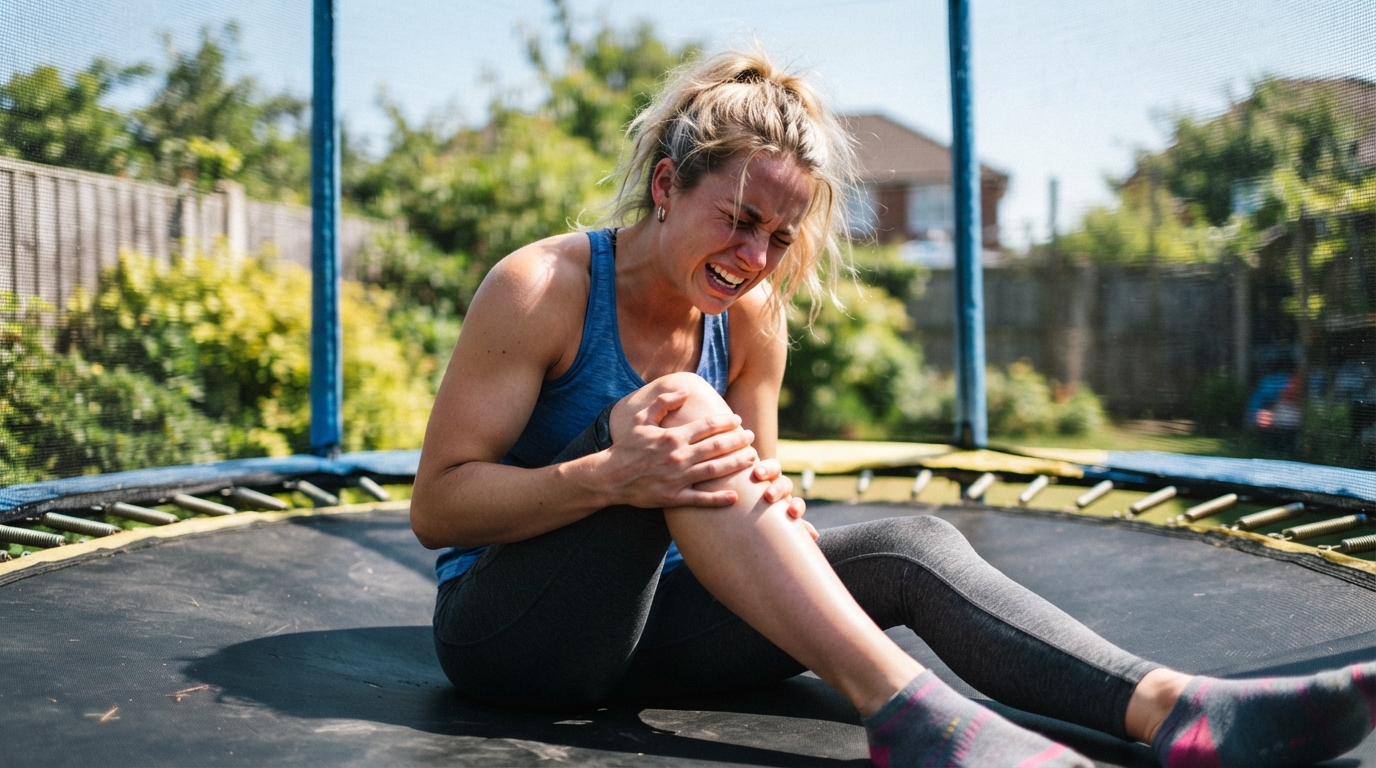
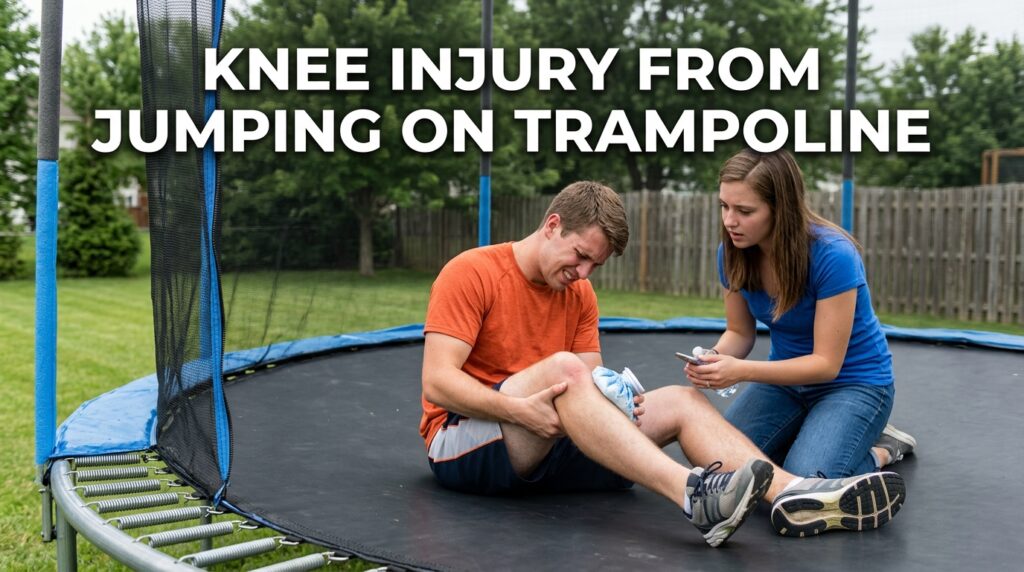
Trampoline is one of the interesting games for kids and teens. Knee injury from jumping on trampoline is increasing recently. You can arrange the best backyard trampolines for your backyard. Your kids will get more fun. Bet you have to check some extra security for injuries. You can buy an extra-large trampoline. So kids will play safely. You have to cover all metal parts with soft rubber materials.
Trampolines bring immense joy to backyards across America, but they also come with real risks — particularly to the knees. Every year, thousands of trampoline-related injuries occur in the United States, with knee sprains, strains, ligament tears, and fractures among the most common lower extremity issues. While bouncing can strengthen muscles and improve balance when done correctly, improper use, poor equipment, or lack of supervision frequently leads to painful knee injuries that affect children and adults alike.
At our outdoor family activity blog serving the USA market, we’ve created this comprehensive 3000+ word guide to help parents, athletes, and homeowners in New York, Texas, Florida, Miami, Washington, San Francisco, and beyond understand the connection between trampolines and knee injuries. You’ll learn the causes, statistics, prevention strategies, safest trampoline types, rehabilitation tips, and region-specific advice tailored to different climates and lifestyles.
The Scope of Trampoline Knee Injuries in America
According to data from the U.S. Consumer Product Safety Commission and various studies, trampolines contribute to over 100,000 emergency room visits annually, with a significant portion involving lower extremity injuries like knees. Children aged 5–14 are most affected, but adults using backyard or park trampolines also report knee problems from awkward landings, multiple jumpers, or worn-out equipment.
Knee injuries on trampolines often include:
- Anterior cruciate ligament (ACL) sprains or tears
- Medial collateral ligament (MCL) damage
- Meniscus tears
- Patellar (kneecap) dislocations
- Proximal tibial fractures (sometimes called “trampoline fractures” in young children)
These injuries happen because the trampoline mat provides an unstable, elastic surface. When a jumper lands off-balance or with locked knees, tremendous shear forces transfer directly to the knee joint.
How Trampolines Cause Knee Injuries: The Biomechanics
The trampoline’s bounce creates both benefits and risks. The flexible surface reduces some impact compared to hard ground, but it also introduces instability. Key mechanisms include:
- Awkward Landings: Landing with straight or hyperextended knees instead of a slight bend absorbs force poorly.
- Multiple Jumpers: Collisions or unexpected movements from others cause sudden twists.
- Falling Off or onto Springs: Direct impact to the knee or loss of control.
- Repetitive Stress: High-volume jumping without proper form fatigues stabilizing muscles (quads, hamstrings, glutes), leaving ligaments vulnerable.
Studies show that over 75% of injuries occur when more than one person jumps simultaneously.
Risk Factors That Increase Knee Injury Chances
- Age: Young children (under 6) have softer bones and poorer coordination. Teens and adults attempting flips increase risk.
- Technique: Locking knees, poor posture, or excessive height.
- Equipment Quality: Old springs, inadequate padding, or round trampolines that push users toward the center unevenly.
- Surface and Environment: Wet mats, uneven ground, or windy conditions (common in Texas and Florida).
- Body Weight and Fitness: Overweight individuals or those with pre-existing knee issues face higher strain.
Are Trampolines Good or Bad for Knees? The Nuanced Answer
When used correctly with proper equipment, mini trampolines (rebounders) and well-designed backyard models can actually strengthen knees by building supporting muscles with low impact. Rebounding is often recommended in physical therapy for knee rehabilitation because it reduces joint stress compared to running.
However, full-size backyard trampolines and trampoline parks carry higher injury risks if safety rules are ignored.
Prevention: How to Enjoy Trampolines with Minimal Knee Risk
1. Choose the Right Trampoline Rectangular trampolines generally offer more consistent bounce and control than round ones, reducing erratic movements that stress knees. Look for models with thick padding, safety enclosures, and springless or bungee systems for smoother impact.
2. Enforce Strict Safety Rules
- One jumper at a time.
- No flips or somersaults without professional training.
- Always use safety nets and padding.
- Supervise children constantly.
3. Teach Proper Technique
- Keep knees slightly bent on landing.
- Land in the center of the mat.
- Maintain upright posture with core engaged.
4. Warm-Up and Strength Training Incorporate exercises that strengthen knees before jumping: squats, lunges, and balance drills.
Best Trampolines for Knee Safety in 2026
- Springfree or Bungee Models: No exposed springs, gentler on joints.
- Rectangular Designs: Better control for experienced users.
- Mini Rebounders: Excellent for low-impact knee-friendly workouts.
Top recommendations include models from JumpFlex, Skywalker, and ACON with superior padding and stability features.
Regional Advice for Safe Trampoline Use
New York: Cold winters mean indoor storage and shorter outdoor seasons. Focus on quality enclosures to prevent falls on hard ground.
Texas: Large backyards allow bigger rectangular trampolines, but watch for wind and heat — ensure proper anchoring.
Florida & Miami: High humidity and storms require rust-resistant frames and regular inspections. Beach areas should use elevated models.
Washington DC: Family-oriented neighborhoods benefit from supervised play with strict one-jumper rules.
San Francisco: Hills and variable weather favor stable, smaller models. Fog and moisture demand good drainage under the trampoline.
Recovery and Rehabilitation After a Knee Injury
If a knee injury occurs:
- RICE method (Rest, Ice, Compression, Elevation).
- Consult a doctor or physical therapist.
- Gradual return with mini trampoline rebounding under guidance.
Many recover fully and return to safe jumping with strengthened muscles.
Expert Opinions and Studies
Orthopedic associations like AAOS emphasize supervision and proper equipment. Research consistently shows that adult supervision and safety features dramatically reduce injury rates.
Frequently Asked Questions
Can trampolines cause permanent knee damage? Are rectangular trampolines safer for knees? Is rebounding good for bad knees? And more.
To reduce injuries –
- Use a large number of trampoline
- Cover all metal parts with soft rubber materials
- Encourage to play at home
- Use knee guards. So it will protect your kid’s knee.
Trending now –
Best pogo stick
Best walking toys for babies
Here are 10 frequently asked questions (FAQs) regarding knee injuries caused by jumping on a trampoline, covering symptoms, common conditions, immediate care, and prevention.
1. What are the most common types of knee injuries caused by trampolines?
Trampoline use can lead to several types of knee injuries due to the high-impact landings, awkward twists, and unpredictable rebounds. The most frequent include:
- Ligament Sprains and Tears: Damage to the ACL (Anterior Cruciate Ligament) or MCL (Medial Collateral Ligament) caused by twisting while landing.
- Meniscus Tears: Ripping of the cartilage cushions in the knee joint from sudden pivoting or deep bending upon impact.
- Hyperextension: Forcing the knee to bend backward past its straight position when landing with a locked leg.
- Patellar Subluxation/Dislocation: The kneecap popping completely or partially out of its groove.
- Bone Fractures: Specifically proximal tibia fractures or growth plate injuries in young children, often caused when multiple people jump at once.
2. Why are trampolines so high-risk for knee injuries?
The elastic surface of a trampoline creates a dynamic and unstable environment. When you land, the surface absorbs energy and then propels you upward. If your knee is locked, awkwardly aligned, or if you twist mid-air and land before your body finishes rotating, the immense upward force of the trampoline bed is transmitted directly into your knee joint, bypassing the muscle’s natural shock-absorption.
3. I felt a “pop” in my knee while jumping. What does that mean?
Hearing or feeling a distinct “pop” followed by immediate swelling and an inability to bear weight is a classic sign of a significant ligament tear—most commonly the Anterior Cruciate Ligament (ACL)—or a severe meniscus tear. If this happens, stop jumping immediately and seek medical evaluation.
4. What should I do immediately after hurting my knee on a trampoline?
If you sustain a knee injury, follow the PRICE protocol right away:
- Protect: Safeguard the joint from further injury (stop jumping and avoid walking on it).
- Rest: Avoid bearing weight on the affected leg.
- Ice: Apply an ice pack wrapped in a cloth for 15–20 minutes every 2 to 3 hours to reduce swelling.
- Compress: Use a medical elastic bandage to gently wrap the knee (not too tightly) to minimize swelling.
- Elevate: Prop your leg up on pillows so that your knee sits above the level of your heart.
5. When should I see a doctor or go to the emergency room?
You should seek immediate medical attention if you experience any of the following “red flag” symptoms:
- An audible “pop” or tearing sensation at the moment of injury.
- Severe pain or rapid, intense swelling within a few hours.
- Inability to bear any weight on the leg or walk even a few steps.
- The knee looks physically deformed or misaligned.
- The knee feels completely unstable, gives out, or “locks” (cannot be straightened or bent).
- Numbness, tingling, or coldness in your lower leg or foot.
6. What is “Trampoline Knee” in children?
“Trampoline knee” is a term often used to describe a specific type of fracture or severe growth plate injury occurring in young children (typically under the age of 6). Because young children’s bones and growth plates are still soft and developing, the heavy, rhythmic bouncing forces—especially if bouncing with an older, heavier person—can cause a fracture to the upper part of the shinbone (tibia) just below the knee.
7. How are trampoline-related knee injuries typically diagnosed?
A healthcare professional will perform a physical exam to test your knee’s stability, range of motion, and localized tenderness. To accurately diagnose internal damage, they will likely order imaging:
- X-rays: To check for broken bones or dislocations.
- MRI (Magnetic Resonance Imaging): To get detailed images of soft tissues, allowing them to see if ligaments (ACL/MCL) or cartilage (meniscus) are torn.
8. Will I need surgery to fix a trampoline knee injury?
Not necessarily. Treatment depends entirely on the severity and type of injury.
- Non-Surgical: Mild-to-moderate ligament sprains, minor meniscus tears, and hyperextension injuries often heal with rest, physical therapy, wearing a supportive knee brace, and targeted strengthening exercises.
- Surgical: Complete tears of the ACL, complex meniscus tears that cause the knee to lock, or severe bone fractures usually require arthroscopic surgery to restore full stability and function, especially for active individuals.
9. How long does the recovery process take?
Recovery timelines vary significantly:
- Minor sprains/strains: 2 to 6 weeks with proper rest and physical therapy.
- Severe meniscus or ligament tears (without surgery): 2 to 4 months.
- Surgical reconstruction (e.g., ACL surgery): 6 to 9 months (or longer) of structured rehabilitation before returning to high-impact sports or jumping.
10. How can I prevent knee injuries while using a trampoline?
To drastically reduce the risk of knee injuries, adhere to these safety practices:
- One jumper at a time: More than 75% of trampoline injuries happen when multiple people jump together, causing an unstable “double bounce” effect that snaps knees and joints.
- Avoid flips and somersaults: Awkward landings from aerial maneuvers are a primary cause of severe knee and neck trauma.
- Land with slightly bent knees: Never land with your legs completely straight or locked. Keep your knees aligned with your toes.
- No young children: Medical organizations, including the American Academy of Pediatrics, advise against letting children under 6 years old use trampolines.
- Stay in the center: Keep your bounces controlled and in the middle of the mat, away from the rigid frame and springs.
Conclusion: Bounce Smarter, Not Harder
Trampolines and knee injuries are closely linked when safety is ignored, but with the right equipment, technique, and precautions, you can enjoy the fun while protecting your joints. Families in New York, Texas, Florida, Miami, Washington, San Francisco, and across the USA can create safe backyard memories by prioritizing quality and rules.
Ready to choose a knee-friendly trampoline? Explore our recommendations and safety resources for the best outdoor experience.
Keywords: trampolines and knee injuries, trampoline knee pain prevention, safe trampolines for knees 2026, rectangular trampoline knee safety, trampoline injury statistics.