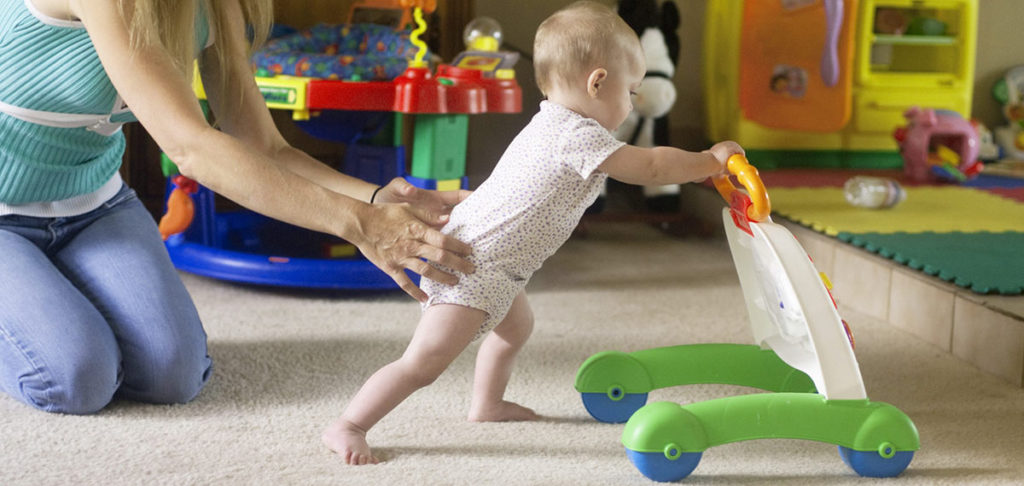
After thorough research and testing, our expert team has chosen the VTech Walker as the best walking toy for babies. This pick stands out thanks to its excellent build quality, engaging features, and consistently strong customer reviews. We always recommend carefully reading parent feedback when choosing a walker, and the overwhelmingly positive response from families confirms that the VTech Walker is a reliable, well-loved option that truly helps babies take their first confident steps.
When a baby starts transitioning from crawling to standing, finding the right walking toy can make a massive difference. Pediatric physical therapists generally favor push walkers over traditional seated walkers. Seated walkers can actually alter a baby’s natural gait and pelvis alignment, whereas a sturdy push toy allows them to practice active balance, build core stability, and control their own center of gravity.
Here is a breakdown of the best walking toys for babies, classified by what makes them stand out for development and play.
Essential Safety & Buying Checklist
When evaluating any walking toy, look for these specific engineering features to keep your little one safe:
- Wheel Speed Control: Look for adjustable tension screws or rubber strips on the wheels. Bare plastic wheels on tile or hardwood can glide too quickly, leading to face-forward slips.
- Wide Wheelbase: The rear wheels should extend slightly further out than the width of the handle frame. This trapezoidal geometry provides maximum anti-rollover stability.
- Vertical Stability: Test the walker by pressing straight down on the handle. If the front wheels lift off the ground easily under downward pressure, it may tip backward when a baby tries to pull themselves up using the handle bar.
A Pro-Tip from Pediatric Therapists: Before spending money on a high-end push toy, try an empty plastic laundry basket loaded with a few heavy books. Pushing a weighted laundry basket across a carpeted floor offers identical resistance and stability benefits for a fraction of the cost.
10 months gone, your children growing very well but not walking yet! You can’t spend enough time with your toddler, you must need a toy for almost walking baby. It is very helpful for your kids. It is one of the playing partners for your kids. So you need the best baby push walker for hardwood floors. Check out reviews for kids to know which is the best walking toys for babies. Here are the best product for kids, in order:
- VTech Learning Walker
- Joovy Spoon Walker
- KidsEmbrace Baby Walker
- Fisher-Price Zebra Walker
- Storkcraft Mini-Speedster Walker
No.1 – VTech Learning Walker Reviews
Best walking toys for babies
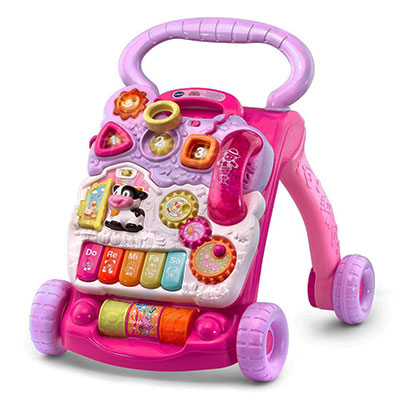
Our expert team chooses this item as number one because of its customer reviews and super product quality. This is a really awesome product with a very good sound system, around 70 kids song, 2 AA batteries are included. It has 3 light-up buttons and 2 spinning rollers which is colorful. It will grow your kid’s motor skills, in a word it is an education game as well. The dimension of this item is 16.5″ x 14.2″ x 18.1″ and the weight of this item is 4.8 pounds (2.18 kg). The price of this item is very compatible. So anyone can easily pick this product.
More than 6,000 customers give their reviews, among them, around 86% of the customers have given them 5 out of 5. And only 2% of the customers have given them 1 out of 5. So you can pick this item at any time. The interesting part of this product is the cost-saving price.
Why we pick this item:
The maximum height for toddler: 30 inches tall
Age recommendation: 9 months to 3 years old
Music system: Around 70 kids song with 5 piano keys
Wheels: 4
Adjustable heights: 3 different position
No.2 – Joovy Spoon Walker Reviews
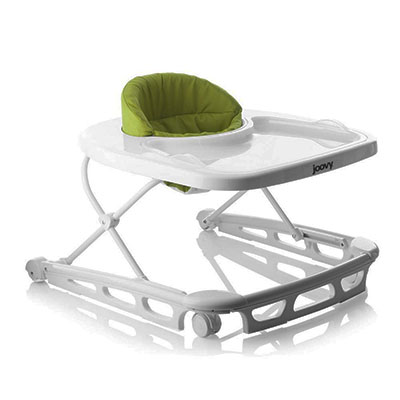
Our expert team found it number two because of the best-seller items in the online and online market. You can easily choose Joovy because of its quality. You 9-10 months baby can easily ride it, and learn how to walk. This is a unisex product, so this item is fit for your toddler. This dimension of this item is 27.8″ x 25.5″ x 18″. It is very much comfortable for your toddler. The weight of this item is 12.3 lbs.
More than 2180 customers have given them valuable feedback. And they have received 4.6 customers feedback out of 5. Among them, around 78% of the customers have given them 5 out 5. And only 5% of the customers have given them 1 out of 5 ratings. So you can easily understand the product quality.
Why you choose this item:
The maximum height for toddler: 33.5 inches tall
Maximum weight recommendation: 30 lbs
Machine washable: Yes
Wheels: 4
Adjustable heights: 3 different position
No.3 – KidsEmbrace Baby Walker Reviews
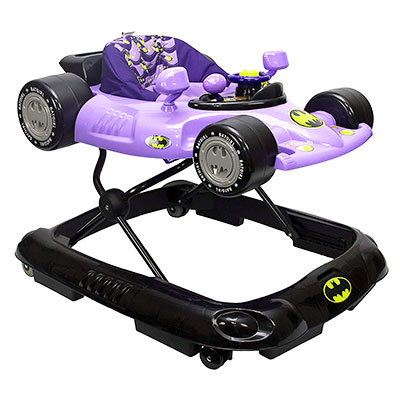
We consider this item as a 3rd position because of its customer reviews and product quality. Your ten months baby can easily ride it, a maximum of 2-3 years old kids can ride it. More than 690 customers have given them valuable feedback. Customer reviews of this walker are super high, around 85% person of the total customer gives them 5 out of 5. This dimension of this item is 28.5″ x 25″ x 21″ and the weight of this item is 13.7 pounds.
Why you choose this item:
The maximum height for toddler: 32 inches tall
Maximum weight recommendation: 26 lbs
Machine washable: Washable polyester cover
Wheels: 6 grip pads and 4 wheels
Adjustable heights: 3 different position
No.4 – Fisher-Price Zebra Walker Reviews
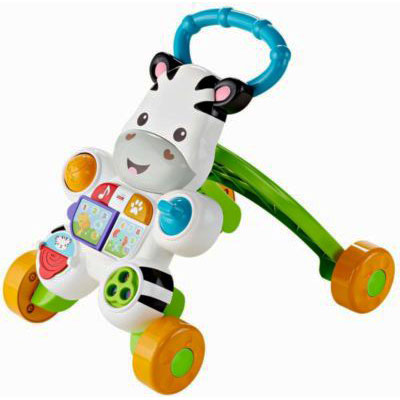
If you don’t like the previous item or item is now stock out, you will choose this product. We consider this item as a 4th position because of its product quality and customer reviews. The dimension of this item is 26.9″ x 3.5″ x 16″ and the weight of this product is 2.2 pounds. The recommendation age of this item is 6 months to 4 years old but after checking we think that the recommended starting age would be 7-8 months. It has a tiny music system included, ABC’s & 123’s through song, just press a button.
Why you pick this product:
The maximum height for toddler: 28 – 32 inches tall
Maximum weight recommendation: Not necessary
Wheels: sturdy 4-wheel and grasp handle
Music system: yes, with some kids song
No.5 – Storkcraft Mini-Speedster Walker Reviews
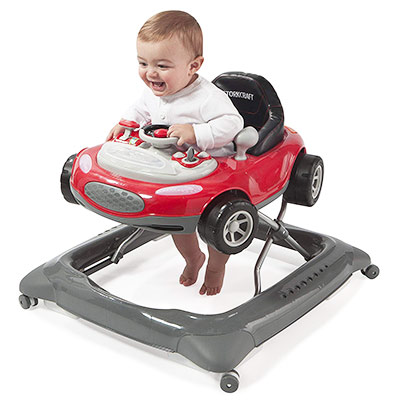
This is another good quality toddler walker that looks like a car. Our expert team chooses it as no.5 because of its quality. It is made of good quality plastic and steel. They have received more than 324 customer reviews, among those reviews, around 74% of customers have given them 5 out of 5. And only 5% of the customers have given them 1 out of 5. So, you can easily understand the product quality. The dimension of this item is 14″ x 27″ x 25″ and the weight of this product is 13.5 pounds. Most of the consumers are very happy after using this item.
Why you pick this item:
The maximum height for toddler: 33 inches tall
Age Recommendation: 12 months to 2 years
Weight Recommendation: 26 lbs.
Adjustable heights: 3 different position
Wheels: 4 wheels
No.6 – Melissa & Doug Deluxe Walker Reviews
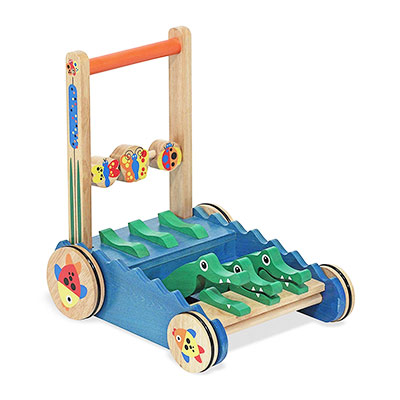
This is another good quality walker for your kids, our expert team chooses as number six cause of its customer reviews and product durability. This walker is made of wood for that reason it is durable. More than 905 customers reviews for this item, among them 71% customer give them 5 out of 5. That means most of the customers are happy about this walker for your toddler. The dimension of this baby walker is 15″ x 15″ x 11.8″ and the weight of this item is 6.95 pounds.
Why you pick this item:
Maximum height for toddler: 35 inches tall
Age Recommendation: 12 months to 2 years
Weight Recommendation: 28 lbs.
Material: Wood
Wheels: 4 wheels
No.7 – Bright Starts Walker Reviews
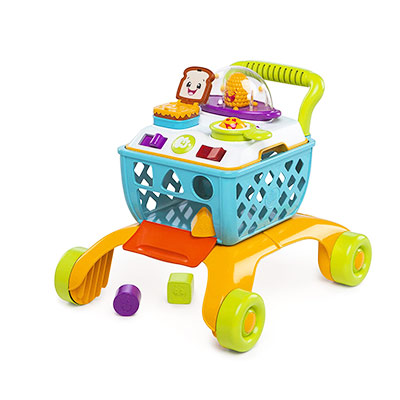
This is also a very good baby walker, but our expert team chooses it as seven because of its customer reviews. Average customer reviews of that item are around 4.2 out of 5, more than 292 customer reviews, among them around 67% of the customers have given them 5 out 5. So, you can easily understand its quality is really very good. The dimension of this item is 22-inch x 6.9-inch x 16-inch & the weight of this item is 5.29 pounds (2.4 kg). Your kid will think, it is actually his playing material. So automatically he will stand up and learn very quickly.
Why you pick this item:
The maximum height for toddler: 35 inches tall
Age Recommendation: 6 months to 3 years
Weight Recommendation: 30 lbs.
Wheels: 4 wheels
Material: Plastic
When choosing between wooden and plastic baby push walkers, the decision usually comes down to a tradeoff between built-in stability and adaptability/entertainment value. Both materials have distinct advantages and drawbacks when it comes to safety and how long the toy will last in your home.
Here is a direct comparison of the specific pros and cons for both materials.
Wooden Baby Walkers
Wooden walkers are often favored by minimalist or Montessori-leaning parents. They are typically made from solid wood or high-quality plywood.
Pros:
- Superior Anti-Tip Safety: Wood is naturally heavy. This weight creates a low center of gravity, making wooden walkers excellent for babies who tend to lean hard or put all their downward pressure on the handlebar. They are much harder for a baby to accidentally flip backward.
- Natural Traction Control: Because they are heavy, wooden walkers don’t fly across hardwood floors as easily as lightweight plastic. Many premium wooden options also feature rubber-trimmed wheels that provide built-in friction to slow down early steps.
- Incredible Lifespan: A well-made wooden walker is practically indestructible. They don’t have electronic components that fry or battery compartments that rust. They easily survive multiple children and can be passed down as family heirlooms.
- Multipurpose Utility: Many wooden options are built as “wagons.” Long after a child learns to walk, they will use it for years as a toy cart to transport blocks, dolls, and stuffed animals around the house.
Cons:
- Blunt Force Risks: Because they are heavy and rigid, they have a lot of momentum. If a toddler crashes a wooden walker into baseboards, furniture, or a sibling’s shins, it can cause minor damage or bruising.
- Lack of Multi-Stage Adaptability: Wooden walkers generally do not convert into different objects (like play tables or ride-ons). Once the child outgrows the pushing and wagon phase, its functional life ends.
- Higher Price Point: High-quality, non-toxic wooden toys demand a premium price compared to mass-produced plastics.
Plastic Baby Walkers
Plastic walkers are the modern standard, engineered to maximize sensory engagement and offer multi-functional layouts.
Pros:
- Impact Cushioning Safety: Plastic absorbs impact better than wood. If a baby falls against a plastic walker, the material has a slight “give” to it, and the rounded molded corners are much softer on impact. It is also highly unlikely to scuff your home’s walls or furniture during a crash.
- Advanced Speed & Tension Controls: While wooden walkers rely on pure weight for resistance, many plastic walkers feature mechanical tension switches on the rear wheels. You can lock the wheels completely for a baby who is just learning to stand, click it to a “slow” setting for early steps, and unlock it fully once they are confident.
- Extended Product Lifespan (Versatility): Many modern plastic walkers are 2-in-1 or 3-in-1 systems. They can start as a floor play panel, convert to a walker, and then transform into a toddler activity desk or a ride-on toy, extending their functional daily use from 6 months up to 3 years old.
Cons:
- Tip-Over Risks: Plastic is lightweight. If a baby attempts to pull themselves up from a seated position by grabbing the handlebar, a plastic walker is much more likely to lift off its front wheels and flip backward onto the baby unless it is weighted down.
- Durability Vulnerabilities: Plastic can crack under heavy stress, and the electronic sound/light panels are susceptible to water damage (from juice or spit-up) or internal wire failure. Once the electronics stop working, much of the toy’s appeal is lost.
- Slickness on Hard Floors: Cheaper plastic walkers with hollow plastic wheels struggle immensely on tile or hardwood. They tend to slide rather than roll, causing the walker to shoot forward faster than the baby’s legs can move.
Frequently Asked Questions About Baby Walking Toys
Here are the 10 most common questions parents and caregivers ask when selecting and using baby push walkers:
1. Are push walkers safe for a baby’s hips and physical development?
Yes. Unlike traditional seated/saucer walkers (which hold a baby up artificially and can distort pelvic alignment), push walkers are highly recommended by pediatric physical therapists. They require babies to support their own body weight, engage their core, and practice natural balance.
2. At what age can a baby start using a push walker?
Most babies are ready around 9 to 12 months, but it depends entirely on milestones rather than age. A baby is ready to use a push walker when they can confidently pull themselves up to a standing position on furniture and cruise along the edges of a couch.
3. Will a push walker delay my baby from walking independently?
No, it will not delay development. However, relying on it exclusively won’t speed up independent walking either. Push walkers teach a baby how to propel themselves forward, but they don’t teach the specific lateral (side-to-side) balancing needed to walk completely unassisted. It is best used as one of many movement tools.
4. How can I keep a plastic walker from sliding too fast on hardwood floors?
If the walker moves too fast, look for a tension control switch on the rear wheels to increase resistance. If your model lacks this feature, you can tie a small hand towel or strip of fabric tightly around the rear axle to act as a natural brake, or tape rubber grip strips (like non-slip rug tape) onto the plastic wheels.
5. Why do pediatricians warn against traditional seated walkers?
The American Academy of Pediatrics (AAP) strongly discourages seated rolling walkers for two reasons: developmental delays (they train the wrong leg muscles and cause toe-walking) and extreme safety hazards. Seated walkers allow babies to move at speeds up to 4 feet per second, leading to high-risk injuries like falling down stairs or reaching hot stove tops.
6. Can a baby use a push walker on thick carpet?
Yes, and carpet is actually the ideal environment for a beginner. The natural resistance of carpet fibers slows down the walker’s wheels automatically, preventing it from slipping away from the baby, while offering a much softer landing pad for unavoidable falls.
7. How do I stop a push walker from tipping backward when my baby pulls up on it?
Many lightweight plastic walkers will tip if a baby pulls backward on the handle rather than pushing down. To fix this, you can temporarily weight down the front of the walker. Placing heavy books inside the wagon tray (for wooden models) or taping a couple of full water bottles to the lower front frame of a plastic walker adds the necessary counterweight.
8. What features should I prioritize if I have a small living space?
Look for a multi-functional 2-in-1 design where the interactive play panel detaches from the wheels. This allows your baby to use the toy flat on the floor or at a small table without the bulky wheel frame taking up floor space when it is not actively being used for walking practice.
9. How do I know if a wooden walker is safe and non-toxic?
Check the manufacturer’s product specifications for certifications. Look for labels stating the toy uses water-based, non-toxic paints/finishes and complies with global safety standards like ASTM F963 (USA) or EN71 (Europe). This is crucial since babies frequently mouth the handlebars.
10. When will my baby completely outgrow a push walker?
Most toddlers transition away from using a push walker for stability around 15 to 18 months, once they are running independently. However, if the walker features a toy shopping cart, a wagon bed, or an interactive activity board, children will often continue playing with it creatively until they are 2 or 3 years old.
Final Words
So you can easily understand that which is the best walker for your kids. Our top pick VTech Learning Walker is a really quality item. So, you can try this product.
Popular links –
Best hospital-grade breast pump
Best Pogo stick
3d pen for kids