Waking up to see tiny white flakes scattered across your shoulders can completely shake your confidence. When this happens, our immediate instinct is to jump into the shower and wash our hair aggressively, assuming that more soap and scrubbing will clean away the visible irritation.
However, this daily scrubbing routine frequently creates a frustrating paradox: the more frequently you wash your hair, the more persistent and noticeable the flaking becomes.
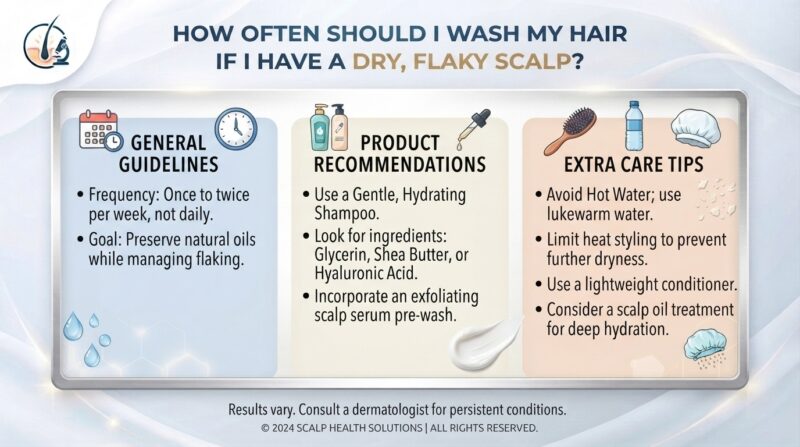
This highlights a vital, high-intent personal care question: How often should I wash my hair if I have a dry, flaky scalp?
The direct answer is that you should wash your hair only 1 to 2 times per week if your flaking is caused by a true dry scalp. Washing any more frequently will continuously strip away the scarce natural sebum (oil) your skin produces, breaking down the skin’s moisture barrier and making the flaking significantly worse.
Note: If your flakes are actually oily, yellowish, and caused by dandruff (seborrheic dermatitis), you actually need to wash more frequently (3 to 4 times a week) to remove excess oil. This guide focuses specifically on managing a moisture-depleted, dry scalp.
This comprehensive guide serves as the ultimate diagnostic and scheduling resource for itemguides.com readers, mapping out the cellular science of skin hydration, personalized washing schedules, and regional climate adaptations.
The Biological Hydration Equation: Why Less is More
To fix a dry, scaling scalp, we have to look beneath the surface flakes and examine the biological mechanisms that keep human skin hydrated.
1. The Sebum Protective Blanket
Your scalp naturally produces a light, specialized oil called sebum from its sebaceous glands. Sebum acts as your skin’s built-in shield, sealing in essential hydration and keeping external irritants out. When you wash your hair daily with standard commercial shampoos, the harsh surfactants lift away this vital oil blanket before it can spread along the skin, leaving the skin cells exposed, dehydrated, and prone to peeling away as dust-like particles.
2. Triggers: Dry Scalp vs. True Dandruff
It is critical to pinpoint your exact issue before changing your washing schedule. A dry scalp is a hydration deficiency, similar to having chapped hands. True dandruff, however, is a inflammatory condition triggered by an overgrowth of a microscopic yeast fungus (Malassezia) that actively feeds on excess oil. Treating a moisture-depleted dry scalp with the frequent, aggressive washing schedules meant for oily dandruff will damage the skin barrier even further.
The Master Washing Frequency Matrix
Your ideal washing schedule depends on your hair texture, styling habits, and daily activity levels. Use this targeted structural matrix to plan your weekly routine:
| Hair Type & Texture | Recommended Weekly Wash Frequency | Optimal Cleaning Product Choice |
| Fine, Straight, or Thin Hair | 2 times per week (e.g., Sunday and Wednesday) | Lightweight, sulfate-free hydrating shampoo. |
| Thick, Coarse, or Curly Hair | 1 time per week | Deeply moisturizing cream cleanser or co-wash. |
| Coily, Kinky, or Textured Hair | Once every 7 to 10 days | Nutrient-rich conditioning wash with botanical oils. |
| Daily Active / Heavy Sweat Workouts | 2 times per week (Rinse with plain water on off days) | Ultra-mild, fragrance-free scalp balancing cleanser. |
Step-by-Step Scalp Rehydration Protocol
Transitioning your scalp from a state of chronic dryness to deep hydration requires an organized, disciplined shower routine. Follow this precise sequence to restore balance to your skin barrier:
1.Lower Your Shower Water Temperature to Lukewarm:Phase 1: Thermal Calibration.
Steaming hot water melts away the delicate lipid oils that keep your skin hydrated. Turn your shower dial down to a comfortable, lukewarm temperature before wetting your hair to protect your skin barrier from heat damage.
2.Apply Shampoo Strictly to Your Roots, Not the Hair Tips:Phase 2: Targeted Cleansing.
Pour a dime-sized amount of sulfate-free shampoo onto your palms. Using only the soft pads of your fingertips, massage the cleanser directly into your root area; avoid rubbing the mid-lengths and ends of your hair, as the rinsing suds will naturally clean them without over-drying.
3.Apply a Specialized Conditioning Mask to the Scalp Layer:Phase 3: The Hydration Seal.
Unlike standard hair conditioners that are meant only for the hair ends, apply a dedicated, scalp-safe conditioning mask rich in aloe vera, hyaluronic acid, or colloidal oatmeal directly onto your exposed skin parting lines. Let it sit for 3 to 5 minutes to restore deep hydration.
4.Blot Gently with Microfiber and Avoid Direct High-Heat Tools:Phase 4: Low-Friction Drying.
Step out of the shower and gently blot your hair using a soft microfiber towel—never rub your head roughly, as friction can pull up loose skin cells and worsen flaking. If you use a blow dryer, keep it on the lowest, coolest air setting.
5 Essential Tips for Managing a Dry Scalp Across Different Climates
- Tailor Your Washing Frequency to Local Humidity Cycles: Your local weather patterns significantly impact how your skin holds onto moisture. If you live in cold, dry winter climates like New York or Washington State, the low humidity combined with indoor heating will dry out your skin rapidly, meaning you should drop down to one wash per week. Conversely, if you are in warm, humid coastal areas like California, San Francisco, or Texas summers, increased sweat can build up on your skin, allowing you to safely wash twice a week using a mild, soothing cleanser.
- Use the Power of Water-Only Rinses on Workout Days: If you exercise regularly or sweat heavily, you don’t need to use shampoo after every workout. Instead, rinse your hair thoroughly with plain, lukewarm water while massaging your roots with your fingertips. This simple rinse clears away dried sweat and salt buildup without stripping away the essential protective oils your skin needs to heal.
- Install a Multi-Stage Shower Head Water Filter: If your home is in a major metropolitan city with hard water, the high concentrations of minerals like calcium and magnesium can leave a drying film on your hair and skin. This mineral residue can cause long-term irritation and flaking. Adding a multi-stage filter to your shower head neutralizes these harsh minerals, giving your skin barrier a clean environment to recover.
- Audit Your Products to Eliminate Harsh Drying Sulfates: Check the ingredient lists on all the bottles in your shower. Completely avoid products containing aggressive surfactants like Sodium Lauryl Sulfate (SLS) or Ammonium Lauryl Sulfate (ALS). These industrial-strength cleaning agents are too harsh for dry skin, so switch to mild, plant-derived cleansers like coco-glucoside or decyl glucoside.
- Incorporate an Overnight Hyaluronic Acid Scalp Serum: Just like you use a nighttime moisturizer to protect your face, you can apply a few drops of a lightweight, oil-free hyaluronic acid serum directly to your damp hair partings before bed. This humectant draws moisture deep into the skin cells overnight without leaving a greasy residue, helping to eliminate fine, powdery dust flakes by morning.
Frequently Asked Questions (FAQ)
1. Will my hair get super oily when I first reduce my washing frequency?
Yes, you may experience a brief transition phase lasting 1 to 2 weeks. When you stop stripping your scalp with daily washes, your sebaceous glands need a little time to realize they no longer need to overproduce oil to compensate for the dryness, and your skin will balance out naturally.
2. Can using dry shampoo help manage the days between washes?
Use dry shampoo very sparingly. Heavy use of dry shampoos can clog your hair follicles, trap dead skin cells, and absorb the minimal healthy oils your skin produces, which can trigger extra irritation and flaking.
3. How can I tell if my flakes are from a dry scalp or true dandruff?
Look closely at the texture and color of the flakes. Dry scalp flakes are small, clear or pure white, loose, and powdery. True dandruff flakes are larger, thick, waxy, distinctly yellowish, and tend to stick to your hair strands due to excess oil.
4. Is a dry scalp a contagious condition?
No, a dry scalp is completely non-contagious. It is simply a localized skin barrier issue caused by dehydration, weather changes, or harsh styling products, meaning it cannot be passed from person to person.
5. Does applying neat coconut oil fix a chronic dry scalp?
Coconut oil can help smooth down surface flakes, but it has a high molecular weight that makes it difficult to penetrate deep into the skin layers. For the best results, use lightweight, highly absorbable oils like jojoba or argan oil, or stick to water-soluble hydrators like aloe vera.
6. Can drinking more water clear up a dry scalp?
Yes, increasing your daily water intake helps hydrate your body from the inside out, supporting general skin health. However, you must pair internal hydration with a gentle, moisture-preserving external hair care routine to fully heal your skin barrier.
7. Why does my scalp flake more immediately after I wash my hair?
If you see a surge of fine white flakes right after showering, your shampoo is likely too harsh, or the water temperature is too high. The immediate loss of moisture causes the dehydrated surface cells to shrink, crack, and peel away instantly.
8. Should I use a fine-toothed comb to scrape away loose flakes?
Never scrape or scratch your scalp with a comb or your fingernails. This aggressive friction causes micro-tears in the delicate skin, introducing bacteria, increasing inflammation, and making the flaking issue worse.
9. Can changing my hair parting line help reduce localized dryness?
Shifting your hair parting line can protect specific areas of your skin from constant exposure to sun, wind, and direct heat from styling tools, giving vulnerable areas a chance to heal.
10. When should I stop self-treating at home and see a doctor?
If you have consistently followed a gentle, moisture-rich routine for 4 full weeks without seeing any improvement, or if your skin begins to bleed, blister, weep fluid, or cause localized hair loss, stop home treatments and consult a dermatologist right away.
Conclusion
Successfully clearing up a dry, flaky scalp is all about shifting your approach from aggressive cleaning to deep moisture preservation. By reducing your washing schedule to just 1 or 2 times per week, replacing harsh sulfate shampoos with gentle, plant-derived cleansers, and protecting your skin from extreme weather and hot shower water, you can easily restore your skin’s natural moisture barrier. Be patient with your skin’s natural transition phase, treat your scalp with care, and enjoy a comfortable, flake-free landscape through every season.