There is nothing quite as relaxing as stepping into a steaming hot shower after a long, stressful day. Whether you are unwinding from a freezing winter day or washing off the grime of a humid afternoon, high-temperature water feels deeply therapeutic.
However, if you are currently dealing with persistent head itching, irritation, or white flakes on your clothes, that comforting daily ritual might actually be the primary cause of your discomfort.
When it comes to maintaining healthy hair and skin, many people unknowingly sabotage their routines right at the shower dial. This raises a critical question for anyone looking to build a better personal care routine: Will hot water showers make a dry scalp worse?
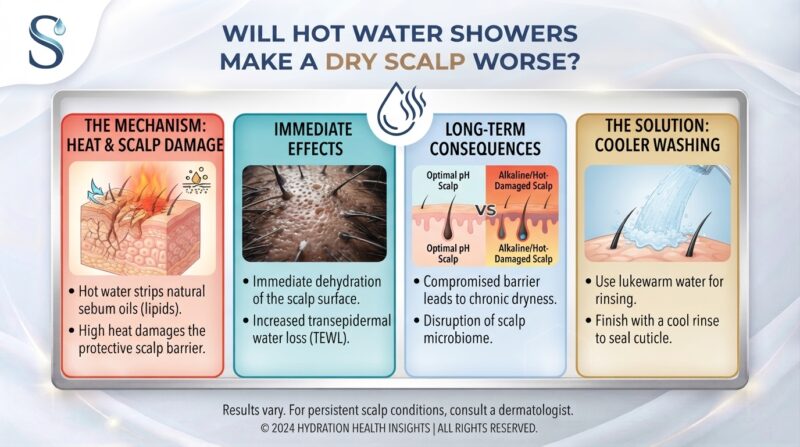
Yes, hot water showers will absolutely make a dry scalp worse. High-temperature water acts as a harsh solvent, melting away the delicate sebum (natural oil) layer and natural moisturizing factors that insulate your skin. This causes rapid moisture loss, accelerates skin cell death, and leaves the scalp dry, tight, itchy, and highly prone to flaking.
To help you restore balance to your hair care routine, this comprehensive guide serves as an authoritative diagnostic manual for itemguides.com readers. We will explore the underlying biology of heat damage, establish a step-by-step recovery routine, and break down how regional environmental factors—from the hard water of Texas to the chilly winters of New York—impact your skin barrier.
The Dermatological Science: How High Heat Destroys Your Skin Barrier
To understand why hot water is so damaging, we have to look past the temporary comfort it provides and examine the microscopic structure of human skin.
1. The Sebum Liquefaction Factor
Your hair roots are protected by a fine, specialized layer of lipid fats and oils called sebum. Produced by your sebaceous glands, sebum forms your skin’s primary defense system, blocking out environmental toxins while keeping cellular hydration locked inside.
Think of sebum like butter: at room temperature or cool temperatures, it remains solid enough to form a protective coating. When exposed to water temperatures above 105°F (40.5°C), it liquefies and washes away completely. Without this protective oil layer, your skin cells are left entirely exposed to the air.
2. Transepidermal Water Loss (TEWL)
When hot water strips away your lipid oils, it triggers a rapid physical process known as Transepidermal Water Loss (TEWL). The heat causes the blood vessels in your skin to expand, increasing blood flow and forcing the water trapped inside your lower skin layers to evaporate rapidly into the air.
The Shower Paradox: The longer you stand under a hot, steaming shower, the more dehydrated and moisture-depleted your skin becomes once you step out.
3. Cellular Keratin Damage
The outer layer of your skin, the stratum corneum, is made of specialized proteins called keratin. High heat alters the physical structure of these proteins, causing the microscopic skin cells to curl up, split apart, and lose their flexibility. As these damaged cells dry out, they separate from the healthy skin below and shed in large numbers, showing up as fine, powdery white dust.
Shower Water Temperature Safety Matrix
Managing your skin health requires finding the right balance on your shower dial. Use our structural reference chart below to guide your daily routine:
| Temperature Range | Biological Effect on Skin | Scalp Health Outcome | Routine Recommendation |
| Hot / Steaming (105°F–115°F / 40.5°C–46°C) | Completely dissolves lipid fats; triggers rapid TEWL; inflames skin tissue. | Severe Dryness & Heavy Flaking | Forbidden: Avoid using this temperature on your head entirely. |
| Lukewarm / Tepid (95°F–100°F / 35°C–37.8°C) | Cleanses away surface dirt and excess sweat without melting your lipid barrier. | Balanced Hydration | Optimal: Use this as your standard setting for washing hair. |
| Cool / Cold (65°F–75°F / 18.3°C–23.9°C) | Closes and seals hair cuticles; constricts capillaries; locks in moisture. | Maximum Shine & Protection | Excellent: Use as a brief final rinse after conditioning. |
Step-by-Step Scalp Rehydration Shower Protocol
Transitioning your skin from a state of chronic heat irritation to deep, healthy hydration requires an organized, disciplined shower routine. Follow this precise sequence to protect and restore your skin barrier:
1.Set the Dial to Lukewarm Before Wetting Your Hair:Phase 1: Thermal Safety Check.
Before stepping under the water stream, adjust your shower handle until the water feels like comfortable lukewarm body temperature. Never let hot steam build up in the bathroom before you begin washing your hair.
2.Apply a Sulfate-Free Cleanser to the Roots Only:Phase 2: Low-Strip Cleansing.
Pour a dime-sized amount of a gentle, plant-derived shampoo onto your palms. Using only the soft pads of your fingertips—never your fingernails—massage the cleanser gently into your roots to lift away dirt without stripping oils.
3.Massage a Hydrating Humectant Mask Into Your Skin:Phase 3: Targeted Moisture Seal.
After rinsing out your mild shampoo, apply a dedicated, scalp-safe conditioning mask rich in aloe vera, hyaluronic acid, or colloidal oatmeal directly along your hair parting lines. Let it absorb for 3 to 5 minutes to restore moisture.
4.Perform a 30-Second Final Rinse with Cool Water:Phase 4: Cellular Lock-Down.
Turn the shower handle down to a cool setting for your final rinse. Run the cool water over your head for 30 seconds to contract the blood vessels, seal your hair cuticles, and lock the hydrating treatment inside your skin.
5 Essential Tips for Managing Scalp Dryness Across Different Regions
1. Match Your Routine to Local Atmospheric Humidity
Environmental factors play a major role in how your skin reacts to shower heat. If you live in cold, dry winter climates like New York or Washington State, the low outdoor humidity combined with drying indoor heating already strips your skin of moisture. In these regions, a hot shower will trigger severe flaking almost instantly, making it crucial to stick to lukewarm water and wash your hair only once or twice a week.
Conversely, if you live in warm, humid coastal areas like California, San Francisco, or Texas, increased sweat can build up on your skin. While you can wash your hair a bit more frequently here (2 to 3 times a week), you must still keep the water temperature down to avoid trapping heat against your skin.
2. Install a Multi-Stage Shower Head Filter to Combat Hard Water
Many major metropolitan areas across Texas and Southern California have high levels of municipal hard water, which is packed with heavy minerals like calcium and magnesium. When you mix hard water with high temperatures, it leaves a stubborn mineral film on your head that irritates your skin and clogs hair follicles. Adding a multi-stage filter to your shower head neutralizes these minerals, giving your skin a clean environment to heal.
3. Replace Stripping Commercial Shampoos with Gentle Plant Cleansers
Check the ingredient labels on all the bottles in your shower. If your current shampoo contains harsh industrial surfactants like Sodium Lauryl Sulfate (SLS), Sodium Laureth Sulfate (SLES), or Ammonium Lauryl Sulfate (ALS), stop using it immediately. These intense detergents are designed to strip away grease, and when paired with hot water, they will completely destroy your skin’s protective barrier. Switch to mild, plant-derived alternatives like coco-glucoside, decyl glucoside, or lauryl glucoside.
4. Apply a Post-Shower Soothing Scalp Serum on Damp Skin
To maximize your hydration, treat your scalp with the same care you give your face. Within 3 minutes of stepping out of the shower—while your skin is still damp and receptive—apply 4 to 6 drops of a lightweight, oil-free hyaluronic acid or aloe-based serum directly to your parting lines. This draws water deep into your skin cells before it can evaporate into the dry air.
5. Boost Your Skin Barrier with Dietary Essential Fatty Acids
Protecting your skin barrier requires internal support alongside your external adjustments. Make sure your daily diet includes plenty of foods rich in essential Omega-3 fatty acids, such as wild-caught salmon, walnuts, chia seeds, and flaxseeds. These healthy lipids strengthen your skin cell membranes throughout your body, helping your scalp hold onto moisture and resist heat damage much more effectively.
Frequently Asked Questions (FAQ)
1. If I love hot showers, can I wash my body in hot water and just keep my hair out of it?
Yes, absolutely. If you aren’t ready to give up your warm showers, you can protect your skin by pinning your hair up and wearing a thick, water-resistant shower cap. When it comes time to wash your hair and rinse your head, turn the dial down to a safe lukewarm temperature.
2. How long does it take for a dry scalp to heal after I stop taking hot showers?
Once you switch to a lukewarm and cool water routine, it typically takes 2 to 4 weeks to see a major reduction in dryness and flaking. This timeframe matches your skin’s natural 28-day cellular turnover cycle, giving your body time to grow new, well-hydrated skin cells to replace the heat-damaged layers.
3. Will taking cold showers all the time cure my dry scalp faster?
While cool water is excellent for sealing in moisture, you do not need to take freezing cold showers. Lukewarm water (95°F–100°F) is perfectly safe and highly effective for dissolving daily sweat and dirt without stripping your protective lipid oils.
4. Can hot water cause my hair to thin or shed prematurely?
Yes, chronic exposure to high heat can lead to hair shedding. When hot water constantly inflames your skin and strips the hair follicles of protective sebum, it can weaken the hair roots and disrupt the natural growth cycle, leading to temporary hair thinning.
5. Why does my head feel much itchier immediately after I blow-dry my hair?
Blow drying your hair on a high heat setting right after a hot shower creates double the heat damage. The intense airflow dries out the remaining moisture in your skin cells, causing them to shrink, crack, and trigger an intense, uncomfortable itching sensation.
6. Is a dry, heat-damaged scalp the same thing as fungal dandruff?
No. A dry scalp is a moisture deficiency problem caused by external factors like hot water and dry air, resulting in small, powdery white flakes. True dandruff is an inflammatory condition triggered by an overgrowth of a yeast fungus (Malassezia) that feeds on excess oil, producing large, waxy, yellowish flakes.
7. Can I use dry shampoo to skip showers and protect my skin from water heat?
Use dry shampoo very sparingly. Relying on it too heavily can lead to a buildup of powders, starches, and synthetic fragrances on your head, which clogs your hair follicles and worsens irritation. A plain, lukewarm water rinse is a much healthier alternative on intermediate days.
8. Should I use a coarse physical scrub to remove the dry flakes caused by hot water?
Never use harsh physical scrubs, stiff bristle brushes, or your fingernails to scrape away loose skin cells. This rough friction creates microscopic tears in your skin, introducing bacteria and causing extra inflammation. Stick to gentle finger massages instead.
9. Does using a bedroom humidifier help soothe a dry scalp?
Yes, very much so. If you live in an area with dry air or heavy indoor heating, running a cool-mist humidifier in your bedroom overnight keeps moisture in the air. This significantly cuts down on nighttime transepidermal water loss, helping you wake up with calmer skin.
10. When should I stop trying to treat my dry scalp at home and consult a doctor?
If you have consistently used lukewarm water and gentle, hydrating products for 4 to 6 full weeks without seeing any improvement, or if your skin begins to bleed, blister, ooze fluid, or cause patchy hair loss, stop home treatments and consult a dermatologist right away.
Conclusion
Clearing up a dry, irritated scalp is all about working with your skin’s natural biology rather than stripping it away. While hot showers offer wonderful comfort, the high heat is simply too aggressive for your skin’s delicate moisture barrier. By adjusting your shower handle to a safe lukewarm temperature, finishing with a quick cool rinse, and using gentle, sulfate-free cleansers, you can easily restore your skin’s natural balance. Treat your skin with care, keep the heat down, and enjoy a comfortable, flake-free scalp through every season.