Dealing with an itchy, flaky scalp can range from a minor cosmetic annoyance to a physically painful struggle. For many people, the initial response is to self-treat the issue at home indefinitely. We cycle through shelves of grocery store anti-dandruff shampoos, apply natural oils, wash our hair less frequently, or try homemade apple cider vinegar rinses, hoping that the next home remedy will finally bring relief.
However, this constant trial-and-error approach often masks a more serious underlying issue. When home care fails, continuing to guess can lead to worsening inflammation, secondary infections, and even permanent hair loss.
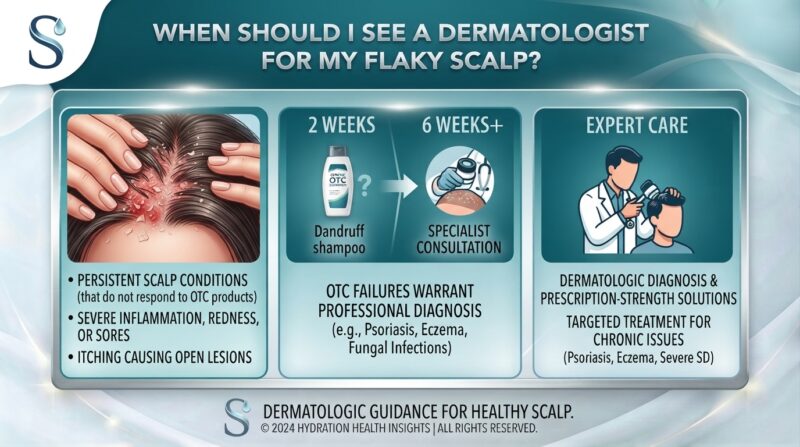
This brings us to a vital clinical threshold question: When should I see a dermatologist for my flaky scalp?
You should see a board-certified dermatologist immediately if your flaky scalp persists for more than 4 weeks despite using over-the-counter medicated shampoos, or if you experience “red flag” symptoms like intense localized pain, distinct swelling, bleeding, yellow crusting, hair shedding, or silver plaques that spread past your hairline.
These symptoms indicate that your flaking is not simple dryness or basic dandruff, but a more complex medical condition that requires targeted prescription intervention.
This comprehensive guide serves as the ultimate diagnostic and clinical navigation resource for itemguides.com readers. We will map out the biological indicators of complex skin conditions, establish a timeline for professional evaluation, and break down how varying regional climates affect your skin health.
The Pathological Threshold: When Flaking is a Chronic Medical Condition
To know exactly when to transition from home care to a medical clinic, we have to look past the surface flakes and examine the underlying conditions that affect the skin.
1. Seborrheic Dermatitis (Severe Dandruff)
While basic dandruff causes minor flaking, seborrheic dermatitis is a chronic inflammatory skin condition driven by an immune response to an overgrowth of Malassezia yeast. It causes greasy, yellowish, waxy scales that stick tightly to the skin around your hair roots. If left untreated, the chronic inflammation can damage your hair follicles and lead to temporary hair thinning.
2. Scalp Psoriasis
Scalp psoriasis is a chronic autoimmune condition that accelerates your body’s skin cell production cycle. Instead of taking the normal 28 days to grow and shed, skin cells develop in just a few days, piling up on the surface. This creates distinct, raised patches covered in thick, silvery-white scales that can crack, bleed, and spread down onto the forehead or behind the ears.
3. Tinea Capitis (Scalp Ringworm)
Tinea capitis is a highly contagious fungal infection that penetrates deep into the hair shafts and surrounding skin. It typically presents as expanding, circular patches of dry flaking accompanied by intense itching, broken hairs that look like tiny black dots, and painful, fluid-filled swelling called a kerion. This condition requires prescription oral anti-fungal medications, as surface shampoos cannot reach the root of the infection.
Triage Grid: Home Care vs. Professional Medical Intervention
Use this structural triage matrix to evaluate the current severity of your scalp condition and determine the appropriate level of care:
| Symptom Profile | Potential Underlying Cause | Recommended Action Plan |
| Mild white, powdery flakes; light itching; skin feels tight after hot showers; no visible redness. | Simple dry scalp or mild product accumulation. | Home Management: Use sulfate-free moisturizing products, reduce hair washing frequency, and lower your shower water temperature. |
| Loose white or yellowish flakes; mild redness; itching that comes and goes; oily roots. | Mild to moderate dandruff (seborrheic dermatitis). | Targeted Over-the-Counter Care: Use alternating zinc pyrithione or selenium sulfide shampoos for 2 to 4 weeks. |
| Thick, silvery-white scales; raised patches that bleed when scratched; plaques spreading past the hairline. | Scalp Psoriasis or severe Seborrheic Dermatitis. | Dermatologist Appointment: Requires targeted prescription topical steroids, vitamin D analogues, or systemic biologic therapies. |
| Circular patches of flaking; hair breaking off at the root; oozing yellow crusts; swollen lymph nodes in the neck. | Tinea Capitis (Fungal Infection) or secondary bacterial infection. | Urgent Medical Care: Requires an immediate professional culture swab, oral prescription anti-fungal drugs, or targeted antibiotics. |
Step-by-Step Clinical Evaluation and Preparation Protocol
If your symptoms indicate it is time to see a specialist, following a structured preparation routine ensures you get the most out of your dermatology appointment. Follow this precise sequence to prepare for your clinical evaluation:
1.Stop Using Medicated Shampoos 48 Hours Before Your Exam:Phase 1: Routine Preservation.
To allow your dermatologist to see the true state of your skin, stop using strong medicated formulas, coal tar shampoos, or heavy styling pomades for at least 2 days before your visit. Let the natural flaking pattern develop naturally.
2.Document Your Symptom History and Active Triggers:Phase 2: Data Accumulation.
Write down a clear timeline of your symptoms. Note when the flaking first started, how often you wash your hair, any active styling products you use daily, and whether changes in weather or high stress levels make the itching worse.
3.Undergo Professional Dermoscopy and a Skin Biopsy:Phase 3: Clinical Diagnostic Testing.
During your appointment, your dermatologist will use a specialized high-magnification lens (a dermoscope) to look at your hair follicles. If they suspect psoriasis or a deep fungal infection, they may perform a quick, painless skin scraping or a small punch biopsy to analyze the cells in a lab.
4.Follow Your Custom Prescription Plan and Schedule a Follow-Up:Phase 4: Targeted Prescription Recovery.
Begin using your prescribed medical treatment—which may include high-potency topical corticosteroid solutions, anti-fungal foams, or oral medications—exactly as directed. Schedule a follow-up appointment in 4 to 6 weeks to monitor your skin’s recovery.
5 Essential Tips for Managing Chronic Scalp Conditions Across Regions
1. Adjust Your Scalp Routine to Local Seasonal Changes
Your local weather patterns can have a major impact on chronic skin conditions like psoriasis and seborrheic dermatitis. If you live in regions with cold, dry winter air like New York or Washington State, the low indoor and outdoor humidity causes rapid moisture loss, which can trigger severe psoriasis flare-ups. In these climates, you will need to prioritize thick, prescription moisturizing ointments and run a cool-mist humidifier in your bedroom.
Conversely, if you live in warm, highly humid areas like Texas or coastal California, increased sweat and oil production create the ideal environment for Malassezia yeast to multiply, which can worsen seborrheic dermatitis. In these climates, you may need to wash your hair more frequently with an anti-fungal formula during the summer months.
2. Identify and Track Environmental Stress Triggers
Living and working in busy, high-pressure urban centers like San Francisco, Silicon Valley, or Manhattan can expose you to chronic everyday stress. Elevated stress levels trigger the release of cortisol throughout your body, which can set off inflammatory pathways and worsen conditions like psoriasis or seborrheic dermatitis. Incorporating daily stress-relief habits—like regular exercise, meditation, or structured sleep routines—is a vital part of managing your skin health.
3. Install a Quality Filter to Counteract Hard Urban Water
Many major cities across Texas and Southern California rely on hard municipal tap water, which contains high levels of dissolved minerals like calcium and magnesium. These minerals leave a stubborn residue on your head that irritates the skin barrier and prevents topical prescription foams or lotions from absorbing properly. Installing a multi-stage shower head filter removes these harsh minerals, creating a clean environment for your medical treatments to work effectively.
4. Create a Comprehensive List of All Your Hair Care Ingredients
Before you go to your dermatology appointment, take photos of the ingredient labels on every shampoo, conditioner, gel, and dry shampoo in your bathroom. Many common hair products contain hidden preservatives (like methylisothiazolinone) or synthetic fragrances that can trigger allergic contact dermatitis. Sharing this list with your doctor helps them quickly rule out product allergies as the cause of your flaking.
5. Never Use Sharp Tools to Scrape Away Loose Scales
When thick plaques form on your head, it can be incredibly tempting to use fine-toothed combs, brushes, or your fingernails to pick or scrape the scales away. Doing this is highly dangerous. In conditions like psoriasis, scraping triggers a biological reaction known as the Koebner phenomenon, where physical injury to the skin causes new, larger plaques to grow in that exact spot. Scraping also creates tiny tears in the skin that can introduce bacteria, leading to a painful secondary infection.
Frequently Asked Questions (FAQ)
1. Why did the anti-dandruff shampoo I bought at the grocery store stop working?
Over-the-counter shampoos often contain low concentrations of active ingredients. Over time, the yeast on your skin can develop a resistance to a single anti-fungal agent, or your flaking might be caused by an autoimmune issue like psoriasis rather than fungal dandruff, meaning it requires a different prescription strategy.
2. Can a chronic flaky scalp cause permanent hair loss?
Simple dry scalp or mild dandruff rarely causes hair loss. However, severe, long-term conditions like untreated seborrheic dermatitis or scalp psoriasis can cause intense inflammation around the hair roots. This inflammation, combined with aggressive scratching, can damage the follicles and lead to temporary shedding or permanent patchy hair thinning.
3. What is the difference between an over-the-counter shampoo and a prescription version?
Prescription shampoos contain much higher strengths of active ingredients (such as 2% Ketoconazole compared to 1% over-the-counter) or utilize advanced medical anti-inflammatory ingredients (like Clobetasol Propionate) that are not available without a doctor’s order.
4. Can a dermatologist diagnose my flaking issue just by looking at my head?
In most cases, yes. Experienced dermatologists can identify conditions like seborrheic dermatitis, psoriasis, or contact dermatitis based on the color, shape, and pattern of the scales. For less obvious cases, they will perform a quick skin scraping or a small punch biopsy to look at the cells under a microscope.
5. Will my health insurance cover a dermatology visit for a flaky scalp?
Yes. When a flaky scalp is accompanied by medical symptoms like chronic inflammation, burning itching, pain, or potential infections, it is classified as a medical condition rather than a cosmetic issue, meaning it is typically covered by standard health insurance plans.
6. Can a stressful event trigger a sudden outbreak of head flaking?
Yes, absolutely. High levels of emotional or physical stress cause your body to release pro-inflammatory chemicals and hormones. These hormones can disrupt your skin barrier, alter your natural oil production, and trigger sudden flare-ups of both psoriasis and seborrheic dermatitis.
7. What exactly is a scalp biopsy, and does it hurt?
A scalp biopsy is a quick in-office medical procedure where a doctor numbs a tiny area of your skin with a local anesthetic and removes a small sample of skin cells (around 4 millimeters wide). You will not feel any pain during the procedure, and it provides a definitive diagnosis for complex skin issues.
8. Can a poor diet or eating too much sugar cause my scalp to flake?
While a poor diet does not directly cause these conditions, eating high amounts of processed sugars and inflammatory foods can alter your body’s hormone levels and worsen systemic inflammation. A balanced diet rich in antioxidants and Omega-3 fatty acids helps support a healthy skin barrier.
9. Is a chronic flaky scalp a sign of poor personal hygiene?
No, absolutely not. Conditions like seborrheic dermatitis and scalp psoriasis are driven by complex biological factors, including your genetics, immune system responses, and natural yeast populations, meaning they are not caused by how clean you keep your hair.
10. Can I use my prescription body steroid creams on my hairy scalp areas?
Never apply creams or ointments meant for your body onto your head unless explicitly directed by your doctor. The skin on your head has a unique thickness and density of hair follicles, and body creams are often too greasy, causing clogged follicles and making the medication difficult to wash away.
Conclusion
Successfully clearing up a persistent, flaky scalp comes down to knowing when to stop guessing with home remedies and seek professional medical expertise. While gentle lifestyle shifts and hydrating shampoos can resolve basic dryness, chronic conditions like scalp psoriasis, seborrheic dermatitis, and deep fungal infections require targeted medical treatments. By paying attention to clinical warning signs, tracking your environmental triggers, and scheduling a timely visit with a board-certified dermatologist, you can protect your skin barrier, safeguard your hair follicles, and enjoy a comfortable, healthy lifestyle through every season.