When fine, powdery white flakes show up on your dark clothes, it’s incredibly common to blame your shampoo, purchase an expensive styling treatment, or assume you have a fungal infection like dandruff. We treat the issue entirely from the outside, applying thick hair oils, special washes, and intense treatments directly to our hair roots.
Yet, despite trying several topical solutions, the itching and flaking often continue without stopping.
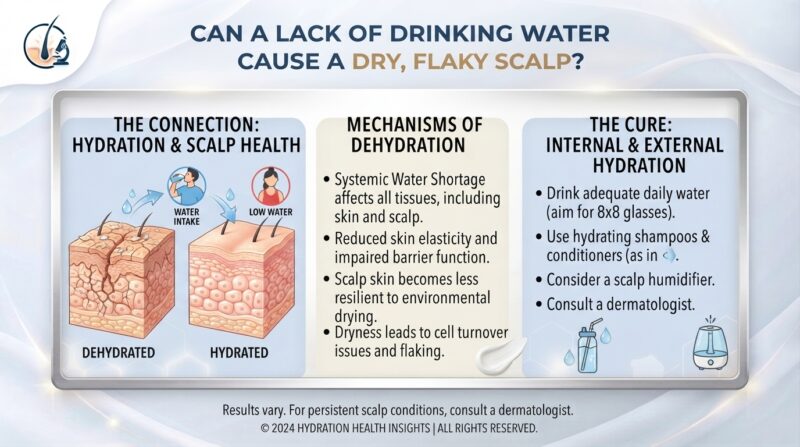
This leads to a fundamental health and lifestyle question: Can a lack of drinking water cause a dry, flaky scalp?
The direct answer is yes. A severe lack of drinking water causes chronic systemic dehydration, which forces your body to pull moisture away from your peripheral organs—like your skin and scalp—to keep your vital internal organs functioning. This leaves the scalp’s outermost layer starved of moisture, causing skin cells to dry up, pull apart, and shed as fine white flakes.
However, it is vital to know that while internal dehydration causes a dry scalp, it does not cause true dandruff. True dandruff is an inflammatory issue driven by an overgrowth of a oil-loving yeast fungus, whereas a dry scalp is purely a moisture deficiency problem.
This comprehensive guide serves as an authoritative diagnostic manual for itemguides.com readers, breaking down the cellular science of hydration, practical recovery schedules, and target tips for varying local climates.
The Biological Hydration Pathway: From Intestine to Epidermis
To understand how systemic dehydration forces your scalp to peel, we must look past the surface flakes and explore how human skin receives and retains water.
1. The Stratum Corneum Moisture Matrix
The outermost layer of your scalp skin is called the stratum corneum. Think of it as a microscopic brick wall: your skin cells are the bricks, and a mixture of natural lipids (fats) and moisture acts as the mortar. This layer requires a minimum water content of 10% to 15% to remain flexible, smooth, and intact. When your body is dehydrated, the moisture content drops below this threshold. The cellular mortar cracks, causing the skin cells to shrivel, curl up at the edges, and flake away.
2. The Internal Hydration Priority Queue
When you drink water, it is absorbed through your digestive system and sent straight into your bloodstream. Your body operates on a strict survival priority queue:
- Tier 1 (High Priority): Brain, heart, kidneys, and liver receive water first.
- Tier 2 (Low Priority): The peripheral capillary network supplying the skin, scalp, and hair follicles receives whatever water is left over.
If you are consistently under-hydrating, your scalp is effectively starved of water from the inside out, making surface treatments almost useless until you fix your internal hydration habits.
Dehydration vs. Fungal Dandruff Symptom Matrix
Before changing your wellness routine, you must accurately diagnose your flaking issue. Use our structural diagnostic grid below to determine what your scalp really needs:
| Visual & Physical Characteristic | Dehydration-Induced Dry Scalp | Malassezia Fungal Dandruff |
| Flake Appearance | Small, clear or bright white, loose, powdery dust particles. | Large, thick, oily, distinctly yellowish or grey clumps. |
| Scalp Skin Sensation | Tightness, general dry itchiness across the whole head, especially after washing. | Intense localized itching, localized burning, and red inflamed patches. |
| Root Oil Production | Completely dry; hair feels rough and brittle from lack of sebum. | Excessively oily; hair roots feel greasy within 24 hours of washing. |
| Primary Treatment Needed | Internal water intake + gentle water-based scalp humectants. | Topical anti-fungal shampoos (Zinc Pyrithione, Ketoconazole). |
Step-by-Step Systemic Scalp Rehydration Protocol
Reversing a dehydration-induced dry scalp requires an organized, disciplined daily routine that combines internal hydration with protective external care. Follow this exact sequence to restore balance to your skin barrier:
1.Establish a Consistent Baseline Daily Water Intake Target:Phase 1: Internal Fluid Correction.
Start your recovery by drinking a minimum of 2.5 to 3 liters (80 to 100 ounces) of pure water every day. Keep a reusable water bottle with you at all times, and use a smartphone tracking app to ensure you spread your fluid intake evenly across the morning and afternoon.
2.Apply a Water-Based Humectant Directly onto Your Skin Partings:Phase 2: Topical Humectant Priming.
While waiting for your internal hydration levels to recover, apply a lightweight, oil-free humectant serum containing hyaluronic acid, aloe vera, or glycerin directly onto your damp scalp skin right after showering. This draws moisture down into the depleted stratum corneum layer.
3.Lock in the Surface Hydration with a Light Plant Carrier Oil:Phase 3: Lipid Barrier Emulsion.
Once the water-based humectant has absorbed for 2 minutes, apply 4 to 6 drops of a high-purity, lightweight carrier oil like jojoba or argan oil directly over the same area. This layer mimics your natural sebum, sealing the moisture inside the skin barrier.
4.Reduce Your Exposure to Drying External Elements:Phase 4: Environmental Protection.
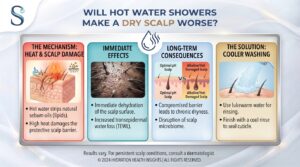
Protect your recovering skin barrier by avoiding steaming hot shower water, cutting back on high-heat blow drying, and wearing a breathable hat when stepping out into extreme wind, intense sun, or freezing outdoor air.
5 Essential Tips for Managing Scalp Hydration Across Different Regions
- Adjust Fluid and Skin Routines Based on Local Climates: Environmental conditions significantly alter your body’s hydration needs. If you live in hot, dry regions like Texas or Central California, you lose large amounts of water through sweat and breathing, requiring you to increase your intake to 3.5 liters of water per day. If you reside in chilly, windy regions like winter in New York or Washington State, indoor heating systems strip moisture from the air, meaning you must combine your water habits with a cool-mist bedroom humidifier to keep your skin from drying out overnight.
- Watch Out for the Diuretic Effects of Coffee and Soda: If you live and work in fast-paced corporate environments like San Francisco, Silicon Valley, or Manhattan, it is incredibly easy to rely on multiple cups of coffee, energy drinks, or soda throughout the day. These caffeinated drinks act as diuretics, increasing urination and causing your body to flush out water faster than it can use it, which worsens skin dryness. Balance every cup of coffee with a full glass of pure water.
- Install a Certified Shower Water Filter for Hard Urban Water: Many major metropolitan areas across Texas and California carry hard tap water packed with heavy minerals like calcium and magnesium. Washing your hair in unfiltered hard water leaves a drying mineral film on your head that irritates the skin barrier and speeds up flaking. Installing a multi-stage shower filter removes these minerals, providing a clean environment for your skin to heal.
- Boost Skin Cell Health with Omega-3 Fatty Acids: Drinking water gives your skin cells essential hydration, but you also need healthy fats to hold that water inside. Eat plenty of foods rich in Omega-3 fatty acids, such as wild-caught salmon, chia seeds, walnuts, and flaxseeds. These healthy fats strengthen your skin cell membranes, helping your scalp lock in moisture more effectively.
- Ditch Harsh Sulfates and Switch to Mild Plant-Derived Cleansers: Check the labels on your favorite shampoos. If you see aggressive industrial cleansers like Sodium Lauryl Sulfate (SLS) or Ammonium Lauryl Sulfate (ALS), stop using them. These harsh surfactants lift away the scarce natural oils your dehydrated scalp is struggling to produce. Switch to ultra-mild, plant-derived cleansers like decyl glucoside or coco-glucoside to protect your skin barrier.
Frequently Asked Questions (FAQ)
1. How long does it take for a dry scalp to heal after I increase my water intake?
Once you consistently hit your daily water targets, it typically takes 2 to 4 weeks for your scalp to show visible improvement. This timeframe aligns with your skin’s natural 28-day cellular turnover cycle, giving new, well-hydrated cells time to grow and replace the dry surface flakes.
2. Can drinking large amounts of alcohol make my scalp flake more?
Yes, absolutely. Alcohol is a powerful diuretic that dehydrates your entire body quickly. A heavy night of drinking causes your skin cells to dry out and shrink, often leading to a noticeable flare-up of scalp tightness, itching, and fine white flakes the next morning.
3. Does drinking electrolyte water help fix a dry scalp faster than plain water?
If you exercise intensely, sweat heavily, or live in extremely hot climates like a Texas summer, electrolyte waters containing sodium, potassium, and magnesium can speed up cell hydration. For everyday office environments, however, clean, filtered plain water works perfectly well.
4. Is it safe to use a dandruff shampoo on a dehydration-induced dry scalp?
Avoid using strong anti-fungal dandruff shampoos if your only issue is dehydration. Medicated options containing zinc pyrithione or selenium sulfide are formulated to dry up excess oil. Applying them to a moisture-depleted dry scalp will strip the skin further, making the flaking worse.
5. Can a lack of water intake also cause my hair to thin or break?
Yes. Your hair follicles depend on a steady supply of moisture from your blood to build strong, healthy hair strands. Chronic dehydration starves the root matrix, which can cause your hair to become dry, brittle, split at the ends, and shed prematurely.
6. Why does my dry scalp feel much itchier during the winter months?
Winter weather brings low outdoor humidity, and indoor heating systems create dry indoor air. This combination speeds up transepidermal water loss (TEWL), causing the moisture in your skin cells to evaporate rapidly into the air, which triggers intense itching and flaking.
7. Should I wash my hair every single day if my scalp is dry and flaking?
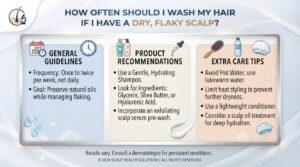
No. If your scalp is dry, you should limit washing your hair to 1 or 2 times per week. Washing every day washes away your natural sebum layer before it can protect the skin, leaving your scalp vulnerable to deeper dehydration.
8. Can drinking green tea or herbal teas count toward my daily water goals?
Yes. Decaffeinated herbal teas, green tea, and water infused with fresh fruit all contribute to your daily fluid intake. Just make sure to avoid sugary juices, energy drinks, and highly caffeinated beverages, as they can cause extra inflammation.
9. Can using a coarse hair scrub help clear away dry flakes?
Never use harsh physical scrubs, stiff brushes, or your fingernails to scrape away loose flakes. This aggressive friction creates microscopic tears in your skin barrier, making you vulnerable to bacterial infections and increasing localized inflammation.
10. When should I stop self-treating my dry scalp at home and see a doctor?
If you have maintained a high-fluid diet and a gentle, moisturizing hair care routine for 4 to 6 full weeks without seeing any improvement, or if your skin begins to bleed, blister, weep fluid, or cause patchy hair loss, stop home care and consult a dermatologist right away.
Conclusion
Clearing up a dry, flaking scalp is all about treating the root cause from the inside out. While top-tier styling creams and hair oils provide short-term surface relief, they cannot fix a skin barrier that is starved of water at a cellular level. By hitting your daily water intake goals, balancing your caffeine habits, and using gentle, sulfate-free external care, you can easily restore your scalp’s natural moisture balance. Be patient with your body’s natural healing cycle, keep a water bottle nearby, and enjoy a comfortable, flake-free landscape through every season.