Finding white flakes scattered across a dark shirt or jacket can be an incredibly frustrating experience. For most people, the immediate assumption is that they are dealing with classic dandruff. We rush to the local store, purchase an aggressive anti-fungal treatment shampoo, and wash our hair aggressively, expecting the problem to disappear.
However, this approach often backfires: the medicated shampoos strip the skin, the irritation grows worse, and the flakes continue to fall.
This common problem brings us to a highly relevant health and beauty question: Can product build-up cause flaking that looks like dandruff?
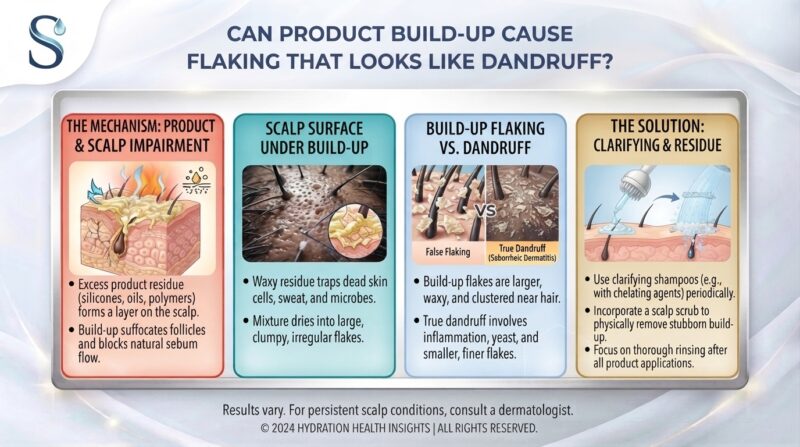
The direct answer is yes. Product build-up can absolutely cause heavy flaking that looks identical to dandruff. When styling creams, dry shampoos, hairsprays, and heavy silicones are used regularly without proper removal, they mix with your skin’s natural oils and form a sticky crust. As this artificial layer dries and shatters over time, it breaks apart into white or translucent flakes that fall exactly like dandruff.
Understanding the difference between an accumulation of old hair product and a genuine medical scalp condition is the first major step toward reclaiming a clean, balanced, and healthy head of hair.
This comprehensive guide serves as the ultimate diagnostic and detox resource for itemguides.com readers, breaking down the chemical science of hair care build-up, clear diagnostic tests, and tailored hair care routines for different regional environments.
The Chemical Layering Problem: How Build-Up Simulates Dandruff
To understand how your morning styling routine can look like a skin issue, we need to look closely at the chemistry of modern hair products.
1. The Heavy Silicones and Polymers Coating
Many modern conditioners, anti-frizz serums, and styling creams rely heavily on non-soluble silicones (such as dimethicone or amodimethicone) and styling polymers. These ingredients are designed to coat the hair shaft to lock out frizz and add temporary shine. However, if these products are applied too close to the roots, they bond directly to the skin, creating an artificial, plastic-like barrier.
2. The Dry Shampoo Accumulation Trap
Dry shampoos are excellent for extending time between washes, but they do not actually clean your hair. Instead, they use micro-powders (like starch, talc, or silica) to absorb excess oil on the surface. When you use dry shampoo multiple days in a row, you are layering starch on top of sebum, on top of dead skin cells. This mixture forms a thick paste that naturally breaks apart and flakes off as you move or brush your hair.
3. Faux-Dandruff vs. True Dandruff
It is critical to know what is actually happening on your skin before choosing a treatment. True dandruff (seborrheic dermatitis) is a biological inflammatory response triggered by an overgrowth of a microscopic yeast fungus called Malassezia. Product build-up, on the other hand, is a simple mechanical accumulation of external ingredients that have not been fully washed away.
Diagnostic Grid: Build-Up vs. Fungal Dandruff
Use this structural diagnostic tool to determine what is actually causing the flakes on your shoulders:
| Visual & Physical Signs | Product Build-Up (Faux-Dandruff) | True Fungal Dandruff |
| Flake Shape & Appearance | Translucent or pure white, irregular shapes, resembles dried glue or thin parchment skin. | Oily, thick, distinctly yellowish or dull grey, waxy clumps. |
| Location of Flakes | Primarily found clustered along the hair strands, an inch away from the roots, or around the hairline. | Sitting directly on the surface of the skin and stuck to the base of the hair follicles. |
| Scalp Skin Condition | Generally normal, though it may feel heavy or slightly dull; no severe redness. | Noticeably inflamed, pink or red patches, oily, and accompanied by a constant burning itch. |
| The Scratch Test Result | Scraping the skin yields a white, waxy substance under the fingernails with no pain. | Scratching causes stinging, raw skin, and can make the area bleed. |
Step-by-Step Scalp Detox and Recovery Routine
Clearing out weeks of accumulated hair products and restoring balance to your skin requires a structured, deep-cleansing routine. Follow this precise sequence to completely refresh your hair roots:
1.Apply a Specialized Clarifying Shampoo to Dry or Damp Roots:Phase 1: Chemical Bond Breaking.
Begin your routine by choosing a dedicated clarifying shampoo containing chelating agents or sodium C14-16 olefin sulfonate. Massage it directly into your roots for 2 full minutes to break down stubborn synthetic silicones and hairspray resins.
2.Gently Use a Soft Silicone Massager Brush in the Shower:Phase 2: Mechanical Exfoliation.
While the clarifying lather sits on your hair, use a soft, flexible silicone scalp massager brush in small, circular motions. This gentle action helps lift up the softened product crust without scratching or tearing the underlying skin.
3.Perform a Diluted Apple Cider Vinegar Scalp Rinse:Phase 3: The Acidity Reset.
After rinsing out your clarifying shampoo, pour a mixture of 1 part organic apple cider vinegar to 4 parts warm water directly over your roots. The natural alpha-hydroxy acids help dissolve any remaining hard water minerals and reset your skin’s optimal pH balance.
4.Apply a Silicone-Free, Water-Based Hydrating Conditioner:Phase 4: Weightless Moisture Restoration.
Finish your routine by applying a lightweight, silicone-free conditioner strictly to your mid-lengths and ends. Ensure the product is water-soluble so it rinses away cleanly without creating a brand-new layer of build-up.
5 Essential Tips for Managing Build-Up Across Different Regions
1. Match Your Product Use to Local Climate and Air Quality
Your local weather patterns significantly alter how hair products behave on your hair and skin. If you live in highly humid, warm climates like Texas or Southern California, humidity causes your sebaceous glands to produce more sweat and oil. This extra oil mixes with styling creams to form a sticky build-up much faster, meaning you should use a clarifying shampoo every 7 to 10 days.
Conversely, if you live in cooler, windy areas like winter in New York or Washington State, the dry air might tempt you to layer on heavy leave-in oils and anti-frizz serums. Doing so without regular deep cleansing will quickly build up a thick crust, making it vital to switch to lightweight, water-soluble hydrators.
2. Adjust Your Washing Routine for San Francisco Soft Water vs. Texas Hard Water
Water quality changes drastically across different cities. If you live in San Francisco, the municipal water is naturally very soft, which means your shampoos will lather beautifully and rinse away cleanly. However, if you are in major metropolitan areas across Texas or Southern California, you likely have hard water packed with minerals like calcium and magnesium. These minerals bind to your styling products, creating a stubborn film that is very difficult to wash away with normal shampoo. If you live in a hard water area, installing a multi-stage shower filter is a game-changer for preventing build-up.
3. Learn to Identify and Avoid Non-Soluble Silicones
Become an active ingredient reader when shopping for hair care. Avoid products that rely heavily on non-soluble silicones like dimethicone, cetearyl methicone, and cyclomethicone as their primary ingredients. These components cannot be removed with simple water or mild sulfate-free shampoos, leading directly to the white flakes you are trying to avoid. Instead, look for water-soluble alternatives like dimethicone copolyol, lauryl methicone copolyol, or hydrolyzed wheat protein.
4. Use the Dry Shampoo “Double-Wash” Rule
If your busy schedule in fast-paced cities like Manhattan or Seattle means you rely heavily on dry shampoo to get through the workweek, make sure to use a double-wash technique on your main wash day. The first wash lifts away the heavy layers of dry powder and surface starch, while the second wash actually reaches and cleanses the skin cells beneath.
5. Keep Your Styling Products Away from Your Skin Parting Lines
When applying leave-in conditioners, texturizing sprays, or heat protectants, always start the application at least two inches away from your roots. Your hair shafts do not need structural support right at the root, and keeping these products away from your parting lines prevents them from mixing with your natural sebum and creating a flaky crust.
Frequently Asked Questions (FAQ)
1. Can product build-up cause hair thinning or temporary shedding?
Yes, prolonged build-up can lead to increased shedding. When heavy polymers and starches clog your hair follicles for weeks at a time, they can cut off oxygen to the root matrix, cause localized inflammation, and disrupt the healthy growth cycle of your hair.
2. How often should I use a clarifying shampoo to prevent build-up flakes?
For most hair types, using a clarifying shampoo once every two weeks is the perfect baseline. If you use heavy styling pomades, gels, or dry shampoos multiple times a week, you may want to increase this to once a week.
3. Will an anti-dandruff shampoo clear up product build-up?
Not efficiently. Anti-dandruff shampoos contain active medical ingredients (like zinc pyrithione or ketoconazole) designed to kill fungal yeast, but they often lack the specific deep-cleansing surfactants needed to dissolve heavy synthetic silicones and styling resins.
4. Why does my hair feel incredibly dry after using a clarifying shampoo?
Clarifying shampoos are formulated to be highly effective deep-cleansers, which means they remove both synthetic build-up and your natural oils. To keep your hair healthy, always follow a clarifying wash with a rich, silicone-free moisturizing conditioner or deep-conditioning mask.
5. Can color-treated hair safely use clarifying products?
Standard clarifying shampoos can cause color treatments to fade faster. If you color your hair, make sure to look for a bottle explicitly labeled as “Color-Safe Clarifying Shampoo.” These options use targeted cleansers that dissolve styling resins without lifting away your color molecules.
6. Can a buildup of natural hair oils alone cause flaking?
Yes. If you go too long without washing your hair, your natural sebum will collect dead skin cells that drop off daily. This creates a natural build-up that looks similar to dandruff, which can easily be resolved by increasing your weekly wash frequency.
7. Does apple cider vinegar really remove stubborn hair product build-up?
Apple cider vinegar is wonderful for clearing away hard water minerals and flattening the hair cuticle to add shine, but it cannot dissolve heavy synthetic silicones or strong styling polymers on its own. It works best when used as a final rinse after a clarifying shampoo.
8. Is product build-up a contagious skin condition?
No, product build-up is completely non-contagious. It is simply a physical accumulation of cosmetic ingredients on the hair and skin, meaning it cannot be spread from person to person.
9. Why do I see more flakes immediately after brushing my hair?
When you run a brush through hair that has product build-up, the bristles break up the dried, invisible layer of styling resins on your head. This shatters the film into visible white pieces, making it look like a sudden breakout of dandruff.
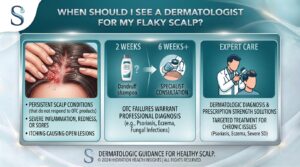
10. When should I stop trying to fix the flaking at home and see a dermatologist?
If you have used a high-quality clarifying shampoo and cut back on styling products for 3 consecutive weeks without seeing any reduction in flaking, or if your scalp becomes intensely red, painful, or starts to ooze fluid, stop home treatments and consult a professional dermatologist immediately.
Conclusion
Clearing up white flakes is all about accurately identifying what is happening on your skin. While it is easy to assume that every flake is a sign of dandruff, a large percentage of people are simply dealing with a buildup of their favorite styling creams, dry shampoos, and silicones. By introducing a dedicated clarifying routine, switching to clean, water-soluble ingredients, and keeping styling products away from your roots, you can easily clear away build-up and reveal a fresh, clean, and perfectly balanced scalp.