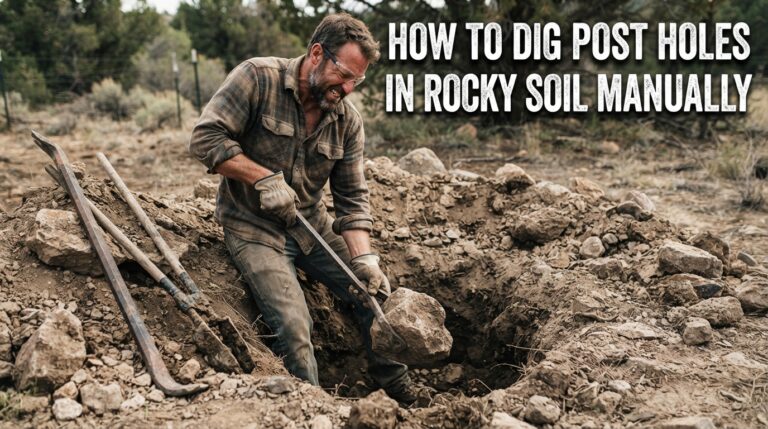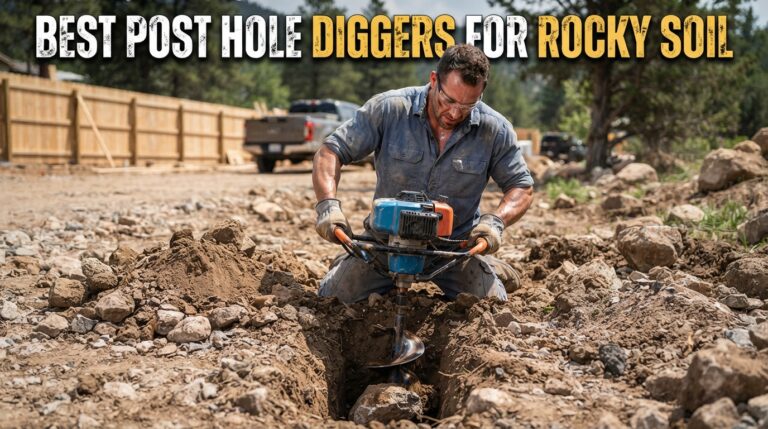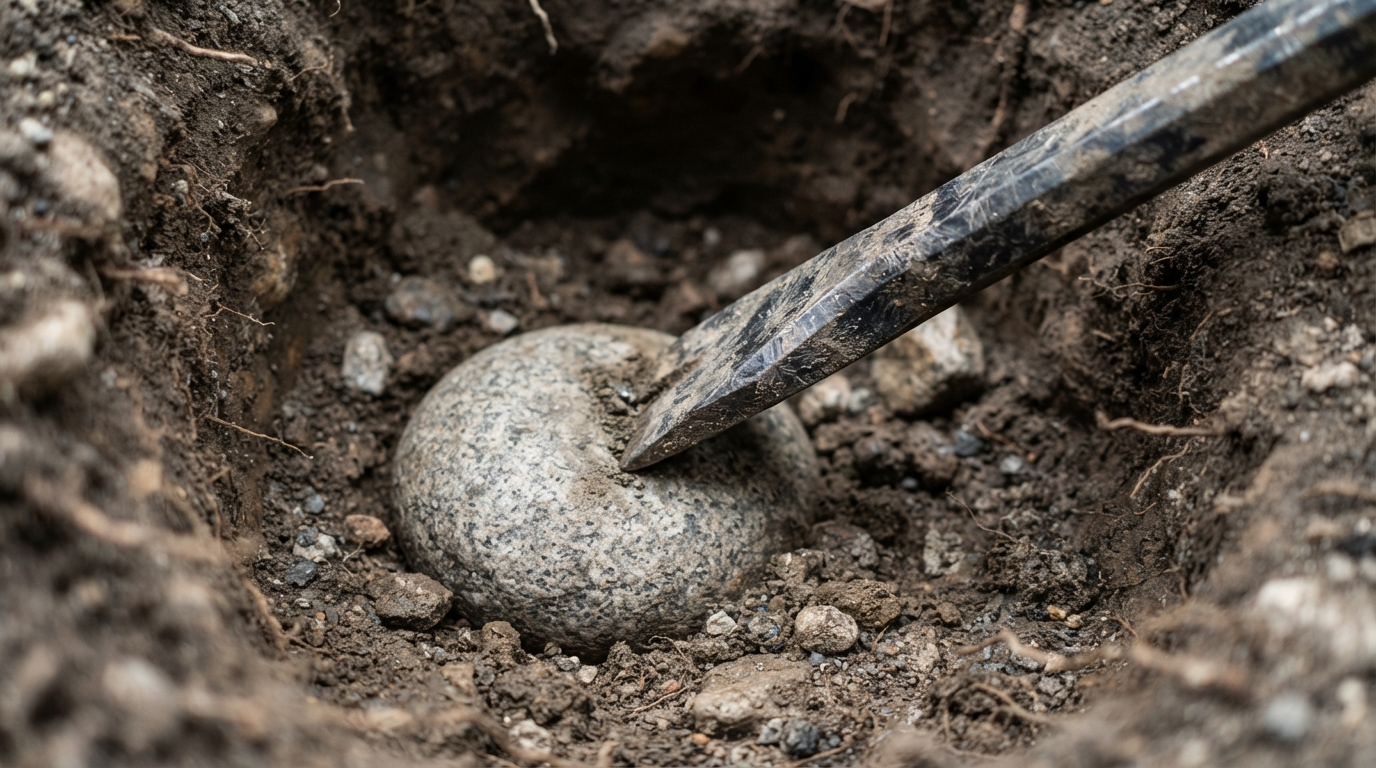
How do I prevent my digging bar from slipping when hitting round stones? There are few sensations more jarring during a weekend landscaping project than lifting an 18-pound solid steel digging bar, driving it downward with all your strength into a post hole, and watching it violently glance off a smooth, rounded stone. Instead of shattering the rock, the bar skids sideways, jars your wrists, rattles your elbows, and leaves you standing ankle-deep in dirt wondering how you are ever going to sink that fence post.
Whether you are battling the smooth glacial cobbles tucked beneath the topsoil in New York and Washington, navigating alluvial river stones in California and San Francisco, or breaking through embedded gravel layers in Texas, dealing with rounded stones is the ultimate test of patience for property owners. When a digging bar slides off a curved stone, it wastes precious energy and creates a safety hazard.
This comprehensive guide explores the physics of glancing blows, details proven techniques to keep your bar locked onto target, reviews top-rated excavation tools, and provides expert tips to conquer rounded stones without injury.
The Physics of the Slip: Why Round Stones Defeat Vertical Strikes
To solve the problem of a slipping digging bar, you first need to understand why it happens. A standard San Angelo bar features a heavy shaft ending in a flat tamper on one side and a pointed or chiseled edge on the other.
When you drop or drive this bar vertically into the earth, it relies on kinetic energy to fracture material. However, geology rarely cooperates:
- The Apex Deflection: When your bar hits the curved, smooth apex (top crown) of a rounded glacial cobble or river stone, there is no flat surface to absorb the impact. The vector of force is split outward rather than downward.
- The Coefficient of Friction: Smooth, water-worn stones coated in wet clay act like ball bearings. The steel tip cannot find microscopic purchase, causing it to slide instantly along the stone’s curve.
- The Wrist-Jarring Recoil: Instead of transferring energy into the stone, the glancing blow sends torsional shockwaves directly back up your forearms, causing fatigue, blisters, and potential joint strain.
Proven Techniques to Stop Your Digging Bar from Slipping
Stopping your bar from slipping is not about using more brute force; it is about changing your geometry and strike angle. Implement these four field-tested techniques when you encounter rounded stones:
1. The Offset Shoulder Strike (Hit the Side, Not the Top)
Never drop your bar directly onto the center peak of a rounded stone. Instead, tilt the bar slightly and drive the chisel or point into the lower shoulder curve of the stone. Striking the slope at a 45-degree angle converts your downward stroke into a wedging action, initiating a shear fracture rather than sliding off the top.
2. Create a “Purchase Point” with a Cold Chisel
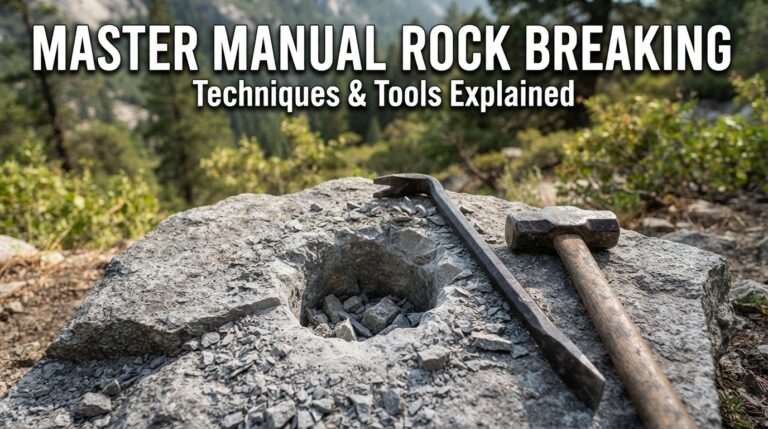
If you are dealing with an exceptionally hard, perfectly smooth granite cobble, trying to break it by dropping a bar repeatedly will only wear you out. Take a 2-inch masonry cold chisel, place it firmly against the side of the stone, and strike it two or three times with a sledgehammer to chip a small flat notch or indent. Once you establish this tiny purchase point, your digging bar tip will lock right into the notch without slipping.
3. Switch from Pounding to Wedging and Prying
If a round stone is medium-sized (the size of a grapefruit or cantaloupe), stop trying to smash it. Instead, wedge the chisel end of your digging bar underneath or beside the stone where it meets the dirt wall of the hole. Use the compacted earth wall as a fulcrum and pry upward. Leveraging rounded stones out whole is often three times faster than trying to fracture them in place.
4. Flood the Hole to Create Hydraulic Friction
Dry, dusty stones roll and slide easily. Pouring a gallon of water into your post hole before striking creates a slurry of fine silt and clay. This wet paste acts as a stabilizing agent, preventing stones from shifting or spinning when your bar makes contact.
Product Reviews: Best Digging Bars and Rock-Breaking Tools
Having a high-quality, well-designed digging bar with a properly shaped chisel edge drastically reduces slippage compared to cheap, worn-down tools. Here are the top-rated excavation bars on the market.
1. True Temper 69-Inch San Angelo Bar (18 lbs)
- Design & Materials: Forged solid high-carbon steel featuring a precise, flat-angled chisel tip on one end and a tamping head on the other.
- Best For: Heavy-duty impact breaking and wedging round stones.
- Review: The True Temper San Angelo bar is the gold standard for contractors and landowners. Unlike cheap bars with rounded or blunt tips, the factory-ground chisel edge on this bar bites cleanly into stone imperfections rather than glancing off.
- Pros: Optimal 18-pound weight; sharp factory chisel edge; virtually indestructible solid steel.
- Cons: Requires upper-body endurance for extended overhead lifting.
- Rating: 4.9 / 5
2. Vaughan 5-Foot Tamper and Digging Bar
- Design & Materials: Drop-forged American steel with a reinforced pinch-point and chisel design.
- Best For: Prying stubborn embedded boulders and cobbles out of narrow post holes.
- Review: Vaughan designs this bar with a slight pinch-point curve near the tip. This curvature allows you to hook and wedge underneath rounded stones with superior mechanical leverage, preventing the bar from slipping out of position.
- Pros: Excellent grip geometry; heavy-duty forged construction; superior prying leverage.
- Cons: Slightly heavier than standard homeowner bars.
- Rating: 4.8 / 5
3. TEKTON 12-Inch Masonry Cold Chisel with Guard
- Design & Materials: Premium high-carbon steel with an integrated rubber hand guard.
- Best For: Creating starter notches on slick rounded stones.
- Review: When your digging bar keeps slipping off smooth river rocks, pairing it with this heavy-duty cold chisel allows you to fracture the stone surface manually before returning to your bar.
- Pros: Built-in hand guard protects fingers from hammer strikes; exceptionally sharp tip.
- Cons:* Requires carrying a secondary hammer/chisel combo into the trench.
- Rating: 4.7 / 5
Comparison Table: Digging Bars & Rock Tools
| Tool Name | Weight | Tip Design | Best Use Case | Anti-Slip Performance |
| True Temper San Angelo Bar | 18 lbs | Chisel & Tamper | General rock breaking & post holes | High (Sharp factory angle bites well) |
| Vaughan Pinch-Point Bar | 16 lbs | Pinch-Point & Chisel | Prying out embedded boulders | Excellent (Hook geometry prevents sliding) |
| TEKTON Cold Chisel | 3 lbs | Flat Masonry Wedge | Scoring starter notches in slick stone | High (Precision manual placement) |
| Pick Mattock | 6 lbs | Point & Cutter Adze | Chipping fractured shale & gravel | Moderate (Good for surrounding dirt) |
Step-by-Step Guide: How to Extract Slippery Rounded Stones
When you encounter a nest of smooth glacial cobbles in your post hole, follow this step-by-step extraction protocol:
- Clear the Surrounding Soil: Use a narrow trowel or garden spoon to scoop away the loose dirt surrounding the top curve of the stone. Expose at least the upper third of the cobble.
- Determine the Stone’s Orientation: Inspect the stone to see if it is a solitary pebble or part of an interlocking shelf.
- Establish a Biting Angle: Tilt your San Angelo bar at a 30 to 45-degree angle. Position the chisel tip against the side flank of the stone rather than straight above the crown.
- Drive and Wedge: Drop the bar firmly into the flank. Because you are striking at an angle, the chisel will bite into the surface rather than glance off.
- Pry Upward: Once the chisel is seated, push down on the top of the bar to use the hole wall as a fulcrum, lifting the rounded stone out of its socket.
- Scoop and Repeat: Remove the loosened stone immediately with your hands or a shovel before dropping your bar in again.
State-by-State Considerations: Texas, New York, California, Washington, & San Francisco
Geological diversity across your target regions changes how rounded stones behave under excavation.
Texas
- Challenge: While Texas is famous for caliche and limestone, regions near river basins feature smooth, rounded alluvial gravel.
- Strategy: These round gravel stones slip easily. Use a pointed digging bar tip rather than a flat chisel to pinpoint cracks between clustered gravel stones.
New York & Washington
- Challenge: Glacial till deposits left behind massive fields of rounded, water-polished granite and gneiss cobblestones embedded in dense clay.
- Strategy: Glacial cobbles are notoriously slippery. The offset shoulder-strike technique is mandatory here; vertical drops will bounce off every time.
California & San Francisco
- Challenge: Alluvial valley soils and hillside slide zones packed with weathered, rounded river rock.
- Strategy: In San Francisco and surrounding Bay Area clay-loam soils, rounded stones often sit in loose pockets. Focus on prying them sideways rather than hammering them vertically.
10 Expert Tips to Master Rocky Soil Excavation
- Never Slam Your Bar Blindly: Always clear surface dirt so you can see where your bar is landing; blind drops onto hidden round stones guarantee a slipped blow.
- Inspect Your Tool Tip: Over years of use, a digging bar tip rounds off like a pebble. Grind your chisel edge flat on a bench grinder if it has become dull and rounded.
- Wear Shock-Absorbing Gloves: Thick, padded work gloves absorb the micro-vibrations caused by glancing blows, protecting your hands from numbness and blisters.
- Maintain a Wide Stance: Keep your feet wider than shoulder-width when swinging or dropping a heavy bar so that if the tip slips, your balance remains secure.
- Use Water as Lubricant and Binder: Wetting the hole keeps dust out of your eyes and helps lock loose stones into place while you work.
- Don’t Fight Immovable Boulders: If a round stone is larger than your entire post hole and refuses to budge, consider shifting your post 6 inches to the side if your project allows.
- Combine Bar and Shovel: Use the digging bar exclusively to break and pry, and keep your round-point shovel ready to instantly scoop out debris before stones can roll back into place.
- Wear Sturdy Steel-Toe Boots: Heavy digging bars can slip and drop onto your feet. Steel-toe boots are essential safety gear when working in rocky terrain.
- Pace Your Energy: Fighting slippery rocks is frustrating; take a 5-minute break every half hour to maintain muscle coordination and prevent clumsy, dangerous swings.
- Repurpose Round Stones: Save the attractive glacial cobbles and river stones you extract; they make fantastic, natural borders for garden beds and landscaping around your newly installed posts.
Frequently Asked Questions (FAQs)
1. Why does my digging bar keep sliding off round stones?
Your bar slides because striking the smooth, curved apex of a round stone splits your downward force outward rather than absorbing it. To stop this, strike the side shoulder of the stone at an angle instead of dropping straight down.
2. Can I sharpen a dull digging bar tip to prevent slipping?
Yes. If your digging bar tip has become blunt or rounded from years of hitting rocks, use an angle grinder or bench grinder to reshape the chisel edge back to a sharp, flat 45-degree bevel.
3. What is the best tool to use on smooth river rocks in post holes?
A pinch-point digging bar or a San Angelo bar combined with a masonry cold chisel is best. The chisel allows you to score a starter notch, and the bar’s chisel edge provides a wedge to pry the rock out sideways.
4. Should I use the pointed end or the chisel end on round stones?
Use the chisel end. A pointed tip acts like a needle on a ball bearing, causing the bar to glance off slick stone instantly. A flat chisel edge distributes force across a wider surface area and allows for angular biting.
5. How do I remove a round stone that keeps rolling around in my hole?
If a stone rolls freely in the hole, wedge your digging bar tightly between the stone and the side wall of the hole to pin it in place, then use a second tool or your hand to lift it out.
6. Is it safe to drop a heavy digging bar into a rocky hole?
Yes, provided you maintain a firm grip, wear eye protection, and keep your legs safely out of the rebound zone in case the bar glances off a stone and kicks sideways.
7. What causes hand fatigue when using a digging bar in rocks?
Hand fatigue is primarily caused by glancing blows. When a bar slips off a round stone, the sudden torsional recoil travels directly into your wrists and forearms. Striking at an angle eliminates this shock.
8. Can I break a round granite stone with a hammer?
For smaller stones, yes—a 10-pound sledgehammer and a cold chisel can split them. For large embedded boulders, thermal shock or chemical rock-breaking expansion mortar is required, though prying them out is usually faster.
9. Why are glacial cobbles so common in New York and Washington soils?
Glacial till deposits left behind thousands of tons of rounded, water-worn stones swept down from northern mountain ranges during the last Ice Age, creating the rocky subsoils found across the Pacific Northwest and Northeast today.
10. What should I do if a round stone is too deep to pry out?
If a massive rounded boulder sits at the bottom of your hole and cannot be moved, you can build your post foundation directly on top of it by pouring a heavy concrete footer to anchor the post securely against the stone.
Conclusion
Encountering slippery, rounded stones while digging post holes is an inevitable frustration when working in regions like New York, Washington, California, and Texas. However, you don’t have to let glancing blows exhaust your energy and risk your safety. By shifting your strike angle to the stone’s shoulder, creating purchase notches with a cold chisel, switching from pounding to prying, and using a high-quality forged digging bar, you can conquer the slickest river rocks and glacial cobbles. Equip yourself with the right technique, prioritize safety, and you’ll achieve a rock-solid installation every time.