What is the easiest way to dig a post hole in solid rock without power tools? Stepping out onto your property to install a new wooden fence, secure a mailbox, or anchor a backyard pergola is an ambitious weekend project. But the moment your shovel or auger slams into solid, unyielding stone, enthusiasm can quickly turn into sheer frustration. Whether you are battling the concrete-like caliche hardpan of Texas, the glacial till and bedrock shelves of New York, the weathered shale of California, the boulder-strewn earth of Washington, or the rocky urban-fill soils of San Francisco, discovering solid rock where your post hole needs to go is a daunting obstacle.
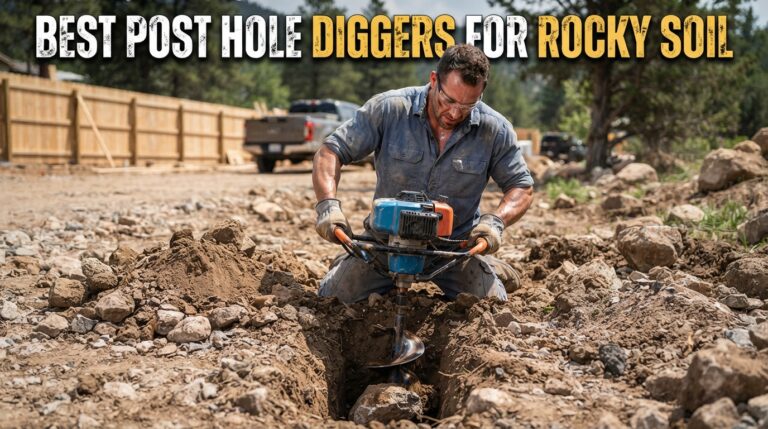
When heavy gas-powered augers are too expensive to rent, unable to fit through narrow backyard gates, or completely stalled by underground stone, many homeowners wonder: Is there an effective way to get through solid rock using purely manual methods?
The short answer is yes. While you cannot dig through solid stone with standard dirt shovels, you can conquer rock using the time-tested “Fracture, Pry, and Scoop” method, powered by heavy impact hand tools and strategic physics. This comprehensive, 3000-word guide explores manual rock excavation techniques, reviews the best heavy-duty hand tools on the market, provides step-by-step instructions, and outlines expert tips to help you sink rock-solid posts without a machine.
Understanding the Geology: Why Rock Defies Standard Tools
To successfully dig through solid rock or hard stone layers without power equipment, you must understand how rock reacts to force. Unlike soil, which can be sheared and scooped, solid stone has high compressive strength but relatively low tensile and shear strength.
This means that while you cannot easily “dig” rock, you can shatter it by concentrating heavy kinetic energy into a small surface area, creating fracture lines that break the stone apart piece by piece.
[ Solid Rock Surface ]
        │
        ▼  (Drop heavy 18-lb San Angelo Bar)
[ Concentrated Impact Fractures Stone ]
        │
        ▼  (Wedge Chisel Under Fragment)
[ Pry Upward with Leverage ]
        │
        ▼
[ Scoop Debris & Repeat ]
Depending on your geographic location across the United States, the type of rock you face will dictate your strategy:
- Texas (Caliche and Limestone): Cemented calcium carbonate layers that act like natural concrete. They require moisture and heavy vertical impact to fracture.
- New York & Washington (Glacial Till and Bedrock): Rounded cobblestones and dense, compact shale shelves. They require wedging leverage to lift stones out sideways.
- California & San Francisco (Sandstone, Serpentine, and Fractured Shale): Brittle layers that respond exceptionally well to wedge chisels and heavy pickaxes.
The Essential Manual Arsenal: Tools for Rock Excavation
If you attempt to dig in solid rock with cheap residential garden tools, you will bend steel shafts, snap wooden handles, and exhaust yourself in minutes. Manual rock excavation requires professional-grade, impact-rated tools designed to transfer raw human power into destructive stone-breaking force.
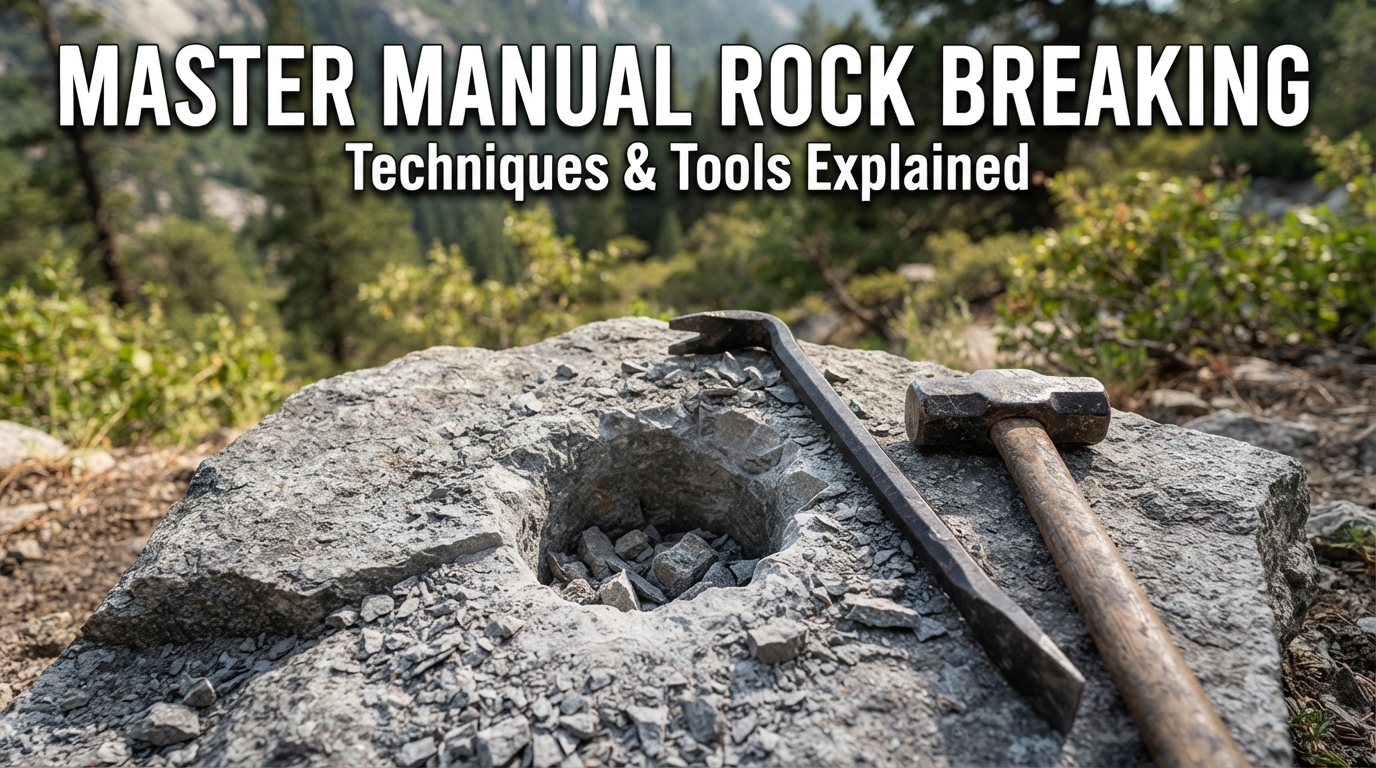
1. The San Angelo Digging Bar (Tamping Bar)
- What it is: A solid, forged steel rod weighing between 15 and 20 pounds, featuring a pointed or chisel end on one side and a flat tamper on the other.
- Why you need it: This is your primary weapon. By lifting it vertically and dropping it like a pile driver into the rock, you generate massive kinetic energy that fractures stone upon impact.
2. The Forged Pick Mattock
- What it is: A dual-headed striking tool featuring a pointed pick on one side for fracturing hard stone and a wide horizontal adze blade on the other for scraping away debris.
- Why you need it: Used to chip away at the fractured edges of your hole and trench around stubborn stone fragments.
3. The Heavy-Duty Cold Chisel and Sledgehammer Combo
- What it is: A 2-to-3-inch wide masonry cold chisel paired with a 10-pound short-handled sledgehammer.
- Why you need it: For precise work when you need to crack a specific ledge or wedge into a tight rock seam.
Product Reviews: Best Manual Tools for Digging in Solid Rock
Investing in rugged, commercial-grade hand tools is the single most important factor for success when tackling solid rock manually. Here are the top-rated tools available to homeowners today.
1. True Temper 69-Inch San Angelo Bar (18 lbs)
- Design & Materials: Forged solid high-carbon steel with a chiseled working end.
- Best For: Delivering gravity-powered impact loads to fracture solid stone and hardpan.
- Review: True Temper’s solid steel bar is virtually indestructible. When dropped vertically into a rocky hole, its 18-pound weight does 90% of the work, fracturing rock surfaces that would immediately bend a standard shovel.
- Pros: Unbreakable solid steel; optimal weight for vertical drop force; chisel tip wedges into stone cracks effectively.
- Cons: Heavy and tiring to lift repeatedly during extended sessions.
- Rating: 4.9 / 5
2. Council Tool 5-Pound Pick Mattock with Fiberglass Handle
- Design & Materials: Drop-forged high-carbon steel head mounted on a shock-absorbing fiberglass handle.
- Best For: Chipping away fractured rock fragments and slicing through interlaced roots.
- Review: Council Tool is renowned for rugged forestry and digging equipment. This mattock provides superb leverage. The pick point pierces compacted shale, while the wide cutter blade clears out pulverized stone dust with ease.
- Pros: Extremely durable forged head; shock-absorbent handle reduces vibration shock to hands; excellent balance.
- Cons:* Requires strong upper-body endurance.
- Rating: 4.8 / 5
3. TEKTON 10-Inch Cold Chisel with Hand Guard
- Design & Materials: Premium high-carbon steel heat-treated with a protective rubber hand guard.
- Best For: Precision splitting of rock ledges and tight bedrock corners.
- Review: When a large rock shelf won’t yield to a digging bar, placing this cold chisel against a fracture line and striking it with a sledgehammer allows you to split the stone precisely where needed.
- Pros: Hand guard prevents accidental hammer strikes; hardened steel tip stays sharp; highly durable.
- Cons:* Requires two-handed coordination (hammer + chisel).
- Rating: 4.7 / 5
Comparison Table: Manual Rock-Digging Tools
| Tool Name | Weight | Primary Action | Best Used For | Physical Demand |
| San Angelo Digging Bar | 15–20 lbs | Vertical drop / Chisel | Cracking flat rock & hardpan | High (Vertical lifting) |
| Pick Mattock | 5–7 lbs | Chipping / Prying | Breaking shale & clearing debris | Moderate-High |
| Sledgehammer & Chisel | 10–12 lbs | Precision impact splitting | Cutting ledges and tight cracks | Moderate |
| Long-Handled Shovel | 5–6 lbs | Scooping | Removing pulverized stone dust | Moderate |
Step-by-Step Guide: The “Fracture and Pry” Manual Method
When you encounter solid rock in your post hole, abandon the shovel and follow this proven manual excavation sequence:
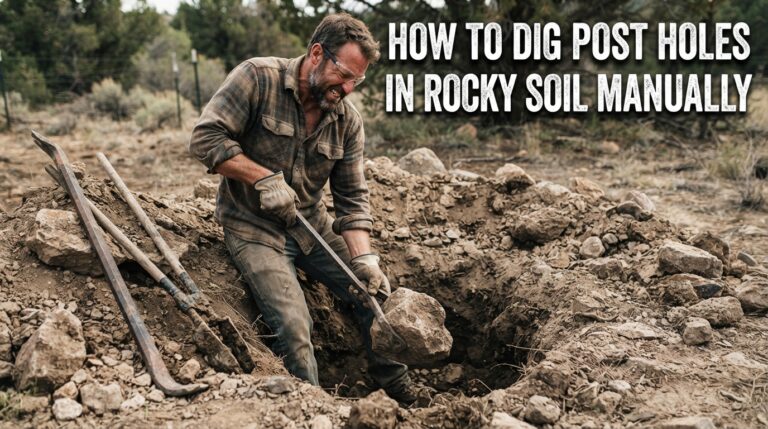
- Mark and Widen the Hole Perimeter: Spray paint a circle that is 3 times the diameter of your post (e.g., a 4-inch post needs a 12-inch wide hole). A wider hole provides the working clearance necessary to swing tools and angle your digging bar.
- Clear Loose Topsoil: Scoop away any loose dirt until the solid rock or hard stone layer is fully exposed.
- Deploy the Vertical Drop (The Digging Bar): Lift your 18-pound San Angelo bar and drop it vertically, driving the chisel tip directly into the center of the rock surface. Repeat this 20 to 30 times in a tight pattern. The kinetic energy will begin to spider-web and fracture the stone.
- The Water Softening Trick (Crucial Tip): Pour 1 to 2 gallons of water into the hole. When you drop your digging bar into the wet stone slurry, the water creates a hydraulic shock effect that accelerates rock fracturing while washing away blinding stone dust so you can see your progress.
- Chisel and Wedge: Switch to your pick mattock or cold chisel and sledgehammer to chip away at the loose rock shards created by the bar. If you see a crack, wedge the chisel end of your bar into it and lever it sideways to pop out large chunks.
- Scoop and Repeat: Use a heavy-duty round-point shovel or a small hand trowel to scoop out the broken gravel and stone dust. Repeat the Drop $\rightarrow$ Wet $\rightarrow$ Pry $\rightarrow$ Scoop cycle until you reach your target depth (typically 24 to 36 inches).
State-by-State Considerations: Texas, New York, California, Washington, & San Francisco
Geological variations across your target regions change how manual rock excavation behaves.
Texas
- Challenge: Caliche hardpan and dense limestone layers.
- Strategy: Caliche is calcium-cemented gravel. Pouring water or a mild vinegar solution onto the caliche 24 hours before digging softens the chemical bonds, making it drastically easier for your digging bar to shatter the stone.
New York
- Challenge: Glacial till, erratic boulders, and dense shale.
- Strategy: Do not try to smash large rounded glacial boulders; instead, use your digging bar to wedge underneath them, pry them sideways, and roll them up and out of the wider hole.
California & San Francisco
- Challenge: Weathered sandstone, serpentine bedrock, and sloping hillside lots.
- Strategy: Hillside soils in San Francisco and California are often shallow over bedrock. If you cannot reach full depth due to solid rock shelves, you can anchor your post using surface post-mounting brackets secured directly into the bedrock with heavy masonry expansion bolts.
Washington
- Challenge: Basalt rock outcroppings and glacial gravel matrices.
- Strategy: Basalt is exceptionally hard volcanic rock. Focus your digging bar on natural fracture joints and seams in the rock rather than trying to crush the flat center of a solid basalt shelf.
10 Expert Tips for Digging Through Rock Without Power Tools
- Pre-Soak the Hole: Pour water into your marked hole a day before digging. Hydrated rock and softened clay fracture significantly faster under impact loads.
- Dig Wider, Not Just Deeper: If a rock refuses to break, widen the hole diameter by 2 to 3 inches. This gives your digging bar the angle clearance required to strike with maximum efficiency.
- Let Gravity Do the Work: Never swing a San Angelo bar like a baseball bat. Lift it vertically and let its 18-pound weight drop naturally; this saves your back and prevents muscle strain.
- Wear Padded Leather Gloves: Striking solid rock with heavy iron tools sends violent shockwaves up your arms. Thick, shock-absorbing work gloves prevent painful blisters.
- Protect Your Eyes: Breaking rock with steel tools generates high-velocity stone chips. Always wear ANSI-rated safety glasses.
- Use Wedges for Directional Splits: If a rock splits unevenly, drive two cold chisels into opposite sides of the crack simultaneously to force a clean break.
- Repurpose Excavated Stone: Save the rock fragments you pull out of your holes; they make excellent base drainage gravel or decorative borders for your landscaping.
- Compensate for Shallow Depth with Concrete: If solid rock stops you at 18 inches instead of 24 inches, build a wider, heavy-duty concrete collar around the base of the post to make up for the lost depth with mass stability.
- Pace Your Labor: Rock excavation is intense anaerobic exercise. Work in 20-minute blocks with water breaks to avoid heat exhaustion or physical burnout.
- Check for Underground Utilities: Even in rocky soil, always call 811 to have underground utility lines marked before driving heavy steel bars deep into the earth.
Frequently Asked Questions (FAQs)
1. What is the easiest way to dig a post hole in solid rock without power tools?
The easiest manual method is the “fracture, pry, and scoop” technique using an 18-pound San Angelo digging bar dropped vertically to shatter the stone, a cold chisel to split cracks, and water poured into the hole to create a hydraulic softening effect.
2. Can I rent a manual auger that cuts through rock?
No. Standard manual earth augers and one-man gas augers will stall, kick back violently, or shear their drive pins the instant they hit solid stone. Manual hand tools are the only reliable option when power augers fail.
3. What should I do if a boulder is too massive to remove from the hole?
If an immovable bedrock shelf or massive boulder blocks your progress and you cannot reach standard depth, you can anchor your post at a slightly shallower depth by using heavy-duty steel post brackets bolted directly into the rock using concrete masonry anchors.
4. How deep must a post hole be if I am digging in solid rock?
In standard soil, a hole is 36 inches deep (one-third the post length). However, because solid rock provides vastly superior holding power compared to loose dirt, an 18-to-24-inch hole drilled securely into solid bedrock or hardpan is often structurally sufficient if locked in with fast-setting concrete.
5. Should I use concrete when setting posts in rock holes?
Yes. Concrete is essential in rock holes because the excavated walls are irregular and filled with loose stone shards. Fast-setting concrete flows into every crevice, locking the post and surrounding stone into a monolithic, unyielding anchor block.
6. How do I prevent my digging bar from glancing off rounded stones?
Rounded glacial boulders cause chiseled bars to slide sideways. To prevent this, angle your bar so the chisel point strikes the side curve of the stone rather than the top center, creating a wedge-splitting action that cracks the rock instead of slipping.
7. Is it worth renting a manual demolition jackhammer for post holes?
If you are digging multiple post holes through solid limestone or basalt, renting an electric or pneumatic demolition breaker (jackhammer) with a narrow spade bit will save you hours of grueling manual labor compared to hand-barring.
8. Why is my standard clamshell post-hole digger useless in rock?
Clamshell diggers are designed exclusively to shear through soft, cohesive soils like clay and loam. When slammed into rock, their blades cannot bite, and their metal handles warp instantly. Use them only after the rock has been pulverized into loose gravel.
9. How do I keep water from pooling in rocky post holes?
Rocky soils often trap water in perched subterranean pockets. To prevent wooden posts from rotting prematurely, pour a 4-inch layer of crushed drainage gravel at the bottom of the hole before placing your post.
10. Can I shift my post location if I hit an impenetrable rock?
Yes. If your project layout allows for a minor adjustment of 6 to 12 inches in either direction, shifting your post location can often completely bypass a localized boulder, saving you hours of heavy rock excavation.
Conclusion
Digging a post hole in solid rock without power tools is undeniably tough physical labor, but it is entirely achievable with the right strategy. By swapping out useless shovels for heavy-duty impact tools like an 18-pound San Angelo bar, utilizing the water-softening trick, and applying smart leverage principles, you can shatter and clear stubborn stone. Whether you are building a fence in Texas, setting a deck support in New York, or securing a gate in California, patience and the “fracture and pry” method will deliver a rock-solid installation that stands firm for decades.