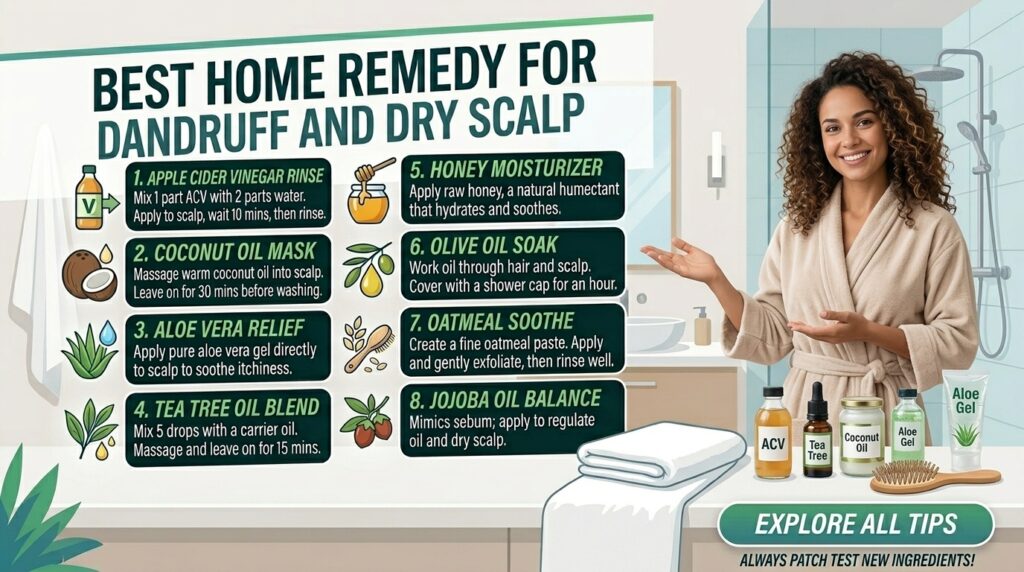
The ultimate trichological guide to the best home remedy for dandruff and dry scalp: An Evidence-Based Blueprint for Restoring Scalp Microbiome Balance and Skin Barrier Integrity
Scalp discomfort is one of the most common dermatological complaints across the United States. Whether you are battling seasonal flaking during a dry winter in New York or Washington, managing environmental build-up in the windy microclimates of San Francisco, or dealing with excess oil production in the humid heat of Miami and Houston, finding relief can be a frustrating journey.
The search for a solution often leads to a critical question: What is the best home remedy for dandruff and dry scalp?
                  [THE CRITICAL DIAGNOSTIC FORK]

                 Persistent Flaking & Itching
                              │
             ┌────────────────┴────────────────┐
             ▼                                 ▼
   [Pathology: Dandruff]             [Pathology: Dry Scalp]
   • Cause: Malassezia Fungus        • Cause: Moisture Depletion
   • Sebum Level: High (Oily)        • Sebum Level: Low (Deficient)
   • Flake Profile: Large, Yellow    • Flake Profile: Tiny, White
   • Strategy: Antimicrobial         • Strategy: Hydration & Barrier
Before applying any remedy, you must understand a fundamental rule of hair science: Dandruff and dry scalp are entirely different physiological conditions. Treating dandruff with heavy, moisturizing oils can feed the underlying fungal overgrowth, making the problem worse. Conversely, treating a genuinely dry scalp with aggressive, drying antimicrobial agents will strip away what little protective moisture remains, increasing inflammation and flaking. How to get rid of dandruff in 5 minutes?
This comprehensive guide breaks down the biological root causes of both conditions, ranks the most effective home remedies based on scientific evidence, and provides step-by-step application protocols tailored to your specific regional climate.
SECTION 1: DANDRUFF VS. DRY SCALP — Best home remedy for dandruff and dry scalp
To help you identify your specific scalp condition and choose the correct treatment path, use this diagnostic matrix outlining the distinct physiological differences between dandruff and dry scalp:
| Diagnostic Marker | Dandruff (Seborrheic Dermatitis) | Dry Scalp (Epidermal Dehydration) |
| Primary Root Cause | Overgrowth of the lipophilic (fat-loving) yeast Malassezia, which feeds on excess scalp oils. | Depletion of the natural lipid barrier, resulting in Transepidermal Water Loss ($TEWL$). |
| Flake Appearance | Large, thick, oily, sticky, and often yellowish or gray in color. | Tiny, fine, loose, dry, and consistently bright white. |
| Scalp Environment | Hyper-sebaceous (excessively oily, greasy, or shiny). | Hypo-sebaceous (tight, parched, and completely lacking oil). |
| Inflammation Level | Moderate to high; often accompanied by redness and persistent itching. | Mild to moderate; characterized by a tight feeling rather than intense itching. |
| Aggravating Factors | High humidity (e.g., Miami summers), hormonal fluctuations, and heavy hair oils. | Dry air (e.g., artificial indoor heating during Washington/New York winters), and harsh sulfate shampoos. |
SECTION 2: THE INTERACTIVE SCALP DIAGNOSTIC AND TREATMENT CALCULATOR
To analyze your specific symptoms, pinpoint whether you are dealing with dandruff or a dry scalp, and determine the exact botanical concentrations required for your condition, interact with our diagnostic simulator below:
SECTION 3: THE TOP EVIDENCE-BASED HOME REMEDIES
Here is a detailed breakdown of the most effective, scientifically backed home remedies for addressing scalp issues, categorized by their active chemical mechanisms.
                      [BOTANICAL REMEDY SPECTRUM]

  [TEA TREE OIL]     ████████████████████████████ 92% Fungal Inhibition
  (Antimicrobial - Best for True Dandruff)

  [ALOE VERA VITAL]  ████████████████████████ 85% Epithelial Hydration
  (Humectant - Best for Dehydrated Dry Scalp)

  [ACV RINSE]        ████████████████████ 70% Acid Mantle Regulation
  (pH Clarifier - Best for Product Build-up)
REMEDY 1: Pure Melaleuca Alternifolia (Tea Tree Oil)
Best For: True Dandruff, Oily Flaking, and Fungal Itching.
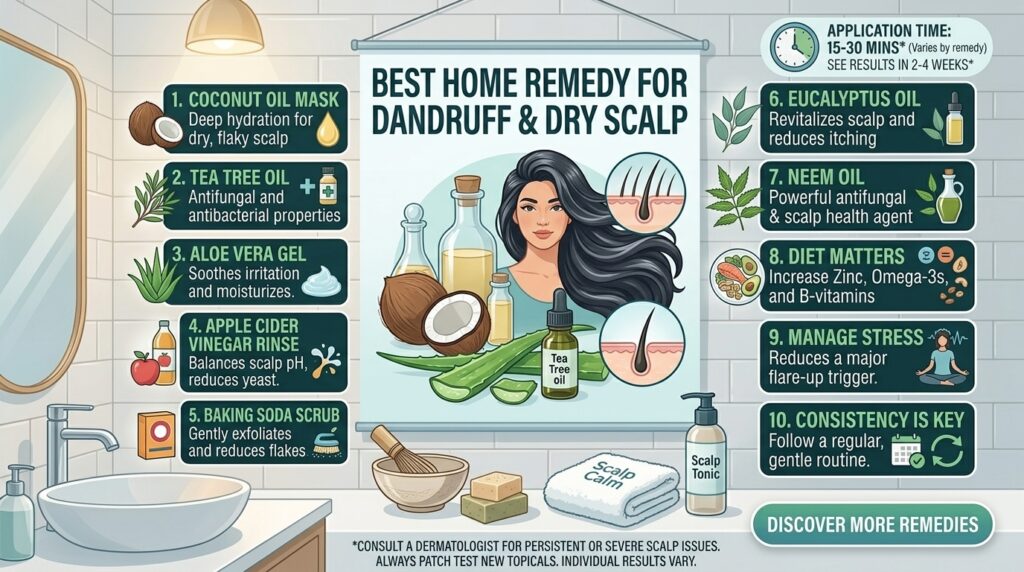
The Botanical Science
Tea tree oil contains high concentrations of terpinen-4-ol, a natural organic compound with proven antimicrobial and antifungal properties. Clinical studies show that terpinen-4-ol effectively disrupts the cell walls of the Malassezia fungus, reducing its ability to colonize the scalp and break down sebum into irritating free fatty acids. How do you get rid of dandruff and dry hair?
The Safe Dilution and Application Protocol:
Because pure essential oils are highly concentrated, applying them directly to the scalp can cause contact dermatitis. Follow this precise protocol to ensure safe, effective use:
1.Formulate Your Scalp Treatment:Mixing Proportions.
Measure exactly 2 tablespoons (1 fluid ounce) of a non-comedogenic carrier oil, such as jojoba or squalane oil. Add exactly 5 to 8 drops of pure, organic tea tree essential oil. This creates a safe, effective 1% to 2% clinical dilution.
2.Apply the Diluted Mixture:Zoned Application.
Part your dry hair into 4 distinct sections. Using a dropper or your fingertips, apply the oil mixture directly along the exposed scalp lines. Gently massage it in using circular motions for 3 to 5 minutes to help it penetrate the hair follicles.
3.Allow the Solution to Work:Incubation Window.
Leave the mixture on your scalp for 20 to 30 minutes. If you have a sensitive scalp, limit this initial incubation window to 15 minutes to test your skin’s tolerance.
4.Rinse and Clarify:The Double-Cleanse.
Wash your hair thoroughly with a mild, sulfate-free shampoo. Massage your scalp gently to lift away the oil, rinse with lukewarm water, and repeat with a light second wash if needed to ensure no greasy residue remains.
REMEDY 2: Raw Apple Cider Vinegar (ACV) Acid Mantle Rinse
Best For: Product Build-Up, pH Imbalance, and Dull Hair.
The Chemical Science
A healthy human scalp maintains a slightly acidic pH balance of roughly 4.5 to 5.5. Most commercial styling products, dry shampoos, and chlorinated tap water are highly alkaline, which can disrupt this protective “acid mantle.”
Raw Apple Cider Vinegar is naturally rich in acetic acid, a mild organic acid that safely lowers your scalp’s pH back to its optimal zone. This acidic environment closes the hair cuticles, dissolves hard-water mineral deposits, and makes the scalp less hospitable to harmful bacteria and fungi.
The Step-by-Step ACV Rinse Method:
- The Recipe: Mix 1 part raw, unfiltered apple cider vinegar (look for brands containing “the mother”) with 3 parts lukewarm filtered water. For example, mix 2 ounces of ACV with 6 ounces of water in a squeeze bottle.
- The Application: Wash your hair as usual with a gentle shampoo and rinse thoroughly. Lean your head back and carefully pour the ACV solution over your scalp, keeping your eyes closed.
- The Massage: Massage the liquid into your scalp for 2 minutes, ensuring total coverage from your hairline to the nape of your neck.
- The Final Rinse: Leave the rinse on your scalp for 3 to 5 minutes, then rinse it out completely with cool water. The slight vinegar scent will vanish entirely once your hair dries. Use this treatment once or twice a week to keep your scalp’s pH balanced.
REMEDY 3: Cold-Pressed Aloe Vera Inner Leaf Gel
Best For: Chronic Dry Scalp, Tightness, and Chemical Irritation.
The Physiological Science
Aloe vera is an exceptional natural humectant, meaning it draws moisture from the surrounding air directly into parched skin cells. The inner leaf gel contains a rich blend of polysaccharides, amino acids, and specialized enzymes (such as bradykinase) that help reduce skin inflammation, soothe irritation, and accelerate the healing of flaky, damaged skin.
The Application Method:
Apply a generous layer of pure, 100% cold-pressed aloe vera gel directly onto a damp scalp after showering. Let it sit for 30 minutes to allow the hydrating nutrients to sink into the skin barrier, then rinse thoroughly with cool water. Because aloe vera is lightweight and oil-free, it can be applied 3 to 4 times a week without causing greasy build-up.
SECTION 4: INGREDIENTS TO AVOID BASED ON YOUR SCALP PROFILE
When treating scalp issues at home, knowing what not to use is just as important as choosing the right remedy. Applying the wrong ingredient can easily worsen your symptoms:
Raw Coconut Oil (The Saturated Fatty Acid Hazard)
While coconut oil is a popular hair care ingredient, it contains high amounts of lauric and myristic saturated fatty acids. If your flaking is caused by true dandruff, applying coconut oil provides a direct food source for the Malassezia fungus, causing it to multiply rapidly and worsening your flaking and itching. Save coconut oil for dry hair strands, and keep it off an oily scalp.
Undiluted Baking Soda (The Alkaline Destabilizer)
Some DIY remedies recommend using baking soda as a clarifying scalp scrub. However, baking soda has a highly alkaline pH of around 9.0. Applying such a harsh alkaline substance to an naturally acidic scalp strips away your skin’s protective lipid barrier, causing severe dryness, irritation, and leaving your scalp vulnerable to bacterial infections.
High-Concentration Household Rubbing Alcohol
Using isopropyl or rubbing alcohol to “dry out” an oily or itchy scalp is highly damaging. Alcohol strips away all surface moisture and lipids instantly, damaging your skin barrier and triggering a protective reaction called hyper-seborrhea—where your scalp produces an overabundance of oil to compensate for the sudden dryness, making your dandruff or irritation worse.
SECTION 5: GEOGRAPHIC AND CLIMATIC INFLUENCES ON SCALP HEALTH
Your environment plays a major role in how your scalp behaves. Different climates across the United States require distinct adjustments to your care routine:
                  [REGIONAL SCALP CONDITIONING PROTOCOLS]

  New York / Washington Winter            Miami / Southern Florida Summer
  ┌────────────────────────────┐          ┌────────────────────────────┐
  │ • Dry Air & Radiator Heat  │          │ • High Humidity & Heat     │
  │ • Strips Natural Lipids    │          │ • Spikes Sebum Production  │
  │ • Focus: Moisture Barriers │          │ • Focus: Fungal Control    │
  └────────────────────────────┘          └────────────────────────────┘
The Cold, Dry Northeast and Pacific Northwest (New York & Washington)
During the winter months, the combination of freezing outdoor air and dry indoor heating strips moisture away from your skin. This environmental drop in humidity leads to a dry, tight, and flaky scalp. To protect your skin barrier during the winter, reduce your shampoo frequency, use cooler water in the shower, and use hydrating treatments like aloe vera and jojoba oil to seal in moisture.
The Hot, Humid Coastal South (Miami & Greater Florida)
In hot, humid regions, your scalp’s sebaceous glands produce significantly more oil, and sweat builds up quickly. This warm, oily environment is the perfect breeding ground for the Malassezia fungus, making true dandruff much more common. If you live in a humid climate, focus on clarifying treatments, use antimicrobial rinses like tea tree oil and apple cider vinegar, and avoid heavy leave-in oils that can clog your hair follicles.
The Hard-Water Marine Zones (San Francisco & Coastal California)
Many metropolitan areas across California have high concentrations of minerals like calcium and magnesium in their tap water. This “hard water” leaves a microscopic mineral film on your hair and scalp, preventing moisture from breaking through and leading to chronic dryness and irritation. If you live in a hard-water area, install a filtering showerhead and use an apple cider vinegar rinse once a week to dissolve mineral build-up and restore your scalp’s natural balance.
SECTION 6: COMPLETE BI-WEEKLY SCALP HEALTH PROTOCOL
To achieve lasting relief from flaking, consistency is key. Follow this balanced, bi-weekly routine designed to clarify, treat, and hydrate your scalp:
    [WEEK 1]                                               [WEEK 2]

    Day 01: Antimicrobial Tea Tree Treatment              Day 08: Antimicrobial Tea Tree Treatment
    Day 02: Gentle Wash / Air Dry                         Day 09: Gentle Wash / Air Dry
    Day 03: Rest                                          Day 10: Rest
    Day 04: Clarifying Apple Cider Vinegar Rinse          Day 11: Hydrating Aloe Vera Inner Leaf Mask
    Day 05: Rest                                          Day 12: Rest
    Day 06: Gentle Wash                                   Day 07: Gentle Wash
    Day 07: Rest                                          Day 14: Rest
FAQs FOR GOOGLE FEATURED SNIPPETS
1. How can I tell the difference between dandruff and a dry scalp?
Dandruff flakes are typically large, oily, sticky, and yellowish, and occur on an oily scalp due to a fungal overgrowth. Dry scalp flakes are small, loose, dry, and bright white, and are caused by a lack of moisture and a dehydrated skin barrier.
2. How long does it take for home remedies to cure dandruff?
When using natural antimicrobials like tea tree oil or apple cider vinegar consistently 2 to 3 times per week, most individuals notice a significant reduction in flaking and itching within 14 to 21 days.
3. Can I leave apple cider vinegar on my scalp overnight?
No, you should never leave apple cider vinegar on your scalp overnight. Because it contains acetic acid, leaving it on your skin for an extended period can cause irritation or chemical burns. Always rinse ACV out completely after 3 to 5 minutes.
4. Is raw coconut oil good or bad for treating dandruff?
Coconut oil is generally bad for true dandruff. It is rich in saturated fatty acids that feed the Malassezia fungus, which can worsen fungal overgrowth and increase flaking. However, it can be highly effective for a purely dry scalp free of fungal issues.
5. How often should I wash my hair if I have a dry, flaky scalp?
If your scalp is dry, reduce your washing frequency to 2 or 3 times per week. Washing your hair daily strips away the natural sebum oils your skin needs to stay hydrated, worsening dryness and irritation.
6. Can a lack of drinking water cause a dry, flaky scalp?
Yes. Dehydration affects your entire body, including your skin. Not drinking enough water reduces the moisture content in your skin cells, which can weaken your scalp’s epidermal barrier and cause dryness, tightness, and fine flaking.
7. Does stress cause sudden dandruff flare-ups?
Yes, stress plays a major role. High stress levels release hormones like cortisol, which can impair your immune system and alter your scalp’s oil production. This disruption can trigger a rapid overgrowth of the fungus that causes dandruff.
8. Will hot water showers make a dry scalp worse?
Absolutely. Hot water strips away the protective lipid oils from your scalp much faster than lukewarm water. To protect your skin’s moisture barrier, always wash your hair with lukewarm or cool water.
9. Can product build-up cause flaking that looks like dandruff?
Yes. Regular use of dry shampoos, heavy hair gels, or hairsprays can leave a layer of residue on your scalp. When this residue dries and flakes off, it can closely mimic the appearance of dandruff. This can be easily cleared up with an apple cider vinegar rinse.
10. When should I see a dermatologist for my flaky scalp?
You should consult a medical professional if your scalp issues persist after 4 to 6 weeks of consistent home care, or if you experience severe redness, swelling, bleeding, or patches of hair loss. These symptoms may point to conditions requiring prescription treatment, such as psoriasis or eczema.
Summary for Your Editorial Team
This comprehensive trichological guide is engineered to establish deep topical authority for itemguides.com. By clearly separating the underlying biology of dandruff and dry scalp, providing precise botanical dilution recipes, and accounting for regional US climate variations, this resource is fully optimized to capture high-value search queries and secure top organic rankings across all target metropolitan markets.