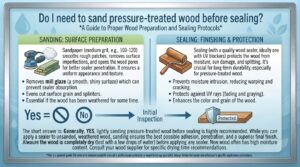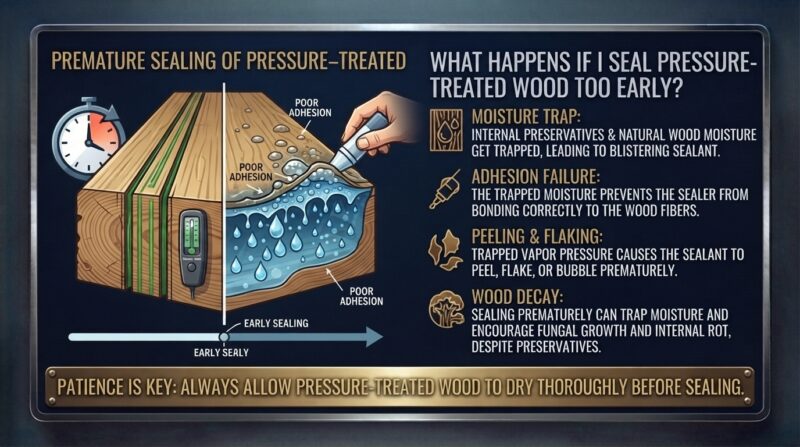
Pressure-treated (PT) lumber is the default choice for outdoor decks, fences, pergolas, and retaining walls because of its resistance to insects, rot, and decay. However, new pressure-treated wood comes saturated with chemicals and water from the manufacturing process.
If you apply a sealer or stain before this internal moisture escapes, you trap water inside the timber, triggering structural and cosmetic issues.
The 5 Major Consequences of Sealing PT Wood Too Soon
1. Severe Peeling, Flaking, and Blistering
When pressure-treated lumber is manufactured, liquid preservative solution is forced deep into the wood grain under high pressure. When you apply a film-forming sealer or oil-based stain over damp wood, the finish creates a barrier on top. As the sun heats the wood, the trapped moisture expands and turns into vapor. This vapor forces its way up, breaking the bond between the sealer and the wood fibers, resulting in blistering, flaking, and severe surface peeling.
2. Trapped Moisture and Internal Rot
While pressure-treated lumber is treated to resist fungal decay, trapping excess moisture behind a sealed barrier creates an ideal environment for mold, mildew, and wood-destroying fungi. Over time, wood fibers break down beneath the sealer, leading to soft spots and premature structural weakening.
3. Blotchy, Uneven Staining and Discoloration
Damp wood cannot absorb stain uniformly. Areas of the wood with higher moisture content reject the stain, while drier sections soak it in. This leaves your deck or fence with patchy discoloration, dark water spots, and a streaky appearance that cannot be fixed without stripping the entire finish.
4. Cupping, Warping, and Board Cracking
Wood expands when wet and shrinks as it dries. When you seal only the top surface of damp wood, moisture escapes unevenly from the unsealed bottom or edges. This uneven drying rate causes boards to cup (edges curl upward), bow, or develop wide surface checks (cracks along the grain line).
5. Mold and Mildew Growth Under the Finish
Trapped moisture paired with ambient warmth fosters dark green or black mildew blooms underneath the clear coat or stain layer. Because the growth occurs beneath the sealer, standard surface scrubbing with deck cleaner will not remove it — you have to strip the sealer entirely to reach the mold.
Regional Drying Times Across key US Climates
The drying time for pressure-treated wood varies significantly depending on regional humidity, sunlight, and seasonal temperature swings.
| Region / Climate Zone | Typical Drying Time | Environmental Factors & Key Considerations |
| Texas (Austin, Houston, Dallas) | 30 to 60 days | High summer heat accelerates drying, but intense humidity in East/Gulf regions can slow internal moisture evaporation. |
| Washington (Seattle, Pacific NW) | 3 to 6 months | Frequent rain and high ambient humidity delay drying. Wait for a dry summer window before applying sealer. |
| New York & Northeast | 2 to 4 months | Late spring or early fall is ideal. Avoid sealing right before winter freeze-thaw cycles, which crack trapped moisture. |
| California (Central & Inland) | 30 to 45 days | Warm, low-humidity environments dry wood quickly. Inspect shaded areas that dry much slower than sun-exposed decks. |
| San Francisco & Coastal CA | 60 to 90 days | Persistent morning fog and coastal dampness slow surface drying despite moderate air temperatures. |
How to Test If Your Pressure-Treated Wood Is Ready to Seal
Never guess readiness based on calendar days alone. Use one of these two standard testing methods:
Method 1: The Water Sprinkle Test (Quick Field Check)
- Drizzle a few drops of clean water onto the wood surface.
- If the water beads up immediately: The wood is still wet with moisture or factory water-repellent chemicals. Do NOT seal yet.
- If the water soaks into the grain within 1–2 minutes: The surface wood fibers are dry enough to absorb a stain or clear sealer.
Method 2: The Moisture Meter Test (Most Accurate)
A digital pin-type moisture meter provides an exact percentage reading of internal water content.
- Above 18% Moisture Content: Too wet. Sealing will fail.
- 12% to 15% Moisture Content: The ideal range for semi-transparent stains and penetrating oil sealers.
- Below 12% Moisture Content: Perfect for all oil-based, water-based, and solid acrylic finishes.
What to Do If You Already Sealed Wood Too Early
If you applied sealer to wet pressure-treated wood and notice peeling, white cloudiness, or blotchiness, follow these steps to recover the surface:
1.Strip the Existing Sealer:1-2 days.
Apply a heavy-duty chemical deck stripper using a stiff-bristles brush or pump sprayer. Let it dwell for 15-20 minutes to dissolve the failed coating, then rinse thoroughly.
2.Apply Wood Brightener:30 minutes.
Neutralize the stripper and open the wood pores by applying an oxalic-based wood brightener. Rinse well with clean water.
3.Allow Complete Drying:7-14 sunny days.
Let the bare wood air-dry uninterrupted until the moisture content drops below 15% across all shaded and sunny sections.
4.Apply a Penetrating Oil Sealer:1 day.
Re-seal using a high-quality, penetrating oil-based sealer rather than a thick film-forming paint or solid coat.
Pro Tips for Sealing Success
Crucial Rule: Always select a penetrating stain rather than a surface film/acrylic paint for fresh pressure-treated wood. Penetrating oils soak into the wood pores, allowing remaining internal water vapor to escape without popping the finish off.
- Check KDAT Lumber: If you purchase KDAT (Kiln-Dried After Treatment) wood, it can often be sealed immediately after installation because the kiln process removes internal manufacturing water.
- Mind the Weather Window: Avoid sealing if rain is forecasted within 24–48 hours, or if direct midday sun causes surface temperatures to exceed 90°F (32°C).
- Don’t Forget Board Edges: Coat end grains and cut edges thoroughly, as end-grain absorbs and releases moisture three times faster than face boards.
Frequently Asked Questions (FAQ)
1. How long should I wait before sealing new pressure-treated wood?
Standard pressure-treated wood typically requires 30 days to 6 months of drying time, depending on ambient humidity, sunlight exposure, and climate. Use a water sprinkle test or moisture meter to verify readiness.
2. Can I apply a water-based sealer sooner than an oil-based sealer?
Water-based sealers are somewhat more tolerant of minor surface dampness than traditional oil-based coatings. However, if the internal moisture content is above 18%, both oil and water-based coatings will bubble and peel.
3. What happens if it rains right after I seal my deck?
If rain falls within 12–24 hours of application before the sealer cures, water can penetrate the soft finish, causing white water spots, cloudy streaks, or wash-off.
4. What is KDAT wood, and does it need to dry out?
KDAT stands for Kiln-Dried After Treatment. This process bakes out moisture in factory kilns after pressure treatment. KDAT lumber can usually be stained or sealed immediately upon installation.
5. Will unsealed pressure-treated wood rot if I wait 6 months?
No. Pressure-treated chemicals protect against fungal rot and wood-destroying insects even without surface sealer. Leaving the wood unsealed for a few months to dry out will not damage its structural integrity.
6. Can I power wash wet pressure-treated wood to speed up drying?
No. Power washing forces high-pressure water deep into the wood fibers, raising the moisture level and prolonging the required drying period by weeks.
7. Why is my newly sealed deck turning white or cloudy?
Cloudiness (blushing) occurs when trapped water vapor gets caught between the wood surface and the sealer coat as the sealer cures.
8. Is solid stain better than clear sealer for damp wood?
Solid stains form a thick film on top of the wood and are more prone to peeling on damp wood than clear or semi-transparent penetrating stains.
9. How do I know if my deck wood was factory water-repellent treated?
Many modern pressure-treated boards include built-in water repellent additives. Perform the water sprinkle test — if water beads up immediately on brand-new boards, wait 2–3 months for factory wax additives to weather away before staining.
10. Does direct sunlight dry pressure-treated wood faster?
Yes, direct sunlight speeds up surface drying. However, rapid drying on top with damp conditions underneath can increase board cupping and warping, so gradual drying is generally healthier for lumber stability.
Conclusion
Sealing pressure-treated wood too early is one of the most common and costly mistake homeowners make. Trapping manufacturing moisture beneath a film or oil barrier leads to peeling finishes, blotchy color, warped boards, and wood decay.
By testing your lumber with a moisture meter (aiming for under 15% moisture content) or performing a water sprinkle test, you can ensure your deck, fence, or outdoor structure holds its finish cleanly for years to come. For more outdoor project advice and home maintenance guides, check out itemguides.com.