The cultural shift away from traditional, synthetic chemical herbicides has led millions of homeowners to look for safer alternatives in their own kitchens. If you pull up any gardening blog or social media platform, you will find a viral, widely recommended recipe for an eco-friendly weed killer: a simple mixture of white distilled vinegar, liquid dish soap (usually blue Dawn), and table salt.
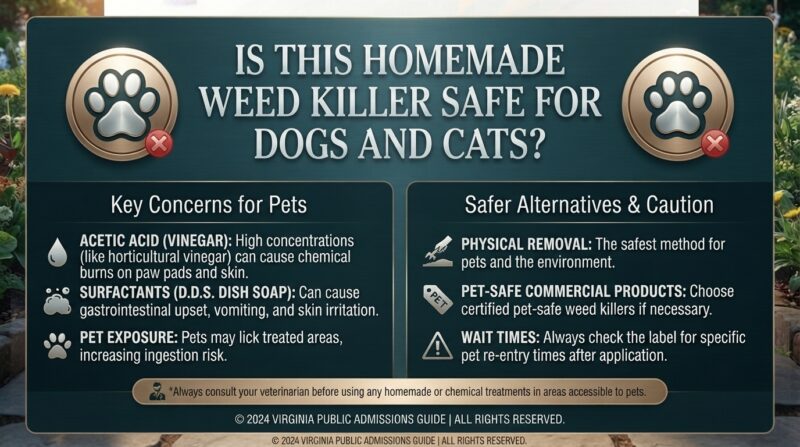
Because these ingredients are common household staples, it is easy to assume they are completely harmless to our furry family members. However, as responsible pet owners, you must ask the critical follow-up question before spraying your entire yard: Is this homemade weed killer safe for dogs and cats?
The short, nuanced answer is yes, the basic mixture of white vinegar and dish soap is generally safe for dogs and cats once it has dried completely on the foliage. However, if you add table salt to the mixture, it transforms into a highly dangerous tracking and ingestion hazard for your pets.
Furthermore, even “natural” components can cause severe eye, skin, and gastrointestinal irritation if your pet walks through or licks the mixture while it is still wet.
This exhaustive guide serves as the ultimate pet-safety manual for itemguides.com readers, breaking down the exact toxicology of DIY herbicides, safe application practices, and how to maintain a beautiful, weed-free lawn without risking a trip to the emergency vet.
The Toxicology: Breaking Down the Ingredients Under the Microscope
To truly understand the safety profile of this popular home remedy, we must evaluate how each individual component interact with a pet’s unique physiology.
1. White Distilled Vinegar (Acetic Acid)
Standard household white vinegar contains roughly 5% acetic acid.
- The Wet Phase Risk: When sprayed raw onto plants, wet acetic acid is a strong local irritant. If a dog or cat brushes past wet, freshly sprayed weeds, the acid can cause localized skin redness, chemical fur bleaching, and painful eye irritation. If they lick the wet leaves, the sharp acidity will typically cause immediate drooling, nausea, vomiting, or minor oral blistering.
- The Dry Phase Profile: Once the sun completely evaporates the liquid, the remaining dried acid residue loses its volatile irritant properties. It poses virtually zero long-term systemic threat to dogs or cats walking across the treated terrain.
2. Liquid Dish Soap (Dawn)
Dish soap functions as a surfactant, breaking the surface tension of the waxy weed leaves so the vinegar can stick and dissolve them.
- The Risk Factor: In small, diluted amounts, modern dish soaps are relatively non-toxic. However, Dawn contains concentrated anionic and nonionic surfactants. If ingested in high quantities via licking treated leaves, it can disrupt the natural lining of a pet’s digestive tract, leading to mild foaming at the mouth, standard diarrhea, and general stomach distress.
3. The Hidden Danger: Table Salt (Sodium Chloride)
Many viral DIY recipes strongly urge you to add a heavy dose of table salt to create a permanent weed-killing barrier. This is where the mixture becomes genuinely dangerous for pets.
- The Toxicity Threshold: When salt dries on patio stones or dirt, it leaves behind a concentrated crust of pure sodium chloride. Dogs and cats can easily pick up these salt crystals on their sensitive paw pads. This causes severe cracking, localized burning, and drying.
- The Ingestion Danger: When pets inevitably lick their burning paws to clean them, they ingest the salt. If a small dog or cat consumes even a small amount of concentrated salt crystals relative to their body weight, they can quickly develop sodium ion poisoning (salt toxicity). This is a severe medical emergency characterized by intense thirst, tremors, seizures, cerebral edema, and potential kidney failure.
DIY Herbicide Pet-Safety Viability Matrix
To help you instantly assess the safety profiles of various home remedies, refer to our structural safety grid below:
| Formula Profile | Safety Status for Wet Exposure | Safety Status After Full Drying | Primary Clinical Pet Risk |
| Pure White Vinegar (5%) | Caution Required | 100% Safe | Minor oral discomfort, eye watering, temporary vomiting if ingested wet. |
| Vinegar (5%) + Dawn Soap | Caution Required | 100% Safe | Mild gastrointestinal foaming, loose stools, minor skin tracking. |
| Vinegar + Dawn + Heavy Salt | DANGEROUS | DANGEROUS | Salt toxicity, severe paw pad erosion, neurological tremors, dehydration. |
| Horticultural Vinegar (20%–30%) | HAZARDOUS | Safe (Verify) | Corrosive tissue burns, blindness risk, severe respiratory tract irritation. |
Step-by-Step Pet-Safe Application Protocol
If you choose to use a natural, salt-free vinegar and Dawn solution to manage your landscape walkways, you must execute a strict safety routine. Follow this sequence to protect your domestic animals completely.
1.Enforce a Strict 100% Salt-Free Ingredient Policy:Phase 1: Verification.
Audit your chosen recipe line-by-line. Strike out any mention of table salt, rock salt, or Epsom salt. If your primary goal is safe weed clearing around active pet zones, stick strictly to a mild combination of standard 5% white vinegar and a minimal dash of dish soap.
2.Secure All Pets Indoors Prior to Spraying:Phase 2: Isolation.
Before walking into the yard with your sprayer, place all dogs and cats inside a secure indoor room. Double-check that all doggy doors, window screens, and patio entries are completely locked down so no curious animal can slip outside during application.
3.Apply the Solution via High-Precision Spot Treatment:Phase 3: Execution.
Pump your sprayer to a tight, directional stream rather than a wide airborne misting pattern. Drench only the specific target weeds close to the ground. This minimizes environmental drift onto surrounding lawns or tracking paths where your pets regularly run.
4.Enforce a 4-Hour Drying Window Before Yard Release:Phase 4: Curing & Release.
Keep your pets indoors for at least two to four hours after spraying. Wait until you have visually inspected the treated weeds and confirmed the liquid has evaporated completely in the sun. Once the leaves are bone-dry, it is safe to open the doors and let your pets back into the yard.
5 Essential Pro-Tips for Pet-First Landscaping
- Steer Completely Clear of Horticultural Vinegar: Standard store-bought kitchen vinegar sits at a safe 5% concentration, but commercial horticultural vinegar runs between 20% and 30% pure acetic acid. This is an industrial-strength corrosive agent. If a dog or cat steps in or inhales horticultural vinegar mist, it can cause immediate, irreversible corneal blindness, agonizing skin blisters, and respiratory tissue scarring. Avoid using industrial-grade acids in yards where pets live.
- Utilize Safe Mechanical Alternatives in Play Zones: For areas where your dogs actively dig or lounge, completely bypass liquid sprays. Instead, invest in a handheld weeding tool or a high-heat propane weed torch. A weed torch instantly boils the water inside the weed cells using pure heat, leaving zero chemical or fluid residues behind for your pet to lick or track into the house.
- Beware of Pests in High-Heat Zones: In warm, sun-drenched states like Texas or California, spraying a mixture containing fragrant, concentrated soaps can sometimes attract curious insects or stimulate a pet’s sensory curiosity. Ensure you use completely unscented, clear soaps to keep the treated area as unappealing to your pet’s nose as possible.
- Learn the Clinical Signs of Poisoning: If you suspect your pet managed to ingest an outdoor home mixture, act fast. Monitor them closely for immediate red flags: excessive, unnatural drooling, pawing continuously at the mouth, pale or bright red gums, sudden lethargy, persistent vomiting, or uncoordinated, wobbly walking patterns.
- Always Keep the Local ASPCA Poison Control Number Handy: Save the direct number for the ASPCA Animal Poison Control Center (1-888-426-4435) into your mobile phone contacts. If your pet consumes any home remedy or unknown outdoor growth, you can get immediate, live toxicology guidance before heading to a regional animal hospital.
Frequently Asked Questions (FAQ)
1. Is vinegar and Dawn safer for pets than traditional commercial weed killers?
Yes, generally. Traditional commercial herbicides often contain strong synthetic compounds that carry strict multi-day tracking restrictions to protect animals. A simple 5% white vinegar and soap blend dries quickly in the sun, presenting a significantly shorter window of potential irritation.
2. Can I add Epsom salt to my weed killer instead of table salt?
No. While Epsom salt (magnesium sulfate) acts differently than standard table salt, it remains an intense laxative and localized irritant. If ingested by dogs or cats licking their paws, it can cause severe diarrhea, profound dehydration, and dangerous magnesium imbalances.
3. What should I do if my dog licks a weed that was just sprayed?
If the solution was a basic, salt-free white vinegar and Dawn mix, immediately flush your pet’s mouth out with fresh, clean drinking water. Offer them a small bowl of water or low-sodium broth to dilute the sour acid taste. Monitor them for vomiting; if distress continues for more than two hours, call your local veterinarian.
4. Will the smell of white vinegar keep my dogs away from the sprayed area?
Yes, fortunately. The sharp, highly pungent odor of acetic acid acts as a natural deterrent for the vast majority of dogs and cats. They will typically sniff the sprayed area once, turn away in distaste, and avoid the zone entirely until the scent dissipates.
5. Can I use apple cider vinegar safely around my pets?
Yes. Apple cider vinegar shares the exact same 5% baseline acidity as white distilled vinegar and is equally safe once dry. However, remember that ACV retains a sweet, fruity undertone that might actually make it more interesting to a curious dog compared to harsh white vinegar.
6. Is original blue Dawn soap toxic to cats?
In the tiny quantities used as a landscaping surfactant, it is not lethal. However, cats are exceptionally sensitive to concentrated detergents during grooming. If a cat gets wet dish soap residue stuck to its fur and licks it off, it will easily trigger oral irritation and digestive upset.
7. How long does it take for the DIY weed killer to dry completely?
On a warm, clear, sunny summer day, a light mist of vinegar and soap will typically evaporate and dry completely within 60 to 90 minutes. On cool, overcast, or highly humid days, extend the indoor pet quarantine window to a full four hours to be absolutely certain.
8. Will salt in the weed killer burn my dog’s paws?
Yes. Dried sodium chloride creates sharp, coarse, abrasive crystals on walking surfaces. As your dog runs across it, the salt strips moisture from their paw pads, leading to painful irritation, deep cracking, and bleeding.
9. Can I spray vinegar around my organic garden if I have outdoor cats?
Yes, provided you keep the cats inside during application and use standard 5% kitchen-grade vinegar. The acid breaks down quickly in the soil and won’t leave toxic chemical tracking loops behind for community or domestic cats once dry.
10. Can this DIY mixture cause permanent blindness in animals?
Standard 5% household kitchen vinegar will cause painful stinging and watering but rarely results in permanent ocular damage. However, industrial 20% to 30% horticultural vinegar is deeply corrosive and can easily cause permanent corneal blindness upon contact with a pet’s eyes.
Conclusion
Transitioning to natural, home-blended property management methods is an excellent step toward creating a healthy, chemical-free home environment. However, “natural” does not automatically mean free of risk. By completely banning toxic table salts from your formulations, upgrading to a strict pet-isolation protocol during the wet application phase, and holding a firm drying window before letting your furry companions out to play, you can confidently protect your pets. Keep your ingredients simple, prioritize mechanical tools in high-traffic pet zones, and build a beautiful landscape that is fully safe for every member of your home.