Mixing up a batch of DIY natural weed killer—using the popular framework of white distilled vinegar, Dawn dish soap, and table salt—is a highly effective way to clear out unwanted driveway vegetation. But unless you have a massive property, you will almost always end up with extra liquid sitting at the bottom of your garden pump sprayer or mixing bucket.
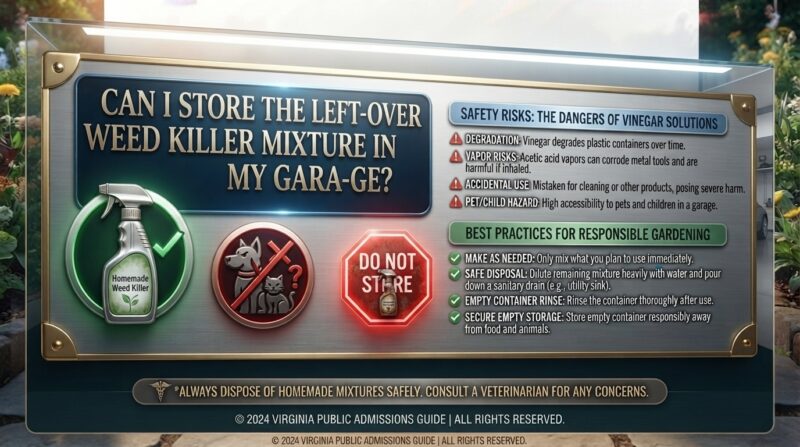
Naturally, you want to set it aside for the next wave of weeds. This leads directly to an important household logistics question: Can I store the leftover weed killer mixture in my garage?
The short answer is yes, you can store leftover homemade weed killer in your garage, but only if you use a high-density polyethylene (HDPE) plastic container and adapt your storage location to protect it from extreme seasonal temperatures.
If you leave the mixture sitting directly inside a cheap metal container or keep it inside a standard garden sprayer with internal metal fittings, the highly corrosive acetic acid will gradually eat through the components, ruining your equipment and causing messy, hazardous leaks on your garage floor.
This comprehensive guide serves as the ultimate chemical preservation manual for itemguides.com readers, breaking down container compatibility, seasonal temperature hazards, and safety best practices to protect your garage and gear.
The Chemistry of Storage: Why Vinegar Destroys Gear
To store your leftover DIY spray without damaging your property, it helps to understand how its core ingredients interact with common storage materials over time.
1. The Corrosive Nature of Acetic Acid
Standard household white vinegar contains roughly 5% acetic acid, while industrial horticultural varieties run anywhere from 20% to 30% acid. While it is completely safe to handle in short bursts, acetic acid is highly corrosive to metals.
- The Damage Mechanism: If left inside a metal watering can or a sprayer with metal wands, steel springs, or brass nozzles, the acid triggers rapid oxidation. Over a few weeks, it will pit the metal, strip away protective coatings, and cause the mechanical seals to fail completely.
2. The Degradation of Rubber Seals
Most standard, low-cost garden pump sprayers use basic rubber O-rings and plungers. Over extended storage periods, the surfactant properties of Dawn dish soap combined with the low pH of the vinegar will slowly degrade, dry out, and crack standard rubber seals. Once these seals rupture, the tank can no longer hold the air pressure required to spray.
Container Compatibility Matrix: Safe vs. Unsafe Materials
Before pouring your leftover weed killer into a random container in the garage, verify the structural material against this master compatibility grid:
| Container Material Type | Compatibility Rating | Long-Term Storage Impact & Risks |
| HDPE Plastic (Code 2) | Perfect (100% Safe) | High-Density Polyethylene completely resists acid corrosion. Ideal for multi-month storage. |
| Glass Jugs | High (Chemical-Safe) | Chemically inert; the acid cannot degrade it. However, it presents a major shattering hazard on hard concrete garage floors. |
| Stainless Steel Tanks | Very Low (Avoid) | Resists minor rust, but prolonged exposure to acidic brines causes microscopic pitting and structural failure. |
| Galvanized / Carbon Steel | DANGEROUS | The acid strips the zinc coating rapidly, causing deep rust, chemical breakdown, and structural tank leaks. |
| Aluminum Foil / Cans | HAZARDOUS | Acetic acid corrodes aluminum instantly, creating chemical off-gassing and rapid structural degradation. |
Step-by-Step Safekeeping Protocols for the Garage
If you want to keep your leftover weed killer intact and ready for the next seasonal treatment wave, follow this precise sequence to guarantee storage safety.
1.Move the Liquid to a Labeled HDPE Container:Phase 1: Container Transfer.
Do not leave your spray sitting long-term in a pressurized pump tank. Pour the remaining solution into a dedicated High-Density Polyethylene (HDPE) jug. Clearly mark the outside of the container with a permanent marker, detailing the exact ingredients and mixing date.
2.De-pressurize and Rinse Your Spray Equipment:Phase 2: Equipment Flush.
Release the air pressure valve on your garden sprayer. Pour out any remaining fluid clings, fill the tank halfway with clean, lukewarm water, and pump it through the spray wand for 60 seconds. This step flushes out lingering acid and soap traces, preserving your internal valves and O-rings.
3.Select a Temperature-Stable Storage Location:Phase 3: Thermal Alignment.
Look for a shelf in your garage that sits completely out of direct sunlight and away from external walls. Avoid setting the container directly onto bare concrete floors, which can transfer extreme cold up into the liquid during winter conditions.
4.Secure the Container Out of Reach of Children and Pets:Phase 4: Safety Isolation.
Place the tightly sealed plastic jug onto a high shelf or inside a lockable storage cabinet. Make sure it sits well away from common household items, automotive fluids, electrical tools, or spaces where domestic animals roam.
5 Essential Pro-Tips for Managing Stored DIY Herbicides
- Watch Out for Severe Texas Heat: In blistering, high-heat summer zones like Texas, enclosed garages can routinely reach internal temperatures well over 100°F (38°C). Extreme heat accelerates chemical reactions, causing the volatile aromatic compounds in the vinegar and dish soap to expand, which can bulge or warp thin plastic storage bottles. Keep your stored containers on lower shelves where the air stays slightly cooler.
- Prevent Hard Freezing in Cold Climates: If you live in cold northern climates like winter in New York or Washington State, uninsulated garages will drop below the freezing mark. Because homemade weed killer is mostly water, it will freeze solid at 32°F (0°C). As it freezes, the liquid expands dynamically and can easily crack plastic containers, leading to a massive, sticky puddle when spring thaw arrives. Move your storage containers into a climate-controlled basement or utility closet before the first deep winter freeze.
- Never Store High-Salt Mixes Long-Term: If your specific DIY weed recipe contains a heavy dose of table salt, try to mix only what you need for immediate application. Over extended storage windows, the dissolved salt will naturally fall out of suspension, forming a thick, hardened crystalline crust at the bottom of the container that is incredibly difficult to dissolve again.
- Agitate Vigorously Before Re-Using: When you retrieve your stored mixture after a few weeks or months, you will notice that the dense, viscous Dawn dish soap has separated from the watery vinegar, settling into a distinct layer at the bottom. Keep the lid secured tightly and shake the container vigorously for 30 seconds to re-emulsify the ingredients before pouring it back into your sprayer.
- Upgrade Your Sprayer to Viton Seals: If you plan on spraying natural, vinegar-based herbicides regularly, stop buying standard cheap garden sprayers. Look for specialized commercial-grade sprayers equipped with Viton seals. Viton is a high-performance synthetic rubber designed specifically to resist aggressive acids and chemical solvents, ensuring your pump setup lasts for years.
Frequently Asked Questions (FAQ)
1. How long does a homemade vinegar and Dawn weed killer stay effective in storage?
If kept in a tightly sealed, dark, and temperature-controlled environment, the mixture will remain fully potent for 6 to 12 months. The acetic acid and surfactant properties do not degrade quickly over time.
2. Can I store the mixture directly inside my plastic pump sprayer?
You can safely keep it inside a high-quality all-plastic pump sprayer for 2 to 3 days during active landscaping projects. However, you should never store it there long-term for months, as the prolonged exposure will gradually erode the rubber gaskets and internal pump springs.
3. Will storing vinegar in the garage create foul odors?
Provided the storage container features a tight, airtight screw-cap lid, it will not release any noticeable odor into your garage. If you notice a sharp, sour scent, inspect the container cap immediately for micro-cracks or loose seals.
4. Is it safe to store horticultural vinegar in a residential garage?
High-strength 20% to 30% horticultural vinegar requires extra care. It is a highly corrosive industrial acid that emits strong, volatile fumes that can irritate your lungs. It should only be stored in its original, heavy-duty commercial plastic packaging on a high, stable shelf well out of reach of children.
5. Can the stored mixture explode or catch fire in a hot garage?
No. Neither white distilled vinegar, table salt, nor standard liquid dish soap are flammable or explosive liquids. They present zero risk of fire or thermal combustion, even when exposed to high summer garage temperatures.
6. What should I do if my stored weed killer freezes solid?
Allow the container to thaw completely in a safe, contained space (like inside a plastic utility tub) at room temperature. Once the liquid has liquefied completely, shake it vigorously to blend the soap and acid back together before use.
7. Can I reuse an old commercial chemical bottle to store my DIY mix?
Yes, provided the old bottle is made of heavy HDPE plastic and has been thoroughly triple-rinsed with clean water to remove any lingering synthetic chemical residues. Always completely scratch out or cover the old label and place a fresh, clear warning label on the bottle.
8. Will the dish soap ruin the container if left for a long time?
Standard liquid dish soaps are perfectly compatible with polyethylene plastics and will not corrode or melt the container structure. The only component at risk is standard rubber padding or low-grade seals found on container caps.
9. Why did my stored weed killer turn cloudy or grow mold?
If you used raw, organic apple cider vinegar or added unpurified organic elements to your mix, microscopic wild yeasts or mold spores can feed on the residual fruit sugars over time. If this happens, filter the liquid through a cheesecloth before use to prevent nozzle clogs.
10. How do I safely dispose of the mixture if I no longer want to store it?
Do not pour large volumes down domestic storm drains or onto active garden soils. The safest disposal method is to simply use up the remaining liquid by spraying it onto unwanted weeds along concrete driveway seams or stone paths on a hot, sunny day.
Conclusion
Storing your leftover DIY weed killer in the garage is a highly practical way to keep your property maintenance routine efficient, provided you choose your storage materials wisely. By bypassing corrosive metal containers completely, transferring extra spray into clearly labeled HDPE plastic jugs, flushing out your application gear immediately after use, and protecting your formulas from extreme summer heat waves and freezing winter conditions, you can safeguard your equipment and property. Keep your storage spaces organized, handle acids with steady care, and keep your natural maintenance solutions perfectly preserved and ready for action.