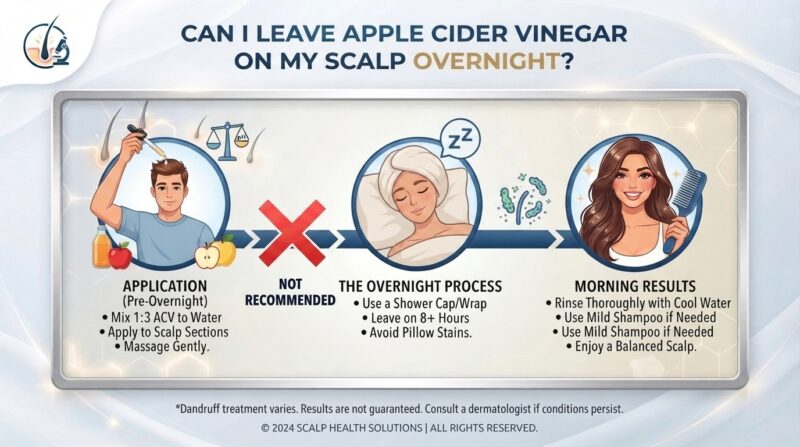
The internet is full of DIY beauty hacks, and apple cider vinegar (ACV) is frequently celebrated as a miracle cure for everything from dull hair to stubborn dandruff. Proponents claim that leaving this acidic kitchen staple on your hair all night long will maximize its benefits, leaving you with a perfectly balanced, flake-free scalp by morning.
However, applying powerful home remedies without understanding the underlying science can easily backfire, turning a well-intentioned treatment into a painful skincare mistake.
This brings us to a crucial question for anyone looking to optimize their hair care routine: Can I leave apple cider vinegar on my scalp overnight?
No, you should never leave apple cider vinegar on your scalp overnight. Apple cider vinegar contains acetic acid, and leaving it on your skin for hours can break down your scalp’s natural moisture barrier, leading to chemical irritation, redness, dryness, and in severe cases, chemical burns.
To get the benefits of ACV safely, you should treat it as a quick, rinse-off treatment rather than a leave-in product.
This comprehensive guide serves as an authoritative diagnostic manual for readers on itemguides.com, breaking down the science of scalp pH, the dangers of prolonged exposure, and how to safely use ACV across different regional climates—from the humid coast of California to the freezing winters of New York.
The Chemical Science: Why ACV Damages Skin Over Time
To understand why an overnight application is dangerous, we have to look at the pH scale and how human skin functions.
1. The pH Dynamic of Your Scalp
A healthy human scalp is naturally slightly acidic, maintaining a pH level of around 4.5 to 5.5. This natural acidity is called the acid mantle, a fine, protective film made of sebum (natural oils) and sweat. The acid mantle acts as your skin’s primary defense system, keeping out harmful bacteria and preventing moisture loss.
2. The Power of Acetic Acid
Pure apple cider vinegar is highly acidic, typically sitting at a pH of 2.0 to 3.0.
- Short-Term Benefits: When used as a brief, diluted rinse, ACV can help lower an elevated scalp pH (often caused by alkaline styling products or hard water), smooth down the hair cuticle, and reduce populations of the yeast that triggers dandruff (Malassezia).
- Long-Term Damage: When left on the skin for 6 to 8 hours overnight, the acetic acid moves past beneficial balancing and begins to aggressively dissolve the lipids (fats) that hold your skin cells together. This strips away your acid mantle, leaving the delicate skin beneath completely exposed to irritation and dehydration.
Exposure Time and Dilution Safety Guide
To protect your skin while still getting the most out of this natural remedy, use our structural safety matrix below to guide your routine:
| Routine Method | ACV-to-Water Ratio | Allowed Application Time | Intended Target Scalp Benefit |
| Standard Clarifying Rinse | 1 tablespoon per 1 cup of water | 1 to 3 minutes (Rinse thoroughly) | Removes styling product buildup; adds shine. |
| Targeted Anti-Dandruff Wash | 2 tablespoons per 1 cup of water | 3 to 5 minutes (Rinse thoroughly) | Balances yeast levels; calms minor itching. |
| Overnight Soaking | Any concentration | Forbidden (0 minutes) | None—causes chemical irritation and skin damage. |
Step-by-Step Protocol for a Safe ACV Scalp Treatment
If you want to add an apple cider vinegar rinse to your weekly personal care routine, you must follow a careful, measured sequence. Use this exact protocol to keep your scalp healthy and protected.
1.Always Blend Your Raw ACV with Clean, Lukewarm Water:Phase 1: Precision Dilution.
Never pour pure, undiluted apple cider vinegar directly onto your head. Mix 1 to 2 tablespoons of raw, unfiltered ACV with a full cup (8 ounces) of clean, lukewarm water in a squeeze bottle or plastic bowl.
2.Apply the Diluted Mixture Directly onto Clean, Damp Skin:Phase 2: Even Distribution.
Wash your hair with your regular gentle shampoo first to clear away surface dirt. Section your hair into even parts and apply the diluted ACV mixture directly onto your damp scalp, keeping it away from your eyes.
3.Massage and Let the Treatment Sit for Under Five Minutes:Phase 3: The Active Window.
Gently massage the liquid into your skin using the pads of your fingers—never use your fingernails, which can scratch the skin. Let the mixture sit for 2 to 5 minutes so the acetic acid can balance your pH and dissolve buildup.
4.Thoroughly Wash Away the Acid with Cool Water:Phase 4: The Final Flush.
Rinse your hair and scalp completely with cool, clean water for at least a full minute. Ensuring all traces of the vinegar are gone stops the chemical exfoliation process, and the cool water helps seal your hair cuticles for extra shine.
5 Essential Tips for Managing Scalp Health Across Different Climates
- Adjust Your Routine for Local Humidity and Weather: Environmental factors play a major role in how your skin reacts to treatments. If you live in cold, dry winter climates like New York or Washington State, your skin barrier is already working harder to retain moisture, meaning you should limit ACV treatments to once every two weeks to avoid extra dryness. Conversely, in warm, humid coastal areas like California, San Francisco, or Texas, increased sweat and oil production can cause product buildup and yeast overgrowth, allowing you to safely use an ACV rinse once a week.
- Always Use Raw, Unfiltered ACV “With the Mother”: When buying apple cider vinegar for your hair care routine, skip the clear, highly refined options. Look for raw, organic, unfiltered ACV that clearly states it contains “the mother.” This cloudy sediment is packed with beneficial proteins, enzymes, and friendly bacteria that help protect and soothe your skin during a brief treatment.
- Protect Your Eyes During Application: Because diluted vinegar is incredibly thin and watery, it can easily run down your forehead when applied in the shower. Acetic acid is highly irritating to the delicate tissues of your eyes. Keep a clean, dry washcloth nearby to cover your face, and lean your head back slightly while pouring the rinse over your hair.
- Counteract the Effects of Regional Hard Water: If your home is in a metropolitan area with hard water, the high levels of calcium and magnesium can leave an alkaline residue on your hair, making it feel dry, brittle, and dull. A quick, weekly ACV rinse is an excellent way to neutralize these minerals and restore your hair’s natural shine, but you should also consider installing a multi-stage shower filter for long-term protection.
- Listen to Your Body’s Warning Signs: Pay close attention to how your skin feels during and after a treatment. If you experience a sudden burning sensation, persistent redness, or increased flaking after an ACV rinse, stop using it immediately. These symptoms are clear signs that your skin barrier is compromised, and you should switch to a gentle, hydrating, sulfate-free routine until your skin heals.
Frequently Asked Questions (FAQ)
1. What happens if I accidentally leave diluted ACV on my hair overnight?
If you forget to rinse out a very weak ACV mixture, you will likely wake up with a dry, tight, and itchy scalp, accompanied by a strong vinegar odor. Wash your hair thoroughly with cool water right away, and apply a soothing, fragrance-free leave-in conditioner to restore moisture.
2. Can apple cider vinegar treatments cause hair loss?
When used correctly as a quick rinse, ACV will not cause hair loss. However, if you leave it on overnight or use it undiluted, the resulting inflammation and chemical irritation can damage your hair follicles, which can lead to temporary hair shedding.
3. Should I use ACV on a scalp that is bleeding or scratched?
No. Never apply apple cider vinegar or any other acidic home remedy to open wounds, scratches, or broken skin. The acetic acid will cause intense pain and burning, and it can disrupt your body’s natural healing process.
4. Can an ACV rinse fade color-treated hair?
Yes, if used too frequently or left on for too long. While a quick, well-diluted rinse can actually help lock in color by closing the hair cuticle, leaving an acidic solution on color-treated hair for extended periods can strip away the dye molecules.
5. Is it safe to use ACV if I have severe scalp psoriasis?
If you have an active flare-up of scalp psoriasis, eczema, or severe dermatitis, you should skip DIY vinegar treatments. These conditions involve a highly compromised skin barrier, and applying acid can trigger severe inflammation.
6. Can I mix apple cider vinegar with my favorite essential oils?
Yes, but you must dilute them properly. You can add a drop of lavender or rosemary oil to your diluted ACV mixture to help mask the strong vinegar scent, but make sure the essential oil is thoroughly blended into a carrier oil or shampoo first.
7. How long does the strong vinegar smell last after a rinse?
The noticeable vinegar odor typically disappears completely as soon as your hair dries. If you have naturally porous hair and find the scent lingers, a light rinse with a fragrant, silicone-free conditioner will quickly wash it away.
8. Can I use white distilled vinegar instead of apple cider vinegar?
While white distilled vinegar is acidic, it lacks the beneficial enzymes, vitamins, and minerals found in raw apple cider vinegar. It also tends to be harsher on the skin, making organic ACV the much better choice for personal care.
9. Does ACV help clear up dry shampoo and styling product buildup?
Yes, absolutely. The natural acidity of apple cider vinegar breaks down the stubborn polymers, silicones, and waxes found in heavy styling creams, gels, and dry shampoos, leaving your hair and skin feeling clean and refreshed.
10. When should I stop using DIY treatments and see a dermatologist?
If you have been treating your scalp issues at home for 3 to 4 weeks without seeing any improvement, or if you develop blisters, severe redness, weeping skin, or painful burning, stop all home remedies and consult a dermatologist right away.
Conclusion
Using natural home remedies like apple cider vinegar is a highly effective way to maintain a clean, vibrant hair care routine, provided you respect the limits of your skin’s biology. While a quick, diluted ACV rinse works wonders to clear away styling buildup and balance your pH, leaving it on overnight creates a serious risk of chemical irritation and long-term skin damage. Keep your applications short, always dilute your mixtures with water, and enjoy a comfortable, perfectly balanced scalp through every season.