When white flakes start showing up on your shoulders, it’s natural to look for a quick, private fix right in your kitchen cabinet. Countless social media channels and lifestyle blogs promote natural solutions like tea tree oil, apple cider vinegar, and coconut oil as instant, magical cures for an itchy, flaky scalp.
Because these ingredients are simple and chemical-free, it is easy to expect immediate results. But after a few days of applying a DIY rinse or serum, many people become frustrated when the flakes keep falling.
This leads to a highly practical, personal care question: How long does it take for home remedies to cure dandruff?
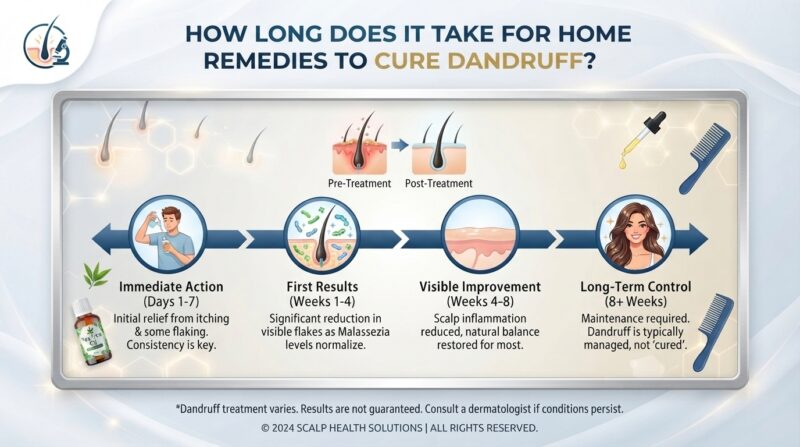
The direct answer is that consistent home remedies typically take anywhere from 2 to 6 weeks to show a significant reduction in dandruff flakes and itchiness. Furthermore, it is important to know that dandruff cannot be permanently “cured”—it is a chronic biological condition that must be continuously managed.
While home remedies can successfully lower the populations of the skin fungus that triggers flaking, their milder nature means they work at a much slower pace than medicated, over-the-counter anti-dandruff shampoos.
This comprehensive guide serves as the ultimate diagnostic and timeline manual for itemguides.com readers, breaking down the exact skin cellular cycles, step-by-step treatment strategies, and clear signs of progress.
The Biological Timeline: Why Clear Skin Takes Time
To understand why natural remedies require weeks rather than days to show visible improvement, we have to look past the surface flakes and examine the natural renewal cycle of human skin cells.
1. The Cellular Turnover Cycle
Your scalp is constantly producing new skin cells deep below the surface, which gradually mature and migrate upward to replace dead surface tissue.
- The Normal Rhythm: For a healthy, balanced scalp, this complete skin cell renewal process takes roughly 28 days.
- The Dandruff Acceleration: When you experience a dandruff flare-up, the overgrowth of a naturally occurring yeast called Malassezia irritates the skin. This irritation causes the scalp to panic, accelerating the entire skin cell turnover cycle down to just 7 to 21 days. Because these skin cells are produced so quickly, they don’t mature properly. They clump together with excess scalp oils and shed as large, visible white or yellowish flakes.
2. The Microbe Suppression Phase
Natural remedies like tea tree oil function as mild, organic antimicrobials. Unlike strong synthetic anti-fungals, these gentle plant-based extracts need extended, regular contact over multiple skin cycles to gradually bring the Malassezia yeast population back down to a balanced, healthy level.
Home Remedy Recovery and Effectiveness Grid
To help you manage your expectations and track your personal progress, refer to our structural recovery matrix below:
| Natural Remedy Type | Core Active Biological Mechanism | Expected Initial Relief Window | Timeframe for Major Flake Reduction |
| Tea Tree Oil (Diluted 5%) | Destroys yeast cell membranes via natural antimicrobial compounds. | 3 to 5 applications (eases itching). | 4 to 6 weeks of consistent, regular use. |
| Apple Cider Vinegar Rinse | Lowers scalp pH to stop yeast reproduction. | 1 to 2 weeks (clears minor buildup). | 3 to 4 weeks of twice-weekly applications. |
| Aloe Vera Gel (Pure Liquid) | Calms skin irritation and reduces inflammatory redness. | Immediate cooling (within 24 hours). | 2 to 3 weeks for general skin scaling relief. |
| Coconut Oil Masking | Moisturizes the skin barrier; contains mild lauric acid. | 1 day (temporarily smooths flakes). | 4 weeks (Warning: Can worsen yeast if overused). |
Step-by-Step Natural Scalp Rehabilitation Protocol
If you are committed to managing your dandruff using a natural, home-based routine, you must stick to an organized, disciplined sequence. Follow this exact application protocol to optimize your results.
1.Verify Skin Sensitivity to Avoid Contact Dermatitis:Phase 1: The Patch Test.
Before putting any natural mixture all over your head, blend 2 drops of your chosen essential oil (like tea tree) with a tablespoon of a mild carrier oil (like jojoba). Dab a small drop onto the inside of your forearm and wait 24 hours to confirm you don’t experience any redness or itching.
2.Apply Treatments Directly onto the Skin, Not the Hair:Phase 2: Targeted Application.
Use a glass dropper or your fingertips to apply your natural mixture directly onto your exposed scalp lines. Part your hair systematically into 1-inch sections so the treatment makes direct contact with the inflamed skin barrier rather than getting trapped in your hair strands.
3.Allow Active Ingredients Time to Penetrate the Oil Layer:Phase 3: The Contact Window.
Leave your natural treatments (like diluted apple cider vinegar or tea tree blends) on your scalp for 10 to 15 minutes. This critical window gives the organic antimicrobial compounds enough time to cut through surface sebum and target underlying yeast cells.
4.Thoroughly Rinse Away All Residual Treatments and Dead Oils:Phase 4: Gentle Cleansing.
Wash your hair thoroughly with a mild, sulfate-free shampoo and lukewarm water. Make sure you rinse away every trace of residual oils or vinegar blends; leaving heavy oils sitting on an active dandruff site will provide a food source for the yeast.
5 Essential Tips for Managing a Natural Dandruff Routine
- Never Apply Undiluted Pure Tea Tree Oil: Tea tree oil is a fantastic natural anti-fungal, but using it at 100% full strength directly on your head is incredibly risky. It can trigger severe allergic contact dermatitis, leading to painful chemical burns, intense itching, and increased skin peeling. Always dilute it by adding 5 to 10 drops into an ounce of a safe carrier oil or mixing it directly into a gentle shampoo.
- Account for the Impact of Your Local Climate: The environment you live in plays a massive role in how your skin behaves. If you reside in hot, humid coastal climates like California, San Francisco, or Texas summers, increased sweat and sebum production will feed the Malassezia yeast, requiring you to wash your hair more frequently. Conversely, cold, dry winter conditions in New York or Washington State can dry out the skin barrier, meaning you’ll need to focus more on deep hydration.
- Limit the Use of Heavy Coconut Oil Masks: While coconut oil is highly praised for its deep moisturizing properties, you should use it with caution if you have true dandruff. The Malassezia fungus feeds directly on the lipids and saturated fatty acids found in heavy plant oils. If your flaking is driven by a heavy yeast overgrowth, leaving thick coconut oil on your scalp can actually feed the fungus, causing a massive increase in flaking.
- Maintain a Detailed Scalp Progress Journal: Because home remedies work gradually over several weeks, it can be tough to see changes from one day to the next. Use your smartphone to take a high-resolution photo of your hairline and hair parting once a week under the same lighting. Comparing these photos over a month will give you an accurate look at whether your flakes and redness are truly improving.
- Install a High-Quality Shower Water Filter: If you live in an urban area with hard water, the high levels of dissolved minerals like calcium and magnesium can leave a drying film on your hair and skin. This residue irritates the scalp and disrupts its natural pH, making it harder for home remedies to do their job. Adding a multi-stage filter to your shower head helps soften the water, giving your skin barrier a clean environment to heal.
Frequently Asked Questions (FAQ)
1. Why does my dandruff look worse after a week of using apple cider vinegar?
This initial spike in flaking is usually caused by the vinegar loosening old, dried skin cells and dead oil buildup from the surface of your scalp. Stick with the routine for 2 to 3 weeks to allow the temporary surface clearing to settle down and show true improvement.
2. Can lifestyle stress delay how fast home remedies work?
Yes, absolutely. High levels of chronic stress flood your body with cortisol, a hormone that can disrupt your immune system and trigger a spike in your skin’s oil production. This extra oil feeds the dandruff-causing yeast, slowing down your recovery timeline.
3. How often should I apply a natural tea tree oil mixture?
For the best balance of safety and effectiveness, apply your diluted tea tree oil mixture 2 to 3 times per week. Using it every single day can strip your skin and cause rebound irritation, while spraying it less than once a week won’t disrupt the yeast cycle enough.
4. Is it possible to permanently cure dandruff with home remedies?
No. Dandruff is a chronic biological condition, meaning it cannot be permanently cured or erased from your genetics. Once your flakes clear up, you must follow a basic, ongoing maintenance routine to keep the yeast and oil levels balanced.
5. Will changing my diet speed up my scalp’s healing process?
Adjusting your diet can make a big difference. Reducing your intake of high-sugar foods, simple white carbohydrates, and dairy products helps lower overall bodily inflammation and can reduce excess oil production on your scalp.
6. Can I use baking soda as a natural scrub to clear away dandruff?
Avoid using baking soda on your hair and skin. Baking soda carries an exceptionally high, alkaline pH of around 9.0. Rubbing it onto your head can severely damage your scalp’s natural acid mantle, leading to extreme dryness, hair breakage, and long-term irritation.
7. Does raw honey work effectively for severe dandruff flaking?
Yes. High-quality, medical-grade raw honey features natural antibacterial, anti-fungal, and deeply soothing humectant properties. Applying a diluted raw honey mask every other day has been shown to ease itching and reduce flaking over a 4-week window.
8. What should I do if my home remedies fail to work after 6 weeks?
If you have maintained a consistent, disciplined natural routine for a full 6 weeks without seeing any reduction in flakes or redness, your scalp issue may be driven by a different problem, such as psoriasis or eczema. At this point, transition to an over-the-counter medicated shampoo or consult a dermatologist.
9. Can using dry shampoo make my dandruff condition worse?
Yes. Heavy use of dry shampoo traps oils, sweat, and dead skin cells right against your scalp. This accumulation blocks fresh air, prevents natural shedding, and creates a prime environment for dandruff-causing yeast to multiply.
10. When should I stop using home remedies and see a doctor immediately?
Stop your home routine and schedule an appointment with a dermatologist right away if your scalp begins to bleed, blister, weep fluid, cause localized hair loss, or trigger intense, painful burning sensations.
Conclusion
Opting for natural, home-based remedies to manage your personal health is an excellent way to maintain a clean, chemical-free wellness routine, provided you give your body the time it needs to heal. By remembering that your skin requires a full 4-week cellular turnover cycle to repair its moisture barrier, diluting strong essential oils to prevent irritation, and keeping a steady, disciplined application schedule, you can successfully take control of your scalp health. Be patient with your routine, protect your skin barrier, and enjoy a comfortable, flake-free landscape across every season.