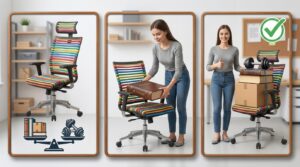
Can I replace the bungee cords myself if they break? When you invest in a stylish, ultra-breathable bungee office chair for your workspace in San Francisco, New York, Seattle, Austin, or Los Angeles, you are buying into a unique piece of modern furniture. Replacing traditional foam and fabric with a web of heavy-duty elastic cords offers unbeatable ventilation during hot summer days in Texas and a dynamic, cushiony bounce.
However, unlike standard mesh or leather task chairs where upholstery is factory-fixed, a bungee chair relies on tension. Eventually, after months or years of daily use, those elastic cords can stretch out, fray, or snap.
When that happens, every DIY enthusiast asks: Can I replace the bungee cords myself if they break?
In this exhaustive, optimized guide tailored for itemguides.com, we examine whether DIY bungee repair is practical, provide a step-by-step restoration walkthrough, compare replacement methods, and answer your most burning maintenance questions to help you extend the life of your office chair.
1. The Reality of Bungee Cord Fatigue: Why Cords Fail
Before diving into repairs, it is essential to understand why bungee cords break or lose their elasticity in the first place:
- Material Degradation: High-grade bungee cords feature a latex or rubber core wrapped in a woven nylon or polyester sheath. Over time, friction, body heat, and ultraviolet exposure (if placed near windows) cause the rubber core to dry out and lose its memory.
- Localized Weight Stress: If you frequently sit cross-legged or concentrate heavy weight on a single section of the seat pan, those specific cords stretch past their yield point and snap.
- Frame Friction: Constant rubbing against unlined steel frame eyelets or welded hooks creates micro-abrasions that wear through the outer nylon sheath, exposing the core.
2. Can You Actually Replace Them Yourself? (The Short Answer)
Yes, but it depends entirely on the chair’s design.
- The Easy Cases (Open Frame Designs): If your bungee chair features a continuous lacing pattern where a single long cord (or a few independent loops) is threaded through open frame hooks or pre-drilled holes without being permanently riveted, you can easily re-string it using marine-grade bungee cord.
- The Difficult Cases (Molded Plastic Shells / Factory Crimped Ends): Many modern office bungee chairs use commercial steel frames where the ends of the cords are factory-crimped, heat-welded, or permanently sealed inside molded plastic channels. Attempting to repair these types often requires destructive modification or is outright impossible without specialized factory tools.
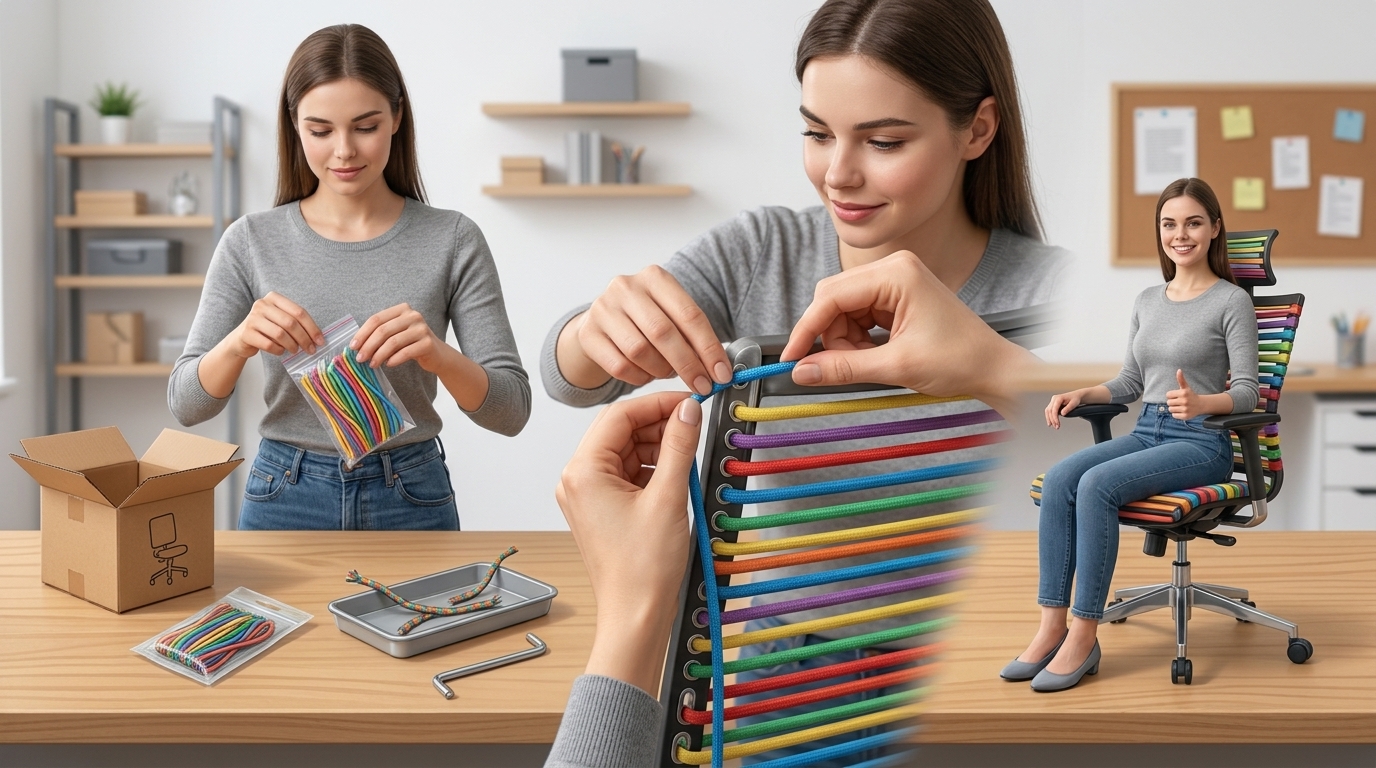
3. Step-by-Step Guide: How to Re-String a Bungee Office Chair
If your chair features a lacing design that allows for manual restringing, you can perform a DIY fix at home. Here is how to do it professionally:
Tools and Materials Needed:
- Marine-Grade Bungee Cord (Shock Cord): Usually 1/4-inch (6mm) or 5/16-inch (8mm) in diameter, depending on your chair’s frame clearance. Always choose a UV-resistant, latex-core cord with a braided nylon jacket.
- Heavy-Duty Scissors or Utility Knife: For cutting the cord to length.
- Lighter or Heat Gun: To melt and seal the nylon ends of the cut cord so they don’t fray.
- Hog Ring Pliers and Hog Rings (Optional): If your chair uses metal crimps to anchor loops.
- Work Gloves: To protect your hands from high-tension snap-back while pulling cords tight.
Step-by-Step Instructions:
- Document the Original Weave Pattern: Before touching a single cord, take multiple high-resolution photos of the chair’s seat and backrest from top, bottom, and side angles. Replicating a complex web pattern from memory is nearly impossible.
- Safely Remove the Old Cords: Cut away the damaged or stretched cords using utility shears. Warning: Release tension slowly if any cords are still under load to avoid a sudden snap.
- Measure and Cut New Cords: Cut your new marine-grade shock cord to the required lengths, adding an extra 2 inches per strand for knotting or anchoring.
- Melt the Ends: Immediately take your lighter and fuse the cut ends of the nylon jacket. This prevents the inner rubber strands from unravelling under tension.
- Thread and Lace: Start from the center or outer perimeter (depending on your photo reference) and thread the new cord through the frame hooks or holes, matching your exact photo pattern.
- Maintain Proper Tension: Pull each cord snug. It should be tight enough to support body weight without sagging to the bottom frame, but loose enough to maintain elastic flex.
- Secure the Anchors: Tie secure double-fishermen’s knots or use heavy-duty cable ties / hog rings to lock the terminal ends firmly to the chair’s frame. Trim excess tails.
4. Product Reviews: Repairability of Popular Bungee Chairs – Can I replace the bungee cords myself if they break?
Not all chairs are created equal when it comes to maintenance. We evaluated three popular styles based on how easy they are to fix.
1. The Container Store Flat Bungee Task Chair
- Repairability Score: 7 / 10
- Review: Because these feature robust flat elastic webbing looped around steel tubing, a skilled DIYer can unhook and replace individual webbing strips if replacement parts are sourced directly or custom-stitched. However, finding exact matching flat webbing can be challenging compared to round marine cord.
2. Standard Round-Cord Bungee Dish / Office Chairs
- Repairability Score: 9 / 10
- Review: These chairs are almost universally laced with continuous round shock cord. If a section snaps, you can easily strip the entire chair and re-lace it with a 50-foot roll of 1/4-inch marine bungee cord bought online for under $20.
3. Budget Molded-Shell Bungee Office Chairs
- Repairability Score: 2 / 10
- Review: Ultra-cheap imported chairs often embed the cord ends inside sealed plastic injection molds or use proprietary non-removable metal brackets. If a cord snaps here, DIY repair is virtually impossible, and you will need to replace the entire chair.
5. Comparison Table: DIY Repair vs. Buying Replacement Parts vs. Buying a New Chair
| Factor | DIY Re-Stringing | Buying Manufacturer Replacement Parts | Purchasing a New Bungee Chair |
| Cost | Low ($15–$25 for cord roll) | Moderate ($30–$60 + shipping) | High ($100–$250) |
| Time Required | 1 to 2 hours of labor | 20 to 30 minutes of installation | Immediate (upon delivery) |
| Difficulty Level | Moderate to High (Requires hand strength) | Low to Moderate | None |
| Durability | High (If using marine-grade cord) | High (OEM factory match) | Maximum (Brand new frame & lift) |
| Warranty Impact | Voids manufacturer warranty | Preserves warranty | Comes with new warranty |
6. Pros and Cons of DIY Bungee Chair Repair
The Pros:
- Cost-Effective: A $20 roll of marine shock cord can completely revive a $200 office chair.
- Customization: You can upgrade standard black cords to vibrant neon colors, custom patterns, or heavier-gauge tension cords.
- Sustainability: Keeps bulky office furniture out of landfills, aligning with eco-friendly remote work practices in Seattle and San Francisco.
The Cons:
- Time and Hand Fatigue: Weaving high-tension elastic cord requires significant physical grip strength and patience.
- Aesthetic Imperfections: A DIY lace job rarely looks as pristine and uniform as a factory-tensioned automated machine weave.
- Safety Risks: Incorrectly tied knots can slip under body weight, causing the seat to suddenly drop or sag.
7. Expert Tips: How to Prevent Bungee Cord Breakage
Preventing a breakdown is always easier than attempting a complex repair. Protect your investment with these professional maintenance tips:
- Keep Away from Direct Sunlight: UV rays break down rubber and latex cores rapidly. Do not place your bungee chair directly in front of unobstructed south-facing windows in Texas or California apartments.
- Inspect Monthly: Look for fraying nylon sheaths or exposed white rubber strands every month. Catching a wearing cord early lets you reinforce it before it snaps completely.
- Avoid Sharp Objects: Keep keys, box cutters, and metal pocket tools out of your back pockets when sitting, as they can easily slice or snag elastic fibers.
- Adhere to Weight Limits: Never exceed the manufacturer’s rated weight capacity (typically 200–250 lbs for standard models). Overloading accelerates cord fatigue and warps the steel frame.
- Condition the Cords: Periodically wipe down synthetic cords with a mild silicone-free rubber protectant spray to keep the material supple and prevent drying out.
8. Frequently Asked Questions (FAQs)
1. Can I replace a broken bungee cord with standard rope or paracord?
No! Standard rope or paracord has zero elasticity. If you replace elastic cords with rigid rope, you completely destroy the hammock-like suspension and pressure-relieving bounce that makes a bungee chair unique.
2. What type of bungee cord should I buy for an office chair repair?
Always use marine-grade shock cord (also known as bungee cord) with a latex rubber core and a tight woven nylon jacket. Avoid cheap utility cords from dollar stores, as they stretch out permanently within weeks.
3. How do I know if my chair can be re-strung?
Inspect the frame. If the cords loop through open steel hooks, eyelets, or frame holes and can be unknotted, your chair is fully repairable. If the ends are molded directly into plastic housings, it cannot be easily repaired.
4. Is it hard to pull bungee cords tight enough during repair?
Yes. Achieving factory-level tension requires significant hand and wrist strength. Wearing thick work gloves and using a lacing hook tool can prevent blisters and help you pull cords taut.
5. Why do bungee office cords snap prematurely?
Premature snapping is usually caused by excessive localized weight, prolonged exposure to direct sunlight (UV degradation), or manufacturing defects in low-tier imported cords.
6. Where can I buy replacement bungee cord rolls?
You can find high-quality marine-grade shock cord rolls (ranging from 1/4-inch to 5/16-inch diameters) at marine supply stores, hardware superstores like Home Depot, or online via Amazon and specialty rigging sites.
7. Will repairing my chair myself void the warranty?
Yes. Performing a DIY re-stringing or modifying the frame will immediately void any active manufacturer or retailer warranty. Only attempt DIY repairs if your chair is already out of warranty.
8. Can I replace just one snapped cord, or should I replace all of them?
If the chair is relatively new and a single cord was damaged by a sharp object, you can replace just that strand. However, if the chair is over a year old, surrounding cords have also lost tension; replacing the entire web ensures balanced support.
9. What tools make DIY bungee chair repair easier?
Essential tools include heavy-duty utility scissors, a butane lighter for melting nylon ends, a pair of work gloves for hand protection, and zip ties or hog ring pliers to temporarily hold tension while tying knots.
10. When is it better to buy a new chair instead of repairing it?
If the steel frame is bent, the pneumatic lift cylinder is failing, or the cost of replacement marine cord approaches the price of a brand-new chair, it is smarter to recycle the old unit and purchase a replacement.
9. Conclusion
Replacing the bungee cords on your office chair yourself is entirely possible, provided your chair features an open lacing design and you use high-grade marine shock cord. While it requires patience, hand strength, and attention to detail, a DIY re-stringing job can save you money and extend the lifespan of your favorite workspace seat.
Whether you are working from a high-rise in New York or a home studio in Austin, maintaining your bungee chair properly ensures you enjoy its unique breathability and modern comfort for years to come—without unnecessary furniture waste.