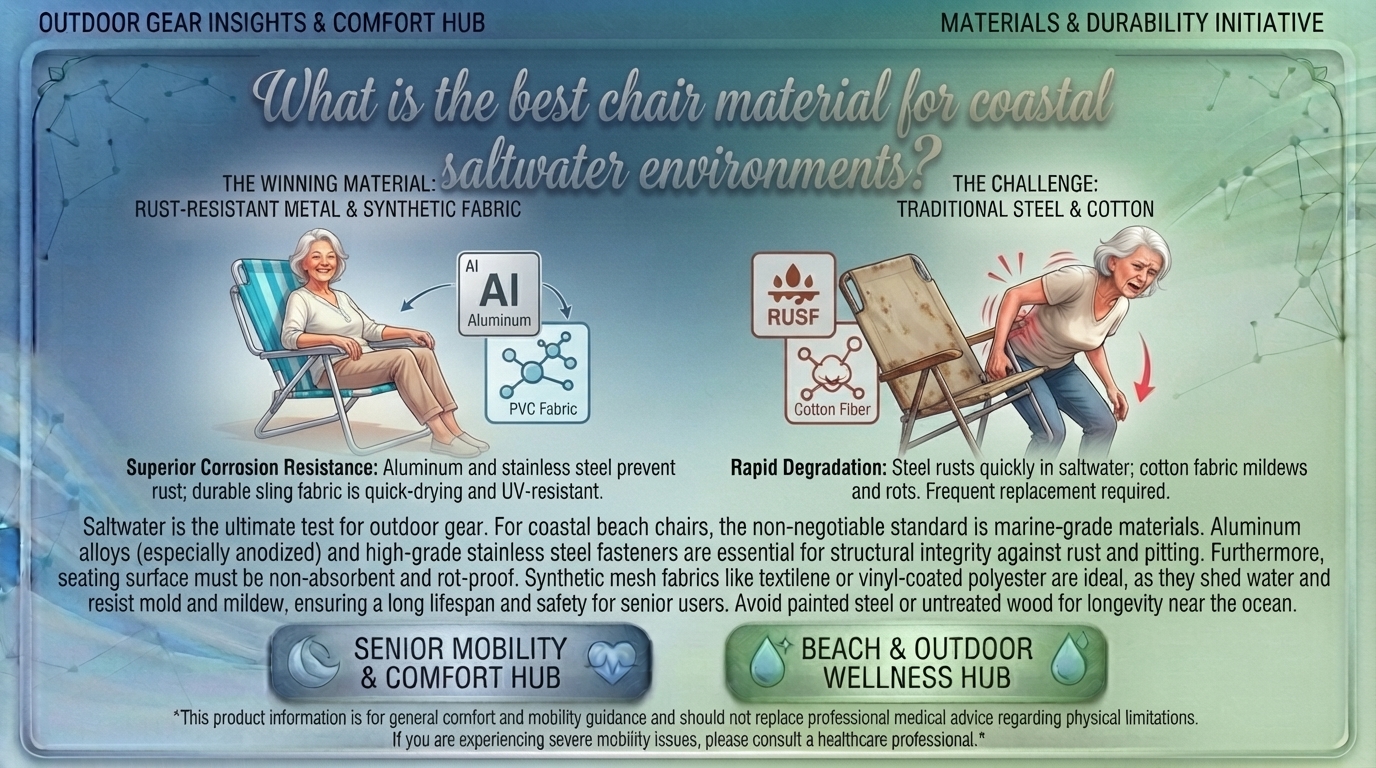
What is the best chair material for coastal saltwater environments? For beachgoers, coastal residents, and weekend vacationers living along the sweeping oceanic expanses of California, Washington, San Francisco, New York, and the humid, salt-laden shores of Texas, a trip to the beach is a regular lifestyle staple. However, the ocean environment is notoriously brutal on outdoor gear.
If you have ever left a standard metal folding chair in a garage or beach house near the coast, you likely returned a few weeks later to find it covered in bubbling, flaking orange rust, with hinges completely frozen solid and fabric rotting at the seams.
Why does this happen, and what materials actually survive the harsh reality of coastal saltwater environments?
Welcome to itemguides.com. In this comprehensive, data-driven, extra-large optimized guide, we examine the chemistry of coastal corrosion, review the top-performing frame and fabric materials on the market, provide a detailed comparison table, share essential maintenance tips, and answer your most complex questions.
1. The Enemy: Why Saltwater and Sea Air Destroy Outdoor Furniture
To understand why certain materials thrive on the coast while others disintegrate, you must understand what makes marine environments so chemically aggressive.
Coastal regions combine three destructive elements:
- Sodium Chloride (Salt Spray): Ocean winds pick up microscopic droplets of saltwater and carry them inland. When this spray settles on metal surfaces, it leaves behind a conductive chloride film that accelerates electrochemical oxidation (rust).
- High Relative Humidity: Moisture in the air acts as an electrolyte medium, continuously feeding the chemical reactions that break down unprotected metals and breed mold on organic textiles.
- Intense UV Radiation: Combined with salt, relentless sun exposure degrades weak plastics, breaks down cheap synthetic stitching, and fades fabrics within a single season.
If a chair is built with inferior materials, the environment will quickly destroy it. Selecting the right components is essential for long-term value.
2. Frame Materials: Which Metals and Plastics Survive the Coast?
When evaluating beach chairs or coastal patio furniture, the frame is your first line of defense. Here is how various frame materials perform under marine stress:
A. Anodized Aluminum Alloy (The Gold Standard for Portability)
- Corrosion Resistance: Excellent
- Weight: Extremely Lightweight
- Why It Works: Aluminum contains zero iron, meaning it cannot form traditional iron oxide (rust). When exposed to oxygen and salt air, aluminum forms a microscopic, self-healing aluminum oxide layer that halts progressive corrosion. For portable beach chairs, marine-grade aluminum alloys (such as 6063-T5 or 6061-T6, reinforced with magnesium and silicon) provide unbeatable strength-to-weight ratios.
B. Stainless Steel Hardware (The Crucial Hidden Component)
- Corrosion Resistance: Superior (Grade 316) to High (Grade 304)
- Where It’s Used: Rivets, bolts, hinges, and folding brackets.
- Why It Works: Even if your chair has an aluminum frame, if the manufacturer used cheap mild steel screws or bolts, those fasteners will rust away within months, causing the frame to collapse. Look for chairs explicitly advertised with Grade 304 or 316 stainless steel hardware (Grade 316 contains molybdenum, which specifically resists chloride pitting in saltwater air).
C. High-Density Polyethylene (HDPE) Plastic and Lumber
- Corrosion Resistance: Impervious to Salt and Water
- Weight: Moderate to Heavy
- Why It Works: HDPE does not rot, splinter, absorb moisture, or rust. While heavy for a portable backpack beach chair, HDPE is the premier material for stationary coastal deck chairs, Adirondack chairs, and structural components.
D. Powder-Coated Steel (The Material to Avoid for Portability)
- Corrosion Resistance: Poor to Moderate (Short Lifespan)
- Why It Fails: While a thick powder-coat layer delays rust initially, the moment the chair is scratched on a rock or sand pebble, saltwater breaches the barrier. Under-film corrosion begins immediately, causing the paint to bubble and flake off in large sheets.
3. Fabric and Webbing Materials: Defying Moisture and Salt
A rust-proof frame is useless if the fabric tears or rots away. Coastal chairs require specialized synthetic textiles:
- Textilene (PVC-Coated Polyester Mesh): The undisputed king of beach chair fabrics. Textilene consists of high-strength polyester core yarns individually coated in polyvinyl chloride (PVC). It is completely immune to saltwater rot, dries almost instantly, promotes cooling airflow, and resists UV fading.
- Solution-Dyed Acrylic (e.g., Sunbrella): Premium fabric where color pigments are embedded directly into the core of the fiber during manufacturing rather than dyed on the surface. It offers elite UV colorfastness and luxurious softness for cushioned coastal loungers.
- Avoid Untreated Canvas or Cotton: Natural fibers absorb moisture, trap salt crystals, and foster black mold and mildew rapidly in humid ocean climates.
4. Product Reviews: Top Coastal-Resilient Beach Chairs
We evaluated top-rated beach chairs based on marine-grade frame alloys, stainless steel fasteners, and salt-tolerant fabrics to bring you the best options for coastal environments.
1. RIO Beach Lace-Up “Hi-Boy” Suspension Chair — Best Overall Coastal Portability
- Frame Material: Anodized 6063-T5 Aluminum with Stainless Steel Hardware
- Fabric: Weather-Resistant Polyester / Suspension Webbing
- Price Range: Moderate (~$70–$90)
- Review: The RIO Hi-Boy is engineered specifically to withstand punishing marine environments. By utilizing an anodized aluminum frame that naturally repels saltwater oxidation, combined with rust-resistant hardware and quick-drying suspension fabric, it shrugs off ocean spray. Its 17-inch seat height and backpack straps make it a coastal favorite from California to New York.
2. Parkit Voyager Ergonomic Chair — Best Premium Coastal Durability
- Frame Material: Aviation-Grade Anodized Aluminum with Marine-Grade Wood Accents
- Fabric: UV-Stabilized Custom Webbing
- Price Range: Premium (~$160–$190)
- Review: Built like high-end yacht furniture, the Parkit Voyager pairs a robust, corrosion-proof aluminum frame with marine-grade wood armrests treated to resist moisture and salt. It includes stainless steel connection points and an innovative under-seat cooler box, making it an elite luxury choice for frequent beachgoers in saltwater regions.
3. POLYWOOD Long Island Folding Adirondack — Best Stationary Coastal Chair
- Frame Material: Solid HDPE Poly Lumber with Marine-Grade Stainless Steel Fasteners
- Fabric: None (Solid molded contours)
- Price Range: Premium (~$250–$300)
- Review: If you are outfitting a beachfront balcony, patio, or deck in Florida, Texas, or Washington, portable folding chairs aren’t necessary. The POLYWOOD Adirondack is made from heavy-duty HDPE lumber that will never rot, fade, or rust, backed by marine-grade hardware that stands up to direct ocean gales year-round.
4. GCI Outdoor Wilderness Backpacker Reclining Chair — Best Mid-Height Coastal Pick
- Frame Material: Powder-Coated Aluminum Alloy with Corrosion-Resistant Joints
- Fabric: Quick-Dry Nylon Mesh
- Price Range: Moderate (~$65–$80)
- Review: Featuring an auto-fold frame and breathable mesh backing that prevents salt and moisture retention, the GCI Wilderness Backpacker offers reliable performance in coastal air. Its lightweight aluminum construction minimizes oxidation risks compared to cheap steel alternatives.
5. Tommy Bahama Deluxe 5-Position Backpack Chair — Best Classic Coastal Lounger
- Frame Material: Rust-Proof Lightweight Aluminum
- Fabric: Durable Water-Repellent Polyester
- Price Range: Moderate (~$80–$100)
- Review: An iconic beach classic, this chair uses a lightweight aluminum frame that resists saltwater pitting. Equipped with an insulated cooler pouch, towel bar, and adjustable pillow, it provides great value for casual beach vacationers who rinse their gear after use.
5. Comprehensive Comparison Table: Coastal Chair Materials
| Material Type | Saltwater Resistance | Rust Risk | Weight / Portability | Lifespan in Coastal Air | Best Coastal Use Case |
| Anodized Aluminum | Excellent (Self-healing oxide layer) | None (Contains no iron) | Very Lightweight | 5 to 10+ Years | Portable beach chairs & loungers |
| Stainless Steel (316/304) | Superior (Resists chloride pitting) | Extremely Low | Heavy | Decades | Fasteners, rivets, and hardware |
| HDPE Poly Lumber | Impervious (Does not absorb water) | None | Heavy | 15 to 20+ Years | Stationary patio and deck seating |
| Powder-Coated Steel | Poor (Corrodes once scratched) | High (Rapid under-film rust) | Moderate | 1 to 2 Seasons | Inland use only (Avoid near ocean) |
| Textilene Mesh Fabric | Excellent (Immune to rot/mildew) | N/A (Synthetic) | Featherlight | 5 to 8 Years | Breathable seating surfaces |
6. Essential Maintenance Tips to Prevent Saltwater Corrosion
Even the highest-grade marine aluminum and stainless steel benefit from basic preventative maintenance. Extend the life of your coastal beach gear with these four simple rules:
- The Post-Beach Fresh Water Rinse: Never pack a saltwater-soaked chair directly into a hot car trunk or garage. After every beach trip, hose down the entire chair thoroughly with clean tap water to dissolve microscopic salt crystals trapped in the hinges and joints.
- Inspect Fasteners Annually: Check the small bolts and rivets connecting the frame. If you notice lower-grade steel screws showing early signs of rust pitting, apply a dab of anti-corrosion spray (like Boeshield T-9 or WD-40 Specialist Corrosion Inhibitor).
- Dry Completely Before Storing: Store folding chairs in a well-ventilated garage or shed. Storing a damp chair in a sealed plastic bag invites mold on fabrics and traps humidity against metal joints.
- Avoid Abrasive Scrubbers: When cleaning salt-crusted aluminum frames, use mild dish soap and a soft sponge. Never use steel wool or harsh metal scouring pads, which scratch the protective aluminum oxide layer and invite oxidation.
Frequently Asked Questions (FAQs)
1. What is the best chair material for coastal saltwater environments?
Anodized aluminum alloy for portable frames, HDPE plastic for stationary deck chairs, marine-grade stainless steel for fasteners, and Textilene mesh for fabrics represent the absolute best materials for resisting coastal saltwater corrosion.
2. Does aluminum beach furniture rust in saltwater?
No. Aluminum contains no iron, meaning it cannot form traditional red iron oxide rust. Instead, it creates a transparent, self-healing protective oxide layer that guards against salt spray.
3. Why do some aluminum chairs still show white powdery spots near the coast?
That white chalky powder is aluminum oxidation (pitting corrosion) caused by long-term exposure to heavy chloride spray without fresh-water rinsing. It is easily cleaned with a mixture of vinegar, water, and a soft nylon brush.
4. Are steel beach chairs ever a good choice for the ocean?
Generally no. Uncoated or powder-coated steel chairs will begin to rust within 3 to 6 months of heavy coastal exposure once the paint barrier is nicked or scratched by sand.
5. What is the difference between Grade 304 and Grade 316 stainless steel?
Grade 316 stainless steel contains an extra element called molybdenum, which provides vastly superior resistance to chloride and saltwater corrosion compared to standard Grade 304.
6. How do I prevent sand and salt from jamming my chair’s folding hinges?
Rinse the hinges with high-pressure fresh water after every beach outing, and occasionally lubricate moving mechanical pivots with a dry silicone spray that won’t attract sticky beach sand.
7. Is teak wood a good material for coastal environments?
Yes! Grade A teak wood contains natural silica and heavy oils that make it virtually immune to rotting, warping, and insect damage in humid coastal climates, though it requires periodic cleaning if you want to prevent its natural silver-gray patina.
8. What fabric is best for beach chairs in humid, salty air?
Textilene (PVC-coated polyester mesh) is the premier choice because it dries instantly, resists UV degradation, and will never rot or support mold growth like cotton canvas.
9. Can I leave my beach chairs outside on a beachfront deck all year round?
Only if they are specifically rated as marine-grade (such as HDPE poly lumber or powder-coated marine aluminum with stainless hardware). Standard portable folding chairs left outside year-round will degrade rapidly from wind and salt.
10. Where can I find more coastal gear reviews and outdoor buying guides?
You can explore comprehensive material breakdowns, product comparisons, and expert outdoor tips right here at itemguides.com.
Conclusion
When shopping for outdoor furniture or portable beach chairs destined for coastal saltwater environments, material science matters more than brand names or color options. Avoiding cheap powder-coated steel in favor of anodized aluminum frames, marine-grade stainless steel hardware, and Textilene mesh fabrics guarantees that your gear will survive years of ocean spray, sand, and blazing sun.
Invest in corrosion-resistant engineering, practice a simple fresh-water rinse routine, and enjoy countless rust-free days by the water across Texas, New York, California, Washington, San Francisco, and beyond with expert guidance from itemguides.com!