Few things match the frustration of completing your morning grooming routine, glancing down at your shoulders, and finding a fresh dusting of white or yellowish flakes across your clothing. What makes this experience incredibly confusing is the timing: your scalp looked relatively clear before you picked up your brush, but running the bristles through your hair seemed to instantly trigger a snowstorm of flakes.
This phenomenon often leads people to make the wrong assumption—they worry that the act of brushing is actively damaging their scalp, ripping up healthy tissue, or accelerating hair thinning.
For the readers of itemguides.com, we have put together a comprehensive breakdown of the science behind post-brushing flaking. Below, we will look at how your brush interacts with your skin, examine the underlying clinical conditions responsible, and share professional, region-specific tips to help you maintain a healthy, flake-free scalp.
1. The Mechanics of the “Post-Brush Snowstorm”
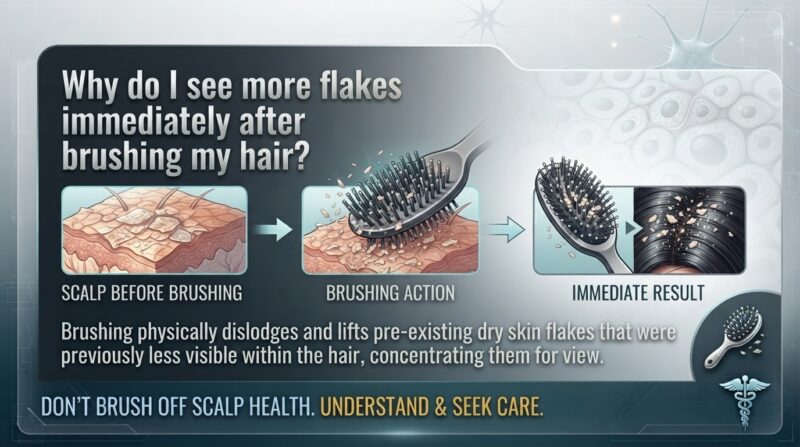
When you see a sudden increase in flakes after brushing, your brush isn’t actually creating new skin damage on the spot. Instead, it is acting as a mechanical exhumation tool for material that was already sitting quietly at the base of your hair shafts.
[Scalp Surface: Dormant Flakes Bound by Sebum]
                       │
                       ▼ (Mechanical Brushing Action)
[Bristles Break Sebum Bonds & Lift Flakes Into Hair Strands]
                       │
                       ▼
[Flakes Dislodge from Roots & Cascade Down to Shoulders]
The Exfoliation Effect
Your scalp naturally sheds dead skin cells every day. When an underlying condition accelerates this shedding process, the dead cells clump together. Because your hair grows closely together, these clumps get trapped at the root, held in place by your scalp’s natural oils (sebum). When you brush your hair, the bristles act like a comb running through loose soil—they break those oily bonds, lift the trapped clumps away from the skin, and push them down the length of your hair strands where they become highly visible.
Static Electricity and Dispersion
Using plastic or synthetic nylon bristles can generate static electricity as they rub against your hair. This static charge reduces the natural moisture attraction between fine, dry flakes and your hair strands, causing the particles to repel each other and drift down onto your collar and shoulders.
2. Identifying the Culprit: What Type of Flake Are You Disturbing?
To solve a flaking issue, you need to identify exactly what kind of material your brush is lifting. Scalp flaking generally falls into three separate categories, each requiring a different treatment approach:
| Flake Profile | Visual Appearance | Texture & Feel | Underlying Root Cause |
| Classic Dandruff | Small, loose, distinct white or translucent particles. | Fine, dry, powdery; drops easily when touched. | Mild acceleration of the skin’s natural shedding cycle, often linked to seasonal weather shifts. |
| Seborrheic Dermatitis | Large, patchy, yellowish or honey-colored flakes. | Oily, greasy, waxy; tends to stick firmly to the hair roots. | An inflammatory reaction to an overgrowth of Malassezia, a naturally occurring yeast on the scalp. |
| Product Buildup | Irregular, clear, whitish, or soft gray clumps or sheets. | Sticky, gummy, or chalky; can be scraped away easily with a fingernail. | Residual layers of styling gels, hairsprays, dry shampoos, or heavy silicone-based conditioners. |
3. The Clinical Drivers Behind Accelerated Scalp Shedding
If your hair brush is consistently lifting a large volume of flakes every day, it is usually a sign of one of these three underlying conditions:
Seborrheic Dermatitis
This is a very common inflammatory skin condition that targets oil-rich areas like the scalp, eyebrows, and the sides of the nose. When your body overproduces sebum, a naturally occurring skin yeast called Malassezia feeds on the excess oil. This process breaks the oil down into irritating fatty acids that inflame the scalp barrier, causing your skin cells to shed much faster than normal.
Scalp Psoriasis
Unlike dandruff, which is a surface-level skin issue, psoriasis is an autoimmune condition. It causes your body to produce new skin cells in days rather than weeks. Because these cells build up rapidly on the surface before they can mature and shed naturally, they form thick, raised plaques covered with silvery scales that crack and flake off when brushed.
Tinea Capitis (Scalp Ringworm)
This is a superficial fungal infection that settles deep inside the hair follicles. It typically creates localized, circular patches of dry, intensely itchy flaking, often accompanied by brittle hair strands that snap off close to the scalp surface. Fungal infections require target prescription treatments and will not improve with standard moisturizers.
4. Regional Climate Profiles: How Your Environment Shifts the Flake Loop
Where you live and groom across the United States plays a significant role in how your scalp behaves. Local weather conditions can directly influence oil production and skin moisture:
California & San Francisco: Hard Water Residue and Microclimates
Moving between different microclimates can alter your scalp’s oil production.
- The Environmental Trigger: Traveling between the cool, windy coastal areas of San Francisco and the warmer, drier inland valleys can cause rapid shifts in skin hydration. Additionally, municipal hard water containing high levels of calcium and magnesium can leave a mineral film on your hair roots.
- The Post-Brush Result: Hard water minerals can bind with your hair products, creating a stubborn residue layer. When you brush your hair, the bristles lift this dried mineral-product film, which looks identical to dandruff flakes.
- Targeted Tip: Install a specialized showerhead water filter to remove heavy minerals, and use a clarifying rinse once a week to clear away buildup.
Texas: Intense Summer Heat and Excess Sebum Production
High humidity and extreme summer heat create an ideal environment for yeast growth.
- The Environmental Trigger: Texas heat waves cause active sweat and oil production along the scalp line. This excess sebum provides an abundant food source for Malassezia yeast, which can trigger flare-ups of seborrheic dermatitis.
- The Post-Brush Result: The yeast overgrowth causes your skin cells to shed rapidly. These cells mix with sweat and oil to form heavy, waxy flakes that lift away in large clumps when you brush your hair.
- Targeted Tip: Avoid heavy styling pomades or oils during hot summer months. Opt for lightweight, water-based styling products that won’t feed scalp yeast.
Washington: Damp Air and Product Buildup from Dry Shampoos
Cool, overcast weather can change how frequently people wash their hair.
- The Environmental Trigger: In the damp climate of western Washington and Seattle, many people extend the time between traditional washes by relying heavily on dry shampoos to absorb excess moisture and volume.
- The Post-Brush Result: Stacking multiple layers of dry shampoo powder over several days creates a thick crust at the roots. Running a brush through your hair breaks up this dried starch layer, causing a shower of fine white powder that looks like dry scalp flaking.
- Targeted Tip: Limit your use of dry shampoo to no more than two consecutive days, and ensure you wash your hair thoroughly with a deep-cleansing shampoo between applications.
New York: Dry Radiator Heat and Dehydrated Skin Barriers
Freezing northeast winters can dry out your skin from head to toe.
- The Environmental Trigger: New York winters combine freezing outdoor air with dry, indoor radiator heating. This environment strips moisture from the skin, leaving the scalp dry, tight, and dehydrated.
- The Post-Brush Result: A dehydrated scalp sheds fine, powdery white flakes. When you brush your hair, the mechanical friction easily releases these dry skin particles from the tight surface.
- Targeted Tip: Lower your shower temperature from hot to lukewarm to protect your scalp’s natural oils, and use a humidifier in your bedroom to keep the air hydrated at night.
5. Brushing Dos and Don’ts: Adjusting Your Routine
You don’t need to stop brushing your hair altogether to avoid flakes. Instead, follow these simple guidelines to protect your scalp while keeping your hair neat:
- Don’t Use Sharp Synthetic Bristles: Avoid brushes with sharp, plastic bristles that don’t have protective ball tips. These sharp points can scratch and irritate your scalp, triggering localized inflammation and scaling.
- Do Switch to Natural Boar Bristles: Natural boar bristle brushes are excellent for managing oil. They help pick up excess sebum from the roots and distribute it evenly down the hair shaft, which keeps your scalp drier and hydrates your ends naturally.
- Don’t Scrap the Scalp Surface Intentionally: Never use a hair brush or a fine-toothed comb to aggressively scrape away visible flakes. This physical irritation can trigger an inflammatory response known as the Koebner phenomenon, causing your skin to produce new flakes even faster.
- Do Wash Your Brushes Regularly: Hair brushes collect oils, dead skin cells, and product residue over time. If you don’t wash your brush regularly, you are simply transferring old oils and bacteria back onto your clean scalp with every stroke.
6. A Step-by-Step Scalp Care Sequence
To manage persistent flaking and keep your hair clean without irritating your scalp, follow this balanced care routine:
1.Apply a Targeted Medicated Scalp Treatment:Frequency: Twice a week.
Apply an over-the-counter anti-dandruff shampoo containing zinc pyrithione, ketoconazole, or selenium sulfide directly to your wet scalp. Use your fingertips to massage the product gently into the skin—never use your fingernails, which can scratch and irritate the area.
2.Allow the Active Ingredients Time to Work:Duration: 5-10 minutes.
Leave the medicated shampoo on your scalp for at least 5 to 10 minutes before rinsing. This gives the active ingredients time to break through the protective sebum layer, target yeast overgrowth, and calm underlying inflammation.
3.Rinse Thoroughly with Lukewarm Water:Temperature: Lukewarm.
Rinse your hair completely with lukewarm water, ensuring no shampoo residue is left behind. Avoid hot water, which can strip away your skin’s remaining natural oils and leave your scalp feeling dry and irritated.
4.Use a Gentle Boar Bristle Brush Before Washing:Timing: Pre-wash step.
Brush your hair gently before stepping into the shower. This timing allows the bristles to loosen and lift trapped flakes and product buildup, making it much easier for your shampoo to wash them away completely.
7. Top 10 Frequently Asked Questions (FAQs)
1. Does brushing my hair frequently cause permanent hair loss?
Normal, gentle brushing does not cause permanent hair loss. However, if your scalp is highly inflamed from a condition like severe seborrheic dermatitis or psoriasis, aggressive brushing can stress the weakened hair roots, leading to temporary hair shedding known as telogen effluvium.
2. Why does my scalp feel sore or tender after I brush out the flakes?
If your scalp feels tender after brushing, it means the bristles are scraping against skin that is already inflamed and sensitive from an underlying condition. It could also mean you are pressing down too hard, which can cause microscopic scratches and increase irritation.
3. Can I use natural oils like coconut or olive oil to treat waxy scalp flakes?
If your flakes are thick, greasy, and yellow, avoid using natural oils. These waxy flakes are usually a sign of seborrheic dermatitis, and the yeast responsible feeds on the lipids and fatty acids found in oils like coconut and olive oil. This can increase yeast growth and worsen your flaking.
4. What is the difference between dry scalp flaking and classic dandruff?
A dry scalp happens when your skin loses too much moisture, producing fine, small, powdery white flakes, often accompanied by dry skin elsewhere on your body. Classic dandruff is typically driven by an oily environment where excess sebum causes skin cells to clump together into larger, more visible flakes.
5. How often should I wash my hair brush to keep it clean?
You should remove loose hair from your brush after every use and give it a thorough cleaning once every two weeks. Wash the bristles with warm water and a small amount of clarifying shampoo or dish soap to dissolve accumulated scalp oils, dead skin cells, and product residue.
6. Can using dry shampoo too often cause my scalp to flake?
Yes, frequent use of dry shampoo can lead to flaking. Dry shampoo powders are designed to sit on the scalp and absorb oil, but if they aren’t washed out regularly, they can mix with your natural sebum to form a thick, crusty layer that breaks apart into white flakes when brushed.
7. Why do my scalp flakes have a distinct, sour odor?
A noticeable sour or musty odor points to an overgrowth of yeast or bacteria on an oily scalp. When Malassezia yeast breaks down your natural sebum, it releases byproducts that can produce a distinct scent, especially if you go several days between washes.
8. Will a clarifying shampoo help eliminate dandruff flakes?
Clarifying shampoos are excellent for removing stubborn styling product buildup and hard water minerals. However, because they are deeply cleansing, they do not contain the active antifungal or anti-inflammatory ingredients needed to treat root causes like seborrheic dermatitis or psoriasis.
9. Can a sudden change in my diet cause my hair brush to pull up more flakes?
While a simple dietary change rarely causes immediate flaking, diets very high in sugar, simple carbohydrates, or dairy can sometimes increase your body’s insulin levels. This can trigger higher sebum production, which can indirectly encourage yeast growth and lead to a flare-up of flakes.
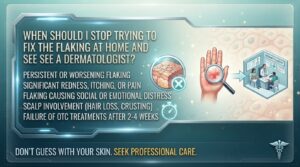
10. When should I stop trying over-the-counter shampoos and see a dermatologist?
You should schedule an appointment with a board-certified dermatologist if your scalp flaking does not improve after two weeks of consistent use with over-the-counter medicated shampoos. You should also seek professional care if you notice raw red patches, open sores, bleeding, or fluid oozing from your scalp.
Conclusion: Maintaining Scalp Health for Clear, Confident Styling
At itemguides.com, we want to help you understand how your body works so you can make informed choices for your daily care. Seeing a sudden shower of flakes after you brush your hair can be frustrating, but it is simply a sign that your scalp’s natural shedding cycle is out of balance.
By tailoring your hair care routine to your local environment—whether you’re filtering out hard water minerals in San Francisco, managing oil production during a hot Texas summer, washing away dry shampoo buildup in Washington, or hydrating a dry skin barrier during a cold New York winter—you can help keep your scalp balanced and healthy. Use gentle styling tools, select the right treatment products for your specific flake type, and enjoy a clean, confident look every single day!