We have all dealt with it: you look in the mirror and notice a patch of dry, peeling, or flaky skin. Your immediate instinct is likely to reach for a heavier moisturizer, use an exfoliating scrub, or look up a home remedy.
Often, a few days of extra hydration will solve the issue. But what happens when the flaking refuses to budge, spreads, or starts to sting, burn, and bleed?
Persistent skin flaking is rarely just about lacking moisture. It is often a visible sign of underlying inflammation, an overactive immune response, an allergic reaction, or a chronic skin condition. Trying to fix complex skin issues at home with random products can weaken your skin barrier, introduce infections, and delay the correct medical treatment.
For the readers of itemguides.com, this extensive guide will clarify when skin peeling is a simple seasonal annoyance and when it is a clear sign to stop DIY treatments and book an appointment with a board-certified dermatologist.
1. Dry Skin vs. Clinical Flaking: Spotting the Difference
It is easy to confuse dry skin (xerosis) with clinical conditions that cause flaking. How you handle the issue depends entirely on understanding which one you are dealing with.
Simple Dry Skin (Xerosis)
Dry skin is a temporary condition caused by environmental factors like cold winter air, low humidity, hot showers, or harsh soaps. The flaking is usually fine, powdery, white, and covers a broad area. It typically improves significantly within 5 to 7 days of using a gentle, fragrance-free moisturizer.
Clinical Skin Flaking
Clinical flaking is a symptom of an underlying issue where your skin’s cellular turnover loop is disrupted. The flakes are often thick, greasy, yellowish, or silvery, and they appear on localized patches of red, inflamed skin. If your skin is still flaking after two weeks of consistent moisturizing, you are likely dealing with a clinical condition rather than basic dryness.
2. The Five Most Common Medical Causes Behind Flaking Skin
When home moisturizing fails, it is usually because one of these underlying clinical conditions is driving the flaking process:
Atopic Dermatitis (Eczema)
Eczema compromises your skin barrier, allowing moisture to escape easily and irritants to get in. It causes intense itching, redness, and patchy flaking, often appearing in the bends of the elbows, behind the knees, or on the face.
Seborrheic Dermatitis
This inflammatory condition is triggered by an overgrowth of a harmless yeast called Malassezia on oil-rich parts of the body. It causes greasy, yellowish flakes on the scalp (dandruff), eyebrows, sides of the nose, and ears.
Psoriasis
Psoriasis is an autoimmune condition that accelerates your skin’s cellular growth cycle. Because skin cells build up rapidly on the surface before they can shed naturally, they form thick, raised red plaques covered with silvery scales.
Contact Dermatitis
This is an allergic reaction or direct irritation caused by a specific substance touching your skin—such as a new skincare ingredient, fragrance, preservative, or laundry detergent. It triggers a sudden outbreak of red, peeling, and blistering skin.
Tinea Corporis or Faciei (Fungal Infections)
Fungal infections feed on keratin in the skin, creating expanding, ring-shaped red patches with elevated, flaky edges. Applying standard steroid creams or moisturizers can actually worsen fungal infections.
3. Regional Environmental Triggers Across the US
Where you live can play a major role in how your skin behaves. Different regional climates across the United States can aggravate underlying skin conditions and complicate home care:
California & San Francisco: Microclimates and Windburn
Living in California, especially in coastal areas like San Francisco, presents unique challenges for your skin.
- The Climate Impact: Moving between warm, sunny inland areas and chilly, fog-heavy coastal zones creates rapid shifts in humidity. Constant coastal winds can strip moisture from your face, causing windburn and surface peeling.
- The Risk Factor: It is easy to mistake windburn or sun damage for simple dryness, leading people to over-exfoliate and irritate their skin further.
- When to See a Doctor: If your skin remains flaky, red, and sensitive despite regular wind protection and hydration, a local dermatologist can check for conditions like rosacea or eczema.
Texas: Heat Waves, Air Conditioning, and Hard Water
Texas presents a different set of challenges, from intense outdoor heat to dry indoor air.
- The Climate Impact: Extreme summer heat forces people to spend most of their time in air-conditioned buildings. Air conditioning strips moisture from indoor air, drying out your skin. Additionally, many areas in Texas have hard water, which contains minerals like calcium and magnesium that can irritate the skin barrier.
- The Risk Factor: Hard water residue can trap sweat and bacteria on the skin, aggravating seborrheic dermatitis and eczema.
- When to See a Doctor: If you notice greasy flaking around your nose or hairline that resists over-the-counter anti-dandruff washes, it is time for a professional assessment.
Washington: High Humidity, Mold Spores, and Damp Environments
The Pacific Northwest’s damp climate introduces unique environmental allergens.
- The Climate Impact: While western Washington and Seattle enjoy high outdoor humidity that prevents basic dry skin, the constant dampness encourages the growth of indoor molds and environmental allergens.
- The Risk Factor: Airborne mold spores and dust mites are common triggers for eczema flare-ups. High humidity can also worsen fungal issues on the skin.
- When to See a Doctor: If your flaking looks like a circular rash or expands outwards, it could be a fungal infection that requires prescription-strength antifungal treatment.
New York: Freezing Winters and Radiator Heat
New York winters bring a harsh combination of freezing outdoor air and dry indoor heating.
- The Climate Impact: Freezing winter air carries very little moisture. Indoors, building radiators produce intense, dry heat that saps moisture from your skin overnight.
- The Risk Factor: This severe drop in humidity can crack the skin barrier, leaving it raw, red, and prone to flaking.
- When to See a Doctor: If your skin develops deep, painful cracks that bleed or ooze, home moisturizers are no longer enough. You need professional care to heal the skin barrier and prevent infection.
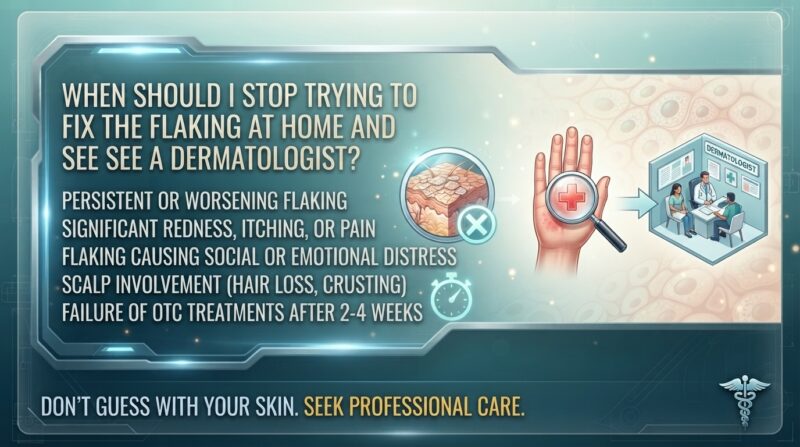
4. The Dermatologist Red Flags: When to Stop Home Care Immediately
If you experience any of the following symptoms, stop trying to treat your skin at home and book an appointment with a professional:
| Red Flag Symptom | Visual Appearance | What It Usually Indicates | Required Urgency |
| Signs of Infection | Yellow crusting, oozing pus, radiating heat waves, or red streaks. | Staph or strep bacteria entering through skin cracks. | Immediate (Within 24 Hours) |
| No Improvement | Flaking stays the same or spreads after 14 days of proper moisturizing. | A chronic condition like psoriasis or seborrheic dermatitis. | Schedule Soon (Within 1-2 Weeks) |
| Disrupted Sleep | Itching so intense that it wakes you up or prevents you from sleeping. | Severe eczema flare-up or advanced allergic reaction. | Schedule Promptly (Within a Few Days) |
| Pain & Bleeding | Skin splits open into deep fissures that bleed when you move. | Severely compromised skin barrier with a high risk of infection. | Schedule Promptly (Within a Few Days) |
| Asymmetrical Patches | A single, isolated flaky patch that does not match the other side of your body. | Potential fungal infection or precancerous actinic keratosis. | Schedule Soon (Within 1-2 Weeks) |
5. The Common Pitfalls of DIY Skin Care
When faced with flaking skin, many people make mistakes with home remedies that inadvertently make the problem worse:
- Aggressive Physical Scrubbing: Using physical scrubs, coarse washcloths, or facial brushes to scrub away flakes can damage your skin barrier, cause micro-tears, and trigger more inflammation and flaking.
- Misusing Hydrocortisone Creams: Over-the-counter hydrocortisone cream can help calm an itch, but using it continuously for more than a week can thin your skin, cause steroid-induced rosacea, and mask underlying infections.
- Layering Heavy, Pore-Clogging Oils: Slathering thick oils like coconut oil over flaking skin can worsen conditions like seborrheic dermatitis, as the yeast responsible feeds on the fatty acids in these oils.
6. Step-by-Step Gentle Skin Routine While Waiting for Your Appointment
If you have booked an appointment with a dermatologist but need to manage your skin in the meantime, follow this gentle care routine to avoid further irritation:
1.Wash with a Soap-Free, Non-Foaming Cleanser:Duration: 1-2 minutes.
Cleanse your skin using lukewarm water and a gentle, fragrance-free, non-foaming cleanser. Avoid harsh bar soaps or products containing salicylic acid or glycolic acid, which can strip away your skin’s remaining natural oils.
2.Pat the Skin Damp—Do Not Rub:Duration: 30 seconds.
Gently pat your skin with a clean, soft cotton towel, leaving it slightly damp. Never rub or scrub flaky areas, as this can worsen irritation and damage the skin barrier.
3.Apply a Ceramide-Rich Barrier Cream:Duration: 1 minute.
While your skin is still damp, apply a generous layer of a fragrance-free moisturizer containing ceramides, hyaluronic acid, or petrolatum. This helps lock in moisture and provides a protective layer over your skin barrier.
4.Stop Using Active Skincare Products:Duration: Ongoing.
Pause the use of all active skincare products, including retinoids, vitamin C serums, chemical exfoliants, and fragranced items, until a dermatologist has evaluated your skin.
7. 10 Comprehensive Skin Care FAQs
1. Can a routine change cause skin to flake unexpectedly?
Yes, introducing new skincare products can easily cause flaking. This can happen through two main pathways: an allergic reaction (contact dermatitis) to ingredients like fragrances or preservatives, or a normal adjustment period called “purging” caused by active ingredients like retinol or alpha-hydroxy acids (AHAs), which speed up cell turnover.
2. How can a dermatologist identify the cause of my flaking skin?
A dermatologist uses several diagnostic approaches. They will examine your skin under a specialized magnifying tool, review your health history, and may perform a painless skin scraping to check for fungal infections under a microscope. For complex cases, they can perform a small punch biopsy to confirm conditions like psoriasis.
3. Why does my dandruff keep returning despite using over-the-counter flaking shampoos?
Over-the-counter anti-dandruff shampoos often rely on a single active ingredient, like zinc pyrithione or selenium sulfide. If your dandruff is driven by a resistant strain of yeast or is actually scalp psoriasis rather than seborrheic dermatitis, you may need prescription-strength treatments containing ketoconazole or topical steroids.
4. What is a precancerous flake, and how can I spot it?
A precancerous lesion known as actinic keratosis often looks like a small, rough, sandpaper-like flaky patch on sun-exposed areas like the face, scalp, ears, or hands. Unlike dry skin patches, these lesions do not improve with moisturizer, can feel tender when touched, and may bleed occasionally.
5. Can high stress levels trigger sudden face peeling?
Yes, high psychological stress triggers the release of cortisol, a hormone that can disrupt your skin barrier and cause inflammation. Stress is a well-documented trigger for chronic skin conditions like eczema, psoriasis, and seborrheic dermatitis, often leading to sudden flare-ups.
6. Is it safe to use petroleum jelly (Vaseline) on flaky eyelids?
Eyelid skin is exceptionally thin and sensitive. While pure white petrolatum is safe and hypoallergenic, flaking on the eyelids can be a sign of contact dermatitis from makeup, nail polish transfer, or airborne allergens. It is best to have a dermatologist evaluate the area before applying heavy ointments long-term.
7. Why does my skin flake more when I spend time in air-conditioned buildings?
Air conditioning systems cool indoor spaces by removing moisture from the air. Spending long periods in low-humidity, air-conditioned environments can cause moisture to evaporate quickly from your skin, drying out the skin barrier and leading to surface flaking.
8. What is the difference between a skin allergy and a simple irritation?
An irritant reaction happens when a harsh substance damages the skin surface directly, causing immediate redness and peeling. An allergic reaction involves an immune response; it can develop a day or two after exposure, can spread beyond the initial area that touched the allergen, and often causes intense itching and small blisters.
9. Can dietary deficiencies cause my skin to peel?
Severe deficiencies in essential nutrients—such as omega-3 fatty acids, zinc, vitamin D, or B vitamins—can compromise your skin barrier and lead to dry, flaky skin. However, for most people living in developed regions, flaking skin is more commonly driven by topical skincare habits or environmental factors rather than diet.
10. Can I use a facial oil like coconut oil to treat my flaking skin?
While pure oils can soften dry skin, they are not always ideal for clinical flaking. Coconut oil, for example, is highly comedogenic (pore-clogging) and can feed the yeast that causes seborrheic dermatitis, making the condition worse. It is safer to use a formulated cream containing ceramides to help repair the skin barrier.
Conclusion: Prioritizing Your Skin Barrier Health
At itemguides.com, we believe that taking care of your skin starts with understanding when to manage things at home and when to seek professional help. Your skin barrier is your body’s first line of defense against the outside world, and persistent flaking is a clear sign that this defense system needs support.
By paying attention to environmental factors—whether you are dealing with windy coastal conditions in San Francisco, hard water in Texas, high indoor humidity in Washington, or dry radiator heat during a New York winter—you can better care for your skin. When simple moisturizing isn’t enough, don’t hesitate to consult a board-certified dermatologist. They can provide an accurate diagnosis and a tailored treatment plan to help restore your skin’s health and comfort.