Finding white flakes on your dark clothing is an all-too-familiar frustration. When dandruff strikes, most people immediately head to the store for specialty medicated shampoos, scalp scrubs, or topical oils.
While targeted hair products provide important surface relief, they only address the symptoms on your skin. They don’t tackle what is happening inside your body.
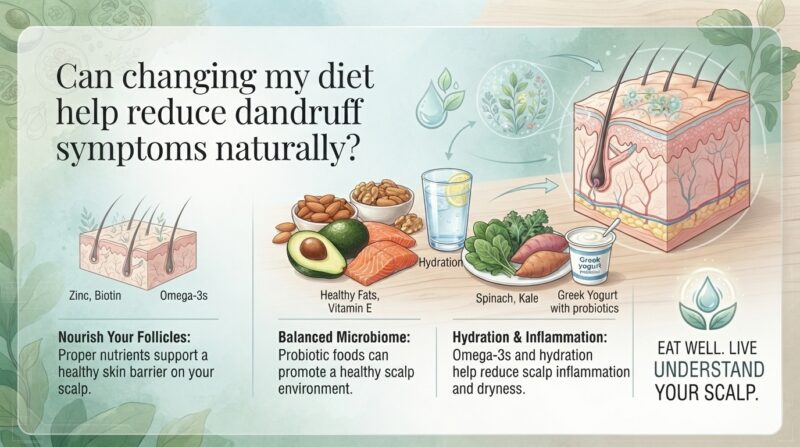
A growing body of dermatological research highlights a clear connection between gut health, system-wide inflammation, and scalp health. What you eat directly influences your sebum (natural skin oil) production, balances your immune system, and helps control the population of yeast living on your scalp.
For the community at itemguides.com, we have put together a detailed guide exploring how strategic dietary adjustments can help reduce dandruff symptoms naturally from the inside out.
1. The Internal Connection: How Diet Affects Your Scalp
To understand how food choices affect your scalp, it helps to understand what causes dandruff in the first place. Dandruff is typically driven by an overgrowth of a naturally occurring, harmless yeast called Malassezia.
[High Sugar / Refined Carb Diet] ──> Spikes Blood Insulin Levels
                                         │
                                         ▼
[Triggers Overproduction of Sebum Oil] ──> Feeds Malassezia Yeast on Scalp
                                         │
                                         ▼
[Yeast Introduces Irritating Oleic Acid] ──> Rapid Skin Cell Shedding (Flakes)
This yeast survives by feeding on the fatty lipids found in your sebum. When your body overproduces oil, Malassezia thrives, breaking down that oil into irritating oleic acid. If your skin barrier is sensitive to this acid, your scalp responds by accelerating its cell renewal process, causing dead skin cells to shed rapidly in visible white clumps.
Your diet can influence this cycle in two main ways:
- Hormonal Influxes: Foods that spike your blood sugar trigger a release of insulin. High insulin levels stimulate your sebaceous glands to produce more oil, providing extra food for scalp yeast.
- Inflammatory Pathways: A diet high in ultra-processed foods can alter your gut microbiome, promoting low-grade inflammation throughout the body that weakens your skin’s natural protective barrier.
2. Nutrient Guide: Foods to Focus On and Avoid
Managing dandruff naturally involves adding anti-inflammatory, sebum-regulating nutrients to your meals while cutting back on foods that fuel yeast growth.
Essential Nutrients to Choose
- Zinc: This essential mineral helps regulate oil production and has natural antimicrobial properties that support a balanced scalp. You can find it in pumpkin seeds, chickpeas, lentils, and lean meats.
- Omega-3 Fatty Acids: Found in wild-caught salmon, mackerel, walnuts, and flaxseeds, these healthy fats help soothe internal inflammation and hydrate dry skin from within.
- B-Complex Vitamins (Especially B6 and Biotin): These vitamins play a vital role in healthy skin metabolism. Great sources include eggs, avocados, bananas, and whole grains.
- Probiotics and Fermented Foods: Foods like plain Greek yogurt, kefir, sauerkraut, and kimchi help support a balanced gut microbiome, which in turn helps regulate your immune system’s response to yeast.
Ingredients to Limit
- Refined Sugars and High-Glycemic Carbs: White bread, pastries, sodas, and sugary snacks cause quick spikes in blood sugar, which can increase scalp oil production.
- Excessive Dairy Products: For some individuals, dairy can stimulate growth factors that encourage sebaceous glands to produce more oil.
- Ultra-Processed Trans Fats: Fried foods and processed snacks contain fats that can promote inflammation, potentially weakening your skin’s natural defenses.
| Food Group | Recommended Options (Add to Diet) | Options to Limit (Reduce Daily) |
| Proteins & Seafood | Wild salmon, sardines, chicken, pasture-raised eggs | Heavily processed deli meats, fried meats |
| Nuts, Seeds & Fats | Walnuts, flaxseeds, chia seeds, extra virgin olive oil | Corn oil, soybean oil, hydrogenated fats |
| Carbohydrates | Quinoa, sweet potatoes, oats, brown rice | White bread, sugary cereals, pastries |
| Snacks & Sweets | Dark chocolate (70%+), fresh berries, pumpkin seeds | Milk chocolate, candy, commercial baked goods |
3. Regional Environmental Challenges and Dietary Adjustments
Where you live across the United States can present unique environmental factors that complement or complicate your dietary adjustments:
California & San Francisco: High-Stress Living and Microclimates
Riding the economic and career waves of major California tech and urban centers can affect your body’s hormone levels.
- The Environmental Factor: High-stress lifestyles can cause your body to produce more cortisol, a stress hormone that can increase oil production along your hairline and scalp.
- The Dietary Adjustment: Balance high cortisol levels by adding stress-reducing, antioxidant-rich foods like green tea, dark berries, and leafy greens to your meals. These foods help protect your skin cells from oxidative stress.
Texas: Heat-Induced Dehydration and Grilling Traditions
Dealing with intense summer heat and regional food preferences requires a unique approach to hydration.
- The Environmental Factor: High summer temperatures lead to heavy sweating, which can dehydrate your skin and cause your scalp to produce extra oil to compensate. Additionally, regional dining habits often lean toward heavily marbled meats and sugary barbecue sauces.
- The Dietary Adjustment: Focus on consistent hydration by drinking plenty of water throughout the day. Opt for lean cuts of protein and choose homemade marinades made without refined sugars to help keep your insulin levels stable.
Washington: Low Winter Sunlight and Vitamin D Deficiencies
The Pacific Northwest’s famously overcast winters can impact your vitamin levels.
- The Environmental Factor: Extended periods of cloudy weather can lead to lower vitamin D levels. Vitamin D plays an important role in supporting your immune system and maintaining a healthy skin barrier.
- The Dietary Adjustment: Support your skin barrier during cloudy seasons by eating more vitamin D-rich foods, such as egg yolks, fortified foods, and fatty fish, or speak with a doctor about a high-quality supplement.
New York: Busy Lifestyles and Fast-Casual Dining
The fast-paced routine of commuting and working in major New York metropolitan areas often leads to relying on convenient meal options.
- The Environmental Factor: Busy schedules make it easy to depend on processed takeout options, which are often high in sodium, refined carbohydrates, and inflammatory oils that can trigger skin issues.
- The Dietary Adjustment: Protect your skin health by meal prepping simple whole foods at home. When dining out, look for whole-grain options, fresh salads, and lean proteins instead of processed fast food.
4. Holistic Scalp Care Routine
To get the best results from your dietary changes, combine them with a gentle, consistent hair care routine:
1.Gently Loosen Surface Debris Before Washing:Timing: Pre-wash.
Use a natural boar-bristle brush to gently brush your hair before showering. This helps loosen dead skin cells and distributes natural oils down the hair shafts, making it easier to wash away buildup without irritating your skin.
2.Use a Gentle Shampoing Method:Frequency: 2-3 times a week.
Apply a mild, fragrance-free or targeted anti-dandruff shampoo directly to your wet scalp. Use the pads of your fingers to massage the skin gently—never use your fingernails, which can scratch and inflame the area.
3.Rinse Thoroughly with Lukewarm Water:Temperature: Lukewarm.
Rinse your hair completely with lukewarm water to ensure no product residue is left behind. Avoid hot water, which can strip away your skin’s natural oils and leave your scalp feeling dry and irritated.
4.Keep a Balanced Daily Food and Hydration Journal:Timing: Daily habit.
Track what you eat alongside your scalp symptoms for three to four weeks. This can help you identify if specific items, like high-sugar treats or dairy, seem to correspond with a flare-up of flakes.
5. Top 10 Frequently Asked Questions (FAQs)
1. How long does it take for dietary changes to improve dandruff?
Because skin cells take time to renew, it typically takes four to six weeks of consistent dietary changes to see visible improvements on your scalp. Your body needs this time to regulate oil production and calm system-wide inflammation.
2. Can drinking apple cider vinegar cure dandruff naturally?
While some people use diluted apple cider vinegar as a topical rinse to help break up product buildup, drinking it will not directly cure dandruff. It can, however, support healthy digestion, which indirectly benefits your overall skin health.
3. Does eating spicy food make dandruff worse?
Spicy foods don’t directly cause dandruff yeast to grow. However, for some individuals, spicy dishes can trigger a sweat response and increase body temperature, which can stimulate oil production on the scalp and create a more favorable environment for yeast.
4. Is there a connection between drinking coffee and experiencing flakes?
Moderate coffee consumption is generally fine for your skin. However, drinking excessive amounts of caffeine can elevate your stress hormones (like cortisol), which can increase oil production. Additionally, adding heavy syrups or sugars to your coffee can spike insulin levels.
5. Can a gluten-free diet eliminate dandruff symptoms?
For individuals with celiac disease or a non-celiac gluten sensitivity, consuming gluten can trigger an inflammatory response that compromises the skin barrier. If you don’t have a gluten sensitivity, cutting out gluten is unlikely to change your dandruff symptoms.
6. Do sugar substitutes or artificial sweeteners cause scalp flaking?
Artificial sweeteners do not cause insulin spikes the same way refined sugars do. However, some research suggests that certain artificial sweeteners can alter your gut microbiome over time. If you want to sweeten your food, try small amounts of natural options like fresh fruit.
7. Can taking a zinc supplement replace a healthy diet for scalp care?
While zinc supplements can help if you have an actual deficiency, they cannot replace the benefits of a balanced diet. It is always best to get your essential nutrients from whole foods first, as they contain a mix of vitamins and minerals that work together to support your health.
8. Does drinking alcohol affect dandruff symptoms?
Yes, frequent alcohol consumption can impact your skin in two ways: it acts as a diuretic, dehydrating your skin barrier, and many alcoholic drinks are high in simple sugars, which can trigger insulin spikes and increase oil production.
9. Why does my dandruff seem to flare up when I skip breakfast?
Skipping meals can cause temporary blood sugar drops, which can lead to increased cortisol (stress hormone) production as your body compensates. This hormonal shift can stimulate your oil glands, potentially creating more flaking later on.
10. When should I stop adjusting my diet and consult a dermatologist?
If your scalp flaking remains severe, stays red, bleeds, oozes, or does not improve after six weeks of consistent dietary adjustments and over-the-counter care, make an appointment with a board-certified dermatologist for a professional evaluation.
Conclusion: Supporting Your Scalp and Skin from Within
At itemguides.com, we want to help you understand how your internal health connects with your outer well-being. Managing dandruff naturally is about more than just switching your shampoo—it’s about providing your body with the right nutritional balance to support your skin from the inside out.
By being mindful of your local environment—whether you are managing stress levels in San Francisco, staying well-hydrated during a hot Texas summer, supporting your vitamin levels during a cloudy Washington winter, or choosing whole foods over processed takeout in New York—you can give your skin the support it needs. Focus on nutrient-rich whole foods, limit ingredients that spike your blood sugar, and enjoy a balanced, healthy approach to daily grooming!