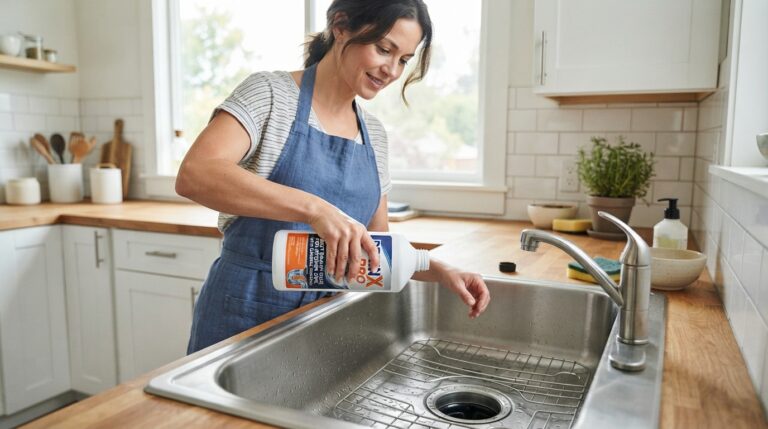
Using horticultural vinegar (typically 20% to 30% acetic acid concentration) is one of the most popular natural, non-selective weed control methods for homeowners across the United States—from the damp, moss-prone climate of Washington state to the sun-baked driveways of Texas, California, and historic brick paths in New York and San Francisco.
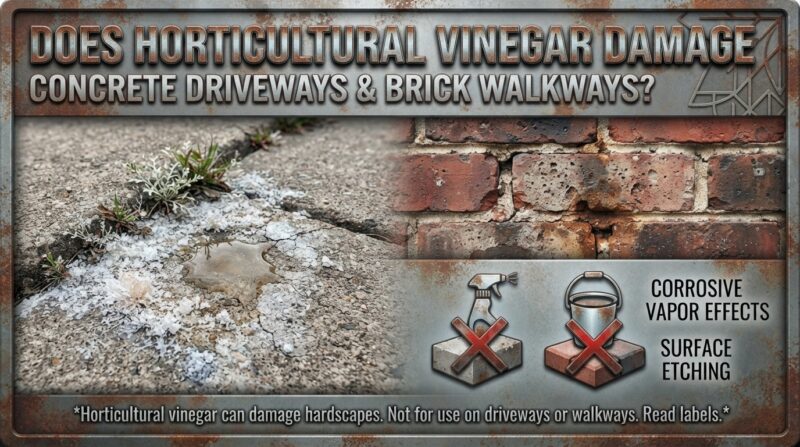
However, while horticultural vinegar is organic and non-toxic to soil life compared to synthetic chemicals, it can cause permanent cosmetic and structural damage to concrete driveways, paver stones, and brick walkway mortar if applied improperly.
Direct Answer: Does It Cause Damage
Yes, horticultural vinegar can damage concrete driveways and brick walkway mortar.
Because concrete and masonry mortar are alkaline (containing calcium hydroxide and calcium carbonate), high-strength acetic acid reacts chemically on contact.
- On Unsealed Concrete: 20–30% concentration horticultural vinegar etches the surface, dissolves the cement binder, exposes aggregate (gravel and sand), and leaves permanent discolored white or chalky stains.
- On Clay Bricks: Standard fired clay bricks are acid-resistant and generally unharmed by brief contact.
- On Brick Mortar & Joints: The mortar holding brick walkways together is cement-based and highly vulnerable to acid erosion, which causes crumbling and loosening over time.
- On Concrete Pavers: Colored concrete pavers lose their protective sealant and pigment, resulting in blotchy fading.
The Chemistry Behind Horticultural Vinegar Damage
To understand why this happens, it helps to examine the acid-base reaction:
- Concrete Composition: Concrete is made by mixing Portland cement, water, sand, and stone aggregate. During curing, cement forms calcium hydroxide Ca(OH)2, giving concrete an alkaline pH between 12 and 13.
- Acidic Reaction: Horticultural vinegar contains 20% to 30% acetic acid CH3COOH (pH ~2.0 to 2.5). Household household kitchen vinegar is only 5% acetic acid.
- Chemical Neutralization: When acid meets concrete, a chemical neutralization reaction occurs:
Ca(OH)2+2CH3COOH⟶Ca(CH3COO)2+2H2O
This reaction converts solid calcium hydroxide into water-soluble calcium acetate, breaking down the matrix that binds the sand and aggregate together. The result is micro-surface pitting, etching, and flaking.
Material Risk Matrix: Concrete vs. Clay Brick vs. Mortar
| Hardscape Material | Susceptibility to Acid | Type of Potential Damage | Risk Level |
|---|---|---|---|
| Unsealed Cast Concrete Driveways | Very High | Acid etching, surface roughening, white staining, aggregate exposure | High |
| Sealed Concrete Driveways | Moderate | Strips/degrades clear protective sealers; etches underlying concrete if worn | Moderate |
| Colored/Stamped Concrete | Extreme | Bleaches pigments, strips gloss sealer, leaves permanent patchy marks | Severe |
| Clay Bricks (Fired) | Low | Clay is inert to mild acids; minimal direct surface impact | Low |
| Masonry Mortar & Grout Joints | High | Dissolves binder, causes crumbling, destabilizes brick alignment | High |
| Polymeric Joint Sand | Moderate | High acidity can degrade binding polymers over repeated exposures | Moderate |
Regional Considerations across Key States
Depending on where your property is located, environmental factors compound or mitigate vinegar damage on hardscape surfaces:
1. California & San Francisco Bay Area
- Climate Factor: Foggy mornings, mild winters, and strict local pesticide restrictions make organic weed control preferred.
- Hardscape Impact: San Francisco’s coastal dampness slows down vinegar evaporation. Acid left pooling on damp concrete driveways etches much deeper than in dry conditions. Always apply on clear, sunny days so the liquid dries quickly.
2. Texas
- Climate Factor: High heat, intense UV rays, and alkaline soils.
- Hardscape Impact: Direct heat accelerates chemical reactions. Applying 20% vinegar to a hot Texas concrete driveway at 95°F will cause rapid surface etching within minutes. Spray during cooler morning hours if spot-treating.
3. Washington State (Pacific Northwest)
- Climate Factor: Frequent rainfall and shaded yards foster heavy weed and moss growth in paver joints.
- Hardscape Impact: Rain can wash high-concentration vinegar into storm drains or leach acid into surrounding soil, altering localized soil pH near flower beds and lawns.
4. New York & Northeast
- Climate Factor: Severe freeze-thaw winter cycles and heavy salt use.
- Hardscape Impact: Concrete already micro-cracked by winter road salt and freeze-thaw pressure is exponentially more fragile when exposed to acetic acid. Etching allows winter moisture to penetrate deeper, increasing spalling risk.
Safe Application Protocol: How to Protect Your Hardscape
If you choose to use horticultural vinegar for weeds along driveway cracks or walkway joints, follow these protective precautions:
Step-by-Step Safe Shielding Method
- Use Pinpoint Spot-Spraying: Never use a broad nozzle spray pattern near concrete or brick. Use a targeted spray wand set to a direct stream pointed strictly at the weed foliage.
- Pre-Wet Surrounding Concrete: Lightly spray surrounding concrete with fresh water before applying vinegar. Saturated concrete absorbs less acidic liquid.
- Cardboard Shielding: Place a piece of cardboard or plastic sheet over adjacent concrete or brick mortar, exposing only the target weed.
- Rinse Excess After 1 Hour: Horticultural vinegar burns plant foliage within 1–2 hours. Once foliage wilts, thoroughly rinse surrounding hardscape surfaces with plain water (or a mild baking soda solution) to neutralize remaining acid residue.
- Wear Protective Equipment (PPE): At 20–30% concentration, horticultural vinegar causes severe eye damage and skin burns. Always wear safety goggles, chemical-resistant gloves, long sleeves, and closed-toe shoes.
Eco-Friendly Alternatives for Driveway & Walkway Weeds
If you want to avoid damaging your concrete driveways or brick mortar altogether, consider these alternative weed-control methods:
Paver joints are prone to weeds, but high-strength acid can compromise joint stability.. Source: Reddit
- Propane Flame Weeder: Thermal weeders subject weeds to quick, high-temperature heat that breaks cell walls without chemical contact on hardscapes.
- Boiling Water: Ideal for small cracks; destroys root systems naturally with zero chemical residue.
- Polymeric Sand Installation: Re-pointing brick or paver joints with high-performance polymeric sand locks out seeds and moisture, preventing weed germination.
- Manual Crack Weeding Tools: L-shaped stainless steel driveway crack tools mechanically remove taproots cleanly without surface staining.
Frequently Asked Questions (FAQ)
1. Can household 5% white vinegar damage concrete?
Household vinegar (5% acetic acid) is much weaker than 20% horticultural vinegar. A quick splash will rarely cause structural damage, but repeated application or leaving 5% vinegar to puddle on unsealed concrete can still dull polished finishes and cause mild surface etching over time.
2. How long does it take for horticultural vinegar to etch concrete?
At 20% to 30% concentration, surface etching begins in as little as 5 to 15 minutes of direct contact on unsealed, dry concrete. High temperatures speed up this reaction.
3. How do I neutralize horticultural vinegar if spilled on concrete or brick?
Immediately wash the area with large amounts of water. For best results, mix 1 cup of baking soda per gallon of water and scrub the spill. Baking soda (an alkali) neutralizes acetic acid on contact.
4. Will horticultural vinegar harm clay brick pavers?
Fired clay bricks are highly acid-resistant and generally won’t react with vinegar. However, the mortar or joint sand between the bricks contains calcium carbonate and cement binders, which will degrade and crumble if exposed to strong acid.
5. Does horticultural vinegar ruin concrete sealers?
Yes. Strong acids breakdown acrylic, silane/siloxane, and topical gloss sealers. Applying 20% vinegar onto sealed driveways creates cloudy, dull patches where the protective coating has dissolved.
6. Is 20% horticultural vinegar safer for the environment than glyphosate?
Yes, horticultural vinegar breaks down rapidly in soil and does not leave persistent chemical residues. However, because it works as a contact burner rather than a systemic herbicide, perennial weeds with deep taproots may regrow and require multiple applications.
7. Why did my concrete turn white after applying horticultural vinegar?
The white residue is calcium acetate—the byproduct of acetic acid reacting with the calcium in cement. It indicates that the top layer of concrete paste has been chemically etched away.
8. Can I mix horticultural vinegar with dish soap and salt?
While mixing dish soap (as a surfactant) and salt (as a dehydrating agent) is popular, adding salt (sodium chloride) to driveways worsens surface pitting, corrodes rebar inside concrete, and causes long-term structural spalling.
9. Will rain wash away vinegar residue before it damages my driveway?
Rain helps rinse acid away, but if high-concentration vinegar sits on concrete for hours before it rains, the etching process has already occurred. Always rinse with a hose manually after foliage dies back.
10. How can I fix concrete already etched by horticultural vinegar?
Mild etching can sometimes be smoothed using a concrete cleaner, light grinding, or applying a wet-look penetrating sealer to blend color variations. Deep etching requires an acrylic concrete overlay or resurfacing compound.
Final Verdict & Summary
Horticultural vinegar is a powerful eco-friendly weed killer, but its 20–30% acidity makes it hazardous to cement-based driveways, concrete pavers, and brick walkway mortar.
To keep your hardscapes intact while managing weeds:
- Use targeted shielding so acid hits only foliage.
- Pre-wet and post-rinse concrete surfaces.
- Consider safer alternatives like flame weeders or polymeric sand for long-term crack protection.