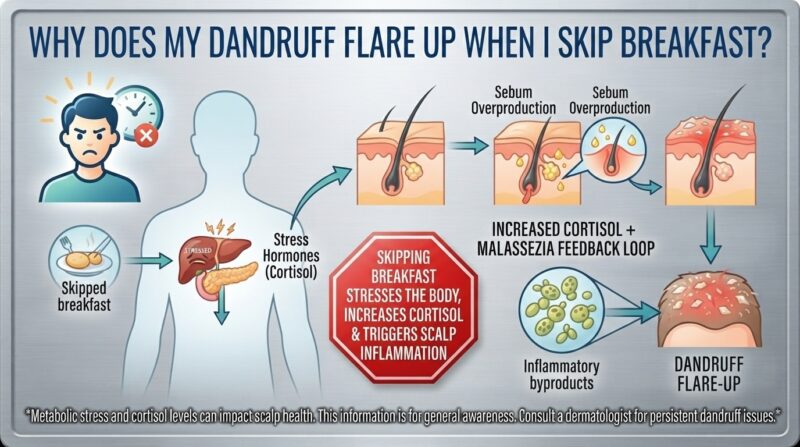
If you have noticed white or yellowish flakes dusting your shoulders on mornings when you rush out the door without eating, you are not imagining things. While skipping breakfast does not directly cause dandruff out of thin air, intermittent fasting, skipping meals, and morning metabolic disruption act as powerful triggers that worsen underlying scalp conditions like seborrheic dermatitis.
From fast-paced tech hubs in San Francisco and Seattle, Washington, to high-stress routines in New York, Texas, and California, skipping breakfast is a common habit. But internally, going extended periods without morning fuel sets off a domino effect: rising stress hormones, blood sugar swings, altered sebum (scalp oil) production, and gut microbiome shifts—all of which feed the yeast responsible for scalp flaking.
The Core Mechanisms: How Skipping Breakfast Triggers Flakes
Dandruff is primarily caused by an overgrowth of Malassezia, a lipid-loving fungus that naturally lives on human scalps. Malassezia feeds on the triglycerides present in sebum, breaking them down into unsaturated fatty acids (like oleic acid) that irritate the epidermal barrier and cause rapid skin cell turnover (flaking).
When you skip breakfast, four major biological pathways amplify this process:
1. Cortisol Spikes & Sebum Hyper-Production
When you fast overnight and skip breakfast, your body experiences low blood glucose. To compensate, the adrenal glands release cortisol and adrenaline to mobilize stored glucose.
Cortisol stimulates the sebaceous glands on your scalp via androgen receptor signaling. Elevated cortisol leads to excessive sebum secretion, effectively serving a massive feast to Malassezia yeast right when your immune defenses are under stress.
2. Blood Sugar Crashes and Insulin Surges
Skipping breakfast often leads to extreme hunger by mid-day, prompting high-carbohydrate or high-sugar lunches. This rapid shift from hypoglycemia to severe hyperglycemia causes massive insulin spikes. High circulating insulin elevates insulin-like growth factor 1 (IGF-1), which further drives sebaceous gland proliferation and scalp inflammation.
3. The Gut-Scalp Axis Disruption
Your gut microbiome and skin microbiome communicate constantly through systemic immune signaling (the gut-skin axis). Skipping meals irregularly alters gut motility and gastric acid secretion, which can trigger localized gut inflammation. This systemic inflammation weakens the skin’s natural stratum corneum barrier, making the scalp far more sensitive to Malassezia irritants.
4. Nutrient & Hydration Deficits
Breakfast is typically when people consume essential skin-supporting micronutrients like zinc, B vitamins (especially B6 and B12), and essential fatty acids (Omega-3s). Skipping breakfast routinely depletes these nutrients, leading to impaired epidermal repair and increased dry, itchy skin.
Regional Environmental & Lifestyle Compounding Factors
Your geographic location significantly alters how meal skipping affects your scalp:
| Region / City | Climate & Environmental Triggers | Lifestyle Impact on Scalp |
| San Francisco & Northern CA | Microclimates, cold coastal wind, fog, high indoor heating | Cold winds dry out the scalp barrier; skipping breakfast heightens systemic inflammation, compounding flaking. |
| Texas (Austin, Dallas, Houston) | Intense sun exposure, high heat, high humidity, hard water | Heat increases sweat and oil production. Combined with cortisol-induced oil from skipping meals, yeast multiplies exponentially. |
| Washington (Seattle, Spokane) | High rainfall, limited sunlight/Vitamin D, damp air | Low winter Vitamin D levels weaken immunity against fungal overgrowth, making stress-induced flares worse. |
| New York (NYC & Statewide) | Fast-paced commute stress, extreme seasonal shifts | Rushed morning routines lead to coffee-only breakfasts; high caffeine on an empty stomach spikes cortisol rapidly. |
How Stress Hormones Drive Scalp Inflammation
Understanding the endocrine pathway clarifies why skipping morning fuel shows up on your shoulders:
- Morning Fasting State: Blood glucose levels drop below baseline (~70 mg/dL).
- HPA Axis Activation: The Hypothalamic-Pituitary-Adrenal (HPA) axis activates to preserve brain function.
- Adrenal Cortisol Release: Cortisol levels surge significantly higher than the natural morning “cortisol awakening response” (CAR).
- Sebaceous Gland Stimulation: Cortisol binds to receptors on scalp sebaceous glands.
- Sebum Composition Alteration: Scalp oil becomes richer in squalene and fatty acids.
- Fungal Proliferation: Malassezia consumes excess oil, generating irritants that cause itching and visible white flakes.
Practical Protocols to Stop Breakfast-Related Flakes
You do not need to eat a massive breakfast to protect your scalp. The goal is simply to blunt the morning cortisol surge and stabilize blood sugar.
1. Follow the “Anti-Dandruff Morning Plate” Rule
If you are busy or follow a low-appetite morning routine, prioritize small, protein-rich, anti-inflammatory foods within 90 minutes of waking:
- Protein First: 2 boiled eggs, a scoop of collagen powder in tea, or Greek yogurt.
- Healthy Fats: Half an avocado or a handful of walnuts (rich in scalp-soothing Omega-3s).
- Zinc & Biotin: Pumpkin seeds or chia seed pudding to reinforce skin barrier integrity.
2. Modify Your Morning Coffee Routine
Drinking black coffee on an empty stomach dramatically amplifies the cortisol spike caused by skipping breakfast.
- Fix: Pair your morning coffee with a small protein snack, or add a dash of unsweetened almond milk and collagen peptides directly into your cup.
3. Targeted Scalp Wash Schedule
Match your scalp care routine with your high-stress days:
- Use targeted active ingredient shampoos containing Ketoconazole (1–2%), Zinc Pyrithione, or Selenium Sulfide on days when your routine is disrupted.
- Leave anti-dandruff shampoo on the scalp for at least 3 to 5 minutes before rinsing so the active antifungal can penetrate the hair follicles.
Comparison: Skipping Breakfast vs. Other Common Flaking Triggers
| Trigger | Primary Mechanism | Primary Symptom Profile |
| Skipping Breakfast | Cortisol spike $\rightarrow$ excess sebum $\rightarrow$ Malassezia surge | Greasy, large yellow-white flakes; scalp itchiness by midday |
| Hard Water Washing | Mineral buildup (calcium/magnesium) on hair shaft | Dry, dull hair with tight, powdery dry scalp flakes |
| Cold Weather / Dry Air | Dehydration of the top epidermal layer | Fine, small, non-greasy white flakes that fall easily |
| Aggressive Product Buildup | Silicone and heavy polymer residue trapping dead skin | Clumped, sticky residue near hair roots without redness |
Frequently Asked Questions (FAQ)
1. Can intermittent fasting permanently give me dandruff?
Intermittent fasting does not cause permanent dandruff, but the physiological stress during fasting windows can cause temporary flare-ups in susceptible individuals. Ensuring adequate nutrient intake and easing into fasting windows helps minimize scalp reaction.
2. Does coffee on an empty stomach make scalp itching worse?
Yes. Caffeine stimulates the adrenal glands to release extra cortisol and adrenaline. When consumed on an empty stomach, this effect is heightened, leading to increased scalp oil secretion and itchiness.
3. What vitamins should I take if I frequently skip breakfast?
A quality B-complex vitamin (containing B6 and Biotin), Zinc picolinate (15–30 mg), Omega-3 fish oil, and Vitamin D3 are essential for maintaining skin barrier function and regulating fungal growth on the scalp.
4. Is the flaking from skipping breakfast dry scalp or seborrheic dermatitis?
It is usually seborrheic dermatitis. Dry scalp results from lack of moisture, whereas breakfast-skipping triggers an increase in oil production that fuels yeast growth, causing oily, inflamed flakes.
5. Why does my scalp feel itchy around noon when I don’t eat?
By noon, cortisol-driven sebum production peaks while your blood sugar reaches its lowest point. This combination triggers localized neurogenic inflammation and histamine release around hair follicles, causing intense itching.
6. Can drinking water in the morning replace the need for breakfast for my skin?
Hydration is important, but water alone cannot blunt the cortisol spike triggered by low blood sugar. Consuming a small amount of protein or fat alongside water is required to signal metabolic safety to your brain.
7. Does high sugar at lunch make morning fasting flare-ups worse?
Yes. Breaking a fast with high-glycemic carbohydrates causes a steep insulin spike, which further stimulates androgen receptors in the scalp, worsening oil production and flaking.
8. Will anti-dandruff shampoos work if I don’t change my diet?
Anti-dandruff shampoos with active ingredients like Ketoconazole effectively clear external yeast on the surface. However, if internal triggers like cortisol spikes continue to produce excess oil, the flaking will likely return quickly once shampooing stops.
9. Why does my dandruff get worse in the winter when I skip meals?
Winter combines low ambient humidity with reduced solar UV exposure (which naturally suppresses Malassezia). When combined with internal stress from skipping meals, scalp susceptibility doubles.
10. How quickly will my scalp improve once I start eating morning meals?
Most people notice a reduction in midday scalp oiliness and itching within 7 to 10 days of stabilizing their morning blood sugar and cortisol levels.
Conclusion
Your scalp is a sensitive mirror of your internal metabolic health. While skipping breakfast might seem like a simple time-saver during busy mornings in California, Texas, New York, or Washington, the resulting cortisol spikes, blood sugar fluctuations, and altered sebum production create an ideal environment for dandruff-causing yeast.
By stabilizing your morning routine with a small, protein-rich snack, moderating empty-stomach caffeine, and utilizing targeted scalp care, you can effectively break the cycle of stress-induced flaking and maintain a healthy, flake-free scalp.