In an era of fast-paced lifestyles and quick-fix wellness trends—from tech hubs in San Francisco and Seattle, Washington, to bustling urban corridors in New York, Texas, and California—hair and scalp supplements have exploded in popularity. Zinc, in particular, is frequently marketed as a silver bullet for stopping dandruff, reducing oiliness, and preventing hair thinning.
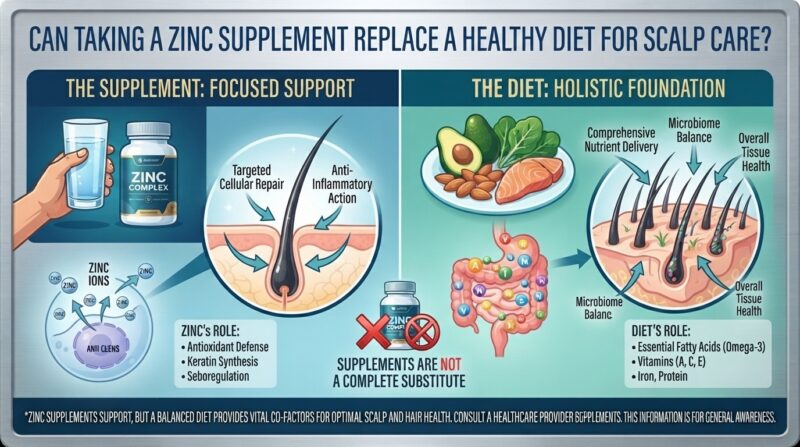
However, the direct answer from clinical dermatology and nutritional science is definitive: No, taking a zinc supplement cannot replace a healthy diet for scalp care.
While zinc is an essential trace mineral required for tissue repair, cellular immunity, and sebum regulation, isolated zinc supplementation addresses only a fraction of what your scalp requires to stay healthy. Relying on a pill while consuming a poor diet creates nutritional imbalances, misses key co-factors, and can even trigger severe side effects like copper deficiency and increased hair shedding.
Why Zinc Is Vital for Scalp Physiology (And Its Limits)
To understand why zinc alone falls short, it helps to look at what zinc actually does—and what it cannot do—for your scalp biology.
What Zinc Does Well
- Regulates Sebaceous Gland Activity: Zinc inhibits 5$\alpha$-reductase, an enzyme that converts testosterone into dihydrotestosterone (DHT), helping regulate excess sebum (oil) production.
- Suppresses Fungal Overgrowth: Zinc possesses natural antimicrobial properties that help control Malassezia, the yeast responsible for dandruff and seborrheic dermatitis.
- Accelerates Epidermal Repair: Zinc acts as a vital co-factor for RNA and DNA polymerases, enabling rapid cell division and tissue repair in the scalp’s stratum corneum.
What Zinc Cannot Do Alone
- Build Hair Keratin: Hair strands are made of structural proteins. Without adequate dietary protein (amino acids like cysteine and methionine), zinc has no raw materials to work with.
- Maintain the Lipid Barrier: Scalp hydration relies on essential fatty acids (Omega-3 and Omega-6). Zinc cannot create lipid membranes out of thin air.
- Deliver Oxygen to Follicles: Oxygen transportation to hair roots requires iron and ferritin, not zinc.
- Fight Oxidative Stress Alone: Comprehensive antioxidant defense requires a network of Vitamins A, C, E, and polyphenols working synergistically.
The Co-Factor Matrix: Whole Foods vs. Isolated Zinc Pills
Nutrients in whole foods do not act in isolation; they function as a biological matrix where vitamins, minerals, and enzymes work together. Taking a high-dose zinc pill without these co-factors is far less effective than consuming nutrient-dense whole foods.
| Scalp Health Goal | Essential Nutrient Matrix | Whole Food Sources | What Happens If You Rely Only on Zinc Pills |
| Keratin Production & Follicle Strength | Zinc + L-Cysteine + Biotin + Complete Protein | Eggs, wild salmon, pumpkin seeds, lentils | Weak hair structure due to lack of amino acid building blocks. |
| Sebum Balance & Barrier Repair | Zinc + Vitamin A + Omega-3 Fatty Acids | Mackerel, walnuts, spinach, sweet potatoes | Scalp remains dry or inflamed despite lower oil levels. |
| Antioxidant & Collagen Support | Zinc + Vitamin C + Vitamin E + Copper | Bell peppers, almonds, sunflower seeds, dark leafy greens | Accelerates cellular aging and follicle weakening. |
| Microcirculation & Oxygenation | Zinc + Iron + Vitamin B12 + Folate | Grass-fed beef, oysters, chickpeas, beet greens | Follicles starve from poor blood flow and low oxygen. |
The Hidden Danger: Zinc-Induced Copper Deficiency
One of the biggest risks of taking standalone zinc supplements to compensate for a poor diet is induced secondary copper deficiency.
- Intestinal Competition: Zinc and copper compete for the exact same intestinal transport protein, metallothionein.
- Imbalance Creation: High intake of elemental zinc (above 30–40 mg per day) stimulates excess metallothionein production in the gut lining.
- Copper Trapping: Metallothionein binds copper far more greedily than zinc, trapping dietary copper inside intestinal cells and preventing its absorption into the bloodstream.
The Irony for Scalp Health: Copper is required for lysyl oxidase (an enzyme that cross-links collagen and elastin in the scalp dermal matrix) and tyrosinase (the enzyme responsible for hair pigmentation). Over-supplementing zinc can cause severe hair breakage, premature graying, and diffuse hair shedding (telogen effluvium)—the exact problems users try to fix!
Regional Environmental Factors across Key States
Depending on where you live, environmental stressors tax your scalp in distinct ways that require whole-food nutritional support beyond a single mineral:
1. California & San Francisco Bay Area
- Environmental Factor: Microclimates, hard water minerals, and dry seasonal winds.
- Nutritional Need: Hard water deposits strip natural moisture from the scalp. Countering this requires high levels of Omega-3 fatty acids and Vitamin E to rebuild the lipid barrier—something zinc supplements cannot provide.
2. Texas
- Environmental Factor: Year-round high heat, intense UV radiation, and heavy sweating.
- Nutritional Need: Sunlight breaks down scalp cell folate and generates free radicals. Polyphenols and Vitamin C from fresh fruits and vegetables are essential to neutralize UV-induced oxidative stress.
3. Washington State (Pacific Northwest)
- Environmental Factor: Extended winter overcast, limited sunlight, damp ambient moisture.
- Nutritional Need: Low sunshine exposure leads to widespread Vitamin D3 deficiency, which directly triggers hair follicle miniaturization. Zinc pills cannot substitute for Vitamin D.
4. New York
- Environmental Factor: Severe winter freeze-thaw cycles, aggressive indoor heating, urban pollution.
- Nutritional Need: Cold dry air rapidly dehydrates the scalp. Fat-soluble vitamins (A and E) from a balanced diet are required to retain moisture and prevent winter flaking.
How to Build an Ideal “Scalp-First” Nutritional Plan
Instead of relying solely on a zinc capsule, build a dietary foundation that delivers zinc naturally alongside its vital co-factors:
1. Top Bioavailable Whole-Food Zinc Sources
- Oysters: 6 oysters supply over 300% of the daily value of zinc, alongside natural copper, B12, and selenium.
- Pumpkin Seeds (Pepitas): Packed with zinc, magnesium, and plant-based Omega-3s.
- Grass-Fed Beef & Pastured Poultry: Provides highly bioavailable heme zinc alongside complete amino acids.
- Lentils & Chickpeas: Excellent plant-based sources (pro-tip: soak or sprout them to reduce phytates and maximize absorption).
2. Smart Supplementation Guidelines
If a blood test confirms an actual zinc deficiency, supplement safely:
- Stay Within Limits: Keep daily supplemental zinc between 15 mg and 30 mg of elemental zinc (picolinate, glycinate, or citrate forms).
- Maintain the Zinc-to-Copper Ratio: Look for balanced formulas that provide a 10:1 or 15:1 ratio of zinc to copper (e.g., 15 mg zinc with 1.5 mg copper).
- Take with Food: Always take zinc with a meal to prevent nausea.
Frequently Asked Questions (FAQ)
1. How do I know if my scalp issues are caused by a zinc deficiency?
Common symptoms of zinc deficiency include slow wound healing, impaired taste or smell, brittle nails, persistent scalp dermatitis, and diffuse hair shedding. A serum zinc blood test ordered by a healthcare provider can confirm your levels.
2. What is the maximum safe daily dose of oral zinc?
The Tolerable Upper Intake Level (UL) for adults is 40 mg of elemental zinc per day. Taking higher amounts without medical supervision increases the risk of nausea, copper deficiency, and immune suppression.
3. Will taking zinc cure my dandruff permanently?
No. While zinc helps regulate scalp oil and yeast overgrowth, dandruff is a chronic, recurring condition driven by genetics, stress, immunity, and climate. A holistic approach combining diet, lifestyle, and medicated shampoos works best.
4. Is topical zinc (like Zinc Pyrithione shampoo) better than taking a pill?
For immediate surface symptoms like flaking and itching, topical zinc is far more direct and effective because it targets Malassezia directly on the skin without affecting internal systemic mineral levels.
5. Why do zinc pills make me nauseous on an empty stomach?
Zinc irritates the gastric mucosa when swallowed without food. Always take oral zinc supplements alongside a meal containing healthy fats and protein.
6. Can vegans and vegetarians get enough zinc from diet alone?
Yes, but plant-based zinc sources contain phytates, which bind to minerals and lower absorption rates. Vegans can increase bioavailability by soaking, sprouting, or fermenting grains and legumes, or by eating pumpkin seeds and nuts regularly.
7. Does biotin work better when taken with zinc?
Biotin (Vitamin B7) and zinc support different pathways—biotin aids keratin infrastructure while zinc supports cellular repair and oil regulation. They complement each other well, but neither can replace a protein-deficient diet.
8. Can too much zinc cause hair loss?
Yes. Chronic high doses of zinc (exceeding 50 mg daily) cause copper deficiency and disrupt iron absorption, both of which trigger telogen effluvium (widespread hair shedding).
9. How long does it take for diet changes to improve scalp health?
Because skin cells on the scalp take about 28 days to turn over and hair grows roughly half an inch per month, noticeable improvements usually appear after 4 to 8 weeks of consistent dietary upgrades.
10. Does drinking alcohol lower zinc levels in the body?
Yes. Chronic or heavy alcohol consumption decreases intestinal zinc absorption and increases urinary excretion of zinc, making drinkers more prone to deficiency.
Conclusion
While zinc is undeniably a cornerstone mineral for skin repair, hair follicle division, and oil balance, taking a zinc supplement can never replace a well-rounded, nutrient-dense diet.
Isolated supplements lack the protein building blocks, essential fatty acids, antioxidants, and co-factors needed for a healthy scalp barrier. For individuals in Texas, New York, California, Washington, or San Francisco facing scalp flaking or hair thinning, the most effective path forward is a food-first approach—supported by targeted, bioavailable supplementation only when a true deficiency exists.