If you recently switched to sugar-free energy drinks, diet sodas, or keto-friendly desserts and noticed an uptick in white flakes or an itchy, inflamed scalp, you might wonder if there is a connection.
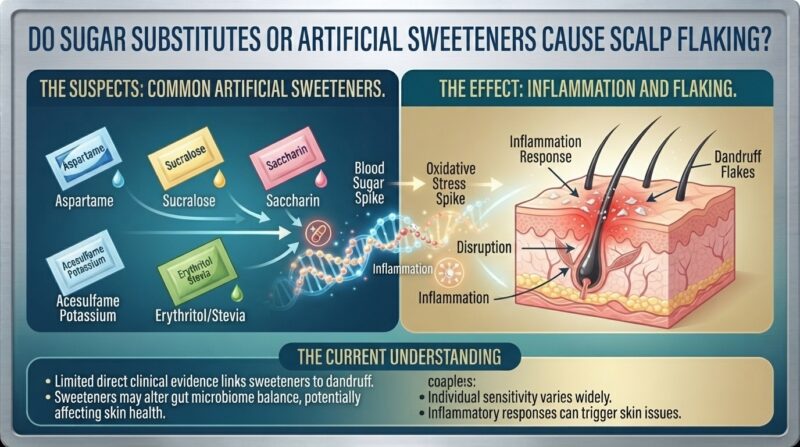
The direct answer: Artificial sweeteners and sugar substitutes do not directly feed scalp fungus the way sugar or sebum does, but they can indirectly cause or worsen scalp flaking by disrupting gut microbiome balance, triggering metabolic stress responses, and inducing systemic inflammation.
Across health-conscious demographics in San Francisco, California, Texas, Washington, and New York, low-calorie and zero-sugar diets are widely popular. However, the physiological impacts of non-nutritive sweeteners on the gut-skin axis can create ideal conditions for conditions like seborrheic dermatitis, severe dandruff, and dry scalp irritation.
The Biological Connection: How Sweeteners Trigger Flakes
Dandruff and seborrheic dermatitis stem primarily from an overgrowth of Malassezia, a lipid-dependent yeast naturally residing on human scalps. While Malassezia feeds on fatty acids in human sebum rather than sugar molecules, artificial sweeteners trigger secondary pathways that disrupt skin barrier health.
Scalp flaking ranges from fine dry skin to greasy, inflammatory seborrheic dermatitis scales.. Source: TimoninaIryna / Getty Images
1. Gut Microbiome Dysbiosis (The Gut-Scalp Axis)
Non-nutritive artificial sweeteners—particularly saccharin, sucralose, and aspartame—pass through the upper gastrointestinal tract without being fully digested. When they reach the colon, they alter the composition and diversity of gut bacteria.
- A compromised gut microbiome decreases short-chain fatty acid (SCFA) production (like butyrate), which is critical for maintaining intestinal wall integrity.
- Leaky gut lining permits endotoxins (like lipopolysaccharides) to enter circulation, triggering systemic low-grade inflammation.
- Systemic inflammation directly manifests in skin tissue, destabilizing the scalp’s stratum corneum barrier and causing increased cell shedding (flaking).
2. Sugar Alcohols and Gastrointestinal Osmotic Stress
Sugar alcohols (polyols) such as sorbitol, maltitol, and xylitol draw water into the large intestine. In sensitive individuals, high doses cause bloating, diarrhea, and nutrient malabsorption.
- Chronic digestive distress from polyols impairs the absorption of skin-vital micronutrients like zinc, B-vitamins, and fat-soluble vitamins (A and E).
- Nutrient-deprived scalp tissue becomes prone to dryness, micro-cracking, and inflammation.
3. Cephalic Phase Insulin Response (CPIR)
Even though artificial sweeteners carry zero calories, the taste receptors on your tongue signal your brain that sugar is entering the system. In some individuals, this triggers a cephalic phase insulin release.
- Fluctuating insulin levels stimulate androgen signaling.
- Androgens activate the sebaceous glands to produce thicker, more abundant scalp oil.
- This extra oil feeds Malassezia yeast, leading to rapid fungal reproduction and inflammatory scaling.
Comparison of Popular Sugar Substitutes & Scalp Impact
Not all sugar substitutes affect the body or scalp in the same way. The table below breaks down common sweetener categories and their specific risk profiles for scalp health:
| Sweetener Category | Common Examples | Primary Biological Pathway | Scalp Flaking Risk Level |
|---|---|---|---|
| Artificial Sweeteners | Aspartame, Sucralose, Saccharin | Gut microbiome dysbiosis; systemic inflammatory response | Moderate to High |
| Sugar Alcohols (Polyols) | Maltitol, Sorbitol, Xylitol, Erythritol | Osmotic gut distress, nutrient malabsorption, GI inflammation | Moderate |
| Natural Zero-Calorie | Stevia (Rebaudioside A), Monk Fruit (Luo Han Guo) | Minimal gut impact; generally well-tolerated by skin | Low |
| Novel / Rare Sugars | Allulose, Tagatose | Minimal glycemic impact; acts as a beneficial prebiotic fiber in gut | Low |
| Refined Cane Sugar (Baseline) | Table sugar, High-Fructose Corn Syrup | Direct insulin spikes, elevated sebum, increased systemic glycation | High |
Regional Environmental & Lifestyle Amplifiers
Depending on where you live, regional environmental stressors can compound the negative effects of diet-induced scalp issues:
1. San Francisco & California
- Lifestyle/Environment: High adoption of strict keto, carnivore, and zero-sugar diets combined with cool, windy coastal air.
- Impact: Coastal winds strip surface moisture while sweetener-induced gut dysbiosis weakens internal barrier repair, making the scalp twice as vulnerable to flaking.
2. Texas (Austin, Dallas, Houston)
- Lifestyle/Environment: Intense summer heat, high humidity, and heavy consumption of diet beverages during hot months.
- Impact: Heat accelerates sweat and oil secretion. When paired with insulin fluctuations from diet drinks, Malassezia yeast multiplies rapidly on the scalp.
3. Washington State (Seattle)
- Lifestyle/Environment: Limited winter sunlight, high ambient moisture, and heavy coffee/diet syrup consumption.
- Impact: Low Vitamin D levels compromise overall skin immunity. Adding artificial syrups to daily coffee can worsen gut inflammation and exacerbate winter seborrheic dermatitis.
4. New York
- Lifestyle/Environment: High-stress urban environments, severe freeze-thaw winter cycles, and artificial sweetener reliance during busy work routines.
- Impact: Stress hormones (cortisol) combined with sweetener-driven gut dysbiosis create a double hit on scalp barrier integrity.
Practical Tips: How to Tame Sweetener-Related Scalp Flakes
If you suspect artificial sweeteners are triggering or aggravating your scalp issues, follow this structured reset protocol:
Step 1: Conduct a 14-Day Sweetener Elimination Test
- Completely remove synthetic artificial sweeteners (sucralose, aspartame, saccharin) and high-dose polyols (maltitol, sorbitol) from your diet for two weeks.
- Replace them with pure water, herbal teas, or small amounts of natural monk fruit or pure stevia.
- Track whether midday scalp itching and greasy flaking decrease.
Step 2: Rebuild Gut Microbiome Diversity
- Incorporate Fermented Foods: Eat plain Greek yogurt, kefir, sauerkraut, or kimchi daily to replenish beneficial gut bacteria.
- Add Prebiotic Fibers: Consume asparagus, garlic, onions, and green bananas to feed healthy gut microbes that produce skin-protective short-chain fatty acids.
Step 3: Use Direct Topical Scalp Interventions
- Wash your scalp 2–3 times per week with active antifungal shampoos containing Ketoconazole (1–2%), Zinc Pyrithione, or Selenium Sulfide.
- Allow the shampoo foam to sit on the scalp for 3 to 5 minutes before rinsing so the active ingredients can penetrate deep into hair follicles.
Frequently Asked Questions (FAQ)
1. Does keto diet dandruff come from artificial sweeteners or ketosis itself?
It is often a combination of both. Entering ketosis changes the lipid composition of your sebum, while heavy reliance on artificial sweeteners, sugar alcohols, and diet products during keto can cause gut dysbiosis that worsens scalp inflammation.
2. Is Stevia safer for the scalp than aspartame or sucralose?
Yes. Pure stevia extract generally has a neutral impact on the gut microbiome and does not cause the same level of microbial imbalance as synthetic artificial sweeteners like sucralose or saccharin.
3. Can drinking diet soda directly cause a dandruff flare-up the next day?
A single diet soda is unlikely to cause immediate flaking overnight. However, regular consumption over days or weeks alters gut bacteria, leading to systemic inflammation that eventually manifests as scalp flaking.
4. Why does my scalp get greasy after consuming zero-calorie drinks?
In sensitive individuals, sweet tastes trigger a cephalic phase insulin release. Insulin stimulates androgen receptors in the scalp’s sebaceous glands, leading to increased oil production.
5. Are sugar alcohols like erythritol and xylitol bad for the scalp?
Erythritol is largely absorbed in the small intestine and excreted in urine, making it gentler on the gut. However, sorbitol and maltitol can cause significant gastrointestinal distress and nutrient malabsorption, indirectly worsening scalp health.
6. Can switching back to real sugar fix my scalp flaking?
Not necessarily. Excess refined sugar causes rapid insulin spikes, systemic glycation, and increased sebum production—all of which feed scalp yeast just as effectively. Moderate consumption of whole-food carbohydrates is ideal.
7. How long after cutting out artificial sweeteners will my scalp improve?
Gut bacterial balance begins to shift within 3 to 7 days after dietary changes. Noticeable improvements in skin turnover and scalp flaking typically appear within 2 to 4 weeks.
8. Does monk fruit sweetener affect the scalp or trigger dandruff?
Pure monk fruit (Luo Han Guo) extract contains mogrosides, which have antioxidant properties and do not disrupt gut bacteria. It is one of the safest sugar alternatives for skin and scalp health.
9. Can artificial sweeteners cause a dry, tight scalp without grease?
Yes. By causing osmotic fluid shifts in the gut and mild systemic dehydration, high consumption of diet beverages can reduce skin hydration, leading to dry, powdery white flakes rather than oily seborrheic dermatitis.
10. Should I stop using diet products entirely if I have seborrheic dermatitis?
If you suffer from chronic, stubborn seborrheic dermatitis, eliminating synthetic artificial sweeteners for a trial period is a low-risk, high-reward strategy to rule out gut-driven inflammatory triggers.
Conclusion
While artificial sweeteners do not directly feed the yeast responsible for dandruff, their hidden impacts on the gut-skin axis cannot be overlooked. By disrupting gut microbiome balance, inducing insulin fluctuations, and triggering systemic inflammation, artificial sweeteners can turn a manageable scalp condition into an uncomfortable, persistent flare-up.
For health-conscious consumers in Texas, California, Washington, New York, or San Francisco, balancing your sweetener intake with gut-friendly prebiotic foods and targeted scalp hygiene is the most reliable way to maintain a clear, flake-free scalp.