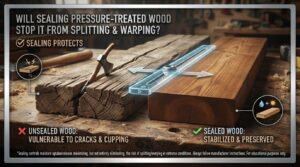
Pressure-treated pine is one of the most affordable and structural outdoor building materials available across North America. However, while chemical pressure treatment protects wood from fungal rot and wood-boring insects, it does not protect pine against moisture absorption, sun-induced UV degradation, cupping, checking, or splintering.
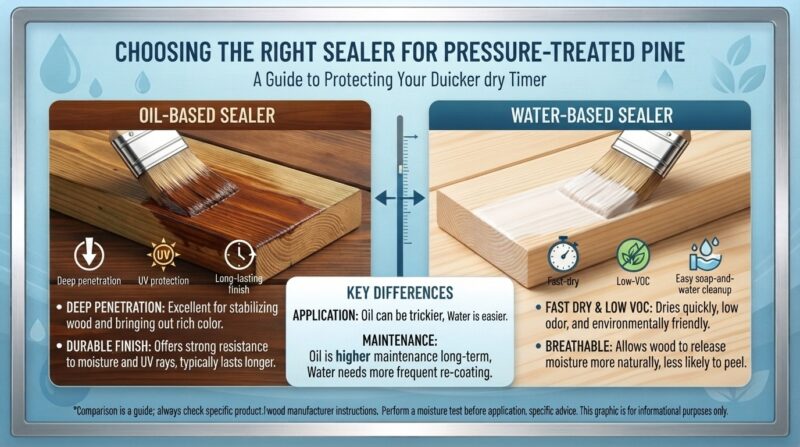
To keep a pressure-treated pine deck, fence, or pergola looking fresh and structurally sound, applying a high-grade sealer is non-negotiable. The fundamental choice comes down to two chemistries: oil-based (alkyd or natural oil) sealers and water-based (acrylic or synthetic resin) sealers.
Quick Verdict: Which Should You Choose?
- Choose Oil-Based Sealer if: You want deep conditioning inside dense pine fibers, a warm natural look, simple reapplication without stripping, and live in areas with moderate VOC regulations and high temperature swings.
- Choose Water-Based Sealer if: You need high resistance to UV fading, fast drying times, low VOC compliance (mandatory in California/San Francisco), resistance to mold/mildew in high-humidity climates (Washington state), or easy soap-and-water cleanup.
Understanding Pressure-Treated Pine Before Sealing
Pressure-treated pine (typically Southern Yellow Pine) is impregnated under high pressure with chemical preservatives like Copper Azole (CA) or Alkaline Copper Quaternary (ACQ). Understanding two physical characteristics of fresh pine avoids application failures:
1. High Initial Moisture Content
Fresh pressure-treated lumber leaves the home center saturated with chemical water solutions. Applying any sealer immediately will trap moisture inside, causing blistering, peeling, or internal wood rot.
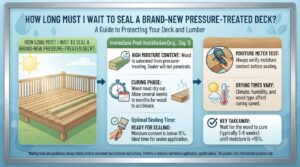
Rule of Thumb: Fresh pressure-treated pine must dry out before sealing. Depending on ambient humidity and sun exposure, this takes anywhere from 3 weeks to 6 months.
2. Mill Glaze
During the manufacturing process, heavy planetary planers generate intense heat that melts natural sugars and resins to the board surface, creating a hard, shiny barrier known as mill glaze. This glaze prevents sealers from absorbing evenly. Pressure washing or sanding with 80-grit paper opens the wood pores.
Oil-Based Sealers: Deep Penetration & Classic Aesthetics
Oil-based sealers utilize natural oils (linseed, tung, or soy) or petroleum-based alkyd resins suspended in mineral spirits.
┌──────────────────────────────────────────────────────────┐
│              OIL-BASED PENETRATION DYNAMICS               │
├──────────────────────────────────────────────────────────┤
│   [ Sealer Applied ]                                     │
│          │                                               │
│          ▼                                               │
│   ┌───────────────┐  Deep absorption into pine cellulose │
│   │ Wood Surface  │  replacements natural wood oils,    │
│   ├───────────────┤  curing INSIDE the board rather      │
│   │ Internal Cell │  than forming a hard top film.       │
│   │   Structure   │                                      │
│   └───────────────┘                                      │
└──────────────────────────────────────────────────────────┘
Key Advantages of Oil-Based Sealers
- Superior Deep Wood Conditioning: Oil penetrates deep into the cellular structure of Southern Yellow Pine, replacing lost natural oils and repelling moisture from within.
- Never Peels or Flakes: Because true penetrating oils don’t build a rigid top film, they slowly wear away over time rather than cracking, peeling, or flaking.
- Easiest Reapplication: Maintenance requires no heavy sanding or chemical stripping. Give the deck a light scrub with a cleaner, let it dry, and apply a fresh coat.
- Rich, Natural Wood Appearance: Oils highlight pine’s distinct grain pattern with a warm amber tone.
Disadvantages of Oil-Based Sealers
- Higher Volatile Organic Compounds (VOCs): Traditional solvent-borne oils emit higher chemical fumes during curing and are subject to strict environmental regulations in states like California and New York.
- Slower Drying Times: Curing takes 24 to 48 hours depending on temperature and humidity, leaving a longer window for dust, pollen, or leaves to stick to the finish.
- Susceptibility to Mildew: Natural oils (especially linseed oil) can act as a food source for mold and mildew spores in damp, shady areas unless high-grade mildewcides are added.
Water-Based Sealers: Modern Polymers & All-Weather Protection
Modern water-based sealers have evolved dramatically over the last decade. Advanced synthetic acrylic resins and nano-polymers allow these formulas to bond tightly to wood surfaces while offering environmental and performance benefits.
Key Advantages of Water-Based Sealers
- Exceptional UV Protection & Color Retention: High-quality acrylic polymers hold pigments tighter and reflect ultraviolet radiation better than oils, preventing graying for longer periods.
- Low-VOC & Environmental Compliance: Water-based sealers meet strict low-VOC mandates across California (including the Bay Area), New York, and northeastern air quality districts.
- Rapid Drying & Moisture Tolerance: Dries to the touch in 2 to 4 hours. Certain advanced water-based formulations can even be applied to damp wood 24 hours after pressure washing.
- Superior Mildew & Algae Resistance: Synthetic acrylics offer no organic food source for fungus, making them ideal for high-moisture or heavily shaded backyards.
Disadvantages of Water-Based Sealers
- Risk of Peeling: If applied too thick or over contaminated/un-sanded wood, water-based sealers form a top film that can peel, blister, or flake off.
- More Intensive Prep During Reapplication: If a water-based film breaks down or peels, restoring the surface requires chemical stripping or sanding back to bare wood before recoating.
- Dries Almost Too Fast: Applying water-based sealer in direct sunlight or on hot days can lead to lap marks and uneven streaks if you don’t maintain a wet edge.
Head-to-Head Comparison: Oil vs. Water-Based
| Performance Metric | Oil-Based Sealer | Water-Based Sealer |
| Primary Protection Mechanism | Deep cellular penetration | Surface bonding & cross-linking film |
| Typical Lifespan (Horizontal Decks) | 1 – 3 Years | 2 – 4 Years |
| Typical Lifespan (Vertical Fences) | 3 – 5 Years | 4 – 6 Years |
| Drying Time | 24 – 48 Hours | 2 – 6 Hours |
| VOC Levels | High (350–550+ g/L) | Very Low (<100–250 g/L) |
| Peeling Risk | Low to None | Moderate to High (if over-applied) |
| Ease of Cleanup | Mineral spirits / Paint thinner | Warm water and mild soap |
| Application Temperature | 50°F to 90°F | 50°F to 90°F (Avoid direct harsh sun) |
| Mildew Resistance | Moderate (requires additives) | Excellent |
| UV Protection | Good | Superior |
Climate & Regional Buyer’s Guide (US Target Areas)
Where your property is located dictates the environmental stresses your pressure-treated pine will face. Matching the sealer chemistry to regional weather conditions ensures maximum durability:
1. Texas (Austin, Dallas, Houston, San Antonio)
- Climate Drivers: Intense solar heat, extreme UV index, high summer humidity (Houston), periodic flash downpours.
- The Recommendation: Hybrid or High-Solid Water-Based Sealers with Strong UV Inhibitors.
- Why: The heat and UV radiation in Texas break down natural oil binders quickly, turning pine grey within a single season. Water-based acrylics retain color longer under extreme sun exposure.
2. Washington State (Seattle, Tacoma, Spokane)
- Climate Drivers: Frequent rainfall, high humidity, protracted damp seasons, low sun exposure.
- The Recommendation: Water-Based Penetrating Sealers with Heavy-Duty Mildewcides.
- Why: Oil-based coatings in damp Pacific Northwest microclimates can harbor green algae and black mold growth. Water-based synthetic polymers dry quickly between rain windows and resist moisture accumulation.
3. New York & Northeast (NYC, Long Island, Upstate NY)
- Climate Drivers: Freeze-thaw winter cycles, snow buildup, salt exposure, hot humid summers.
- The Recommendation: High-Quality Deep Penetrating Oil-Based or Water-Based Hybrid.
- Why: Water trapped inside wood during a freezing New York winter expands, causing top-film water-based sealers to micro-crack and peel. A deep-penetrating oil or penetrating water-based formula that leaves no top film handles freeze-thaw expansion better.
4. California & San Francisco Bay Area
- Climate Drivers: Strict SCAQMD & CARB VOC regulations, coastal salt fog (San Francisco), dry summer heat.
- The Recommendation: Ultra-Low VOC Water-Based Acrylic/Resin Sealers.
- Why: Regional air quality laws in California strictly limit high-solvent oil sealers. Modern low-VOC water-based sealers provide strong defense against coastal salt fog and dry heat while remaining compliant with state environmental guidelines.
How to Test If Pressure-Treated Pine is Ready for Sealing
Applying sealer to damp wood is the leading cause of coating failure. Perform the Water Drop Test:
           [ WATER DROP TEST DIAGNOSTIC ]

             Drop clean water on pine surface
                           │
            ┌──────────────┴──────────────┐
            ▼                             ▼
   Water beads into droplets     Water absorbs into wood
   & sits on top after 10 min    within 1 to 3 minutes
            │                             │
            ▼                             ▼
    [ DO NOT SEAL YET ]            [ READY TO SEAL ]
   Wood is too damp/waxy.        Pores are dry and open.
   Wait 2-4 weeks & retest.       Proceed with prep.
Step-by-Step Preparation & Application Process
To achieve professional-grade results that won’t fail prematurely, follow this procedural sequence:
- Clean & Prep the Surface: Wash the deck or fence with a dedicated wood cleaner or oxygenated bleach formula to remove mill glaze, dirt, gray wood fibers, and mold. Avoid high-pressure washing (above 1,500 PSI) on soft pine as it gouges and splinters the wood fibers.
- Apply Wood Brightener: Pressure-treated pine contains copper compounds that can turn dark or blotchy after cleaning. Applying an oxalic-acid-based wood brightener neutralizes the pH, restores the pine’s natural golden color, and opens wood pores for maximum sealer absorption.
- Allow Proper Drying: Let the wood dry completely for 24 to 48 hours of clear weather until the internal moisture content falls below 18% (measured using a digital wood moisture meter).
- Apply in Ideal Conditions: Work in shaded conditions between 55°F and 85°F. Do not apply in direct midday sun, as fast drying prevents deep absorption and causes lap marks.
- Back-Brush Every Application: Whether applying with a pump sprayer, roller, or pad applicator, always back-brush with a quality natural (for oil) or synthetic (for water) nylon-polyester brush. Back-brushing forces sealer deep into pine pores, cracks, and end-grains while evening out puddles.
Pro Tip: Apply sealer “board by board” along the full length of each plank. Never stop mid-board, or you will create visible lap lines where the dry and wet coats overlap.
Frequently Asked Questions (FAQ)
1. How long should I wait before sealing new pressure-treated pine?
New pressure-treated pine must dry out until its internal moisture level drops below 18%. Depending on the season, local humidity, and whether the wood is “KDAT” (Kiln Dried After Treatment), wait time ranges from 3 weeks to 6 months. Always conduct the Water Drop Test before applying any sealer.
2. What happens if I apply sealer to pressure-treated wood too early?
If sealed while wet, the trapped moisture will attempt to evaporate outward through the sealer. This leads to surface blistering, flaking, cloudy white spots beneath the film, or internal wood rot.
3. Can I apply a water-based sealer over an old oil-based sealer?
Yes, only if the old oil sealer has completely worn off or been chemically stripped and brightened. Water-based formulas cannot adhere to active oil or waxy residues. If water still beads up on the old finish, clean and strip the deck first.
4. Can I apply an oil-based sealer over a water-based sealer?
No. Oil cannot penetrate through a water-based acrylic top film. You must completely strip or sand away the existing water-based coating back to bare wood before applying an oil sealer.
5. What is KDAT pine, and does it change my choice of sealer?
KDAT stands for Kiln-Dried After Treatment. KDAT pine has had its manufacturing moisture removed in a commercial kiln before reaching the store. You can seal KDAT pine almost immediately after installation using either oil or water-based sealer without waiting months.
6. Is oil-based or water-based sealer better for pressure-treated fences?
Water-based sealers are generally preferred for vertical pressure-treated fences. Vertical surfaces receive high UV exposure, and water-based acrylics provide superior color retention with longer intervals between reapplication (up to 5–6 years on vertical posts and pickets).
7. How many coats of sealer should I apply to pressure-treated pine?
For oil-based penetrating sealers, apply one heavy coat or two “wet-on-wet” coats (applying the second coat while the first is still damp, typically within 20–30 minutes). For water-based sealers, follow the manufacturer label—usually two thin coats, ensuring you don’t build up a thick, plastic-like film that can peel.
8. Are oil-based wood sealers being banned in certain states?
While not completely banned, high-VOC oil sealers face strict environmental sales restrictions in California, New York, New Jersey, Pennsylvania, and parts of the Northeast. In these areas, manufacturers sell compliant “low-VOC oil” or advanced water-based alternatives.
9. Which sealer holds up best against heavy foot traffic?
Quality water-based acrylic sealers create a slightly harder surface film that resists scuffing and abrasion from patio furniture, pets, and heavy foot traffic better than soft oil finishes.
10. How often will I need to re-seal my pressure-treated pine deck?
Horizontal deck surfaces typically require re-sealing every 1 to 3 years for oil-based sealers and every 2 to 4 years for water-based sealers, depending on sun exposure, rainfall, and foot traffic.
Final Verdict
Choosing between oil-based and water-based sealer for pressure-treated pine ultimately comes down to balancing ease of maintenance against environmental conditions:
- Go with Oil-Based if you appreciate classic wood aesthetics, want a finish that will never peel or flake, live in a region with freeze-thaw winter cycles like New York, and prefer effortless maintenance coats every 2 years.
- Go with Water-Based if you live in high-sun or high-moisture regions like Texas, Washington, or California, need ultra-low VOC compliance, want maximum protection against graying and mildew, or want a fast single-day project with soap-and-water cleanup.