Medical Disclaimer: The information provided in this guide is for educational purposes only and is not a substitute for professional dental advice, diagnosis, or treatment. If you experience severe facial swelling, high fever, difficulty swallowing, or pain lasting longer than 48 hours, seek emergency dental care immediately.
When a throbbing toothache strikes unexpectedly—whether late at night or over the weekend—finding immediate relief becomes your top priority. Dental pain stems directly from nerve irritation within the tooth pulp, making it uniquely intense and difficult to ignore.
While no home remedy replaces a visit to the dentist, specific natural interventions can dull nerve signaling and lower localized tissue inflammation in under 10 minutes.
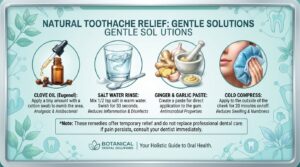
1. The Single Fastest Natural Remedy: Clove Oil (Eugenol)
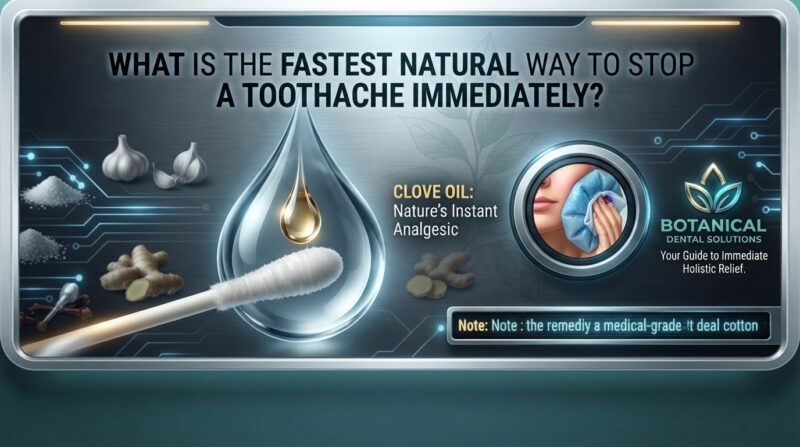
If you need the absolute fastest natural way to numb dental pain, clove oil (eugenol) is the clear winner.
Eugenol acts as a natural local anesthetic and antiseptic. It temporarily paralyzes the exposed nerve endings inside the tooth chamber while reducing bacterial counts around the surrounding gums. In clinical dentistry, modified eugenol formulations are still regularly used inside temporary fillings and dry socket dressings.
How to Apply Clove Oil Safely in 3 Steps
- Dilute the Oil: Mix 2 to 3 drops of pure, high-grade essential clove oil with 1/2 teaspoon of a food-safe carrier oil (such as extra virgin olive oil, coconut oil, or jojoba oil).
- Saturate a Cotton Swab: Dip a sterile cotton ball or swab into the diluted mixture until damp—not dripping wet.
- Target the Tooth: Gently press the cotton against the painful tooth and surrounding gum line for 5 to 10 minutes. You will feel a mild warming sensation followed by noticeable numbing.
Caution: Never apply undiluted essential clove oil directly to raw mucosal tissue or swallow it. Pure clove oil can cause chemical tissue irritation or mild burns if left concentrated on sensitive gums.
2. Speed Ranking: Natural Toothache Remedies Compared
When every minute counts, here is how the most popular natural interventions compare in terms of speed, duration of relief, and mechanism of action:
| Natural Remedy | Speed to Relief | Duration of Action | Primary Mechanism | Best Used For |
| Clove Oil (Eugenol) | 3 – 10 minutes | 1 to 3 hours | Local nerve block / Anesthetic | Sharp, acute dental pulp pain |
| Cold Compress / Ice | 5 – 10 minutes | While applied | Vasoconstriction / Numbing | External swelling & throbbing pain |
| Warm Salt Water Flush | 10 – 15 minutes | 30 to 60 minutes | Osmotic pressure / Disinfection | Swollen gums & food debris pressure |
| Crushed Garlic (Allicin) | 15 – 20 minutes | 1 to 2 hours | Broad-spectrum antibacterial | Suspected bacterial gum infection |
| Peppermint Tea Bag | 15 – 20 minutes | 45 to 90 minutes | Menthol cooling / Tannin astringent | Mild nerve pain & bleeding gums |
| 3% Hydrogen Peroxide Rinse | 15 – 30 minutes | 1 to 2 hours | Oxygenating bacterial wash | Gum irritation & mouth sores |
3. The “Fast-Relief Stack”: A 15-Minute Protocol
To achieve maximum pain relief in the shortest amount of time, dentists often recommend combining safe, non-conflicting home techniques into a rapid step-by-step protocol:
Minute 0 to 3: The Warm Salt Water Rinse
Dissolve 1/2 teaspoon of pure salt into 8 ounces of warm water. Swish gently for 40 seconds and spit it out completely. This flushes out trapped food particles, neutralizes acidic bacterial byproducts, and draws out excess fluid pooled in swollen tissues.
Minute 3 to 10: Apply Clove Oil Directly
Apply your diluted clove oil cotton swab directly to the affected tooth. Maintain gentle pressure for 7 minutes to allow the eugenol to penetrate dentinal tubules and quiet active nerve transmission.
Minute 10 to 15: Apply an External Cold Compress
Wrap an ice pack or a bag of frozen vegetables in a thin hand towel. Press it firmly against your outer cheek or jawline over the painful zone for 15 minutes. The extreme cold constricts local blood vessels (vasoconstriction), slowing inflammation and slowing down pain signal transmission to the brain.
4. What Causes Sudden Toothaches? (And What Remedies Can Fix)
Understanding the source of your pain helps you set proper expectations for what a natural remedy can—and cannot—do.
                    ┌──────────────────────────┐
                    │     Enamel (Outer)       │ ◄── No Nerves
                    └────────────┬─────────────┘
                                 │
                    ┌────────────▼─────────────┐
                    │     Dentin (Middle)      │ ◄── Sensitive Tubules
                    └────────────┬─────────────┘
                                 │
                    ┌────────────▼─────────────┐
                    │   Dental Pulp (Inner)    │ ◄── Active Nerves & Blood Vessels
                    └──────────────────────────┘     (Source of Throbbing Pain)
- Exposed Dentin / Sensitivity: Cracks or enamel loss expose tiny tubules leading straight to the nerve. Clove oil works exceptionally well here.
- Pulpitis (Infected/Inflamed Pulp): Bacteria enter the soft nerve chamber, causing immense pressure buildup inside a closed tooth space. Home remedies offer mild, short-term relief.
- Periodontal Abscess: Bacterial infection deep within the gum pockets or bone. Requires professional drainage and targeted prescription antibiotics.
5. 10 Frequently Asked Questions (FAQ)
1. What is the fastest natural way to numb a toothache at home?
Diluted clove oil (eugenol) applied with a cotton swab provides the fastest relief, usually dulling sharp nerve pain within 3 to 10 minutes.
2. Can a natural remedy permanently cure a toothache?
No. Natural remedies only soothe symptoms temporarily. They do not repair structural enamel loss, heal cracked roots, or clear deep dental infections. A professional dentist must treat the underlying cause.
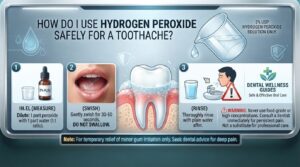
3. How do I use hydrogen peroxide safely for a toothache?
Mix equal parts 3% food-grade hydrogen peroxide and clean water. Swish in your mouth for 30 seconds and spit out thoroughly. Never swallow hydrogen peroxide, and avoid using it more than twice daily.
4. Why does my toothache get worse at night?
When you lie down flat, blood pressure increases toward your head. This extra vascular pressure exerts added force on the sensitive, inflamed pulp tissues inside your tooth. Keep your head elevated on 2–3 pillows to reduce nighttime throbbing.
5. Is it safe to put aspirin directly on my aching tooth or gums?
No. Never place aspirin against your teeth or gums. Aspirin is an acid that will burn your soft tissue, creating a painful chemical lesion known as an “aspirin burn.” Always swallow pain medication whole with water.
6. Can fresh garlic help stop a toothache quickly?
Garlic contains allicin, an antibacterial compound released when garlic is crushed. Applying a small amount of crushed garlic paste mixed with salt to the tooth can help reduce bacterial load within 15–20 minutes.
7. Does ice really help a toothache?
Yes. Holding an ice pack wrapped in a cloth against your cheek for 15 minutes reduces blood flow to the area, numbing local nerves and reducing facial swelling.
8. How long can I rely on home remedies before seeing a dentist?
Home remedies should only be used as a bridge for 24 to 48 hours while you wait for a scheduled dental appointment. Prolonged pain indicates a progressive issue that requires professional care.
9. What red-flag symptoms mean I need emergency medical care?
Seek emergency medical attention immediately if your toothache is accompanied by facial or neck swelling, high fever, difficulty swallowing, inability to fully open your mouth, or difficulty breathing.
10. Can vanilla extract help soothe tooth pain?
Vanilla extract contains small amounts of alcohol and natural antioxidants, which can temporarily numb tissue and offer mild relief. However, it is significantly less effective than clove oil or a cold compress.
Conclusion
When you need the fastest natural way to stop a toothache immediately, clove oil (eugenol) paired with a warm salt water flush and an external cold compress delivers the most reliable relief protocol available at home.
While these home remedies buy you valuable comfort, remember that they manage symptoms rather than fixing structural dental damage. Schedule an evaluation with a licensed dentist as soon as possible to treat the root cause.