Medical Disclaimer: The information in this article is for educational purposes only and does not replace professional dental diagnosis or treatment. If you experience severe facial swelling, fever, difficulty breathing, or pain lasting longer than 48 hours, seek emergency dental care immediately.
A throbbing toothache can disrupt your entire day, making it difficult to speak, sleep, or eat. Whether you are dealing with a sudden flare-up over the weekend or waiting for an upcoming emergency dental appointment in San Francisco, Dallas, or New York, home remedies can help numb localized nerve pain and reduce inflammation.
Understanding which remedies actually work—and how to apply them safely—can make the difference between temporary comfort and chemical burns on your soft oral tissues.
1. Top Evidence-Based Natural Remedies for Toothaches
Not all home remedies are created equal. Below are the most effective, research-supported natural treatments for temporary dental pain relief.
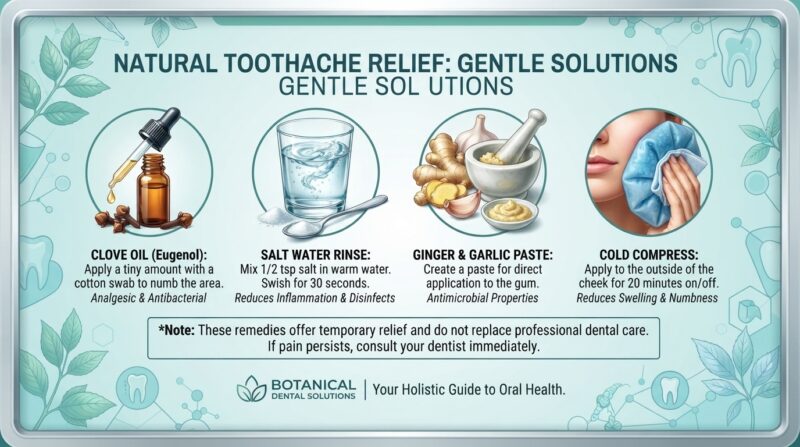
1. Clove Oil (Eugenol)
Clove oil is widely considered the gold standard of natural dental remedies. It contains eugenol, a natural chemical compound with powerful local anesthetic (numbing) and antibacterial properties. In fact, eugenol is still used in professional dental cements today.
- How to use: Mix 2–3 drops of pure clove oil with a teaspoon of carrier oil (such as olive oil or coconut oil). Dip a sterile cotton ball into the mixture and gently press it against the affected tooth and surrounding gum line for 10–15 minutes.
- Safety note: Never apply undiluted essential clove oil directly to raw mucosal tissue, as it can cause localized chemical irritation or burns.
2. Warm Salt Water Flush
A warm salt water rinse is a natural first-line defense against dental discomfort. Salt water acts as a natural disinfectant, drawing out fluid trapped in inflamed gum tissues through osmotic pressure while dislodging food debris wedged between teeth.
- How to use: Dissolve 1/2 teaspoon of pure sea salt or table salt into a glass of warm water (8 oz). Swish the solution around your mouth for 30 seconds before spitting it out. Repeat 3 to 4 times daily.
3. Cold Compress Application
When tooth pain is accompanied by localized swelling or throbbing, temperature therapy can help restrict blood flow to the affected area.
- How to use: Wrap an ice pack or a bag of frozen peas in a clean hand towel. Hold it against the outside of your cheek or jaw near the painful area for 15–20 minutes at a time. Rest for 20 minutes before reapplying.
4. Fresh Garlic Paste (Allicin)
Garlic contains allicin, an organic sulfur compound released when fresh garlic cloves are crushed, chopped, or chewed. Allicin exhibits broad-spectrum antimicrobial properties that can temporarily suppress bacterial proliferation around an infected tooth.
- How to use: Crush one fresh garlic clove to create a smooth paste. Add a pinch of salt, then apply a tiny amount directly to the painful tooth using a cotton swab. Leave for 5–10 minutes before rinsing thoroughly with warm water.
5. Peppermint Tea Bags
Peppermint contains menthol, which acts as a mild topical numbing agent and provides a cooling sensation that distracts from deep nerve throbbing. Additionally, the natural tannins in tea help soothe irritated oral tissue.
- How to use: Steep a peppermint tea bag in hot water for 3–5 minutes. Remove the tea bag and allow it to cool down in the freezer for 5 minutes until it is comfortably cool. Apply the damp bag directly over the sore tooth or gum area.
2. Quick-Reference Comparison of Toothache Home Remedies
| Remedy | Key Active Component | Primary Benefit | Best Used For | Caution / Side Effects |
| Clove Oil | Eugenol | Local Anesthetic / Numbness | Sharp, localized pulp pain | Tissue burn if undiluted |
| Salt Water Flush | Sodium Chloride | Draws fluid / Disinfects | Swollen gums, food debris | Do not swallow excess salt |
| Garlic Paste | Allicin | Antimicrobial / Antibacterial | Suspected minor infections | Strong odor, mild skin sting |
| Cold Compress | Cryotherapy | Reduces blood flow & swelling | Traumatic injury, throbbing | Do not apply ice directly to skin |
| Peppermint Tea | Menthol / Tannins | Soothing / Mild Numbing | Sensitive or inflamed gums | Temporary relief only |
| 3% Hydrogen Peroxide | Peroxide | Oxygenating disinfectant | Bleeding gums, debris removal | Must be diluted 1:1 with water |
3. Underlying Causes of Toothaches & What Remedies Can (and Can’t) Do
Understanding why your tooth hurts helps set realistic expectations for home remedies:
- Dental Caries (Cavities): When bacteria erode protective enamel and reach the dentin, nerves become sensitive to temperature and pressure. Home remedies temporarily deaden nerve signals, but only a dentist can remove decay and place a filling.
- Dental Abscess: A localized bacterial infection at the root of a tooth or between the tooth and gum. Home remedies cannot clear a deep structural infection; antibiotics or root canal therapy are required.
- Cracked or Fractured Tooth: Cracks expose internal nerve pathways. While cold compresses lessen pain, structural repairs (crowns or bonding) are needed to save the tooth.
- Impacted Wisdom Teeth: Third molars trying to break through tight gum tissue cause localized pericoronitis. Warm salt water flushes help clear trapped food, but extraction may ultimately be necessary.
Key Takeaway: Home remedies are temporary symptom-management tools, not permanent cures. They manage pain while you organize professional dental care.
4. Practical Tips for Managing Nighttime Toothache Pain
Toothache pain frequently intensifies at night. When you lie down flat, blood pressure increases toward your head, exerting extra pressure on inflamed dental nerves.
- Elevate Your Head: Use two or three pillows to keep your head elevated above your heart level while sleeping to reduce cranial blood pooling.
- Avoid Trigger Foods Before Bed: Refrain from consuming extremely hot, ice-cold, sugary, or acidic foods and drinks in the evening.
- Floss Gently: Carefully floss around the aching tooth before bed to ensure no stubborn food particles are exerting mechanical pressure on the gums.
- Combine Remedies Wisely: A salt water rinse followed by a cold compress applied to the cheek often provides the best relief window for falling asleep.
10 Frequently Asked Questions (FAQ)
1. What is the fastest natural way to stop a toothache immediately?
Application of diluted clove oil (eugenol) directly to the tooth using a cotton swab typically delivers the fastest numbing action, often taking effect within 5 to 10 minutes.
2. Can a natural remedy permanently cure a toothache?
No. Home remedies only alleviate symptoms temporarily. They do not remove decayed enamel, eliminate deep root canal infections, or repair cracked teeth. A professional evaluation is required to prevent progressive jawbone damage or systemic infection.
3. How do I use hydrogen peroxide safely for a toothache?
Mix equal parts 3% food-grade hydrogen peroxide and warm water. Swish the mixture in your mouth for 30 seconds and spit it out completely. Never swallow hydrogen peroxide, and rinse your mouth with plain water afterward.
4. Is vanilla extract effective for tooth pain?
Vanilla extract contains alcohol, which acts as a mild topical antiseptic and numbing agent, alongside natural antioxidant compounds. While it offers temporary distraction and cooling, it is less potent than clove oil.
5. Why does my toothache feel worse when lying down?
Lying flat causes more blood to flow to your head and neck tissues. Increased localized vascular pressure exerts extra force on inflamed, sensitive dental nerves inside the tooth pulp.
6. Can I put aspirin directly against my tooth or gums?
No. Placing aspirin directly against a tooth or gum tissue causes severe acid burns known as an “aspirin burn.” Aspirin must always be swallowed with water like any standard oral pain reliever.
7. How long can I safely use home remedies before seeing a dentist?
Home remedies should generally not be relied upon for more than 24 to 48 hours. Prolonged pain indicates underlying structural or bacterial issues that require professional intervention.
8. What red-flag symptoms mean I need emergency medical care?
Seek immediate emergency medical or dental care if your toothache is accompanied by facial swelling that extends to your eye or neck, high fever, difficulty swallowing, trouble opening your mouth, or difficulty breathing.
9. Are essential oils other than clove safe for oral use?
Thyme oil and tea tree oil have antibacterial properties, but they must be heavily diluted with carrier oils before oral contact. Never swallow essential oils, as internal ingestion can be toxic.
10. How can I protect my teeth from future toothaches?
Maintain diligent oral hygiene: brush twice daily with fluoride toothpaste, floss at least once a day, restrict sugary snacks, wear a nightguard if you grind your teeth, and schedule professional cleanings every six months.
Conclusion
When a toothache strikes, utilizing natural remedies like clove oil, warm salt water flushes, and cold compresses can help manage pain and lower inflammation while you arrange care. However, because home treatments address symptoms rather than underlying causes, scheduling a visit with a licensed dentist remains essential.