When a sharp, pulsating toothache strikes without warning, finding immediate relief becomes your top priority. Whether the pain flares up late at night, over a weekend, or while traveling, many people turn to their kitchen pantries for home remedies. Among the most popular traditional treatments is fresh garlic.
Yes, fresh garlic can help soothe a toothache, but it works primarily by fighting bacterial infection rather than instantly numbing nerve pain.
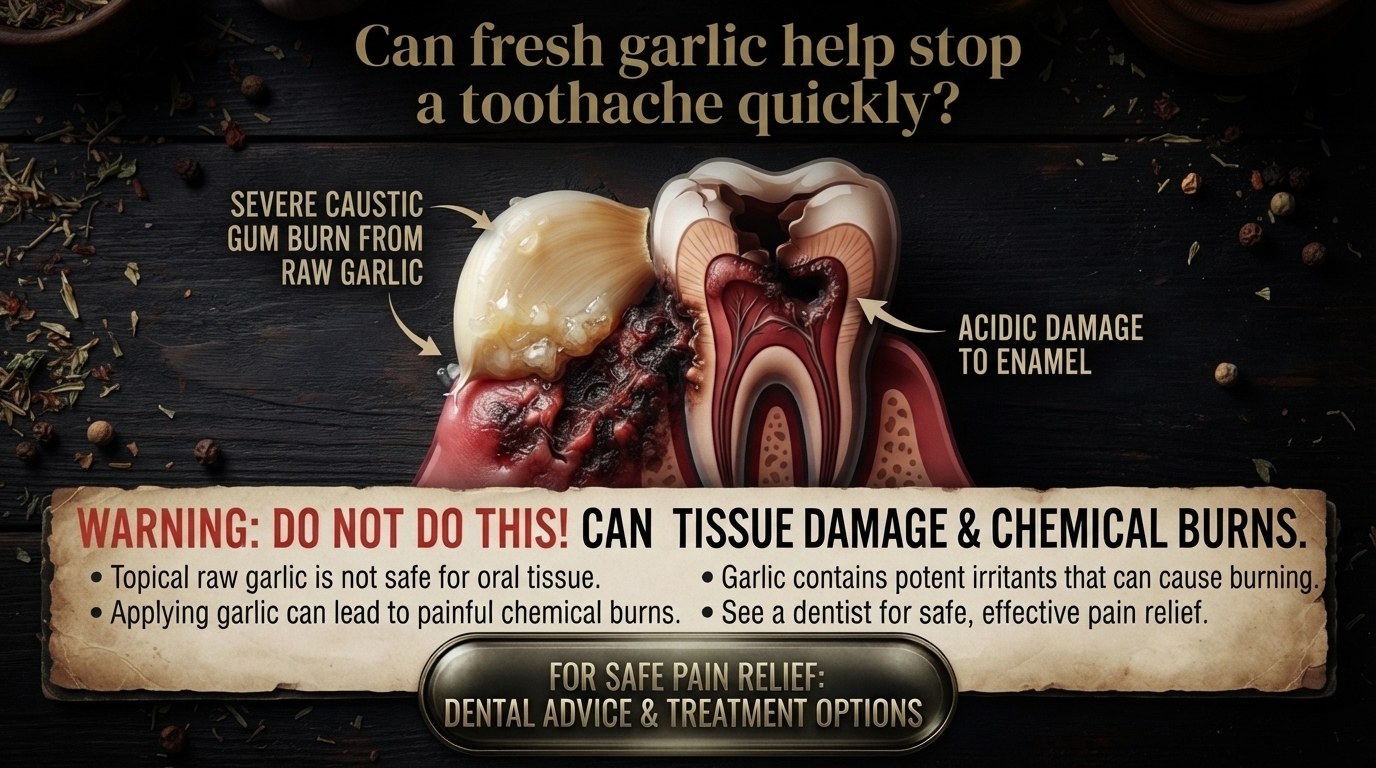
When fresh garlic is crushed, chopped, or chewed, an enzymatic reaction produces allicin—a powerful natural antibacterial and antimicrobial compound. Allicin actively kills the oral bacteria responsible for dental decay and localized gum infection, which can help reduce infection-related pressure and throbbing. However, garlic does not contain true local anesthetic properties (unlike eugenol in clove oil), and applying raw garlic directly to tender oral tissue carries a real risk of chemical mucosal irritation or burns if done incorrectly.
This comprehensive guide covers the biochemical mechanisms of garlic, safe step-by-step application techniques, state-by-state climate and health factors for key US regions, top emergency dental relief products, and a detailed 10-question troubleshooting FAQ.
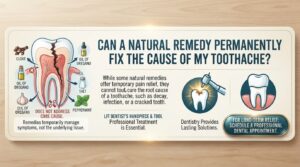
Medical Disclaimer: Home remedies provide temporary symptom relief only. They do not cure underlying cavities, cracked teeth, deep pulp infections, or dental abscesses. Always schedule an appointment with a licensed dentist as soon as possible.
1. The Science of Garlic: How Allicin Affects Dental Bacteria
To understand why garlic works for some toothaches and falls short for others, it helps to examine the underlying biochemistry.
1. The Allicin Activation Process
Whole, intact garlic cloves contain an amino acid called alliin and an enzyme called alliinase, kept in separate cellular compartments. When you crush, chop, or chew a garlic clove, these cell walls rupture, allowing the enzyme to convert alliin into allicin (diallyl thiosulfinate).
[Crushing / Chewing Fresh Garlic] ---> [Alliin + Alliinase Enzyme Reaction] ---> [Allicin Production (Peak Activity 10-30 mins)]
2. Broad-Spectrum Antibacterial Action
Allicin destroys harmful oral bacteria (such as Streptococcus mutans and Porphyromonas gingivalis) by reacting with essential enzymes inside bacterial cells, disrupting their cellular membranes. By reducing the bacterial load inside an open cavity or around inflamed gums, garlic helps lower localized inflammation and pressure.
3. Antimicrobial vs. Anesthetic: The Important Difference
It is crucial to differentiate between killing bacteria and numbing nerves:
- Garlic (Allicin): Antibacterial agent. It reduces bacterial pressure over 10 to 30 minutes, but it does not block nerve pain signals directly.
- Clove Oil (Eugenol) / Benzocaine: True local anesthetics. They block voltage-gated sodium channels along nerve fibers, numbing pain within 3 to 5 minutes regardless of bacterial count.
2. Natural Toothache Remedies Comparison Matrix
Knowing how garlic compares to other popular home remedies helps you choose the fastest, safest option for your specific type of pain:
| Remedy / Treatment | Active Compound | Speed to Relief | Primary Effect | Risk of Oral Burn / Irritation | Best Used For |
| Fresh Crushed Garlic | Allicin | 15–30 Minutes | Antibacterial & Anti-inflammatory | Moderate (Can burn gums if left raw) | Bacterial cavity pressure & gum infection |
| Clove Oil (Eugenol) | Eugenol | 3–5 Minutes | Direct Local Anesthetic (Numbing) | Moderate (Requires dilution with carrier oil) | Sharp nerve pain & deep cavity ache |
| External Cold Compress | Cold Temperature | 10–15 Minutes | Vasoconstriction (Reduces throbbing) | Very Low (When wrapped in cloth) | External jaw swelling & throbbing pressure |
| Warm Saltwater Flush | Sodium Chloride | 5–10 Minutes | Osmotic fluid draw & debris removal | None | Trapped food particles & swollen gums |
| 3% Hydrogen Peroxide | Hydrogen Peroxide | 5–10 Minutes | Cleanses anaerobic bacteria | Low (Must be diluted 1:1 with water) | Bleeding gums & surface plaque cleanout |
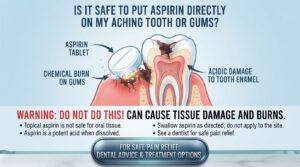
| Aspirin on Gums | Acetylsalicylic Acid | No Relief | Destructive Acid Burn | EXTREME (Causes mucosal necrosis) | NEVER USE TOPICALLY |
3. Safe Step-by-Step Protocol: How to Use Garlic for Toothache Relief
If you decide to use fresh garlic to help manage a toothache, follow this cautious, step-by-step application protocol to maximize antibacterial benefits while protecting your tender oral tissue from chemical burns:
1.Select and Crush Fresh Garlic:Step 1.
Peel a fresh, firm garlic clove. Slice off a small piece and crush or finely mince it on a clean cutting board. Let the crushed garlic sit for 10 minutes at room temperature to allow peak allicin production. (Do not use pre-minced jarred garlic or garlic powder, as they contain negligible allicin levels).
2.Mix with a Protective Carrier Oil or Salt:Step 2.
To prevent the raw garlic juice from burning your delicate gums, mix the crushed garlic paste with a few drops of extra virgin olive oil, cold-pressed coconut oil, or a tiny pinch of sea salt.
3.Target the Affected Tooth Cavity:Step 3.
Using a clean cotton swab or paper towel, dry the area around the painful tooth. Place a small amount of the garlic mixture directly over the open cavity or tooth surface. Avoid smearing raw garlic directly onto soft cheek or gum tissue.
4.Limit Contact Time and Rinse Thoroughly:Step 4.
Leave the garlic in place for no more than 5 to 10 minutes. If you feel a harsh, uncomfortable burning sensation, spit it out immediately. Afterward, flush your mouth thoroughly with a warm saltwater rinse (1/2 teaspoon salt in 8 oz warm water) to clear away all garlic residue.
4. Regional Health & Climate Factors: Texas, California, Washington & NY
Environmental conditions, regional dietary habits, and local lifestyles across key US states play a surprising role in how toothaches develop and how sensitive your teeth become:
Texas & Desert Southwest
- Environmental Driver: High summer heat ($100^\circ\text{F}+$) leads to frequent consumption of ice-cold sodas, sweet iced teas, and sports drinks.
- Impact on Dental Health: Alternating between hot outdoor air and ice-cold sugary drinks subjects teeth to rapid thermal expansion and contraction while fueling bacterial growth. This thermal shock can trigger acute pulpitis in teeth with micro-cracks or deep cavities.
California & San Francisco Bay Area
- Environmental Driver: High intake of acidic beverages (artisanal espresso, kombucha, citrus drinks) combined with chilly coastal fog in San Francisco.
- Impact on Dental Health: Acidic diets slowly dissolve outer enamel, exposing underlying dentin tubules. When cold coastal air or ocean breeze hits exposed dentin, it fires sharp, sudden pain signals along the trigeminal nerve.
Washington State & Pacific Northwest
- Environmental Driver: High dark roast coffee consumption paired with cool, damp year-round weather.
- Impact on Dental Health: Frequent coffee drinking creates an acidic oral environment, while shifting between hot coffee and cold ambient air accelerates micro-fracturing in older dental fillings, giving decay-causing bacteria a direct pathway to the inner pulp.
New York & Northeast Urban Centers
- Environmental Driver: Fast-paced urban stress, late-night dining habits, and freezing winter temperatures.
- Impact on Dental Health: High stress levels often lead to involuntary nighttime teeth grinding (bruxism), which wears down protective enamel and stresses the periodontal ligament. When freezing NYC winter air hits bruxism-damaged teeth, intense throbbing pain follows.
5. Over-the-Counter Emergency Dental Relief Products Review
While garlic offers natural antibacterial benefits, combining or replacing it with dedicated over-the-counter (OTC) dental emergency products provides significantly faster, cleaner, and more reliable pain control:
1. Red Cross Toothache Complete Medication Kit
- Primary Active Ingredient: Eugenol (85%)
- Form: Liquid drops with precision cotton pellets and tweezers
- Overview: A trusted staple for home dental first aid. It utilizes high-potency eugenol liquid paired with pre-cut cotton pellets, allowing you to place targeted numbing relief directly inside an open cavity void without spreading messy liquids across your mouth.
- Pros: Rapid 3-minute local anesthetic action; high eugenol concentration; includes precise application tweezers.
- Cons: Strong herbal taste; can irritate soft tissue if applied carelessly.
2. Orajel 4X Medicated For Toothache & Gum Cream
- Primary Active Ingredient: Benzocaine 20% + Menthol 0.2%
- Form: Topical gel / cream
- Overview: A widely accessible OTC topical anesthetic. Maximum-strength benzocaine blocks nerve impulses immediately upon contact with soft gum tissue, while menthol provides a soothing cooling effect that calms localized tissue inflammation.
- Pros: Instant contact numbing on soft tissue; easy application; pleasant mint flavor.
- Cons: Temporary relief duration (30–45 minutes); less effective at penetrating closed enamel than liquid eugenol.
3. Dentemp Premium Temporary Tooth Filling Kit
- Primary Active Ingredient: Zinc Oxide & Eugenol Paste
- Form: Pre-mixed temporary filling compound
- Overview: If your toothache stems from a lost filling, loose crown, or open cavity, exposing the inner nerve to air, cold liquids, and food debris causes excruciating pain. Dentemp seals the cavity void, isolating the exposed nerve while continuously releasing soothing eugenol.
- Pros: Seals out hot, cold, and sweet triggers; contains built-in soothing eugenol; holds up until your dental appointment.
- Cons: Requires a clean, dry cavity void to adhere properly; temporary fix only.
6. Frequently Asked Questions (FAQ)
Q1: How quickly does fresh garlic relieve toothache pain?
Fresh garlic generally takes 15 to 30 minutes to produce noticeable relief, as its primary active compound (allicin) works by killing surface bacteria and reducing inflammatory fluid pressure rather than instantly numbing nerves. For immediate 3-minute numbing, diluted clove oil is more effective.
Q2: Can raw garlic burn my gums or inner cheek?
Yes. Raw garlic juice contains strong sulfur compounds that can cause chemical irritation, redness, or mucosal burns on sensitive oral tissue if left in direct contact for too long. Never leave raw garlic against your gums for more than 5 to 10 minutes, and mix it with a drop of olive oil to cushion the tissue.
Q3: Can I use pre-minced garlic from a jar or dried garlic powder instead?
No. Jarred minced garlic and dried garlic powder contain negligible amounts of active allicin. Processing, heat, water storage, and preservatives destroy the alliinase enzyme required to create allicin. You must use freshly crushed whole garlic cloves.
Q4: Is it safe to chew a garlic clove directly on the aching tooth?
If your tooth is only mildly sensitive and has no sharp fractures, gently chewing a fresh garlic clove directly over the area releases fresh allicin. However, if the tooth has a deep cavity, cracked enamel, or an exposed nerve, bite pressure will cause severe pain. In that case, apply crushed garlic paste with a cotton swab instead.
Q5: How many times a day can I apply garlic to a toothache?
You can safely apply a crushed garlic paste 2 to 3 times daily, provided you limit each application to 5–10 minutes and rinse your mouth thoroughly with warm saltwater afterward. Discontinue use immediately if you notice tissue redness or a persistent burning sensation on your gums.
Q6: Why does garlic make my breath smell so strong, and how can I fix it?
Garlic breath is caused by volatile sulfur compounds (like allyl methyl sulfide) absorbed into your bloodstream and exhaled through your lungs. To minimize garlic breath after a dental application, chew fresh parsley, mint leaves, or raw apple slices, or rinse thoroughly with zinc-based mouthwash.
Q7: Can garlic cure a tooth abscess or deep root infection?
No. While allicin has strong antibacterial properties in surface lab tests, it cannot penetrate deep into a closed tooth root canal, jawbone tissue, or a sealed dental abscess. A tooth abscess is a serious infection that requires professional drainage, root canal therapy, or antibiotics from a licensed dentist.
Q8: Should I swallow the garlic after using it on my tooth?
Swallowing small amounts of fresh garlic mixed with saliva is safe for most healthy adults and provides general cardiovascular and immune benefits. However, consuming large amounts of raw garlic on an empty stomach can cause gastrointestinal upset, heartburn, or nausea.
Q9: Can I combine garlic with over-the-counter pain relievers like ibuprofen?
Yes. Using topical natural remedies alongside swallowed over-the-counter pain relievers (like ibuprofen or acetaminophen) is safe. Ibuprofen reduces systemic swelling and nerve inflammation, while garlic addresses surface bacterial load.
Q10: What should I do if my toothache is accompanied by facial swelling and fever?
Facial swelling, fever, difficulty swallowing, or a visible pimple-like bump on your gums signal a spreading bacterial dental infection. This is a medical emergency that home remedies cannot fix. Visit an emergency dentist or urgent care clinic immediately for prescription antibiotic therapy.
Conclusion
Fresh garlic can help relieve a toothache, but it is important to understand its limitations. Garlic works primarily as a natural antibacterial agent through the release of allicin when crushed—it does not act as an instant local nerve numbing agent.
To use garlic safely and effectively:
- Crush fresh garlic and let it sit for 10 minutes to activate allicin.
- Mix it with a drop of olive oil to protect your delicate gum tissue.
- Apply it precisely over the cavity for 5 to 10 minutes max, then rinse thoroughly with warm saltwater.
For faster, immediate numbing, turn to diluted clove oil (eugenol) or external cold therapy. Treat all home remedies as a temporary bridge—and schedule an evaluation with a licensed dentist to permanently fix the underlying problem.