When you are suffering from a sharp, throbbing, unyielding toothache, it can be tempting to try any quick fix available in your medicine cabinet. One of the oldest and most persistent home remedies passed down through generations is placing an aspirin tablet directly against the aching tooth or crushing it up to apply as a paste over the gums.
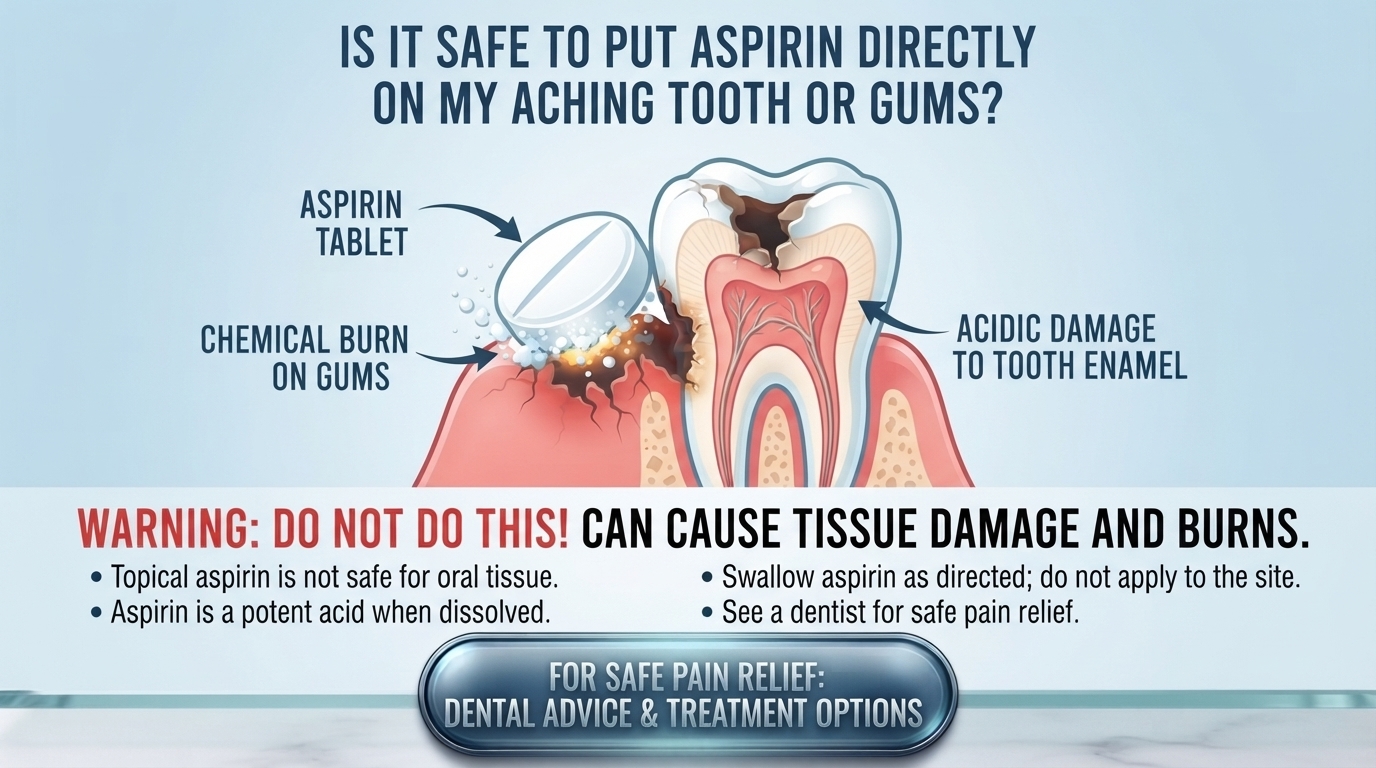
No, it is absolutely not safe to put aspirin directly on your aching tooth or gums.
Placing an aspirin tablet against oral soft tissue does not relieve tooth pain faster or more effectively than swallowing it. Instead, it causes a severe, painful chemical burn known as an aspirin burn (salicylate mucosal burn). Because aspirin is an acid, direct contact burns away the outer layer of your delicate oral tissue, leaving behind a raw, white, necrotized ulcer that adds an extra layer of severe pain to your existing toothache.
This comprehensive guide covers the chemistry behind aspirin burns, safe alternatives for fast toothache relief, state-by-state climate and lifestyle factors for key US regions, product reviews for emergency dental kits, and a detailed 10-question dental FAQ.
1. The Science of “Aspirin Burn”: Why Direct Contact Destroys Oral Tissue
To understand why putting aspirin on your tooth or gums is dangerous, it helps to examine the chemical structure of aspirin and how it acts on oral mucosa.
1. The Chemical Nature of Acetylsalicylic Acid
Aspirin’s chemical name is acetylsalicylic acid. When swallowed, the tablet dissolves safely in the stomach, where systemic absorption into the bloodstream carries pain-inhibiting compounds throughout the body to block prostaglandin production.
2. Acidic Destruction of Mucosal Proteins
The delicate tissue lining your cheeks and gums (oral mucosa) is protected by a thin layer of epithelial cells and protein-rich mucus. When an acidic aspirin tablet rests directly against this tissue:
- The acid lowers the local surface pH dramatically.
- It denatures mucosal proteins, stripping away protective surface layers.
- The tissue undergoes coagulative necrosis, turning into a sloughing white patch or raw red sore within 10 to 30 minutes.
3. Why It Does Not Help the Toothache
Aspirin cannot penetrate the thick, calcified outer enamel of a tooth to reach the inflamed nerve inside the pulp chamber. Pain relief from aspirin occurs systemically through your blood vessels—not topically through enamel contact. Placing aspirin on a tooth gives zero benefit to the underlying nerve while actively destroying the healthy gums around it.
2. What an Aspirin Burn Looks and Feels Like
If you or someone you know has already applied aspirin directly to a tooth or gum line, you will likely notice these symptoms:
- Appearance: A distinct, chalky white patch, film, or sloughing skin on the gums, inner cheek, or tongue where the tablet rested.
- Sensation: A sharp, stinging, or burning pain that feels entirely different from the deep, pulsating throb of the toothache itself.
- Progression: Once the dead white skin sloughs off over 24 to 48 hours, it leaves behind an open, raw, ulcerated sore resembling a large, severe canker sore.
- Healing Time: It can take anywhere from 7 to 14 days for damaged oral tissue to completely regenerate.
3. Safe vs. Harmful Toothache Remedies: Comparison Matrix
Knowing which remedies safely soothe dental pain and which cause harm protects your mouth while you await professional treatment:
| Remedy / Treatment | Safe for Direct Oral Contact? | Numbing / Relief Mechanism | Potential Risks / Hazards | Best Used For |
| Swallowed Aspirin / NSAIDs | Yes (Swallowed with water) | Systemic inhibition of pain-causing prostaglandins | Stomach upset if taken without food | Mild to moderate inflammatory tooth pain |
| Topical Clove Oil (Eugenol) | Yes (Must be diluted) | Local anesthetic; blocks sodium channels along nerve endings | Chemical irritation if applied raw/undiluted | Direct nerve pain & open cavity relief |
| Direct Aspirin on Gums | NO (Highly Dangerous) | None topically | Severe chemical acid burn, mucosal tissue necrosis | Never use topically |
| Cold Compress / Ice Pack | Yes (Applied to outer cheek) | Vasoconstriction; reduces blood pressure in pulp chamber | Frostbite if applied directly to bare skin | External jaw swelling & throbbing pain |
| Warm Saltwater Flush | Yes (Swished and spat) | Osmotic fluid draw; cleanses food debris and bacteria | Minimal; avoid swallowing excess salt | Gums cleansing & drawing out fluid |
| Crushed Alcohol / Spirits | NO | Brief topical drying | Tissue dehydration, mucous membrane irritation | Not recommended |
4. Safe Step-by-Step Protocol for Fast Home Toothache Relief
If you are dealing with a severe toothache at night or over the weekend, follow this safe 4-step emergency relief protocol instead of folk remedies:
1.Floss and Flush Trapped Debris:Step 1.
Gently run dental floss around the aching tooth to remove trapped food particles. Follow immediately with a warm saltwater rinse (1/2 teaspoon salt in 8 oz warm water) to clean the area.
2.Take OTC Oral Pain Medication Systemically:Step 2.
Swallow an over-the-counter pain reliever like ibuprofen or acetaminophen with a full glass of water as directed on the label. Never place pills inside your mouth against the tooth or gums.
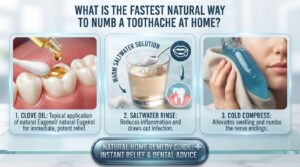
3.Apply Diluted Clove Oil or Eugenol Topically:Step 3.
Dilute 2 drops of pure clove oil with 1/2 teaspoon of olive oil. Saturate a clean cotton swab, squeeze out any excess, and gently hold it directly over the open cavity or tooth edge for 5 to 10 minutes.
4.Apply External Cold Therapy & Elevate Your Head:Step 4.
Place a cloth-wrapped ice pack against your outer cheek for 15 minutes on, followed by 15 minutes off. When lying down to sleep, elevate your head with 2 or 3 pillows to keep blood pressure from building up in your jaw.
5. Regional Health & Environmental Factors: Texas, California, Washington & NY
Geographic location, climate, and lifestyle habits across major US states can influence how toothaches develop and how sensitive your teeth are:
Texas & Desert Southwest
- Environmental Driver: Extreme summer heat ($100^\circ\text{F}+$) leads to high consumption of sugary iced teas, sodas, and sports drinks.
- Impact on Dental Health: Frequent exposure to high-sugar, cold beverages accelerates enamel erosion and causes thermal shock to vulnerable tooth nerves, leading to acute toothache flares during warm summer months.
California & San Francisco Bay Area
- Environmental Driver: High intake of acidic artisanal coffees, kombucha, and citrus juices paired with cool coastal winds in San Francisco.
- Impact on Dental Health: Acidic diets wear away protective enamel over time, exposing sensitive underlying dentin. Cold coastal winds blowing across exposed dentin can trigger sharp, sudden pain signals.
Washington State & Pacific Northwest
- Environmental Driver: High coffee consumption paired with chilly, damp year-round weather.
- Impact on Dental Health: Rapidly switching between hot coffee drinks and cold ambient air causes enamel expansion and contraction. Over time, micro-fractures can develop, giving bacteria a path straight to the inner pulp.
New York & Northeast Urban Centers
- Environmental Driver: Fast-paced urban lifestyle, elevated stress levels, and freezing winter temperatures.
- Impact on Dental Health: High stress often triggers nighttime teeth grinding (bruxism), which wears down enamel and stresses the periodontal ligament. When freezing winter air hits bruxism-damaged teeth, intense throbbing pain follows.
6. Over-the-Counter Dental Relief Products Review
Having proper OTC dental first-aid supplies on hand ensures you do not have to rely on risky DIY remedies like aspirin on your gums:
1. Red Cross Toothache Complete Medication Kit
- Primary Active Ingredient: Eugenol (85%)
- Form: Liquid drops with precision cotton pellets and tweezers
- Overview: A classic emergency kit for home toothache care. It uses high-potency eugenol liquid paired with pre-cut cotton pellets, allowing you to place concentrated relief directly inside an open cavity without getting excess oil on your tongue or cheeks.
- Pros: Rapid 3-minute numbing; high concentration of natural eugenol; includes precise application tools.
- Cons: Strong, pungent herbal taste; can irritate soft tissue if applied carelessly.
2. Orajel 4X Medicated For Toothache & Gum Cream
- Primary Active Ingredient: Benzocaine 20% + Menthol 0.2%
- Form: Topical gel / cream
- Overview: A widely available OTC topical anesthetic. Max-strength benzocaine blocks nerve signals instantly upon contact with soft gum tissue, while menthol provides a cooling sensation that calms localized tissue inflammation.
- Pros: Instant contact numbing; easy to apply precisely on sore gums; pleasant mint taste.
- Cons: Temporary duration (30–45 minutes); does not penetrate deep inside closed teeth as effectively as liquid eugenol.
3. Dentemp Premium Temporary Tooth Filling Kit
- Primary Active Ingredient: Zinc Oxide & Eugenol Paste
- Form: Ready-to-use temporary filling material
- Overview: If your toothache is caused by a lost filling, loose cap, or open cavity, exposing the inner nerve to air and food debris causes intense pain. Dentemp fills the void, sealing out air and food while releasing soothing eugenol directly against the exposed dentin.
- Pros: Seals out hot, cold, and sweet triggers; contains built-in eugenol; stays secure until your dental appointment.
- Cons: Requires a clean cavity void to stick; temporary fix only (lasts up to several weeks).
7. Frequently Asked Questions (FAQ)
Q1: What should I do if I already placed aspirin on my gums and it turned white?
Rinse your mouth immediately with warm saltwater to wash away remaining acid particles. Stop putting anything acidic or abrasive near the area. The white film is dead tissue that will eventually slough off. Keep the mouth clean, stick to soft, non-acidic foods, and let the tissue heal naturally over 7 to 10 days.
Q2: Why do some people still recommend putting aspirin on a tooth?
It is a persistent old wives’ tale from the early 20th century before modern pharmacology was widely understood. Because swallowed aspirin relieves pain systemically, people assumed putting the pill right on the spot would work faster—unaware of the acid damage it causes to soft tissue.
Q3: Is crushed acetaminophen (Tylenol) safe to put directly on a tooth?
No. While acetaminophen is not an acid like aspirin, placing crushed pills against soft tissue offers no topical relief and can irritate oral mucosa. Like aspirin, acetaminophen must be swallowed with water to be processed through your bloodstream.
Q4: Can I place aspirin inside a hollow cavity hole instead of on the gums?
No. Even if placed inside a cavity void, the pill will dissolve into an acidic slurry that leaks onto surrounding gum tissue, causing chemical burns. Use a dedicated temporary filling product containing eugenol (like Dentemp) instead.
Q5: How long does an aspirin burn take to heal completely?
A minor aspirin burn typically heals within 7 to 10 days, while deeper ulcerations can take up to 2 weeks. Rinse daily with warm saltwater and avoid spicy, hot, or acidic foods during recovery.
Q6: Can I take ibuprofen and acetaminophen together for a severe toothache?
Yes. Under medical guidance, combining an NSAID like ibuprofen with acetaminophen creates a dual-action pain management system that targets both nerve pain and inflammation safely when swallowed as directed.
Q7: Why does my toothache get worse when I lie down flat at night?
Lying flat increases blood pressure to your head and jaw. This elevated pressure expands blood vessels inside the rigid pulp chamber of an inflamed tooth, putting extra force on sensitive nerve fibers. Elevate your head with multiple pillows to sleep more comfortably.
Q8: Will an aspirin burn leave a permanent scar on my gums?
In almost all cases, no. Oral mucosal tissue regenerates rapidly, and minor chemical burns heal fully without permanent scarring once the damaged outer layer sloughs off.
Q9: What should I do if my toothache is accompanied by facial swelling and fever?
Facial swelling, fever, difficulty swallowing, or a visible pimple-like bump on your gums indicate a spreading bacterial dental abscess. This is a serious condition that requires immediate professional attention and prescription antibiotics—do not rely on home remedies.
Q10: Can a natural remedy permanently fix the cause of my toothache?
No. Home remedies, essential oils, and OTC pain relievers only address temporary pain symptoms—they cannot repair structural enamel loss, heal a dead tooth nerve, or clean out deep cavity decay. Always schedule an appointment with a licensed dentist to fix the root cause.
Conclusion
Never place aspirin directly on an aching tooth or your gums. Because aspirin is acetylsalicylic acid, direct contact destroys delicate oral tissue, leaving behind a painful, raw aspirin burn that compounds your dental pain.
To manage a toothache safely until you can visit a dentist:
- Swallow oral pain relievers (like ibuprofen or acetaminophen) with water.
- Use diluted clove oil (eugenol) directly inside open cavities or on affected teeth.
- Apply an external ice pack to your cheek to reduce throbbing pressure.
Treat home care as a temporary safety net—and schedule an evaluation with a licensed dentist as soon as possible to permanently resolve the issue.