When you are struck by a severe, throbbing toothache—especially one that wakes you up at night or throbs in rhythm with your heartbeat—finding fast, effective pain relief becomes your single highest priority. In those agonising hours before you can get into a dentist’s chair, standard single-dose pain relievers often fall short of taking the edge off severe dental pain.
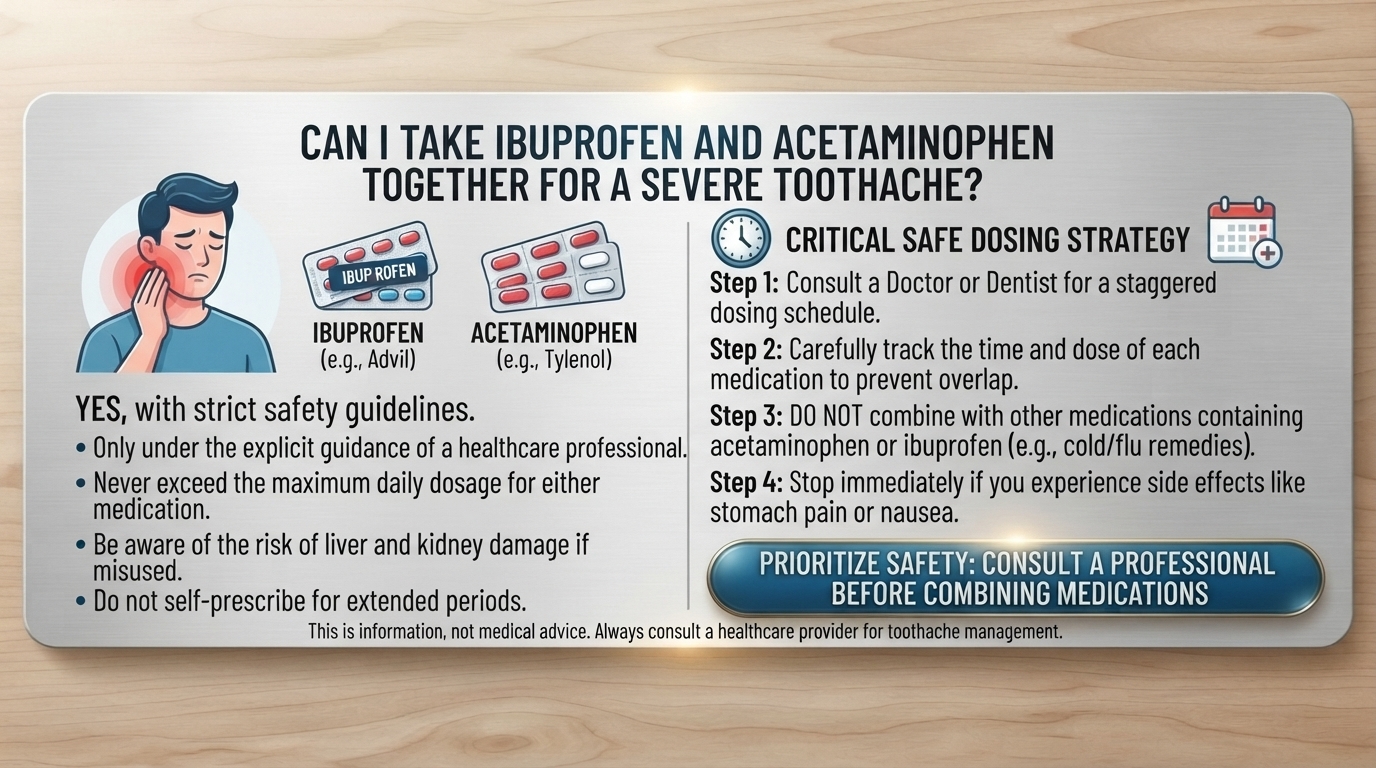
Yes, you can safely take ibuprofen and acetaminophen together for a severe toothache, provided you do not have medical contraindications to either drug.
Combining or alternating these two medications is widely considered by dentists and oral surgeons to be one of the most effective non-prescription pain strategies available. In fact, clinical research shows that combining ibuprofen (an NSAID) with acetaminophen (an analgesic/antipyretic) often provides equal or superior pain relief compared to prescription opioid medications—without the risk of addiction, severe sedation, or nausea.
This comprehensive guide breaks down the biological science of dual-action pain relief, exact safety dosing schedules, critical medical precautions, regional climate/lifestyle considerations across major US states, reviews of top over-the-counter pain relief products, and a detailed 10-question dental FAQ.
Medical & Safety Disclaimer: The information in this article is for educational purposes and does not replace professional medical or dental advice. Always consult a healthcare provider or dentist before combining medications, especially if you have pre-existing health conditions, take other prescription drugs, or are pregnant.
1. The Science: Why Combining Ibuprofen and Acetaminophen Works
To understand why this combination is so effective for severe toothaches, it helps to look at how these two drugs target completely different pain pathways in the human body.
                  [ SEVERE DENTAL PAIN SOURCE ]
                               │
       ┌───────────────────────┴───────────────────────┐
       ▼                                               ▼
[ Inflamed Gums & Pulp Tissue ]              [ Central Nervous System ]
       │                                               │
(Prostaglandins via COX enzymes)             (Central Pain Signal Transmitters)
       │                                               │
       ▼                                               ▼
   IBUPROFEN                                     ACETAMINOPHEN
(Blocks COX-1/COX-2 & Inflammation)          (Blocks Brain Pain Perception)
       └───────────────────────┬───────────────────────┘
                               ▼
            [ DUAL-ACTION COMPREHENSIVE PAIN RELIEF ]
How Ibuprofen Works (Peripheral Action)
Ibuprofen belongs to a class of drugs called Non-Steroidal Anti-Inflammatory Drugs (NSAIDs).
- Mechanism: When tooth pulp or surrounding gum tissue becomes infected or damaged, damaged cells produce enzymes called Cyclooxygenase (COX-1 and COX-2). These enzymes synthesize chemicals called prostaglandins, which cause localized inflammation, swelling, and throbbing pain.
- Target: Ibuprofen directly inhibits COX enzymes at the site of the tooth, shutting down prostaglandin production. This physically reduces tissue swelling and pressure inside the rigid walls of the tooth.
How Acetaminophen Works (Central Action)
Acetaminophen (commonly known as Tylenol or Paracetamol) is an analgesic and antipyretic.
- Mechanism: Unlike ibuprofen, acetaminophen has very little anti-inflammatory effect on swollen tissues. Instead, it acts primarily in the Central Nervous System (CNS)—the brain and spinal cord.
- Target: It elevates your overall pain threshold by inhibiting central prostaglandin synthesis and modulating serotonergic pain pathways. It effectively “turns down the volume knob” on the pain signals arriving at your brain.
The Synergistic Effect
When you take them together, ibuprofen treats the local inflammation at the tooth, while acetaminophen blocks the pain perception in your brain. Because they are processed through entirely different organ systems (ibuprofen primarily via the kidneys, acetaminophen via the liver), taking them simultaneously at proper doses provides maximum pain suppression without overloading a single organ.
2. Safe Dosing Protocols & Schedules for Severe Toothaches
There are two primary ways to combine these medications: taking them simultaneously or staggering (alternating) them.
Maximum Daily Limits for Healthy Adults:
- Ibuprofen: Do not exceed 1,200 mg per day OTC (or up to 2,400 mg – 3,200 mg per day only under direct medical supervision).
- Acetaminophen: Do not exceed 3,000 mg to 4,000 mg per day from ALL sources combined to prevent liver toxicity.
Method A: The Staggered (Alternating) Schedule (Recommended)
Staggering the medications every 3 hours maintains a consistent level of pain relief in your bloodstream, preventing the severe “pain spikes” that occur when a single medication wears off.
| Time | Medication | Standard OTC Dose | What It Does |
| 8:00 AM | Ibuprofen | 400 mg (2 standard 200mg tablets) | Knocks down local tissue swelling and throbbing |
| 11:00 AM | Acetaminophen | 500 mg to 650 mg (1–2 Extra Strength) | Elevates central pain threshold as ibuprofen peaks |
| 2:00 PM | Ibuprofen | 400 mg | Renews anti-inflammatory action at tooth site |
| 5:00 PM | Acetaminophen | 500 mg to 650 mg | Maintains brain-level pain suppression |
| 8:00 PM | Ibuprofen | 400 mg | Reduces night-time pressure build-up |
| 11:00 PM | Acetaminophen | 500 mg to 650 mg | Provides overnight central pain relief |
Method B: Simultaneous Dosing
If pain is extremely acute, taking both medications together at the same time every 6 hours is also clinically safe for short-term emergency use.
- Dose: 400 mg Ibuprofen + 500 mg Acetaminophen every 6 hours.
- Advantage: Provides an immediate, powerful reduction in both inflammation and central pain within 30 to 45 minutes.
3. Critical Safety Precautions & Contraindications
While this combination is safe for most healthy adults, certain medical conditions make one or both medications dangerous:
Who Should Avoid Ibuprofen (NSAIDs)?
- Stomach Ulcers / Gastrointestinal Bleeding: NSAIDs irritate the stomach lining and can trigger severe bleeding.
- Kidney Disease: Ibuprofen reduces blood flow to the kidneys, potentially worsening renal impairment.
- Heart Conditions / High Blood Pressure: Long-term or high-dose NSAID use increases cardiovascular risks and fluid retention.
- Pregnancy (Third Trimester): NSAIDs can cause premature closure of the ductus arteriosus in the fetus.
- Blood Thinners (e.g., Warfarin, Eliquis): Combining NSAIDs with anticoagulants dramatically increases internal bleeding risks.
Who Should Avoid Acetaminophen?
- Liver Disease / Cirrhosis: Acetaminophen is metabolized in the liver. Overdosing or taking it with compromised liver function can lead to fatal hepatic necrosis.
- Heavy Alcohol Consumption: Consuming 3 or more alcoholic drinks daily while taking acetaminophen significantly increases liver damage risks.
- Hidden Acetaminophen Sources: Hundreds of OTC cold, flu, and sinus medications contain acetaminophen. Always read labels to avoid accidental double-dosing.
4. Ibuprofen vs. Acetaminophen vs. Dual Combination Comparison
Understanding how these options stack up side-by-side helps clarify why the dual combination is preferred for severe dental issues:
| Feature / Metric | Ibuprofen Alone | Acetaminophen Alone | Ibuprofen + Acetaminophen Combo |
| Primary Mechanism | Anti-inflammatory (Peripheral) | Analgesic / Antipyretic (Central) | Dual Peripheral + Central Action |
| Reduces Gum Swelling? | Yes (High) | No | Yes (High) |
| Relieves Deep Bone Pressure? | Moderate | Moderate | High / Excellent |
| Organ Processing | Kidneys & Stomach | Liver | Split between Kidneys & Liver |
| Risk of Stomach Upset | Moderate (Take with food) | Very Low | Moderate (Take with food) |
| Efficacy vs. Opioids | Lower | Lower | Comparable or Superior |
| Best Used For | Mild to Moderate Throbbing | Mild Sensitivity / Fever | Severe, Intolerable Dental Pain |
5. Regional Health & Environmental Considerations: TX, CA, WA & NY
Climate, environmental triggers, and lifestyle patterns across major US states influence how dental decay progresses and how severe pain manifests:
Texas & Desert Southwest
- Environmental Factor: Intense summer heat ($100^\circ\text{F}+$) leads to heavy reliance on iced sugary drinks and sports beverages.
- Impact on Dental Pain: Dehydration reduces saliva flow, removing your mouth’s natural buffer against acid-producing bacteria. Drinking freezing iced beverages in extreme heat causes rapid enamel expansion and contraction, creating micro-fractures that trigger sudden, severe nerve shocks requiring dual-action pain relief.
California & San Francisco Bay Area
- Environmental Factor: High consumption of acidic artisanal beverages (kombucha, double-shot espresso, cold-pressed juices) paired with cool, damp coastal winds in San Francisco.
- Impact on Dental Pain: Frequent acid exposure strips protective enamel over time. When chilled coastal fog hits exposed dentin, it triggers sharp, lingering nerve pain along the trigeminal pathway that standard single-ingredient painkillers struggle to suppress.
Washington State & Pacific Northwest
- Environmental Factor: High coffee intake paired with cool, rainy seasonal transitions.
- Impact on Dental Pain: Repeatedly switching between hot dark-roast coffee and cold ambient outdoor air induces thermal stress in older dental fillings. Gaps open around filling edges, allowing bacteria to reach inner pulp tissue quietly until an acute, throbbing toothache erupts.
New York & Northeast Urban Centers
- Environmental Factor: High-stress urban environments, fast-paced lifestyles, and freezing winter temperatures.
- Impact on Dental Pain: Stress frequently causes nocturnal teeth grinding (bruxism), which wears down outer enamel and inflames the periodontal ligament. When freezing winter air hits bruxism-damaged teeth, severe pressure and throbbing follow, requiring aggressive anti-inflammatory control.
6. Over-the-Counter Dental Relief Products Review
When managing a severe toothache at home while awaiting your emergency dental visit, having reliable OTC care products makes a significant difference:
1. Advil Dual Action with Acetaminophen
- Active Ingredients: 250 mg Ibuprofen + 500 mg Acetaminophen per 2-caplet dose
- Form: Fixed-combination caplets
- Overview: This FDA-approved combination pill simplifies dual-action pain management. By combining lower doses of both active ingredients into a single caplet, it delivers up to 8 hours of comprehensive pain relief without requiring you to track separate pill bottles.
- Pros: Pre-formulated safety ratio; convenient single-bottle dosing; excellent for severe throbbing dental pain.
- Cons: Fixed ratio doesn’t allow you to adjust individual medication amounts independently.
2. Red Cross Toothache Complete Medication Kit
- Active Ingredient: Eugenol 85% (Clove Oil Extract)
- Form: Liquid drops with precision cotton pellets and tweezers
- Overview: A classic topical emergency kit designed to numb localized cavity pain on contact. Eugenol directly blocks voltage-gated sodium channels in exposed dentinal nerve fibers, offering immediate local relief alongside your oral pain relievers.
- Pros: Rapid local numbing within 3 minutes; targets open cavity voids directly; includes application tweezers.
- Cons: Strong herbal taste; temporary effect; does not treat deep bone infections or fever.
3. Dentemp Premium Temporary Tooth Filling Kit
- Active Ingredients: Zinc Oxide & Eugenol Paste
- Form: Pre-mixed temporary filling compound
- Overview: If your severe toothache stems from a lost filling, loose cap, or open cavity void, exposing inner dentin to air and liquids causes excruciating pain. Dentemp seals the opening, isolating exposed nerves from environmental triggers while continuously soothing the tissue with eugenol.
- Pros: Seals out hot, cold, and sweet triggers; holds up until your emergency dental visit; easy to apply.
- Cons: Requires a clean, dry cavity void to adhere correctly; temporary fix only.
7. Frequently Asked Questions (FAQ)
Q1: Is taking ibuprofen and acetaminophen together safer than taking narcotics?
Yes. Clinical studies, including major reviews by the American Dental Association (ADA), demonstrate that combining ibuprofen and acetaminophen provides equal or superior pain relief for dental pain compared to prescription opioids (like codeine or hydrocodone)—without the risks of addiction, respiratory depression, constipation, or severe sedation.
Q2: How fast will the ibuprofen and acetaminophen combination start working?
Oral ibuprofen typically begins working within 20 to 30 minutes, peaking at around 1 to 2 hours. Acetaminophen begins working within 30 minutes. When taken together, most people feel noticeable relief from severe throbbing within 30 to 45 minutes.
Q3: Can I take this combination if I have an active dental abscess?
Yes, you can take them to manage pain symptoms, but medication will not cure the abscess. A dental abscess is a bacterial infection trapped in bone or soft tissue. You must see a dentist for antibiotics, abscess drainage, or a root canal/extraction to resolve the underlying cause.
Q4: What should I do if the combination still doesn’t stop my tooth pain?
If taking maximum safe OTC doses of ibuprofen and acetaminophen fails to take the edge off your toothache, it usually indicates severe irreversible pulpitis or an expanding periapical abscess. Seek emergency dental care immediately, as you may require prescription-strength anti-inflammatories, nerve blocks, or urgent surgical intervention.
Q5: Can I drink alcohol while taking ibuprofen and acetaminophen together?
No. Combining alcohol with acetaminophen significantly increases the risk of severe liver toxicity. Combining alcohol with ibuprofen increases the risk of acute stomach lining irritation and gastrointestinal ulcers. Avoid alcohol completely while managing a toothache with these medications.
Q6: Can I take this combination on an empty stomach?
Acetaminophen can be taken on an empty stomach, but ibuprofen should always be taken with food, milk, or a full glass of water. Taking ibuprofen on an empty stomach frequently causes nausea, indigestion, and gastric mucosal irritation.
Q7: Is it safe to take this combination during pregnancy?
Consult your obstetrician before taking any medication while pregnant. Generally, acetaminophen is considered the preferred pain reliever during pregnancy when used as directed. Ibuprofen and other NSAIDs should be strictly avoided during the third trimester because they can cause cardiovascular complications in the developing fetus.
Q8: What is the maximum number of days I can take this combination for a toothache?
Over-the-counter pain relievers should not be used for more than 3 to 5 days for a toothache without consulting a dentist. Using pain relievers long-term masks underlying bacterial infections, allowing decay to progress deeper into the jawbone.
Q9: What happens if I accidentally take too much acetaminophen?
Acetaminophen overdose is a medical emergency that can cause severe, irreversible liver damage. Symptoms of toxicity (nausea, vomiting, abdominal pain) may not appear for 24 hours. If you suspect an overdose, call Poison Control (1-800-222-1222) or go to an emergency room immediately.
Q10: Why does my toothache hurt worse at night even after taking pain relievers?
When you lie down flat, blood pressure increases in your head and jaw. This elevated vascular pressure causes blood vessels inside the inflamed tooth pulp chamber to expand, placing direct pressure on sensitive nerve fibers. Keep your head elevated with 2 or 3 pillows while sleeping to reduce head vascular pressure.
Conclusion
Combining ibuprofen and acetaminophen is a safe, scientifically proven, and highly effective strategy for controlling severe, throbbing toothache pain while you arrange professional care. By targeting pain both at the local tooth site and in the central nervous system, this dual-action approach delivers maximum relief.
Key Reminders:
- Follow safe dosing limits: Track daily totals carefully to protect your liver and kidneys.
- Stagger your doses: Alternating medications every 3 hours maintains steady, long-lasting relief.
- Remember that pain relievers are a temporary bridge: They numb pain signals, but they cannot restore lost enamel or eliminate bacterial infections.
Contact an emergency dentist at the first sign of severe tooth pain to treat the root cause and protect your oral health long-term.