If you wake up every morning in San Francisco, grab a double espresso before heading down the Embarcadero, and later notice embarrassing white flakes dusting your dark blazer, you are far from alone. Whether you are battling the dry indoor heat of a New York City winter, navigating the intense summer sun in Austin, Texas, or dealing with damp dampness in Seattle, Washington, a flaking, itchy scalp is one of the most common—and frustrating—dermatological complaints in the United States.
In your search for relief, you may have heard a growing rumor in wellness circles: cutting out regular caffeine and switching to decaf coffee can cure your dandruff.
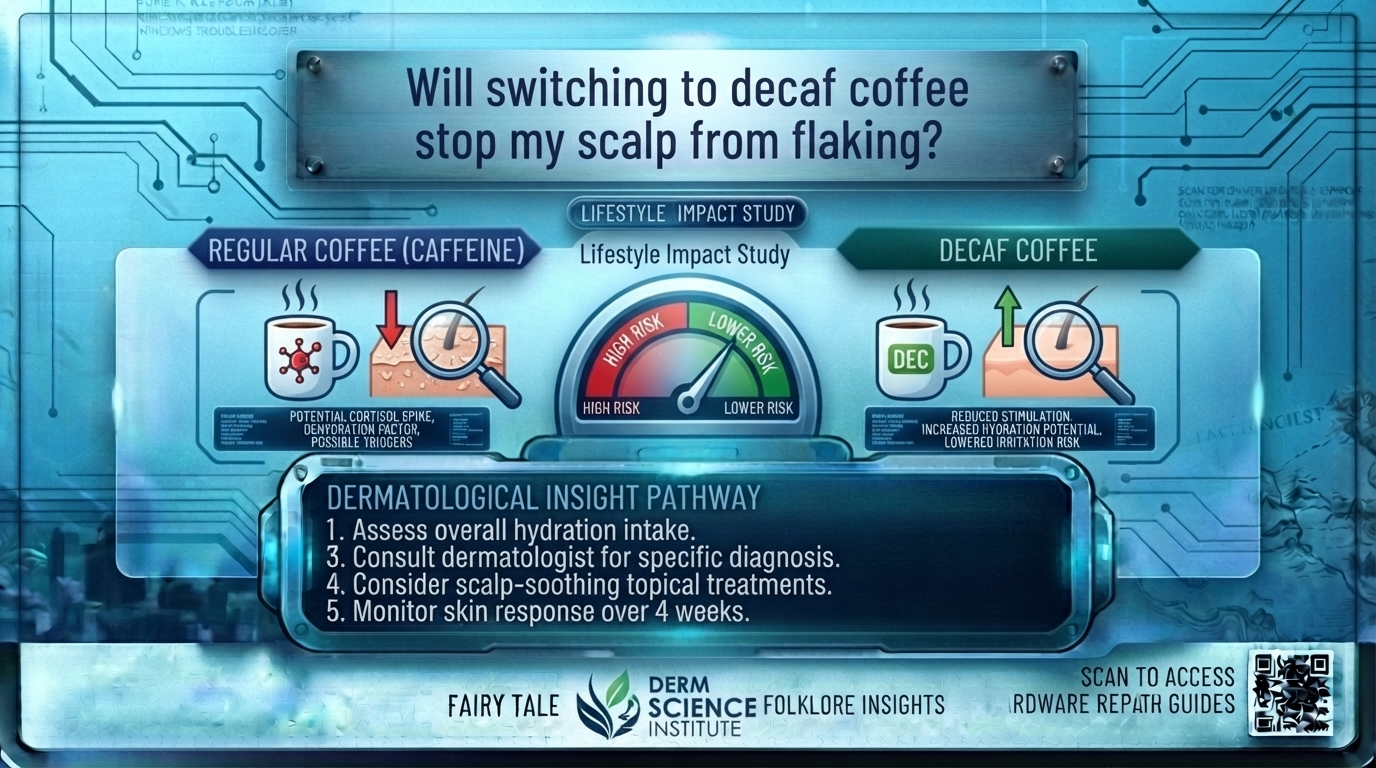
The short answer: Switching to decaf coffee can significantly reduce scalp flaking caused by skin dehydration, stress-induced cortisol spikes, and excessive oil production. However, decaf coffee is not a direct cure if your flaking is driven by an active fungal infection (Malassezia yeast overgrowth) or clinical seborrheic dermatitis.
To permanently stop your scalp from flaking, you need to understand how caffeine alters your skin’s hydration and oil glands, identify whether your flakes are dry or oily, and pair your beverage swap with targeted scalp care.
1. The Physiological Connection: How Caffeine Affects Your Scalp
Coffee is one of the most chemically complex beverages consumed daily. While rich in beneficial antioxidants, its primary active compound—caffeine—exerts three distinct biological effects on your skin and scalp barrier:
                  CAFFEINE TO SCALP FLAKING PIPELINE
                                   │
      ┌────────────────────────────┴────────────────────────────┐
      ▼                                                         ▼
[ Systemic Diuretic Effect ]                              [ Stress & Cortisol Response ]
• Elevated fluid excretion                                • Triggers adrenal gland response
• Epidermal moisture depletion                            • Stimulates sebaceous gland oil output
• Tight, dry, flaking scalp skin                          • Feeds Malassezia yeast microflora
      │                                                         │
      └────────────────────────────┬────────────────────────────┘
                                   │
                                   ▼
                 [ Scalp Barrier Disruption & Flaking ]
1. The Diuretic Effect & Epidermal Dehydration
Caffeine acts as a mild central nervous system stimulant and a natural diuretic. High caffeine intake (more than 300–400 mg per day, or about 3–4 standard cups of drip coffee) increases fluid excretion by the kidneys. If your water intake does not offset your coffee consumption, systemic dehydration follows.
The scalp is an extension of your facial skin, featuring a dense network of blood vessels and hair follicles. When your body is dehydrated, it prioritizes moisture delivery to vital internal organs, leaving your stratum corneum (the outermost skin layer) dry and prone to shedding as fine, white flakes.
2. Cortisol Spikes and Sebum (Oil) Production
Caffeine stimulates your adrenal glands to release cortisol—the body’s primary stress hormone. Elevated systemic cortisol triggers your sebaceous glands to overproduce sebum (natural skin oil).
This creates a paradox: caffeine dehydrates the moisture content of your scalp skin while simultaneously triggering excess oil production on the surface. This combination of dry skin underlying an oily lipid layer is the ideal breeding ground for scalp irritation.
3. Feeding the Malassezia Yeast Microflora
Your scalp naturally hosts a microscopic fungus called Malassezia globosa. This yeast feeds on the fatty acids found in human sebum. When caffeine boosts cortisol and causes a surge in sebum production, the Malassezia population blooms.
As Malassezia breaks down excess oil, it produces oleic acid as a byproduct. Roughly 50% of the population is sensitive to oleic acid, which causes scalp inflammation, rapid skin cell turnover, and large, greasy flakes—commonly known as dandruff or seborrheic dermatitis.
2. Dry Scalp vs. Fungal Dandruff: Identifying Your Flake Type
Before switching to decaf coffee, you must determine which type of flaking you have. Switching to decaf will yield dramatic results for dry scalp, but only moderate improvements for fungal dandruff.
Key Rule of Thumb: If your flakes fall like light snow and your skin feels tight, it is a dry scalp issue. If your flakes are yellow, sticky, and clump together in your hair, it is a fungal/seborrheic issue.
| Feature / Symptom | Dry Scalp Flakes | Fungal Dandruff (Seborrheic Dermatitis) |
| Flake Appearance | Small, fine, white, dry specks | Large, oily, yellow or greyish clumps |
| Scalp Sensation | Tight, itchy, feels dry like chapped hands | Sore, intensely itchy, inflamed red patches |
| Hair Condition | Dry ends, dry roots, lack of natural shine | Oily roots, slick scalp surface |
| Impact of Caffeine | Very High (Dehydration directly worsens flakes) | Moderate (Cortisol spikes feed excess oil) |
| Primary Solution | Hydration, switching to decaf, scalp serums | Antifungal shampoos (Ketoconazole, Zinc Pyrithione) |
3. Step-by-Step Scalp Recovery Protocol
If you are ready to switch to decaf coffee and heal your scalp barrier, follow this 4-step transition plan:
1.Taper Down to Swiss Water Process Decaf:Prevents caffeine withdrawal headaches while lowering cortisol levels.
Quitting caffeine cold turkey can cause severe withdrawal headaches. Taper off gradually over 7 to 10 days.
- For Days 1–3, drink a 50/50 blend of regular and decaf coffee.
- For Days 4–7, switch to 25% regular / 75% decaf.
- On Day 8, transition entirely to Swiss Water Process (SWP) Decaf, which removes 99.9% of caffeine without chemical solvents like methylene chloride.
2.Implement a 2:1 Hydration Ratio:Restores epidermal moisture levels lost to caffeine’s diuretic effect.
Counterbalance any residual caffeine and restore moisture to your stratum corneum.
- Drink two 8 oz glasses of water for every 8 oz cup of decaf or tea consumed.
- Aim for a total baseline fluid intake of 2.5 to 3.5 liters per day depending on your local climate and activity level.
- Add electrolyte minerals (magnesium, potassium, sodium) to your morning water to enhance cellular hydration.
3.Incorporate a Weekly Clarifying Scalp Treatment:Clears existing buildup without stripping natural scalp lipids.
Remove dead skin cell buildup so topical hydrating serums can penetrate the scalp.
- Once per week, apply a gentle physical or chemical exfoliant containing salicylic acid (BHA) or micro-charcoal.
- Massage the scalp gently with your fingertips (avoid using fingernails, which create micro-tears).
- Rinse thoroughly with lukewarm water—never hot water, which dries out the scalp barrier.
4.Apply a Leave-In Hydrating Scalp Serum:Rebalances scalp microbiome and calms inflammation.
Just as you moisturize your face after cleansing, your scalp needs leave-in hydration.
- Towel-dry hair after showering until damp.
- Part hair into sections and apply a lightweight, non-comedogenic serum containing hyaluronic acid, aloe vera, or niacinamide.
- Gently massage the serum into the skin and style hair as usual.
4. Product Reviews: Top Scalp Treatments & Premium Decaf Coffees
To achieve a flake-free scalp, combine high-quality Swiss Water Process decaf coffee with targeted scalp treatments. Here are four top products evaluated by itemguides.com:
1. Volcanica Coffee Swiss Water Decaf Costa Rica
- Best For: Coffee lovers who want zero caffeine without sacrificing rich gourmet flavor.
Volcanica’s Costa Rica Decaf utilizes the 100% chemical-free Swiss Water Process to extract 99.9% of caffeine while preserving delicate flavor notes of sweet apple, milk chocolate, and roasted hazelnut.
- Key Specifications:
- Process: 100% Swiss Water Process (Chemical-Free).
- Bean Origin: Single-origin Tarrazu, Costa Rica.
- Roast Level: Medium Roast.
- Caffeine Content: 99.9% Caffeine-Free.
- Pros: Exceptionally smooth; no chemical solvent aftertaste; rich in coffee antioxidants that support skin health.
- Cons: Premium price compared to standard grocery store decaf brands.
2. Nizoral A-D Anti-Dandruff Shampoo (1% Ketoconazole)
- Best For: Treating fungal dandruff, seborrheic dermatitis, and greasy yellow flaking.
Nizoral is the gold standard over-the-counter treatment for flake-causing yeast. Its active ingredient, Ketoconazole 1%, binds to the natural protein of hair and scalp to kill Malassezia fungus.
- Key Specifications:
- Active Ingredient: Ketoconazole 1%.
- Usage Frequency: Use 2 times per week for 2 to 4 weeks.
- Scent: Clean, fresh salon scent.
- Pros: Highly effective at eliminating stubborn yeast-driven dandruff; works fast.
- Cons: Can be drying if used daily; requires a hydrating conditioner on hair ends.
3. Briogeo Scalp Revival Charcoal + Coconut Oil Micro-Exfoliating Shampoo
- Best For: Gentle physical exfoliation and clearing dead skin cell buildup from dry scalps.
This luxury scalp scrub combines binchotan charcoal to draw out impurities with plant-based micro-exfoliants to lift dead skin flakes. Tea tree oil calms redness, while coconut oil deeply hydrates dry scalp skin.
- Key Specifications:
- Key Ingredients: Binchotan Charcoal, Coconut Oil, Tea Tree Oil, Peppermint Oil.
- Formulation: Sulfate-free, silicone-free, 95% naturally derived.
- Texture: Creamy whipped scrub with gentle exfoliating micro-beads.
- Pros: Soothes itchy scalps instantly; leaves a cooling sensation; safe for color-treated hair.
- Cons: Higher price point per ounce; micro-beads require thorough rinsing out of thick hair.
4. The Ordinary Multi-Peptide Serum for Hair Density & Scalp Care
- Best For: Lightweight daily leave-in hydration that strengthens the scalp moisture barrier.
This water-based leave-in scalp serum uses a combination of peptide complexes, caffeine extracts, and hyaluronic acid derivatives to hydrate skin cells without making hair roots greasy.
- Key Specifications:
- Key Ingredients: REDENSYL, Procapil, CAPIXYL, Peptide complexes.
- Texture: Ultra-lightweight water-like fluid.
- Application: Apply a few drops daily to clean, dry, or towel-dried scalp at bedtime.
- Pros: Non-greasy finish; budget-friendly; improves overall hair root health and density over time.
- Cons: Requires consistent daily application for best results.
5. Comparison Matrix: Product Evaluation
| Product | Category | Primary Function | Active / Key Ingredient | Ideal For |
| Volcanica SWP Decaf | Gourmet Beverage | Reduces systemic caffeine & cortisol spikes | 100% Arabica (SWP) | Replacing regular coffee |
| Nizoral A-D Shampoo | Medicated Treatment | Kills flake-causing Malassezia yeast | Ketoconazole 1% | Stubborn fungal dandruff |
| Briogeo Scalp Revival | Exfoliating Cleanser | Lifts buildup & soothes dry skin | Charcoal & Coconut Oil | Dry, itchy, flaky scalps |
| The Ordinary Serum | Daily Leave-in | Hydrates scalp skin barrier | Peptides & Hyaluronic Acid | Lightweight daily scalp care |
6. Regional Lifestyle Insights: Scalp Health Across Major US Markets
Environmental factors like humidity, hard water, and indoor heating interact with coffee consumption to impact your scalp’s moisture balance:
Silicon Valley & San Francisco, California (Microclimates & Hard Water)
- San Francisco’s cool coastal fog combined with hard water in many Bay Area homes leaves mineral deposits on hair and scalp skin. When paired with high coffee consumption during long coding or engineering sessions, the scalp barrier weakens quickly. Using a shower head filter alongside decaf coffee helps eliminate mineral buildup.
Austin & Dallas, Texas (Heat, Dehydration & Air Conditioning)
- Extreme summer heat across Texas forces your body to sweat, while indoor air conditioning blasts dry air. Drinking large amounts of caffeinated iced coffee in hot climates accelerates dehydration. Texan coffee lovers should switch to cold-brewed decaf and add electrolyte drops to their daily water routines.
New York City Metro Area (Winter Radiator Heat & Urban Pollution)
- New York winters are notorious for stripping moisture from skin due to intense radiator heating in apartments and offices. High caffeine intake during winter months worsens skin barrier cracking. NYC residents should switch to decaf and use a hyaluronic scalp serum during freezing months.
Seattle & Bellevue, Washington (High Coffee Culture & Damp Humidity)
- Seattle is famous for its rich coffee culture, but damp, humid outdoor air combined with heated indoor environments creates ideal conditions for Malassezia yeast growth. If you live in the Pacific Northwest and struggle with oily, flaky scalps, switching to decaf reduces cortisol-driven oil production that feeds fungal spores.
7. Practical Tips to Maximize Scalp Relief
In addition to switching to decaf coffee, adopt these simple lifestyle adjustments:
- Lower Your Shower Water Temperature: Hot water strips the natural lipid mantle from your scalp, causing micro-tears and rebound dryness. Wash hair with warm or cool water.
- Wash Your Pillowcases Twice Weekly: Hair products, natural oils, and dead skin cells accumulate on pillowcases, feeding yeast and bacteria overnight.
- Avoid Heavy Oils on an Inflamed Scalp: Applying thick raw coconut oil or olive oil directly to an active dandruff outbreak can feed Malassezia yeast and make flaking worse. Stick to lightweight, water-based serums.
- Massage Your Scalp Daily: Use a silicone scalp massager brush for 2 to 3 minutes daily during shampooing to boost blood circulation and lift loose dead skin cells naturally.
8. Frequently Asked Questions (FAQ)
1. How long after switching to decaf coffee will I see a difference in my scalp?
Most people notice improvements in scalp tightness and dry flaking within 10 to 14 days as systemic hydration levels restore. However, if your flaking is fungal, it may take 3 to 4 weeks of combined decaf drinking and medicated shampoo treatment to clear completely.
2. Is decaf coffee 100% caffeine-free?
Not entirely. Standard decaf coffee contains about 2 to 5 mg of caffeine per cup (compared to 95–150 mg in regular drip coffee). If you want virtually zero caffeine, choose coffee processed via the Swiss Water Process, which is 99.9% caffeine-free.
3. Does tea cause the same scalp flaking as regular coffee?
Black and green tea contain caffeine, but typically at lower doses (30 to 50 mg per cup). Tea also contains L-theanine, an amino acid that softens the cortisol/stress spike associated with caffeine, making it less likely to trigger oil production than heavy drip coffee.
4. Can drinking coffee directly cause dandruff?
Coffee does not directly cause dandruff because dandruff requires the presence of Malassezia yeast. However, coffee indirectly worsens dandruff by elevating cortisol, increasing oil production, and dehydrating skin tissues.
5. Will cold brew coffee dehydrate my scalp more than hot coffee?
Cold brew coffee generally contains a higher concentration of caffeine per ounce than standard hot drip coffee due to its long steep time. Therefore, drinking large amounts of regular cold brew can cause faster systemic dehydration and worsening scalp dryness.
6. Does adding sugar or dairy to my coffee make scalp flaking worse?
Yes. High sugar intake causes rapid blood glucose spikes that trigger systemic inflammation and androgen production, increasing scalp oiliness. Dairy can also trigger inflammatory flare-ups in individuals with underlying seborrheic dermatitis or eczema.
7. Should I rub decaf coffee grounds directly onto my scalp?
Using coffee grounds as a DIY scrub can provide gentle physical exfoliation, but raw grounds can have sharp edges that create micro-tears on sensitive scalp skin. It is safer to use a formulated, dermatologically tested scalp scrub like Briogeo Scalp Revival.
8. What vitamins help stop scalp flaking?
Zinc, Vitamin D3, Omega-3 fatty acids, and B-complex vitamins (especially Biotin and B6) play essential roles in maintaining epidermal skin health, regulating oil production, and reducing scalp inflammation.
9. Can stress alone cause scalp flaking even if I don’t drink coffee?
Yes. High psychological stress raises cortisol levels, triggering the same oil production and immune response as heavy caffeine consumption. This is why dandruff frequently flares up during stressful work weeks or life events.
10. When should I see a dermatologist about scalp flaking?
You should consult a board-certified dermatologist if your scalp is raw, bleeding, intensely painful, oozing clear fluid, or if your flaking fails to improve after 4 weeks of using over-the-counter anti-dandruff shampoos and lifestyle adjustments.
Conclusion
Switching from regular to decaf coffee can be a game-changer for your scalp health—especially if your flaking is driven by dehydration, stress-induced oil spikes, or a compromised skin barrier. By eliminating heavy caffeine intake, you allow your body to retain moisture more effectively and calm the adrenal stress signals that feed scalp inflammation.
Remember: decaf coffee is half of the equation. Combine your beverage switch with a targeted scalp routine—such as Nizoral A-D for fungal dandruff or Briogeo Scalp Revival for dry skin—and you will be well on your way to a clean, flake-free scalp.
For more wellness reviews, dietary guides, and scalp care advice, explore itemguides.com!