Whether you are battling the aggressively dry indoor heating of a New York City winter, sweating through a humid summer afternoon in Austin, Texas, navigating the misty, damp microclimates of San Francisco, or dealing with the constant drizzle of Seattle, Washington, a flaking scalp is a universal annoyance.
You look in the mirror, see white specks on your shoulders, and immediately reach for the strongest anti-dandruff shampoo on the shelf. But what if that shampoo is actually making your problem worse?
The truth is, not all flakes are created equal. Scalp flaking generally stems from one of two completely distinct physiological issues: epidermal dehydration (dry scalp) or yeast overgrowth (dandruff/seborrheic dermatitis). Treating a dehydrated scalp with harsh yeast-killing chemicals will completely strip your skin barrier, while treating a yeast overgrowth with heavy moisturizing oils will literally feed the fungus.
Before you spend another dollar on specialized hair care, you need a proper diagnosis. This comprehensive diagnostic guide breaks down the biological differences between dehydration and yeast overgrowth, offers a step-by-step home testing protocol, reviews the best targeted products on the market, and answers the 10 most critical FAQs to help you achieve a healthy, flake-free scalp.
1. The Biology of Flaking: What Is Actually Falling Off Your Head?
To fix the flaking, you have to understand the microscopic ecosystem living under your hair. The stratum corneum (the outermost layer of your skin) is constantly shedding dead skin cells and replacing them with new ones. Under normal conditions, these cells shed invisibly. When you can see the flakes, the skin’s renewal cycle has been disrupted.
The Dehydration Pathway (Dry Scalp)
A dehydrated scalp lacks sebum (natural oil) and water retention. When the skin barrier is stripped of its natural moisture, the skin cells dry out, detach prematurely, and fall off as fine, powdery dust.
- The Culprits: Cold weather, harsh sulfate shampoos, over-washing, hard water, poor dietary hydration, and dry indoor air conditioning or heating.
The Yeast Overgrowth Pathway (Seborrheic Dermatitis)
Your scalp is home to a naturally occurring, harmless yeast called Malassezia globosa. This yeast survives by feeding on the natural sebum produced by your hair follicles.
However, when your body overproduces oil (due to stress, hormones, or genetics), the Malassezia population explodes. As the yeast digests the excess oil, it leaves behind a byproduct called oleic acid. Roughly half the human population is allergic to oleic acid. The scalp reacts to this acid with severe inflammation, causing skin cells to rapidly clump together and shed in large, sticky, yellowish chunks. This is clinical dandruff.
2. Visual Diagnosis: Dry Scalp vs. Fungal Dandruff
The easiest way to determine the root cause of your flaking is to examine the physical characteristics of the flakes themselves.
What Epidermal Dehydration Looks Like
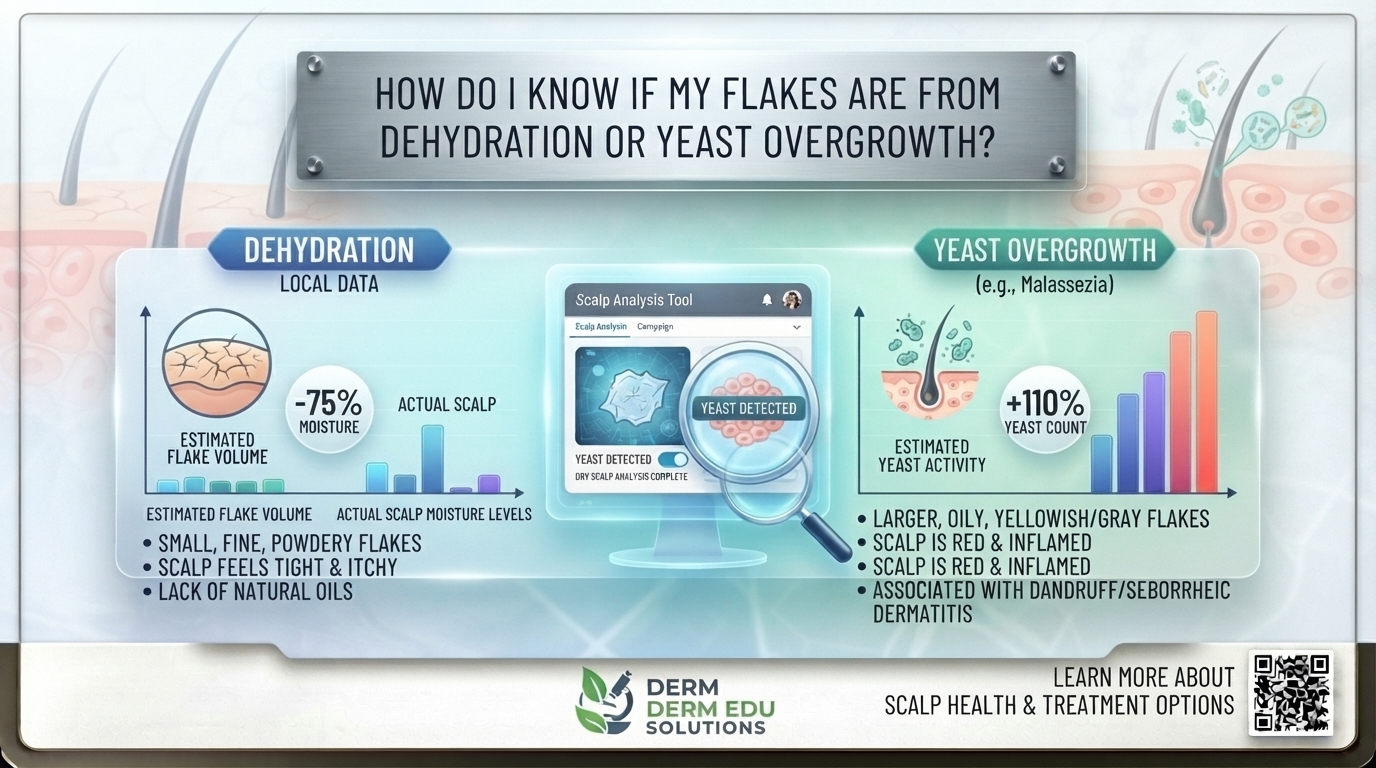
If your scalp is dehydrated, the flakes will look like light, white dust. They are small, dry, and easily fall out of your hair when you shake your head. Your scalp will likely feel tight, similar to how the skin on the back of your hands feels when chapped in the winter.
What Yeast Overgrowth Looks Like
If you are dealing with a Malassezia yeast overgrowth (Seborrheic Dermatitis), the flakes will be substantially larger. Because they are mixed with excess sebum, they appear yellowish and feel greasy to the touch. They tend to stick to the scalp and hair shafts rather than falling freely, and are often accompanied by underlying red, inflamed skin.
3. Comparison Matrix: Dehydration vs. Yeast Overgrowth
| Symptom / Indicator | Dehydration (Dry Scalp) | Yeast Overgrowth (Seborrheic Dermatitis) |
| Flake Appearance | Small, fine, white, powdery | Large, clumpy, yellowish, greasy |
| Flake Adhesion | Falls easily onto shoulders | Sticks to hair roots and scalp surface |
| Scalp Sensation | Tight, dry, occasionally itchy | Sore, inflamed, intensely itchy, oily |
| Hair Condition | Dry, brittle, frizzy | Oily roots, limp hair |
| Reaction to Oils | Improves with lightweight oils/serums | Worsens (oils feed the yeast) |
| Reaction to Antifungals | Worsens (strips away remaining moisture) | Improves significantly |
| Seasonal Triggers | Winter cold, dry indoor heating | Humid summer heat, sweating, stress |
4. The “Scratch & Inspect” Home Diagnostic Protocol
If you are still unsure which condition you have, perform this simple physical test 24 hours after your next shower.
1.Wait 24 Hours Post-Wash:Wait for your scalp to produce its natural baseline oils.
Wash your hair with a gentle, non-medicated shampoo. Do not apply any styling products, leave-in conditioners, or oils. Wait exactly 24 hours to allow your sebaceous glands to normalize.
2.The Scratch Test:Test the adhesion and texture of the skin shedding.
Wash your hands thoroughly. Using the pads of your fingers (not your sharp fingernails), gently massage and rub your scalp at the crown of your head, where flaking is usually worst.
3.Inspect Your Fingertips:Analyze the residue left on your fingertips.
Examine your fingers under a bright light.
- If your fingers are completely dry and you see fine white dust falling off your head, your scalp is dehydrated.
- If your fingers feel slick or greasy, and you see a yellowish residue or sticky clumps under your nails, you are dealing with yeast overgrowth / excess oil.
5. Regional Climate Impacts on Your Scalp
Your geographic location heavily dictates your scalp health. Here is how the target regions of itemguides.com readers influence scalp flaking:
- Texas (Austin, Dallas, Houston): The extreme summer heat causes heavy sweating, which mixes with sebum to create a buffet for Malassezia yeast. Texans are highly prone to fungal dandruff in the summer, and transition to dry scalp in the winter when heavy indoor heating kicks in.
- New York (NYC Metro): New Yorkers face brutal winter winds and aggressive radiator heating. This combination pulls moisture directly out of the stratum corneum, making epidermal dehydration the number one cause of winter flaking in the Northeast.
- California (San Francisco & The Bay Area): SF’s famous microclimates, fog, and highly variable humidity mean your scalp is constantly adjusting. Furthermore, hard water in many Bay Area apartments leaves mineral deposits on the scalp, which can clog follicles and mimic dry scalp flakes.
- Washington (Seattle & Bellevue): The Pacific Northwest’s constant dampness, rain, and high humidity create the ultimate breeding ground for yeast. Residents here who frequently wear beanies or hats trap that moisture against the scalp, leading to high rates of Seborrheic Dermatitis.
6. Product Reviews: The Best Treatments for Each Condition
Once you have diagnosed your flake type, you must use the correct active ingredients. Using the wrong product will exacerbate the issue.
Top Solutions for Yeast Overgrowth (Dandruff)
1. Nizoral A-D Anti-Dandruff Shampoo
- Best For: Aggressive yeast overgrowth and clinical seborrheic dermatitis.
- Active Ingredient: Ketoconazole 1%.
- How it Works: Ketoconazole is a potent antifungal that directly ruptures the cell walls of the Malassezia yeast, stopping the overgrowth at the source.
- Pros: Clinically proven, works incredibly fast (often within 2 washes), removes greasy buildup.
- Cons: Can be drying to the hair shafts; must be followed by a hydrating conditioner on the ends of your hair.
2. Neutrogena T/Sal Therapeutic Shampoo
- Best For: Breaking down thick, sticky, yellowish crusts on the scalp.
- Active Ingredient: Salicylic Acid 3%.
- How it Works: Salicylic acid is a keratolytic agent. It chemically dissolves the “glue” holding the dead skin cells together, allowing the oily clumps to wash down the drain.
- Pros: Clears heavy buildup, unscented, prepares the scalp for antifungal treatments.
- Cons: Does not kill yeast directly; only manages the symptoms of the buildup.
Top Solutions for Epidermal Dehydration (Dry Scalp)
3. The INKEY List Salicylic Acid Exfoliating Scalp Treatment
- Best For: Gentle removal of dry flakes without stripping the scalp’s moisture barrier.
- Active Ingredients: 2% Salicylic Acid, Panthenol (Vitamin B5).
- How it Works: Unlike harsh clarifying shampoos, this pre-wash serum gently lifts dry flakes while the Panthenol deeply hydrates the skin tissue.
- Pros: Very lightweight, extremely hydrating, completely vegan.
- Cons: Must be applied 10 minutes before showering, requiring extra time in your routine.
4. Briogeo Scalp Revival Charcoal + Tea Tree Cooling Hydration Scalp Mask
- Best For: Soothing tight, itchy, dehydrated scalps instantly.
- Active Ingredients: Binchotan Charcoal, Tea Tree Oil, Aloe Vera, Hyaluronic Acid.
- How it Works: This in-shower mask acts like a deep moisturizer for your head. The hyaluronic acid binds water to the scalp skin, while the tea tree oil provides a cooling, anti-itch sensation.
- Pros: Incredible cooling relief, deeply hydrating, safe for color-treated hair.
- Cons: Premium price point.
7. Actionable Tips to Stop Scalp Flaking
Regardless of whether you have dry scalp or yeast overgrowth, these daily habits will improve your scalp’s baseline health:
- Lower Your Water Temperature: Scalding hot showers melt away the protective lipid layer on your scalp. Always wash your hair with lukewarm water, and do a final cold rinse to seal the hair cuticle and soothe the skin.
- Stop Sleeping on Wet Hair: Going to bed with wet hair creates a dark, damp, warm environment in your pillow—the exact conditions in which Malassezia yeast thrives. Always air dry or blow-dry your roots on a cool setting before sleeping.
- Install a Shower Filter: Hard water (especially common in Texas and California) contains calcium and magnesium that bond with shampoo to create an irritating “soap scum” film on your scalp. A $30 shower head filter removes these minerals.
- Avoid Applying Conditioner to the Roots: Conditioner is designed for the dead hair shafts, not living skin. Applying heavy conditioners to your roots will either clog pores (worsening dry scalp) or feed yeast with fatty acids (worsening dandruff). Keep conditioner strictly on the mid-lengths and ends.
8. Frequently Asked Questions (FAQ)
1. Can drinking more water cure my dry scalp?
Systemic hydration helps, but it is rarely enough on its own. The skin is the last organ to receive water from the fluids you drink. If your environment is stripping moisture from your scalp (via cold air or hot showers), you must apply topical hydration (like hyaluronic acid serums) to fix the localized dehydration.
2. Is it safe to use coconut oil on my flaking scalp?
If you have dry scalp: Yes, coconut oil can help lock in moisture, though it is heavy and difficult to wash out.
If you have yeast overgrowth: Absolutely not. Coconut oil is packed with fatty acids that Malassezia yeast feeds on. Applying it to dandruff is like throwing gasoline on a fire.
3. Why does my scalp flake more when I am stressed?
Stress triggers the adrenal glands to release cortisol. High cortisol levels cause your sebaceous glands to kick into overdrive, pumping out excess oil. This excess oil feeds the yeast, triggering a sudden, severe dandruff flare-up.
4. Can switching to decaf coffee help my scalp?
Yes, particularly if you suffer from dehydration. Caffeine is a diuretic that depletes your body of water. High caffeine intake also spikes cortisol, which increases oil production. Reducing caffeine helps balance both moisture and oil levels.
5. How often should I wash my hair if I have flakes?
If you have yeast overgrowth, you need to wash frequently (every 1 to 2 days) to remove the excess oil that feeds the fungus. If you have dry scalp, you should wash less frequently (every 3 to 4 days) to allow your natural, protective oils to coat and hydrate the skin.
6. Are sulfates causing my dry scalp?
Sodium Lauryl Sulfate (SLS) is an aggressive detergent that is excellent at removing grease, but it can completely strip the moisture barrier of sensitive skin. If you have a dry scalp, switching to a sulfate-free shampoo is one of the most critical changes you can make.
7. Does scratching my flakes make them worse?
Yes. Scratching removes the flakes temporarily, but it creates micro-tears in the scalp barrier. This leads to inflammation, fluid weeping, and a higher risk of bacterial infection, which will ultimately cause even more severe flaking as the skin tries to heal.
8. Will Apple Cider Vinegar (ACV) cure my dandruff?
ACV has mild antibacterial and antifungal properties, and its acidity can help balance the pH of your scalp. An ACV rinse can help manage mild yeast overgrowth and remove hard water buildup, but it is not a potent enough antifungal to cure severe Seborrheic Dermatitis.
9. Can I have dry scalp and dandruff at the same time?
It is extremely rare to have both concurrently in the same physical location. However, you can have a combination scalp—oily, fungal dandruff at the crown and nape of the neck (where heat and sweat pool), and dry, tight skin along the front hairline.
10. When should I see a dermatologist for scalp flaking?
You should book an appointment with a board-certified dermatologist if your flaking is accompanied by severe redness, raw/bleeding skin, hair loss, silver scales (which may indicate Psoriasis, an autoimmune condition), or if over-the-counter treatments fail to improve the condition after 4 weeks.
Conclusion
Misdiagnosing your scalp flaking is the number one reason why treatments fail. Throwing harsh antifungal chemicals at a dehydrated, thirsty scalp will only cause more cracking and peeling. Conversely, lathering a greasy, yeast-infected scalp in thick moisturizing oils will cause the fungal population to explode.
By taking the time to inspect your flakes, conduct a simple 24-hour scratch test, and account for your local climate—whether that is the dry heat of Texas or the damp cold of Washington—you can finally break the cycle of irritation. Treat dry scalp gently with hydration, hyaluronic acid, and sulfate-free cleansers. Combat yeast overgrowth aggressively with targeted active ingredients like Ketoconazole and Salicylic acid.
For more in-depth product guides, dermatological breakdowns, and lifestyle wellness tips, continue exploring itemguides.com.