If you live with seborrheic dermatitis, you know how frustratingly unpredictable facial flare-ups can be. One day your skin feels relatively normal, and the next, you wake up to tight, stinging, flaky patches around your nose, eyebrows, forehead, and beard line. When your face feels dry and irritated, your immediate instinct is to reach for a rich, comforting facial moisturizer to soothe the flaking.
However, if you grab a standard, everyday lotion off your bathroom shelf, you might inadvertently be throwing fuel on a microscopic fire.
For individuals navigating dry winter conditions or seasonal climate changes across New York, San Francisco, Seattle (Washington), Texas, and California, managing skin hydration without triggering inflammation is a delicate balancing act. Can you use regular moisturizers on your face if you have seborrheic dermatitis?
The short answer is no—using random, conventional moisturizers can often make your flare-ups significantly worse.
This comprehensive, Optimized guide explores the biological science behind why standard lotions fail, how Malassezia yeast feeds on common skincare ingredients, which products you can safely use, top-rated product reviews, actionable tips, and an extensive FAQ section designed to help you maintain a calm, flake-free complexion.
The Biological Trap: Why Regular Moisturizers Cause Flare-Ups
To understand why your skin reacts poorly to many standard moisturizers, we have to look at the root cause of facial seborrheic dermatitis. It is not just simple dry skin; it is a chronic inflammatory condition driven by an overgrowth of and immune overreaction to Malassezia yeast, a lipophilic (fat-loving) fungus that naturally lives on human skin.
1. Feeding the Yeast (The Lipid Connection)
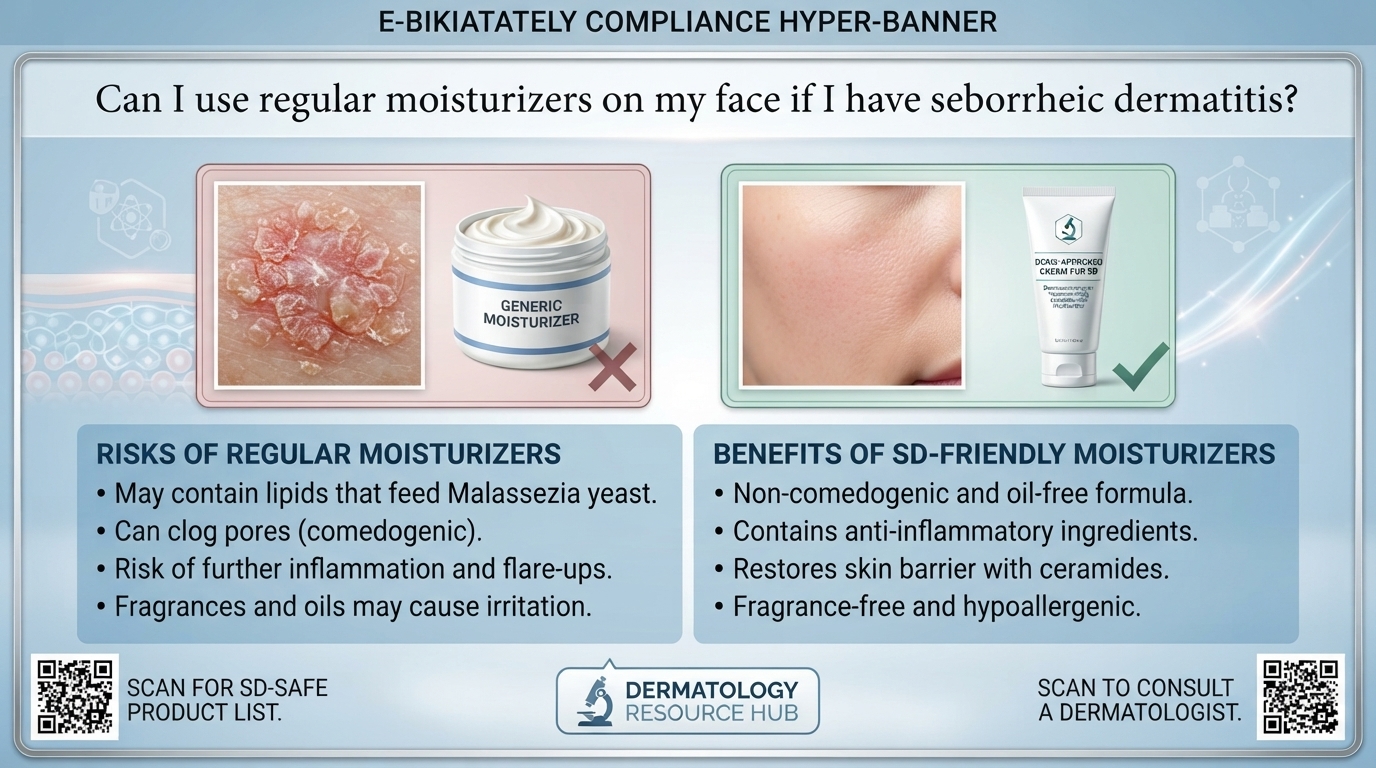
Sebum and oils are the primary food source for Malassezia. Many standard, heavy-duty moisturizers are formulated with rich oils, fatty acids, esters, and botanical butters that have specific carbon chain lengths (typically between C11 and C24). When you apply these regular lotions to your face, you are essentially laying out an all-you-can-eat buffet for the yeast. As the Malassezia metabolizes these lipids, it produces byproducts that irritate your skin barrier, triggering redness, scaling, and intense itching.
2. Comedogenic and Occlusive Ingredients
Conventional anti-aging creams and thick barrier repairs are often designed to trap moisture using heavy occlusives like petrolatum, isopropyl myristate, or coconut oil. While great for normal or dry eczema-prone skin, these ingredients trap heat, sweat, and oil against seborrheic-prone facial zones (like the nasolabial folds), creating an airtight breeding ground for microbes.
3. Irritants and Synthetic Fragrances
Regular skin lotions are frequently packed with synthetic fragrances, essential oils, parabens, and botanical extracts. When applied to an already compromised, inflamed skin barrier, these chemicals act as direct irritants, sparking contact dermatitis alongside your seborrheic flare-up.
What Makes a Moisturizer “Safe” for Seborrheic Dermatitis?
If you cannot use regular moisturizers, what can you put on your face? Safe facial care for seborrheic dermatitis requires checking ingredient lists against specific medical criteria (often referred to in skincare communities as being “fungal acne safe” or Malassezia-safe).
- Zero Carbon Chain Triggers: Safe products avoid fatty acids with carbon chain lengths between 11 and 24. (Ingredients like Caprylic/Capric Triglyceride with only C8/C10 chains are often exceptions because the yeast cannot digest them).
- Lightweight, Non-Occlusive Formulations: Gel-creams, fluid emulsions, and water-based hydrators provide moisture without suffocating the skin or feeding microbes.
- Anti-Inflammatory and Barrier-Repair Actives: Look for ingredients like niacinamide, ceramides, hyaluronic acid, and panthenol (vitamin B5), which strengthen the skin barrier without nourishing yeast.
Comparing Moisturizer Types: Regular vs. Seborrheic-Safe
To understand how your choice of hydration impacts your skin, review this detailed comparative breakdown:
| Moisturizer Feature | Standard / Regular Moisturizers | Seborrheic-Safe Moisturizers | Impact on Facial Skin |
| Primary Oils & Butters | Shea butter, coconut oil, olive oil, heavy esters. | Squalane (plant-derived), MCT oil (C8/C10), mineral oil. | Regular oils feed Malassezia yeast; safe oils hydrate without encouraging yeast growth. |
| Fragrance & Additives | Often contains synthetic perfumes, essential oils, and plant extracts. | 100% Fragrance-free, dye-free, and minimalist formulations. | Fragrances trigger stinging and contact dermatitis on compromised skin. |
| Texture & Finish | Rich, heavy creams, thick balms, and occlusive ointments. | Lightweight gels, fluid lotions, and water-based hydrators. | Heavy creams trap heat and microbes; lightweight gels allow the skin to breathe. |
| Skin Barrier Effect | Can temporarily soothe dryness while secretly fueling underlying inflammation. | Hydrates while actively calming redness and inhibiting microbial overgrowth. | Determines whether your flare-up clears up or spirals out of control. |
Product Reviews: Best Safe Moisturizers for Facial Seborrheic Dermatitis
Finding a facial moisturizer that hydrates dry flakes without causing a breakout can feel like finding a needle in a haystack. Here are four top-rated, dermatologist-approved products that are safe for seborrheic dermatitis.
1. Bioderma Sensibio DS+ Soothing Cream
- Best For: Daily facial hydration targeted specifically at seborrheic-prone skin.
- Why We Love It: This specialized cream is engineered to target the proliferation of Malassezia. It helps reduce flaking, minimizes redness around the nose and eyebrows, and keeps the skin comfortably hydrated without feeding the yeast. It has a lightweight texture that absorbs quickly.
2. Malezia 5% Urea Moisturizer
- Best For: Gentle chemical exfoliation of dry flakes combined with deep hydration.
- Why We Love It: Formulated by a dermatologist specifically for fungal acne and seborrheic dermatitis, this cream uses 5% urea to gently dissolve stubborn dead skin flakes while utilizing safe, non-triggering emollients (like squalane and petrolatum in a specific non-feed formulation). It leaves skin buttery soft without the grease.
3. CeraVe Daily Moisturizing Lotion (Used with Caution / Patch Test)
- Best For: Budget-friendly barrier repair containing ceramides.
- Why We Love It: While CeraVe contains some fatty alcohols that some ultra-sensitive individuals react to, its inclusion of essential ceramides and hyaluronic acid makes it a staple for many mild sufferers who need basic barrier repair. (Note: Always patch test first).
4. Curel Intensive Moisture Facial Cream
- Best For: Ultra-sensitive, dry, winter-chapped facial skin.
- Why We Love It: Utilizing an advanced ceramide-functional ingredient technology, this Japanese therapeutic cream provides deep, soothing moisture to compromised skin barriers without relying on heavy, yeast-feeding oils or synthetic fragrances.
Actionable Tips: How to Moisturize Safely During a Flare-Up
- Always Check the Ingredients: Before buying any new face cream, copy and paste the ingredient list into free online checkers like SkinCarisma or Seza.me (Fungal Acne Scanners) to instantly flag whether it contains ingredients that feed Malassezia.
- Moisturize on Damp Skin: Apply your safe moisturizer immediately after washing your face while your skin is still slightly damp. This locks in water without requiring heavy, pore-clogging occlusives.
- Less is More: During an active flare-up, strip your routine down to the absolute bare minimum: a gentle, sulfate-free cleanser, a targeted anti-fungal wash (like a zinc pyrithione or ketoconazole cleanser used briefly), and a lightweight safe moisturizer.
- Avoid Natural Oils: Many people make the mistake of applying natural oils like organic coconut oil, olive oil, or argan oil to dry facial flakes. This is one of the fastest ways to trigger an explosive seborrheic dermatitis flare-up.
10 Comprehensive FAQs
1. Can I use coconut oil on my face for seborrheic dermatitis flakes?
No! Coconut oil is 100% comedogenic and rich in lauric acid, which is a primary food source for Malassezia yeast. Applying coconut oil to seborrheic dermatitis will almost always worsen redness and flaking.
2. Why does my face feel so dry if seborrheic dermatitis is caused by oil?
Even though your sebaceous glands produce oil, the inflammatory response and rapid skin cell turnover disrupt your natural moisture barrier. This causes transepidermal water loss, leaving your skin feeling tight, dry, and flaky on the surface underneath the inflammation.
3. Are all “natural” or “organic” moisturizers safe for my face?
Actually, the opposite is often true. Natural moisturizers frequently rely on plant oils, seed extracts, essential oils, and botanical butters that are rich in fatty acids that feed yeast and trigger contact dermatitis.
4. Can I use hyaluronic acid serums?
Yes! Pure hyaluronic acid serums (water-based humectants) are generally fantastic for seborrheic dermatitis because they draw moisture into the skin without adding oils or feeding yeast. Just ensure the serum doesn’t contain hidden yeast-feeding esters.
5. What is the difference between eczema moisturizers and seborrheic dermatitis moisturizers?
Eczema moisturizers are designed for dry, damaged skin barriers and are often loaded with heavy oils, shea butter, and ceramides. Seborrheic dermatitis moisturizers must avoid heavy oils and target microbial balance while repairing the barrier.
6. Can I use petroleum jelly (Vaseline) on my facial flare-ups?
Pure petrolatum is inert and does not feed Malassezia yeast because it is a hydrocarbon, not a fatty lipid. However, it is a heavy occlusive, so use it sparingly only on dry, non-inflamed patches so you don’t trap heat and sweat.
7. How can I tell if my current moisturizer is making my skin worse?
If you notice that your skin becomes redder, itchier, or develops more tiny bumps and flakes within 24 to 48 hours of applying a new lotion, your skin is likely reacting negatively to an ingredient in that product.
8. Should I stop moisturizing altogether if I have a flare-up?
Stopping moisturizers entirely can leave your skin barrier severely dehydrated, leading to cracking and increased irritation. Instead, switch to a lightweight, minimalist, fungal-safe hydration gel.
9. Can diet affect how my skin reacts to moisturizers?
While skincare products have an immediate topical impact, high sugar intake and dairy can increase systemic inflammation and alter your sebum composition, making your skin more reactive to topical triggers.
10. When should I see a dermatologist for persistent facial dryness and flaking?
If over-the-counter anti-fungal washes and safe moisturizers fail to clear your facial flakes after 4 to 6 weeks, or if your skin becomes painful, oozing, or severely inflamed, consult a dermatologist for prescription topical treatments.
Conclusion
Navigating facial skincare when you have seborrheic dermatitis requires vigilance, patience, and a willingness to look past marketing claims to read ingredient labels. While regular, heavy-duty moisturizers can seem like a quick fix for dry winter skin, they often act as a hidden catalyst for yeast overgrowth and stubborn flare-ups. By ditching pore-clogging, oil-heavy lotions and switching to lightweight, seborrheic-safe hydrators, you can restore your skin barrier, calm inflammation, and achieve a healthy, comfortable, and flake-free complexion all year round.