If you live in San Francisco, grab a double-shot espresso before catching the BART, brave the freezing winter mornings in New York City, fuel up for a high-stakes tech sprint in Austin, Texas, or navigate the damp microclimates of Seattle, Washington, coffee is likely a non-negotiable part of your daily routine.
However, if you suffer from severe seborrheic dermatitis—marked by intense, burning itching, greasy yellowish flakes, thick crusting along your hairline, and angry red patches across your scalp, face, or chest—you may have wondered if your morning habit is sabotaging your skin.
Should you completely cut out coffee to heal your skin?
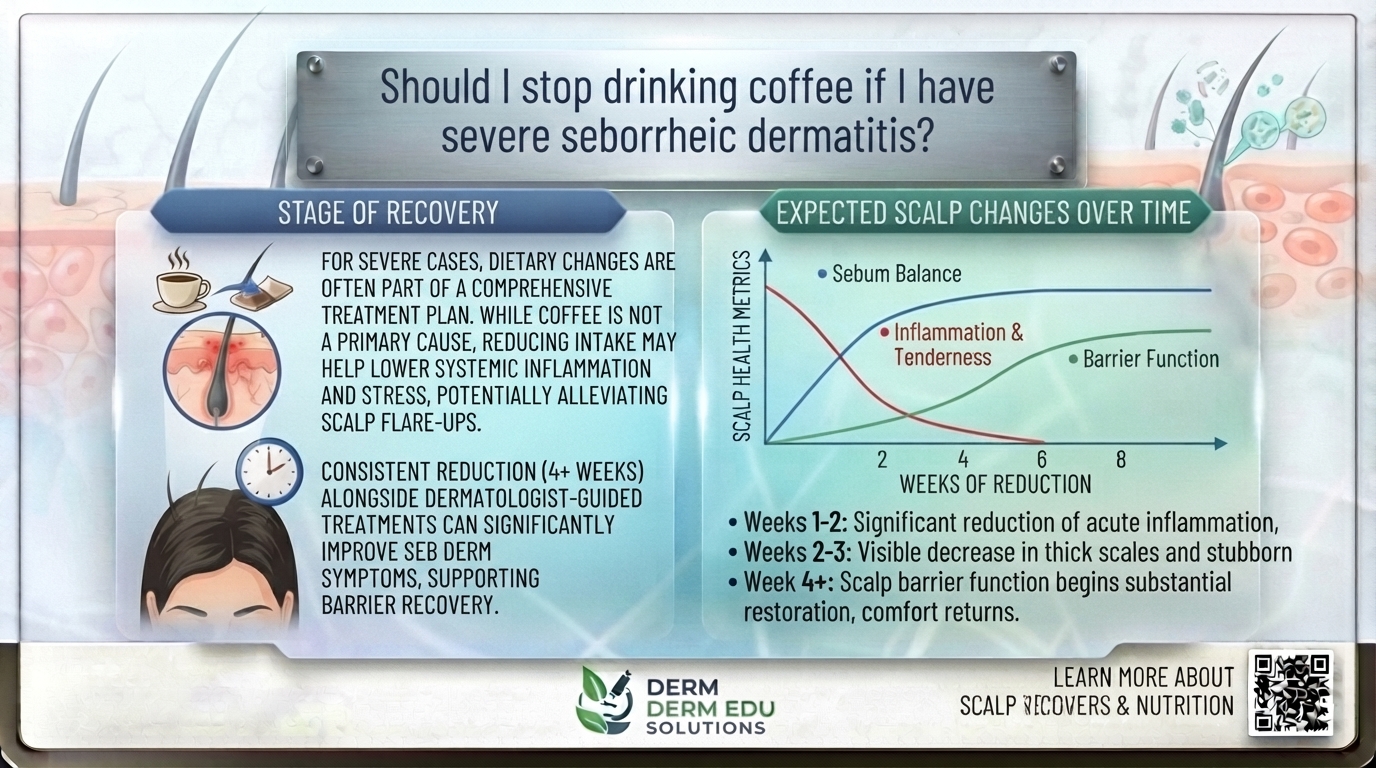
The short answer: While coffee does not directly cause seborrheic dermatitis, drinking heavy amounts of caffeine—especially on an empty stomach—is a major systemic trigger that can dramatically worsen severe flare-ups.
Caffeine spikes systemic cortisol (stress hormones), increases sebaceous (oil) gland output, alters gut barrier integrity, and feeds the underlying yeast (Malassezia) driving your condition. However, you do not necessarily need to quit cold turkey. By understanding the biological mechanics of the gut-skin axis, shifting to low-acid or Swiss Water Processed decaf alternatives, and pairing dietary changes with targeted antifungal care, you can manage your symptoms effectively.
1. The Biological Link: How Coffee Fuels Seborrheic Dermatitis
To understand why coffee impacts severe seborrheic dermatitis, you have to look at the three biological pillars that keep this chronic inflammatory condition active: Yeast Overgrowth (Malassezia), Excess Sebum Production, and Immune System Hyper-Reactivity.
                       COFFEE TO SEBORRHEIC DERMATITIS PIPELINE
                                          │
      ┌───────────────────────────────────┴───────────────────────────────────┐
      ▼                                                                       ▼
[ Adrenal Cortisol & Sebum Surge ]                                      [ Gut Barrier & Inflammation ]
• Caffeine triggers adrenal cortisol spike                              • Gastric acidity irritates gut lining
• Sebaceous glands pump out excess sebum                                • Pro-inflammatory cytokines flood blood
• Feeds Malassezia yeast microflora                                     • Worsens immune reaction to yeast
      │                                                                       │
      └───────────────────────────────────┬───────────────────────────────────┘
                                          │
                                          ▼
                        [ SEVERE SEBORRHEIC DERMATITIS FLARE ]
                 • Thick, greasy yellow crusting & scaling
                 • Intense, burning, raw scalp itching
                 • Spread of red plaques across hairline and face
1. The Sebum-Yeast Feedback Loop
Seborrheic dermatitis is driven by an abnormal inflammatory response to Malassezia, a harmless yeast that lives on everyone’s skin. Malassezia feeds exclusively on the fatty acids found in human sebum (skin oil).
- When you consume caffeine, it stimulates your adrenal glands to release cortisol.
- High cortisol forces your sebaceous glands to overproduce sebum.
- This sudden surge of oil provides an unlimited food supply for Malassezia, causing the yeast population to multiply rapidly and trigger a severe flare-up.
2. Gut Permeability and Systemic Cytokines
Drinking coffee—particularly on an empty stomach—triggers a surge of hydrochloric acid and gastrin in your stomach. In individuals with sensitive immune systems or compromised gut barriers, this acid-induced irritation increases intestinal permeability (“leaky gut”). This allows pro-inflammatory cytokines to enter the bloodstream, traveling directly to your skin and amplifying the redness and scaling of seborrheic dermatitis.
2. Coffee vs. Other Triggers: Where Does Caffeine Rank?
While coffee is a powerful catalyst, it is rarely the sole root cause of severe seborrheic dermatitis. Understanding how it compares to other triggers helps you prioritize your treatment strategy:
| Trigger Factor | Impact on Seborrheic Dermatitis | Primary Mechanism | Management Priority |
| Caffeine & Cortisol | High | Spikes sebum production and feeds Malassezia yeast. | High (Taper or switch to decaf) |
| Empty-Stomach Acidity | High | Triggers gut inflammation and systemic cytokine release. | High (Always eat food with coffee) |
| Refined Sugar & Dairy | Very High | Spikes insulin and systemic inflammation, fueling yeast. | Critical (Limit processed sugars) |
| High Humidity / Sweat | Moderate-High | Traps moisture and oils against the scalp. | Moderate (Wash hair after sweating) |
| Harsh Sulfates (SLS) | High (Local) | Strips skin barrier lipid mantle, causing rebound oiliness. | Critical (Use sulfate-free cleansers) |
3. Step-by-Step Coffee Reduction & Scalp Healing Protocol
If you want to test whether reducing your coffee intake will calm your severe seborrheic dermatitis, follow this structured 4-week protocol:
1.Taper Coffee Intake Over 7 Days:Prevents sudden withdrawal stress and rebound cortisol spikes.
Quitting coffee abruptly can cause severe withdrawal headaches, which trigger a temporary stress response and cortisol surge.
- Days 1–3: Cut your daily coffee intake in half (e.g., from 4 cups down to 2).
- Days 4–7: Transition to a 50/50 mix of regular coffee and Swiss Water Processed decaf.
- Week 2 Onward: Switch exclusively to low-acid, chemical-free decaf or herbal alternatives.
2.Never Drink Coffee Without Food:Protects the gut mucosal lining and prevents acid-induced inflammation.
If you choose to keep a small morning cup of coffee in your routine, change how you consume it.
- Always eat a protein- and healthy-fat-rich breakfast (e.g., eggs, avocado, or Greek yogurt) at least 15 minutes before your first sip of coffee.
- This buffers stomach acid, protects gut integrity, and blunts the acute cortisol response.
3.Incorporate Clinical Antifungal Washes:Directly targets and destroys the Malassezia yeast overgrowth.
Dietary changes alone cannot clear active scaling; you must treat the skin topically.
- Use an over-the-counter medical shampoo containing Ketoconazole 1% or Selenium Sulfide 2.5% twice a week.
- Leave the lather on your scalp for 3 to 5 full minutes to allow the active ingredients to penetrate thick crusts before rinsing.
4.Apply a Lightweight, Soothing Leave-In Serum:Soothes inflammation and repairs the compromised skin barrier.
Severe seborrheic dermatitis leaves skin raw and irritated between washes.
- Apply a non-comedogenic, alcohol-free serum containing niacinamide, zinc PCA, or aloe vera to soothe redness without feeding yeast.
4. Product Reviews: Top Treatments for Severe Seborrheic Dermatitis
To help you combat severe seborrheic dermatitis from both the inside and outside, the team at itemguides.com reviewed four top-rated medical and dietary products:
1. Nizoral A-D Anti-Dandruff Shampoo (1% Ketoconazole)
- Best For: Eradicating the Malassezia yeast driving severe seborrheic dermatitis flare-ups.
Nizoral is the gold-standard clinical treatment for severe scaling and inflammation. Its active ingredient, Ketoconazole 1%, directly binds to scalp proteins to destroy fungal cell walls and stop scaling at its root.
- Key Specifications:
- Active Ingredient: Ketoconazole 1%.
- Usage: 2 times per week for 4 weeks, then as needed for maintenance.
- Formulation: Therapeutic salon-strength formula.
- Pros: Clinically proven to clear severe flare-ups fast; stops intense itching; removes greasy yellow crusts.
- Cons: Can be drying to hair strands; requires a gentle conditioner on hair ends.
2. Volcanica Coffee Swiss Water Process Decaf
- Best For: Enjoying rich, gourmet coffee flavor without caffeine-induced cortisol spikes or gut irritation.
Volcanica’s decaf is processed using 100% pure water (no chemical solvents), removing 99.9% of caffeine while preserving natural antioxidants that support skin health without triggering oil overproduction.
- Key Specifications:
- Process: 100% Chemical-Free Swiss Water Process.
- Bean Origin: 100% Specialty Grade Arabica.
- Caffeine Content: 99.9% Caffeine-Free.
- Pros: Exceptionally smooth taste; zero chemical solvent aftertaste; eliminates caffeine-driven cortisol surges.
- Cons: Premium price point compared to standard grocery store decaf.
3. DermaZinc Therapeutic Soap Bar (Zinc Pyrithione 2%)
- Best For: Treating severe seborrheic dermatitis plaques along the hairline, ears, eyebrows, and face.
Unlike liquid shampoos, this medical-grade zinc soap bar delivers a concentrated dose of Zinc Pyrithione (2%) directly to stubborn facial and hairline seborrheic dermatitis flare-ups.
- Key Specifications:
- Active Ingredient: Zinc Pyrithione 2% (Micronized).
- Application: Face, ears, chest, and hairline.
- Formulation: Fragrance-free, steroid-free.
- Pros: Highly effective for facial seborrheic dermatitis; reduces redness and flaking rapidly; non-drying.
- Cons: Bar soap format requires proper storage on a draining soap dish to prevent melting.
4. Seed DS-01 Daily Synbiotic (Probiotic + Prebiotic)
- Best For: Restoring gut barrier integrity to stop systemic inflammation through the gut-skin axis.
Because coffee-induced gut irritation can trigger systemic inflammation that worsens skin conditions, rebuilding your microbiome with targeted clinical strains is an essential long-term strategy.
- Key Specifications:
- Strains: 24 clinically validated probiotic strains.
- Delivery Technology: Nested ViaCap® capsule that survives stomach acid.
- Pros: Scientifically proven to support gut barrier function; reduces systemic inflammatory markers; dairy- and gluten-free.
- Cons: Monthly subscription investment; requires consistent daily use.
5. Comparison Matrix: Product Evaluation
| Product Category | Product Name | Primary Active Ingredient | Core Benefit for Seborrheic Dermatitis | Ideal Usage Timing |
| Topical Treatment | Nizoral A-D Shampoo | Ketoconazole 1% | Kills Malassezia yeast & clears heavy scales | 2x per week during flare-ups |
| Topical Treatment | DermaZinc Soap Bar | Zinc Pyrithione 2.0% | Calms facial & hairline redness/flaking | Daily face & hairline wash |
| Internal Beverage | Volcanica SWP Decaf | 100% Arabica (Chemical-Free) | Prevents caffeine-driven cortisol & oil surges | Morning coffee replacement |
| Internal Supplement | Seed DS-01 Synbiotic | 24-Strain Microbiome Complex | Repairs gut lining & reduces systemic inflammation | Daily morning routine |
6. Regional Climate & Lifestyle Factors Across Target Markets
Environmental conditions in itemguides.com reader regions heavily influence seborrheic dermatitis severity:
- San Francisco & Bay Area, CA: High-stress professional environments drive elevated baseline cortisol levels. Tech workers relying on espresso all morning experience rapid oil gland overactivity. Pairing reduced caffeine with a soothing daily scalp serum helps control flare-ups.
- New York City, NY: Dry winter radiator heat combined with urban pollution creates severe skin barrier cracking. New Yorkers dealing with seborrheic dermatitis should avoid harsh drying alcohols in hair products and focus on gentle, barrier-repairing topicals.
- Texas (Austin, Dallas, Houston): Extreme humidity and heat cause heavy sweating, which mixes with excess sebum to create an ideal breeding ground for Malassezia yeast. Texans should wash their hair immediately after outdoor workouts and limit high-sugar iced coffees.
- Seattle & Bellevue, WA: The Pacific Northwest’s damp, overcast climate keeps humidity high year-round. Seattle residents prone to fungal skin conditions benefit greatly from reducing internal acid/cortisol stressors while using antifungal washes regularly.
7. Actionable Dietary & Lifestyle Tips
In addition to reducing caffeine and using medical shampoos, adopt these habits to keep severe seborrheic dermatitis under control:
- Eliminate Added Sugars: Malassezia yeast thrives on glucose. Cutting out sugary pastries, sodas, and flavored coffee syrups starves the yeast and reduces inflammation.
- Never Go to Bed with Wet Hair: Trapping moisture against your warm scalp overnight creates a fungal incubator. Always dry your hair and roots completely before sleeping.
- Wash Your Pillowcases Twice Weekly: Dead skin cells, sebum, and yeast spores accumulate on pillowcases, reinfecting your skin night after night. Switch to silk or bamboo pillowcases and wash them frequently.
- Take Omega-3 Fatty Acids: High-dose EPA/DHA fish oil supplements help suppress systemic inflammatory pathways naturally, easing redness and scaling.
8. Frequently Asked Questions (FAQ)
1. Will completely quitting coffee cure my severe seborrheic dermatitis?
Quitting coffee alone will not cure severe seborrheic dermatitis because the condition requires the presence of Malassezia yeast. However, eliminating heavy caffeine intake removes a major trigger that drives excess oil production and inflammation, making your skin much easier to manage.
2. Is decaf coffee 100% safe for seborrheic dermatitis?
Standard decaf coffee contains about 2 to 5 mg of caffeine per cup, which is negligible. However, if your stomach is sensitive to acid, choose a Swiss Water Processed, low-acid dark roast to prevent gastric irritation and gut inflammation.
3. Why does my scalp burn and itch immediately after drinking coffee?
An immediate burning or itching sensation after drinking coffee is typically caused by a neurogenic nervous system response combined with a sudden spike in blood flow and histamine release triggered by caffeine and stomach acid irritation.
4. Can drinking tea cause the same seborrheic dermatitis flare-ups?
Black and green tea contain caffeine, but usually in lower amounts than coffee (30–50 mg per cup). Tea also contains L-theanine, an amino acid that calms the nervous system and softens the cortisol spike, making tea less likely to trigger oil production than heavy coffee.
5. How long after reducing coffee intake will my seborrheic dermatitis improve?
When combined with antifungal shampoos like Ketoconazole, reducing your coffee intake and stabilizing your diet will typically yield visible reductions in scaling and redness within 14 to 21 days.
6. Can I use coconut oil to moisturize my dry seborrheic dermatitis flakes?
Never use coconut oil on seborrheic dermatitis. Coconut oil is packed with medium-chain fatty acids that Malassezia yeast feeds on. Applying it will cause the yeast population to explode and worsen your flare-up.
7. Does stress make seborrheic dermatitis worse even without coffee?
Yes. Psychological stress releases cortisol and adrenaline, which stimulate sebaceous glands to pour out excess oil. This is why severe seborrheic dermatitis frequently flares up during stressful work weeks or exam periods.
8. Will taking zinc supplements help clear my seborrheic dermatitis?
Yes. Oral zinc supplements (like Zinc Picolinate or Zinc Citrate) have been clinically shown to help regulate immune function, reduce skin inflammation, and control sebum production in patients with seborrheic dermatitis.
9. Why do my seborrheic dermatitis flare-ups get worse in the winter?
In the winter, dry indoor heating strips moisture from the skin barrier, while heavy winter hats trap body heat and sweat against the scalp, creating an ideal microclimate for yeast overgrowth and scaling.
10. When should I see a dermatologist for my seborrheic dermatitis?
You should consult a board-certified dermatologist if your seborrheic dermatitis covers large areas of your body, causes raw weeping skin, leads to noticeable hair thinning, or fails to improve after 4 weeks of using over-the-counter clinical shampoos like Nizoral or DermaZinc.
Conclusion
If you suffer from severe seborrheic dermatitis, you do not necessarily have to banish coffee from your life forever—but continuing to consume high doses of caffeine on an empty stomach will keep your skin locked in a painful cycle of inflammation, oil overproduction, and fungal growth.
By tapering your caffeine intake, switching to low-acid Swiss Water Processed decaf, always pairing your coffee with a protein-rich meal, and combining these dietary shifts with proven topical treatments like Nizoral and DermaZinc, you can finally regain control over your skin.
For more expert dermatological guides, product reviews, and wellness tips, continue exploring itemguides.com!