Whether you are halfway through mixing a custom cleaning spray, preparing a batch of homemade pickling brine, or blending a natural, eco-friendly weed burner for your driveway cracks, encountering a sudden vinegar shortage is a classic household frustration. You reach into the pantry, look past the empty bottle of white distilled vinegar, and lock eyes with a bottle of golden apple cider vinegar (ACV).
This triggers an immediate question: Can I use apple cider vinegar instead of white distilled vinegar?
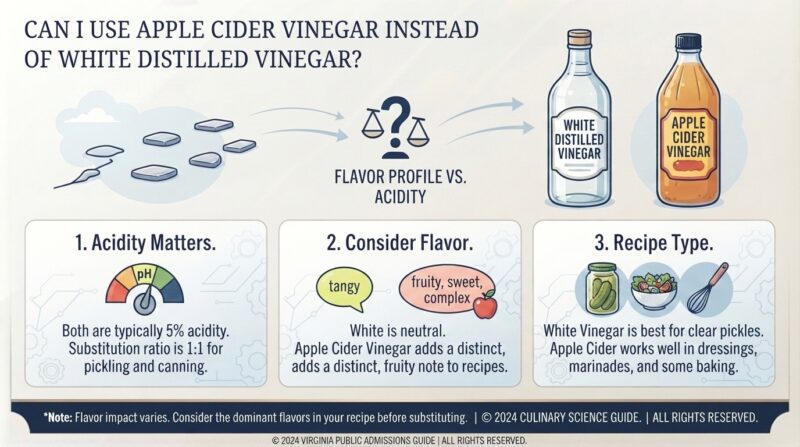
The direct answer is yes, in the vast majority of cases, you can use apple cider vinegar as a direct alternative for white distilled vinegar. Both liquids feature a standard baseline acidity level of roughly 5% acetic acid, meaning they carry the exact same chemical strength.
However, substituting the two isn’t entirely consequence-free. Because apple cider vinegar is derived from fermented apple juice rather than pure grain alcohol, it contains organic sugars, distinct aromatic profiles, and a deep amber hue.
If you use it blindly in the wrong application, you risk staining light fabrics, attracting pests with sweet residues, or altering the flavor profile of your culinary dishes.
This exhaustive guide serves as the ultimate substitution manual for itemguides.com readers, mapping out exactly when to make the swap and when to rush to the store for a fresh jug of white distilled vinegar.
The Core Chemistry: How They Compare Side-by-Side
To master household substitutions, you must first understand the underlying scientific profiles of what you are pouring. While both items are classified under the broader umbrella of vinegars, their processing and components create distinct behavior patterns.
Distilled White Vinegar: The Pure Acid Benchmark
Distilled white vinegar is made by fermenting pure distilled grain alcohol. The resulting liquid is highly filtered, completely clear, sharp, and harsh to smell. Its chemical makeup is remarkably uncomplicated: it is composed strictly of roughly 5% to 7% acetic acid suspended in 93% to 95% pure water, completely devoid of heavy organic compounds, residual sugars, or solid particulate matter.
Apple Cider Vinegar: The Complex Fermented Alternative
Apple cider vinegar begins its lifecycle as crushed apple juice. Yeast and bacteria ferment the fruit sugars first into alcohol, and subsequently into acetic acid.
Because it retains the properties of its raw fruit source, ACV hovers consistently at 5% acidity but carries an array of additional organic compounds: malic acid, tannins, polyphenols, enzymes, and a distinct amber coloring. High-quality varieties also contain “the mother,” a cloudy matrix of beneficial bacteria strains and cellulose.
The Ultimate Substitution Viability Matrix
To help you determine whether the swap is safe for your immediate project, refer to our master application grid below:
| Household Task Category | Substitution Viability | Core Scientific Reason & Performance Impact |
| Kitchen Grease & Surface De-greasing | Moderate | White vinegar cuts heavy oils faster due to a lack of interference. ACV works, but requires longer dwell times. |
| Bathroom Limescale & Soap Scum | High | Both possess the 5% acid necessary to dissolve mineral bonds. White vinegar remains the structural favorite to prevent residue. |
| Laundry Whitening & Softening | Low (Avoid) | The amber pigments in ACV can cause permanent yellowing or staining on light or pure white fabrics over time. |
| Natural DIY Weed Killing | High | Both burn vegetative plant tissue identically on contact. ACV is functionally identical but significantly less cost-effective. |
| Home Food Pickling & Preservation | High | Provided the ACV bottle explicitly states 5% acidity, it safely prevents microbial spoilage. |
| Baking Reactivity (Buttermilk/Rising) | Perfect (1:1) | The acetic acid levels react identically with sodium bicarbonate (baking soda) to produce carbon dioxide bubbles. |
Scenario-Specific Substitution Breakdowns
1. The Natural Household Cleaning Blueprint
If you run out of white distilled vinegar while mixing an all-purpose counter spray or a window cleaner, swapping in apple cider vinegar is perfectly viable for hard, non-porous surfaces like countertops, sinks, and mirrors.
- The Scent Advantage: Many homeowners actually prefer ACV for general room freshening because its post-evaporation scent leaves a subtle, fruity undertone rather than a sharp, chemical odor.
- The Residue Downside: Because ACV contains complex fruit sugars, avoid using it as a long-term carpet treatment or on delicate fabrics. Unfiltered ACV can leave a sticky film that attracts dust or microscopic mold spores if not wiped down cleanly with fresh water.
2. The Backyard Gardening and Weed Control Playbook
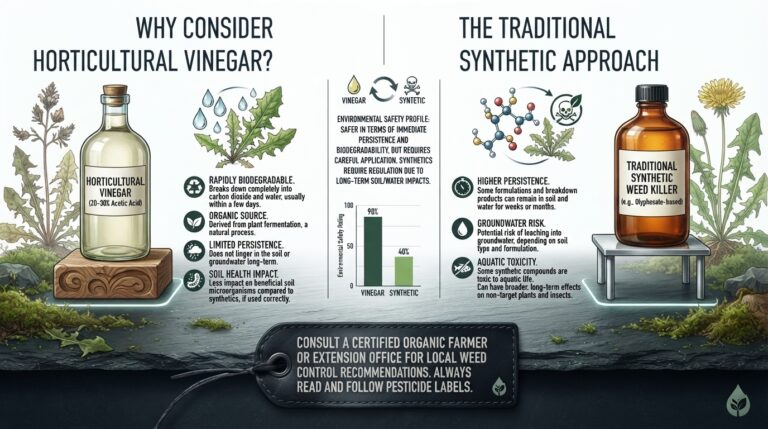
When it comes to building a natural weed control mix using dish soap and vinegar, both styles function as powerful contact desiccants. The acetic acid destroys the leaf cuticle and cell membranes, causing weeds to wilt and dry out in the hot afternoon sun.
- The Practical Reality: While ACV will scorch dandelions and pavement grass effectively, using it over a large yard space is financially impractical. A gallon of industrial white distilled vinegar is highly economical, whereas organic ACV is a premium culinary product. Save the ACV for small spot-treatments.
3. Home Canning and Food Preservation Guidelines
If you are preserving summer vegetables via pickling, structural safety reigns supreme.
- The Acidity Rule: You can safely substitute ACV for white vinegar 1:1 only if you double-check the commercial label to ensure it explicitly guarantees a 5% acidity rating. Never use custom, homemade, or artisanal farm vinegars for canning, as their fluctuating acid levels can allow deadly botulinum or bacterial strains to take root.
- The Visual Shift: Keep in mind that apple cider vinegar’s dark, molasses-like coloration will turn clear brines yellowish-brown and will subtly darken light-colored vegetables like cauliflower or onions.
Actionable Execution Guide: How to Properly Substitute ACV
If you choose to proceed with utilizing your pantry’s apple cider vinegar stash, follow this procedural sequence to guarantee success and minimize potential residue footprints.
1.Verify the Commercial Acid Percentage Label:Initial Assessment.
Pick up your bottle of apple cider vinegar and locate the product description panel. Confirm the statement reads “5% Acidity” or “50 Grain” to guarantee it holds the exact structural power required to match white distilled alternatives.
2.Filter Out the Unfiltered ‘Mother’ Strands:Particulate Removal.
If your ACV is raw and unfiltered, it will contain floating brown sediment lines. Pour the volume you need through a clean, fine mesh coffee filter or a double-layered cheesecloth to remove these organic chunks. This step protects spray bottles and delicate household fixtures from clogging.
3.Formulate a Targeted Dilution Ratio:Mixing Adaptation.
For hard surface cleaning, mix the strained apple cider vinegar in a precise 1:1 balance with lukewarm, distilled water. If you are cleaning heavy kitchen grease or intense soap scum, skip the water dilution entirely and apply the acid directly to the grime layer.
4.Perform a Sensitive Surface Spot Test:Final Execution.
Before spraying the amber solution across large surfaces—especially porous items like unsealed grout lines, light painted woods, or neutral stones—apply a single drop to a hidden corner. Wipe it away after five minutes to ensure no permanent golden discoloration occurs.
5 Essential Expert Tips for Managing Vinegar Substitutions
- Keep ACV Away from White Laundry: Never add apple cider vinegar to your washing machine’s fabric softener compartment to brighten white shirts. The tannins present in fermented apple blends act like a mild organic dye, which can lead to a dingy, off-white appearance over multiple washes.
- Account for Flavor Dynamics in Cooking: When subbing ACV into salad dressings or marinades that call for white vinegar, expect a distinct change in flavor profile. White vinegar delivers a sharp, neutral punch, whereas ACV injects a fruity sweetness that can overpower subtle savory dishes.
- Double Down on the Water Rinse: When utilizing ACV for kitchen counters or appliances, always follow your cleaning session with a prompt wipe down using a clean, damp microfiber cloth. Removing the natural, microscopic fruit sugars prevents the surface from turning slightly tacky or sticky.
- Mind the Cost Differential: Be conscious of your budget. Using high-grade, organic, unpasteurized apple cider vinegar to descale a clogged coffee maker or scrub a shower door is highly cost-prohibitive. Use it strictly as an emergency bridge until you can buy cheap bulk white vinegar.
- Beware of Pests in Dynamic Climates: In warm, humid environments—such as summer in Texas or California—spraying sugary ACV residue across baseboards can act as an unintended attractant for fruit flies or sugar ants. Keep external window frames and doorway tracks treated with clear, sugar-free white vinegar instead.
Frequently Asked Questions (FAQ)
1. Can I use apple cider vinegar to descale my coffee maker?
Yes, you can use it, but it is not highly recommended. While the acid will break down the hard water calcium buildup, the complex apple compounds can leave behind a persistent odor and a lingering sweet residue that can alter the flavor of your coffee for several subsequent brewing cycles.
2. Is apple cider vinegar more acidic than white distilled vinegar?
No. Standard commercial versions of both white distilled vinegar and apple cider vinegar typically average exactly 5% acetic acid concentration. However, specialty “cleaning vinegars” sold in home stores are boosted to 6% acidity, making them roughly 20% stronger than standard kitchen ACV.
3. Will apple cider vinegar stain my grout or tile surfaces?
If you are cleaning dark ceramic tiles or dark grout, it will not cause visible changes. However, if you possess bright white, porous grout lines or light natural marble, the golden organic pigments in ACV can soak in and create a faint, yellowish stain if left to pool.
4. Can I use apple cider vinegar to clean windows and mirrors?
Yes. It functions beautifully for window care and cuts through exterior film cleanly. Simply filter the liquid first if it contains sediment, and use a high-quality squeegee or microfiber cloth to prevent streak marks.
5. Can I use white vinegar instead of apple cider vinegar for health remedies?
No. The popular health uses linked to apple cider vinegar—such as hair rinses, skin toners, or dietary adjustments—rely entirely on the specific fruit enzymes, malic acid, and probiotics found within the apple fermentation process. Pure grain-derived white distilled vinegar lacks these elements completely and can be far too harsh on human skin.
6. Will fruit flies be attracted to an apple cider vinegar cleaning spray?
Yes. Fruit flies are naturally drawn to the scent of fermenting fruit and acetic acid. If you leave unsanitized ACV residue on your kitchen counters in warm weather, it can inadvertently draw pests into your food preparation spaces.
7. Can I substitute apple cider vinegar for white wine vinegar?
Yes. Because white wine vinegar and apple cider vinegar are both derived from fruit bases, they share complementary flavor profiles and similar acidity ranges, making them excellent 1:1 culinary substitutes.
8. Does apple cider vinegar disinfect surfaces as well as white vinegar?
Yes, they possess comparable, moderate antimicrobial properties because their baseline acetic acid percentages are identical. However, remember that neither household vinegar is an EPA-registered medical disinfectant; they reduce surface bacteria but do not eliminate heavy viruses.
9. What can I add to apple cider vinegar to improve its cleaning scent?
To cut through the strong pungent aroma, infuse your vinegar bottle with fresh citrus peels (lemon, lime, or orange) or add a few drops of pure organic essential oils, such as tea tree, lavender, or eucalyptus.
10. Can I use apple cider vinegar to clean my hardwood floors?
It should be used with extreme caution. Any vinegar solution, if applied too heavily or too frequently, can gradually dull or strip away the protective polyurethane clear coat on hardwood flooring over time. If you use it, ensure it is heavily diluted and the mop is wrung out until nearly dry.
Conclusion
When caught in a household pinch, reaching for apple cider vinegar to replace white distilled vinegar is an incredibly safe, reliable, and highly functional workaround. Their matching 5% acetic acid frameworks ensure that your DIY weed sprays will still burn away unwanted vegetation, your pickling brines will safely preserve your foods, and your counter cleaners will effortlessly cut through daily mineral scale. By filtering out internal sediment strands, protecting light fabrics from golden coloration issues, and giving surfaces a clean water rinse to erase fruit sugar residues, you can successfully navigate this common pantry swap with absolute confidence.