Discovering a patch of fuzzy, green bryophyte (moss) colonizing your indoor spaces—whether it is creeping across the terracotta pots of your indoor garden in San Francisco, blanketing a damp brick accent wall in a historic Manhattan loft, spreading across a basement concrete floor in Seattle, or thriving in a high-humidity sunroom in Austin—can be both an aesthetic nuisance and a sign of hidden moisture problems.
When searching for an accessible, chemical-free remedy, the combination of dish soap and household white vinegar is frequently recommended across the internet. It sounds like the perfect, low-cost DIY solution. But does this kitchen blend actually work safely on indoor surfaces, or does it do more harm than good?
At itemguides.com, we dive deep into practical home science, material care, and domestic maintenance protocols. This exhaustive, long-form guide breaks down the chemical mechanisms, step-by-step applications, structural surface risks, and regional indoor challenges of using a dish soap and vinegar mixture to tackle indoor moss.
The Core Verdict: A Highly Effective, Surface-Dependent Safe Fix
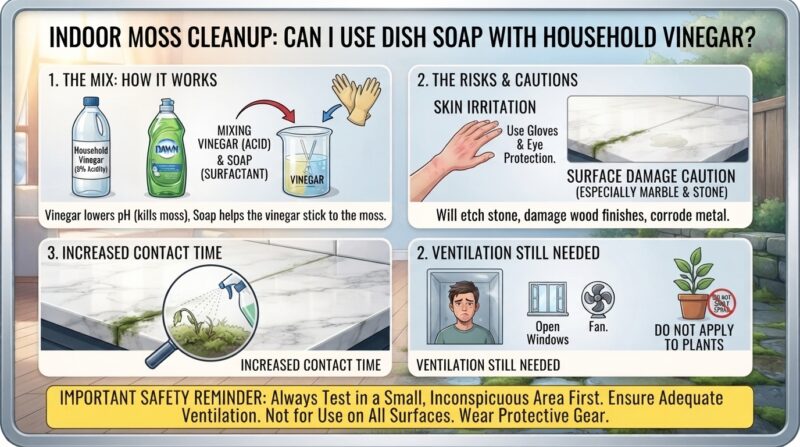
Yes, you can absolutely use standard household white vinegar mixed with a few drops of dish soap to eliminate indoor moss safely and effectively. The acetic acid in household vinegar (typically a mild 5% concentration) acts as a natural, non-selective biocide that disrupts the cellular structure of the moss, causing it to dehydrate. The dish soap functions as a crucial surfactant, breaking down the moss’s water-resistant waxy outer layer so the acid can penetrate deep into the plant’s root-like structures (rhizoids).
However, because this mixture is acidic, its safety depends entirely on the type of surface you are cleaning. While it works wonders on sealed ceramics, terracotta, and glass, it can permanently etch, pit, or discolor porous, alkaline building materials like unsealed concrete, marble, limestone, and metallic fixtures.
1. The Science of the Spray: How Soap and Vinegar Work Together
To understand why this home remedy works so well, we have to look at how moss survives and how these two everyday ingredients interact with it.
The Problem: Moss’s Protective Coat
Unlike common household weeds, mosses are non-vascular plants. They do not have true roots, stems, or leaves. Instead, they absorb water and nutrients directly through their exposed cellular surfaces. To keep from drying out, many indoor moss species develop a thin, waxy, water-repellent layer on their outer surfaces. If you spray plain water or even straight vinegar onto healthy moss, the liquid often beads up and rolls off without harming the plant.
The Role of Household Vinegar ($CH_3COOH$)
Standard household white distilled vinegar contains a mild 5% acetic acid concentration. When this acid comes into direct contact with plant tissue, it lowers the plant’s internal pH, breaks down the cell walls, and forces the cells to lose their moisture. Within 24 to 48 hours, the exposed moss turns from vibrant green to a dull, dead brown.
The Secret Weapon: Dish Soap as a Surfactant
Dish soap is a surfactant (surface-active agent). Its molecular structure allows it to break the surface tension of liquids and dissolve oils or waxes.
When you add a few drops of dish soap to your vinegar solution, the soap strips away the moss’s protective waxy coating. This allows the acetic acid to spread evenly across the plant, sink deep into its structure, and completely dry out the moss down to its base.
2. The Comprehensive Material Safety and Compatibility Guide
Before you spray this acidic mixture around your living room, bathroom, or kitchen, you need to know how it will react with different building materials. Because household vinegar is an acid, it can damage certain surfaces if left to sit.
Safe Surfaces for Vinegar and Soap Application
- Terracotta and Ceramic Pots: Excellent compatibility. The acid safely cleans away both the moss and the unsightly white mineral crusts (efflorescence) that build up on clay pots.
- Glass and Glazed Tiles: Completely safe. The mixture cuts through moss and soap scum without harming the underlying glass or glazed ceramic surfaces.
- Sealed Hardwoods: Safe for brief spot treatments, provided the protective topcoat is fully intact and you wipe the surface completely dry afterward.
Damaging/At-Risk Surfaces (Use Extreme Caution)
- Unsealed Concrete and Brick: The acetic acid will slowly dissolve the free lime present in concrete and brick mortar. Frequent use will weaken the material, causing it to flake, pit, and crumble over time.
- Natural Stone (Marble, Limestone, Travertine): These stones are highly sensitive to acids. Even a mild 5% vinegar spray will instantly react with the calcium carbonate in the stone, creating dull, hazy spots known as acid etching that require professional polishing to fix.
- Metals (Aluminum, Copper, Unprotected Steel): Long exposure to vinegar can cause rapid oxidation, leading to unsightly rust, pitting, and tarnishing on metallic surfaces and nearby hardware.
3. Surface Compatibility Matrix
Use this quick-reference table to determine if the soap and vinegar mixture is safe for your specific indoor cleaning project:
| Surface Material | Safety Profile | Primary Risk | Recommended Cleaning Alternative |
| Terracotta / Clay Pots | Perfect | None (Cleans mineral deposits effectively). | None needed; soap and vinegar is the best choice. |
| Glazed Ceramic Tile | Excellent | None (Keep application limited to the glazed face). | Standard warm water and mild dish soap. |
| Cement Tile Grout | Moderate | Acid can slowly erode and soften the grout lines. | Baking soda paste mixed with warm water (alkaline). |
| Concrete Floors / Brick Walls | Low | Surface pitting, etching, and mortar degradation. | Physical scraping followed by a hydrogen peroxide spray. |
| Marble / Limestone / Slate | Highly Destructive | Permanent chemical etching and loss of surface gloss. | pH-neutral stone cleaners or direct isopropyl alcohol. |
| Sealed Hardwood Flooring | Low | Moisture penetration; finish dulling over time. | Specialized wood cleaner and immediate dry microfibers. |
| Drywall / Painted Plaster | Dangerous | Moisture saturation, paint blistering, paper damage. | Manual dry scraping and active room dehumidification. |
4. The Master Recipe and Step-by-Step Cleaning Sequence
To get the best results without damaging your home, follow this precise, balanced recipe and application sequence:
The Master DIY Moss-Killing Recipe
- 1 Pint (16 ounces): Pure, undiluted household white distilled vinegar (5% acidity).
- 1 Teaspoon: Standard concentrated liquid dish soap (clear, dye-free soap is preferred to prevent staining).
- Optional – 5 Drops: Pure tea tree or lavender essential oil (adds a pleasant scent and provides natural antifungal benefits).
1.Perform a Hidden Patch Test:Verify Surface Compatibility.
Choose a small, hidden corner of the moss-covered surface. Dab a tiny amount of your vinegar and soap mixture onto the material and let it sit for 20 minutes. Wipe it away and check for any color fading, dull spots, or texture changes before cleaning the rest of the area.
2.Apply the Spray Evenly:Saturate the Bryophyte Layer.
Pour your mixture into a clean, adjustable spray bottle. Set the nozzle to a fine mist and spray the moss until it is completely damp but not dripping wet. Avoid spraying nearby unaffected walls or flooring.
3.Let the Solution Dwell:Allow Cell Walls to Dissolve.
Let the mixture sit undisturbed on the moss for 15 to 30 minutes. During this time, the soap will break down the outer wax layer, allowing the acetic acid to dry out the plant’s cells. You will notice the bright green color start to fade to a dull olive or brown.
4.Scrape, Rinse, and Air Out the Area:Clear the Debris and Dry the Surface.
Use a stiff nylon scrub brush or a plastic putty knife to gently scrape the dead moss off the surface. Wipe the area clean with a damp microfiber cloth, and immediately dry it with a towel. Open windows or use a fan to clear out the sharp vinegar scent.
5. Proactive Tips to Keep Indoor Moss from Returning
Killing the existing moss is only half the battle. If you don’t change the conditions that allowed it to grow in the first place, new spores will settle in and start growing again within a few weeks. Use these home maintenance strategies to keep your spaces clear:
- Lower the Relative Humidity: Moss thrives in stagnant, damp air. Use a reliable home hygrometer to track the humidity in problem areas like bathrooms and basements. Run a dedicated dehumidifier to keep relative humidity levels below 50%.
- Improve Room Air Circulation: Stagnant air allows moisture to pool on surfaces. Install a ceiling fan, use portable floor fans, or leave interior doors open to keep fresh air moving through the room.
- Increase Natural or Artificial Light: Moss prefers dark, shaded areas. Open your blinds during the day to let in natural sunlight, or install a UV/LED grow light over damp, dim areas to discourage moss spores from taking root.
- Fix Hidden Structural Leaks: If moss keeps appearing on a specific wall or floor patch, check the area for hidden plumbing leaks, failing window seals, or exterior rainwater seeping through the foundation.
- Switch to Porous, Breathable Planters: If you are fighting moss on your indoor plants, switch from glazed plastic or ceramic pots to breathable unglazed terracotta. Terracotta allows moisture to evaporate naturally through the sides of the pot, keeping the topsoil from staying soggy.
6. Regional Field Analysis: Why Indoor Moss Grows in Specific Climates
The reasons behind indoor moss growth can vary wildly depending on the climate and building styles of different parts of the country.
The Pacific Northwest (Seattle & Western Washington)
In the rainy, high-humidity climate of the Pacific Northwest, indoor moss is a common challenge. It frequently grows in basements, crawlspaces, and around older window frames that collect condensation during the winter. Homeowners here should focus on maintaining strong home insulation, using active dehumidifiers, and regularly cleaning window sills with the soap and vinegar mixture to stop spores from spreading.
The San Francisco Bay Area & Northern California
In coastal California, the cool morning fog creates pockets of high humidity, even when daytime temperatures are mild. Indoor moss often appears in homes with architectural atriums, sunrooms, or exposed indoor brickwork. Because many historic Bay Area properties use delicate, unsealed stone and clear redwood trims, residents must perform careful patch tests to avoid damaging these classic materials.
Greater New York & Manhattan Apartment Contexts
In dense urban areas like NYC, indoor moss typically grows on the lower, shaded floors of historic brick brownstones, in damp cellar apartments, or along the edges of shared concrete lightwells. Because these spaces often have limited windows and airflow, residents should use small, high-efficiency dehumidifiers and use targeted, low-moisture cleaning methods to keep the sharp vinegar smell from lingering in small rooms.
The Texas Triangle (Austin, Dallas, Houston)
In Texas, indoor moss issues are usually caused by the contrast between hot, humid outdoor air and cold, air-conditioned indoor spaces. This temperature difference can create hidden condensation inside walls, near indoor water features, or around stone accent walls. Texas property managers should focus on maintaining balanced HVAC systems and sealing exterior entryways to prevent warm, humid air from feeding moss growth inside.
Comprehensive FAQ Engine: Chemical and Practical Safety
Q1: Can I use apple cider vinegar instead of white distilled vinegar?
Yes, you can use apple cider vinegar since it has a similar 5% acetic acid concentration. However, white distilled vinegar is preferred because it is completely clear, cheaper, and won’t leave behind any dark organic residues or sweet sugars that might attract household pests.
Q2: Will this soap and vinegar spray kill my indoor houseplants?
Yes, it can. Vinegar is a non-selective herbicide, meaning it will damage or kill almost any green plant tissue it touches. When treating moss growing on the soil or pots of your houseplants, shield the plant’s main leaves and stems with cardboard or plastic wrap to protect them from accidental overspray.
Q3: How long does it take for the moss to die after spraying it?
You will typically see the moss begin to fade and wilt within 2 to 6 hours after application. For complete dehydration down to the base of the plant, leave the solution to work for a full 24 hours before scraping away the dead, brown remains.
Q4: Is it safe to use industrial-grade 30% vinegar indoors if I mix it with soap?
No, it is highly dangerous to use industrial or horticultural 30% vinegar inside an enclosed room. High-strength acetic acid creates volatile, corrosive fumes that can cause chemical burns to your respiratory tract and eyes, and it can quickly pit and destroy home building materials. Stick to standard 5% household vinegar for all indoor projects.
Q5: What type of dish soap works best for this cleaning mixture?
Standard, concentrated liquid dish soaps (such as blue Dawn or Palmolive) work best because they are highly effective surfactants. Try to use a clear, dye-free version if you are cleaning porous surfaces like light grout or terracotta to avoid any accidental dye stains.
Q6: Can I mix baking soda directly into the vinegar and soap solution?
No, do not mix them together. Baking soda is an alkaline base, while vinegar is an acid. Mixing them causes a chemical reaction that neutralizes both ingredients, leaving you with a fizzy solution of water and sodium acetate that won’t kill moss effectively. Use them as separate, individual cleaning steps instead.
Q7: Will the vinegar smell linger inside my home for a long time?
The sharp, sour smell of a 5% household vinegar spray usually goes away completely within 2 to 4 hours as the liquid dries, especially if the room has good airflow. Opening windows, turning on exhaust fans, or adding a few drops of essential oils to the mix will help clear the scent much faster.
Q8: Can I use this mixture to clean up mold and mildew in my bathroom?
Yes. The acetic acid in household vinegar is very effective at breaking down mildew and killing many common household mold species. The added dish soap helps lift the loose mold spores and grime off the surface so you can wipe them away easily.
Q9: What happens if I leave the vinegar spray on my concrete floor without rinsing it?
Leaving the acid to sit on unsealed concrete will cause surface etching. The vinegar reacts with the lime in the concrete, slowly dissolving it and leaving behind a rough, dusty, weakened surface. Always rinse the area with clean water and dry it thoroughly after the moss is removed.
Q10: How often should I apply this mixture to keep my home free of moss?
You should only use this spray as a corrective treatment when visible moss appears. To keep it from coming back, don’t rely on continuous chemical sprays; instead, focus on changing the environment by running a dehumidifier, improving airflow, and fixing any moisture leaks.
Conclusion: Balancing Simple Ingredients for a Clean Home
Using a home mixture of household white vinegar and basic dish soap is an exceptionally efficient, safe, and low-cost way to eliminate indoor moss infestations. By combining the natural drying power of mild acetic acid with the oil-breaking properties of a liquid surfactant, this solution penetrates the moss’s defenses and cleans the surface down to the roots without the need for harsh industrial chemical bleaches.
The secret to using this DIY tool successfully lies in respecting your home’s surfaces and managing the underlying environment. Always protect delicate, acid-sensitive stones and unsealed masonry, and pair your cleanup efforts with active moisture control. Keeping your spaces dry and well-ventilated ensures your home stays healthy, beautiful, and completely free of unwanted indoor moss growth.