Discovering a patch of thick, stubborn green moss colonizing an indoor space—whether it is an expansive stone accent wall in a custom Austin home, a damp concrete basement floor in a historic Manhattan brownstone, an indoor atrium in Seattle, or a humid sunroom overlooking the San Francisco Bay—instantly triggers a desire for a fast, powerful, and natural cleanup solution. In the search for an eco-friendly alternative to harsh chemical bleaches, many homeowners and property managers come across industrial horticultural vinegar.
Often marketed as a natural, highly concentrated herbicide, it seems like the ultimate tool to permanently eliminate moss. However, before you unscrew the cap of a high-strength vinegar jug inside an enclosed living space, you need to understand that this is not standard kitchen vinegar. Using it indoors introduces significant safety hazards, risk of property damage, and respiratory risks.
At itemguides.com, we focus on behavioral wellness, home environmental safety, and structural health. Let’s look at the science, chemical composition, and strict precautions regarding industrial horticultural vinegar, helping you determine if it belongs indoors and providing safe, highly effective alternatives.
The Core Expert Verdict
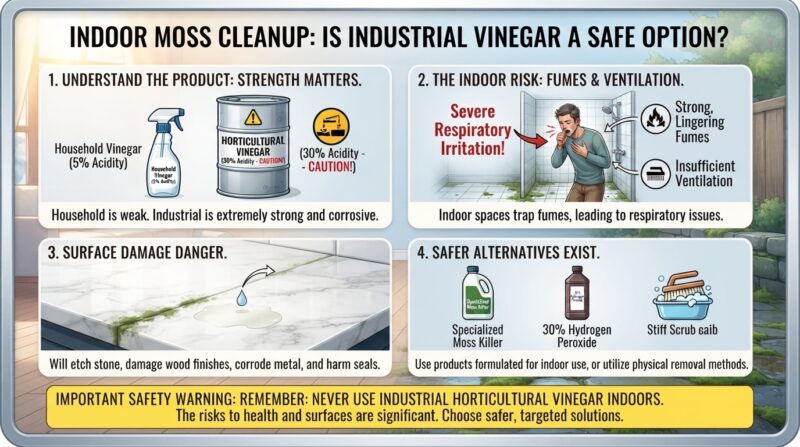
No, you should not use industrial horticultural vinegar indoors to clean up moss. Industrial horticultural vinegar contains an exceptionally high concentration of acetic acid—typically between 20% and 30%—making it highly corrosive, hazardous to human respiratory systems, and highly damaging to indoor building materials. While standard household cleaning vinegar contains a mild 5% acetic acid, industrial variants are strong chemicals designed exclusively for outdoor agricultural use under open-air conditions.
Using 20% to 30% acetic acid inside an enclosed space creates concentrated, toxic fumes that can burn your nasal passages, throat, and lungs, while corroding indoor metals, grout, and natural stone surfaces.
1. The Chemistry of Vinegar: Household vs. Industrial Horticultural Grade
To understand why industrial vinegar is dangerous for indoor environments, we must look at the exact difference in chemical strength between kitchen table vinegar and industrial agricultural treatments.
The active component in all vinegar products is acetic acid ($CH_3COOH$). The drastic difference lies entirely in its level of concentration:
- Culinary White Vinegar (5% Concentration): The standard vinegar found in grocery stores across California, New York, and Texas is highly diluted with water. It is safe to touch, fully edible, and acts as a mild household cleaner that can dissolve hard water deposits without damaging your lungs.
- Cleaning Vinegar (6% to 7% Concentration): A slightly stronger version of kitchen vinegar, designed to give a little extra cleaning power for bathrooms and kitchens while remaining completely safe for indoor residential use.
- Industrial Horticultural Vinegar (20% to 30% Concentration): This is a highly concentrated, industrial-grade acid. It is an unbuffered, non-selective contact herbicide. It destroys the cell walls of any plant matter it touches, drawing out moisture and killing the plant within hours. However, it is six times stronger than kitchen vinegar, making it a volatile, hazardous chemical compound.
2. The Four Severe Risks of Indoor Horticultural Vinegar Application
Applying a 20% or 30% acid concentration inside a home or office creates an immediate environmental safety hazard. Here is a detailed breakdown of the exact risks involved:
Severe Respiratory and Ocular Chemical Burns
When you spray horticultural vinegar, it turns into a fine mist that fills the air. In an enclosed indoor room—even one with windows open—the concentration of acetic acid fumes builds up rapidly.
Breathing in these fumes can cause immediate burning in your nose, throat, and airways, leading to coughing fits or severe breathing issues. If the mist gets into your eyes, it can cause severe irritation, chemical conjunctivitis, or lasting damage to your cornea.
Structural Destruction of Building Materials
Horticultural vinegar is highly corrosive to many common indoor surfaces. When sprayed near walls, floors, or fixtures, it can cause permanent damage:
- Metals: It quickly rusts and pits iron, steel, copper, brass, and aluminum. This includes structural fasteners, decorative metallic finishes, and electrical outlets.
- Natural Stone and Concrete: The strong acid instantly reacts with calcium carbonate in marble, limestone, travertine, and concrete, permanently etching, dulling, and weakening the material.
- Grout and Mortar: It breaks down the binders in tile grout and cement mortar, turning them into a soft, crumbly powder.
Lingering, Overwhelming Odor
Kitchen vinegar has a sharp scent that fades quickly. Industrial-grade 30% vinegar creates a pungent, overwhelming odor that can sink deep into drywall, carpets, insulation, and wooden structures. Without professional-grade ventilation systems, this sharp, sour smell can linger inside a home for weeks, making the space unlivable.
Destructive Microbial Imbalance
Moss growth indoors is always a symptom of a larger environmental issue: constant moisture and high humidity. While spraying a strong acid might temporarily clear the moss, it strips away the natural surface microbes, creating an ideal environment for toxic black molds or specialized fungi to take over the damp surface.
3. Structural Comparison: Indoor Moss Cleaners
When dealing with indoor moss, you must balance safety, material compatibility, and effectiveness. Use this comprehensive reference table to select the right approach:
| Treatment Option | Acetic Acid % | Indoor Safety Rating | Surface Compatibility | Long-Term Effectiveness |
| Industrial Horticultural Vinegar | 20% to 30% | Extremely Dangerous (Severe respiratory and eye hazard) | Destroys concrete, marble, limestone, grout, and metals. | High initial kill rate, but creates a high risk of surface damage. |
| Standard Household Vinegar | 5% | Safe (Requires simple, basic ventilation) | Safe for sealed surfaces; will etch unsealed natural stone. | Moderate; requires repeated applications for thick moss. |
| Baking Soda (Sodium Bicarbonate) | 0% (Alkaline) | Excellent (Completely non-toxic) | Highly compatible with almost all hard indoor surfaces. | Excellent for altering pH levels to stop future moss growth. |
| Commercial Interior Biocide | 0% | Good (Follow label instructions carefully) | Specially formulated for indoor tile, drywall, and concrete. | High; leaves a protective barrier that stops new growth. |
| Physical Scraping & Dehumidification | 0% | Perfect (Zero chemical exposure) | Safe for all surfaces when using appropriate non-scratch tools. | Best results when paired with active moisture control. |
4. The Safe Indoor Moss Elimination Protocol
If you are dealing with moss growth inside your property, use this step-by-step restoration sequence to resolve the issue safely and permanently without using dangerous acids:
1.Fix the Underlying Water Issue:Identify and Stop the Moisture Source.
Moss cannot grow without constant moisture. Inspect the area for hidden pipe leaks, water seeping through foundations, broken window seals, or high humidity levels. Fix the source of the water first, or the moss will return regardless of the cleaner you use.
2.Remove the Moss Manually:Use Non-Scratch Scraping Tools.
Use a stiff nylon brush, a plastic putty knife, or a specialized non-scratch scraper to carefully remove the thick layers of moss from the surface. Bag and remove the loose moss immediately to stop spores from spreading through the air.
3.Treat the Area Safely:Apply a Mild Non-Toxic Solution.
Mix a safe cleaning solution using standard 5% household white vinegar diluted half-and-half with water, or create a paste using warm water and baking soda. Apply it gently to the remaining moss roots, let it sit for 15 minutes to alter the pH level, and wipe the surface clean.
4.Dry the Space and Monitor Progress:Install Active Air Control Equipment.
Place a high-capacity dehumidifier in the room to lower the relative humidity below 50%. Keep the air moving using floor fans, and track the area over the next few weeks to ensure the surface stays completely dry and free of new growth.
5. Regional Environmental Variations and Structural Priorities
The local climate, regional building styles, and architectural trends across the United States heavily influence how indoor moss develops and how it should be treated.
Pacific Northwest (Seattle & Washington State)
With extended seasons of cool, damp weather and high outdoor humidity, homes in the Pacific Northwest frequently experience moss issues. Indoor growth usually appears in basements, crawlspaces, or around window frames. Property owners here should prioritize active mechanical dehumidification and air circulation over chemical sprays to keep indoor spaces dry.
San Francisco Bay Area & Northern California
The combination of cool marine fog and unique indoor atriums or exposed concrete designs can create pocket environments where moss thrives. Because many historic Bay Area properties feature delicate, unsealed natural stone and custom wood elements, using strong acids like horticultural vinegar can cause immediate, costly structural damage.
Greater New York & Manhattan
In dense urban environments, indoor moss typically shows up on the lower levels of historic stone brownstones, brick basements, or enclosed concrete courtyards that receive little sunlight. Because these spaces have limited airflow, using highly volatile chemicals is dangerous. Urban owners should focus on manual cleaning paired with commercial, low-odor indoor biocides.
Texas Innovation Centers (Austin, Houston, Dallas)
In warmer climates, indoor moss issues are usually tied directly to modern architectural trends that feature indoor water fountains, green living walls, or stone accents paired with high air conditioning usage. When moisture builds up in these spaces, owners must use gentle, pH-balancing treatments like baking soda to protect delicate custom finishes.
Comprehensive FAQ Engine: Safety and Application Analysis
Q1: Can I dilute 30% horticultural vinegar with water to make it safe for indoor use?
While you can mathematically dilute it down to a 5% concentration by adding clean water, doing so is highly impractical and unnecessary. It is far safer, cheaper, and less hazardous to simply buy standard, pre-formulated 5% household cleaning vinegar from the store, avoiding the risks of handling and mixing a concentrated acid.
Q2: What should I do if I accidentally breathe in fumes from horticultural vinegar?
If you inhale the strong vapors, leave the area immediately and move into fresh outdoor air. Flush your mouth and nose out with cool water. If you experience persistent coughing, burning in your throat, chest tightness, or difficulty breathing, seek medical attention immediately.
Q3: Will 20% horticultural vinegar ruin the warranty on my home’s fixtures?
Yes, in many cases it will. Because high-strength acetic acid is a powerful corrosive agent, applying it to metallic plumbing fixtures, sealed natural stone, tile grout, or finished hardwood floors will void most manufacturer material warranties due to chemical misuse.
Q4: How long do the chemical vapors of 30% vinegar last in an enclosed space?
In a room with poor airflow, the sharp, irritating acid vapors can remain at dangerous concentrations for 24 to 48 hours. The pungent, sour odor can sink into porous materials like drywall and fabrics, lasting for weeks if not cleared out by professional ventilation equipment.
Q5: Is industrial vinegar safe to use if I wear a standard dust mask?
No. A standard paper dust mask or cloth mask only filters out solid particles; it provides absolutely no protection against chemical vapors and acid mists. Handling 20% to 30% acetic acid safely requires a professional respirator fitted with approved organic vapor cartridges.
Q6: Can I use horticultural vinegar to clean up toxic black mold indoors?
No. You should never use it for mold remediation. It is highly dangerous to spray in enclosed spaces, and the strong acid can damage your walls. Furthermore, it leaves behind a damp, damaged surface that can actually encourage new mold spores to grow.
Q7: Why is horticultural vinegar sold without a prescription if it is so dangerous?
It is classified and sold as a natural, bio-based contact herbicide for outdoor agricultural use. Because it breaks down quickly in outdoor soil without leaving long-term chemical residues, it is safe for open-air farming and gardening, but it was never designed or tested for indoor residential use.
Q8: Will industrial vinegar damage the underlying drywall if sprayed on a mossy wall?
Yes. The high acid concentration will quickly break down the paper facing and the internal gypsum core of standard drywall. This softens the wall structure, encourages rot, and creates a damaged area that requires complete replacement.
Q9: What is the safest, most effective tool to prevent indoor moss from returning?
The most effective tool is a high-quality, properly sized dehumidifier. By keeping the indoor relative humidity consistently below 50%, you create an environment that is too dry for moss to survive, stopping new growth without using any chemicals.
Q10: Can I use dish soap mixed with household vinegar to clean up indoor moss?
Yes. Mixing a few drops of mild dish soap with standard 5% household white vinegar is a safe and effective spot treatment. The dish soap acts as a surfactant, breaking down the moss’s water-resistant outer layer so the mild vinegar can penetrate and clear the roots safely.
Conclusion: Protecting Your Indoor Environment
While industrial horticultural vinegar is an excellent, eco-friendly option for clearing weeds and moss from outdoor gravel paths, driveways, and garden beds, it does not belong inside your home. Its high concentration of acetic acid creates unnecessary risks for your health and your property.
Dealing with indoor moss successfully requires focusing on the root cause: excess moisture. By choosing safe cleaning methods like manual removal, standard household vinegar, or baking soda, and pairing them with proper dehumidification, you can keep your home clean and safe. Protect your living spaces by keeping industrial chemicals outdoors, ensuring a healthy, stable, and comfortable indoor environment.