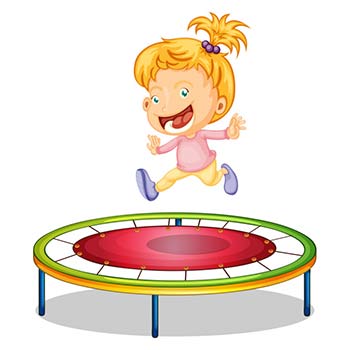
Most of the kids like trampoline jumping. This is very good for health. Even most of the doctor suggest to jump. For that reason parents buy the best backyard trampolines. But it is very dangerous for young kids (under 6 years old). Do trampolines cause brain damage?
Trampolines can cause serious head injuries, including concussions and, in rare severe cases, traumatic brain injuries. However, simply using a trampoline does not automatically cause brain damage. The risk depends heavily on how the trampoline is used, the safety precautions in place, the age of the jumper, and whether an accident occurs.
The greatest danger comes from falls, collisions between multiple jumpers, unsuccessful flips or somersaults, and landing on the head or neck. A powerful bounce can send a person high into the air, and losing control during landing may result in the head striking the trampoline frame, springs, another jumper, or the ground outside the trampoline. These accidents can cause the brain to move suddenly inside the skull, potentially resulting in a concussion or other traumatic brain injury.
Can a Trampoline Cause a Concussion?
Yes. A person can suffer a concussion while jumping on a trampoline. A concussion may happen after a direct blow to the head, but it can also occur when the head and body experience a sudden, forceful movement. For example, an awkward landing, collision with another person, or fall from the trampoline may cause the brain to move rapidly inside the skull.
Possible symptoms of a concussion include:
- Headache or pressure in the head
- Dizziness or balance problems
- Nausea or vomiting
- Confusion
- Blurred vision
- Sensitivity to light or noise
- Difficulty concentrating
- Feeling unusually tired or drowsy
- Memory problems
Symptoms may appear immediately or develop hours after an injury. Anyone who experiences concerning symptoms after a trampoline accident should stop jumping and seek appropriate medical evaluation.
Are Children More at Risk?
Children can be particularly vulnerable to trampoline injuries. Younger children may have less coordination and body control, making it easier for them to land incorrectly or collide with another jumper. The risk can increase significantly when children of different sizes jump together because a heavier person can create unpredictable bouncing forces that launch a smaller child unexpectedly.
Multiple jumpers are one of the most common causes of trampoline accidents. Even when everyone appears to be playing safely, the movement of one jumper can unexpectedly affect another person’s bounce and cause a dangerous fall.
Can Repeated Trampoline Use Cause Brain Damage?
Normal trampoline use without head injuries does not necessarily cause brain damage. The primary concern is repeated or severe head trauma. Multiple concussions or repeated impacts to the head can potentially have long-term consequences, which is why every suspected head injury should be taken seriously.
Someone who has suffered a concussion should not return to trampoline activity until they have recovered and received appropriate guidance from a qualified healthcare professional. Returning too soon could increase the risk of another injury before the brain has fully recovered.
How to Reduce the Risk of Head Injuries
While no trampoline can eliminate all risks, several safety practices can significantly reduce the chance of serious injury:
- Allow only one person to jump at a time.
- Supervise children closely.
- Avoid flips, somersaults, and advanced tricks unless properly trained.
- Use a properly installed safety enclosure where appropriate.
- Check the trampoline regularly for damaged springs, padding, frames, and netting.
- Place the trampoline on level ground with sufficient clear space around it.
- Keep younger children away from larger or more experienced jumpers.
- Never use a damaged or unstable trampoline.
- Stop immediately if someone falls, collides with another jumper, or hits their head.
When Should You Seek Emergency Medical Help?
Seek urgent medical attention after a trampoline injury if a person loses consciousness, experiences repeated vomiting, has a worsening or severe headache, becomes increasingly confused, has difficulty walking or speaking, experiences seizures, shows unusual behavior, or has weakness or numbness. Serious neck pain or suspected spinal injuries also require immediate emergency care.
Final Thoughts
Trampolines do not automatically cause brain damage, and many people use them without suffering serious injuries. However, they can cause concussions and traumatic brain injuries when accidents occur. Falls, collisions, failed tricks, and head-first landings create the greatest risks. Following proper safety rules—especially allowing only one jumper at a time and avoiding dangerous flips—can help make trampoline use significantly safer.
Read more – Best pogo stick | Doctor kirchner natural weed killer