Finding white flakes on your dark clothing or feeling an irritating itch along your hairline can be incredibly frustrating. When this happens, most people run to the store and grab the strongest anti-dandruff shampoo they can find.
However, millions of people treat their flaky scalp for months without seeing any improvement. In fact, their condition often gets significantly worse. Why? Because they are misdiagnosing the underlying problem.
This highlights a critical personal care question: How can I tell the difference between dandruff and a dry scalp?
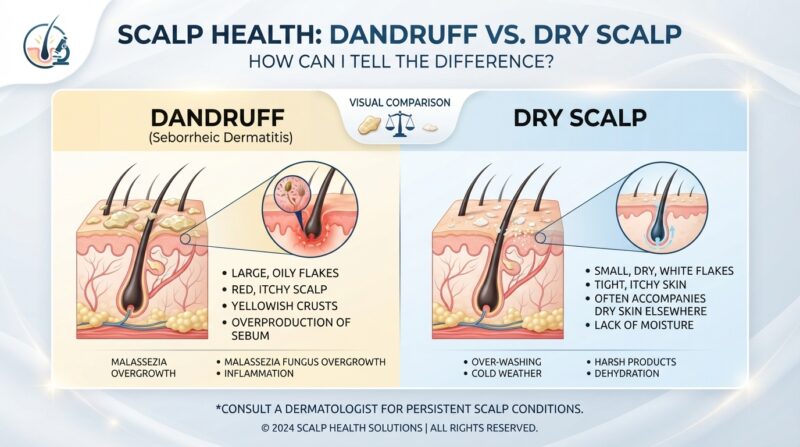
The direct answer is that dandruff is caused by an excess of oil and an overgrowth of yeast on the scalp, resulting in large, oily, yellowish flakes that are often accompanied by a red, greasy scalp. In contrast, a dry scalp is caused by a lack of moisture and hydration, producing small, dry, white flakes accompanied by tight, dry skin on other parts of your body.
Treating a dry scalp with harsh anti-dandruff chemical shampoos will strip away what little moisture remains, aggravating the dryness and increasing the flaking.
This comprehensive guide serves as the ultimate diagnostic manual for itemguides.com readers, breaking down the biological causes, visual identification cues, and target treatments for both conditions.
The Biological Breakdown: Underlying Causes of Scalp Flakes
To effectively fix a flaky scalp, we must look past the surface flakes and examine the distinct underlying biological factors driving each condition.
1. The Biology of Dandruff (Seborrheic Dermatitis)
Dandruff is not a sign of poor hygiene; it is a mild, chronic inflammatory condition known medically as seborrheic dermatitis.
- The Oil Dynamic: Your scalp features a high concentration of sebaceous (oil) glands. When these glands produce too much sebum (oil), it creates an ideal breeding ground for a naturally occurring microbe.
- The Yeast Overgrowth: A microscopic, single-celled fungus called Malassezia lives naturally on everyone’s scalp, feeding on sebum. When oil production spikes, Malassezia multiplies rapidly, breaking down the oil into fatty acids that irritate the skin. This irritation causes the scalp to shed skin cells at an abnormally fast rate, causing the cells to clump together into visible flakes.
2. The Biology of a Dry Scalp
A dry scalp is a simpler moisture-barrier issue, very similar to having dry, chapped skin on your hands or face.
- The Barrier Failure: This condition occurs when the scalp’s outer protective skin layer loses too much water and fails to retain proper hydration. Without adequate moisture, the skin cells dry out, shrink, and peel away individually as small, loose particles.
The Quick Diagnostic Identification Grid
Use this comprehensive diagnostic matrix to immediately distinguish between the two conditions based on your specific symptoms:
| Symptom Characteristic | Classic Dandruff Profile | Standard Dry Scalp Profile |
| Flake Appearance | Large, thick, clumped, noticeably oily or waxy. | Small, loose, powdery, completely dry. |
| Flake Color | Yellowish, dull white, or opaque gray. | Translucent, clear, or pure white. |
| Scalp Sensation | Intense, persistent itch; feels oily or greasy to touch. | Tight, stretched sensation; light, scratchy itch. |
| Skin Appearance | Scalp can look red, irritated, shiny, or inflamed. | Scalp looks dull, matte, pinkish, or flaky. |
| Impact of Washing | Flakes temporarily improve right after shampooing. | Flakes look much worse immediately after washing. |
| Secondary Signs | Oily skin on T-zone, ears, or eyebrows. | Dry skin patches on elbows, hands, or shins. |
Step-by-Step Strategic Elimination Protocol
Once you have identified your specific scalp issue, follow this systematic diagnostic and management sequence to restore balance to your skin.
1.Analyze Flake Size, Texture, and Oily Residue:Phase 1: The Scratch Test.
Part your hair gently in a well-lit mirror. Scratch a small section of the flaking area with a clean fingernail and rub the collected flakes between your fingertips. If the flakes roll into a tiny, waxy, yellow ball, it is dandruff. If they drift away like fine white dust, it is a dry scalp.
2.Remove Drying Sulfates and Synthetic Fragrances:Phase 2: Product Elimination.
Audit your current shower routine. Temporarily eliminate clarify shampoos containing harsh surfactants like Sodium Lauryl Sulfate (SLS). These ingredients aggressively strip away sebum, which can mask the true cause of your flaking.
3.Deploy the Specific Corrective Cleaning Agent:Phase 3: Targeted Treatment.
• For Dandruff: Wash 2 to 3 times a week with an anti-fungal shampoo containing zinc pyrithione, ketoconazole, or selenium sulfide.
• For Dry Scalp: Switch immediately to a deeply hydrating, sulfate-free conditioning wash containing hyaluronic acid or aloe vera.
4.Adjust Local Environmental and Water Variables:Phase 4: Environmental Review.
Examine the external factors surrounding your daily routine. If you live in an area with hard water or low humidity, use a moisturizing leave-in scalp serum post-wash to lock hydration directly into the skin barrier.
5 Essential Tips for Managing Scalp Health Across Different Climates
- Adjust for Regional Humidity Changes: Your local climate plays a major role in how your skin behaves. In dry, hot summer areas like Texas or during chilly winter conditions in New York, the drop in air moisture routinely dries out the skin, triggering a classic dry scalp flare-up. Conversely, the warm, humid conditions of coastal California and San Francisco can increase sweat and oil production, creating the perfect environment for yeast-driven dandruff.
- Never Put Heavy Oils Directly onto Dandruff: If you have dandruff, pouring coconut oil, olive oil, or heavy hair butters directly onto your head will make the problem significantly worse. Because the Malassezia fungus feeds directly on lipids and fatty acids, applying heavy oils acts like fuel for the yeast, causing them to multiply rapidly and trigger a massive flaking episode. Keep topical oils strictly limited to dry scalp treatments.
- Invest in a High-Quality Shower Head Filter: If you reside in metropolitan regions with hard water, the high levels of dissolved minerals like calcium and magnesium can leave a drying residue on your hair and skin. Installing a multi-stage shower filter will neutralize these minerals, softening the water and allowing your scalp to retain its natural hydration naturally.
- Give Anti-Dandruff Shampoos Time to Work: When using a medicated anti-dandruff shampoo, do not rinse it out immediately after lathering. Active anti-fungal ingredients like ketoconazole or selenium sulfide need at least 3 to 5 minutes of direct contact time on the scalp to penetrate the oil layer and effectively target the yeast overgrowth before being rinsed away.
- Keep Your Blow Dryer on a Cool Setting: Blasting your wet hair with high heat right against your skin can quickly dry out and damage your scalp’s moisture barrier, leading to immediate flaking and irritation. Keep your blow dryer at least 6 inches away from your head and use a cool or medium air setting.
Frequently Asked Questions (FAQ)
1. Can you experience both dandruff and a dry scalp at the same time?
Yes, it is possible. A person can have a naturally dry skin barrier while still experiencing a localized overgrowth of Malassezia fungus due to styling product buildup or infrequent washing, leading to a complex combination of symptoms.
2. How often should I wash my hair if I have dandruff?
If you are dealing with genuine dandruff, you should wash your hair 3 to 4 times a week. Frequent washing is important because it removes the excess sebum and oil that the dandruff-causing yeast relies on for food.
3. Will drinking more water help fix a dry scalp?
Yes. Increasing your daily water intake helps hydrate your body from the inside out, improving overall skin health. However, you should also pair increased hydration with a moisturizing, sulfate-free topical hair care routine to fully repair a damaged skin barrier.
4. Why does my scalp flake more during the winter months?
During the winter, the combination of freezing outdoor air and dry indoor heating strips moisture from your skin very quickly. This seasonal drop in humidity makes winter a prime time for dry scalp issues.
5. Can hair styling products cause dandruff-like flaking?
Yes. Heavy hair gels, waxes, sprays, and dry shampoos can leave a residue that builds up on the scalp. Over time, this buildup can dry out and flake off in white particles, a condition often called “product dandruff” or styling residue.
6. Is dandruff a contagious condition?
No. Dandruff is entirely non-contagious. The Malassezia fungus that drives dandruff is a normal microbe that already lives naturally on everyone’s skin; flaking only occurs when an individual’s scalp experiences an oil imbalance or sensitivity.
7. Does apple cider vinegar help clear up dandruff?
Yes, apple cider vinegar can be helpful. Thanks to its natural acetic acid content, a diluted apple cider vinegar rinse can help lower the scalp’s pH and inhibit yeast growth. However, it should always be diluted with water to prevent skin irritation.
8. What is the difference between standard dandruff and scalp psoriasis?
Dandruff produces soft, oily white or yellowish flakes. Scalp psoriasis is a more severe autoimmune condition that creates thick, raised, silver-white plaques that often bleed slightly when scratched and can extend past the hairline.
9. Can changing my diet help reduce dandruff symptoms?
Adjusting your diet can make a difference. Reducing your intake of high-sugar foods, simple carbohydrates, and dairy products can help lower overall inflammation and regulate oil production, while eating more foods rich in zinc and B vitamins supports a healthy skin barrier.
10. When should I stop self-treating and see a dermatologist?
If you have consistently used targeted over-the-counter treatments for 4 to 6 weeks without seeing any improvement, or if your scalp begins to blister, bleed, weep fluid, or cause hair loss, schedule an appointment with a dermatologist right away.
Conclusion
Successfully clearing up a flaky, itchy scalp comes down to understanding whether your skin needs an anti-fungal treatment or deep moisture. By looking closely at the size, color, and texture of your flakes, choosing targeted products that match your specific condition, and adjusting your hair care routine to handle your local weather and water type, you can easily restore your skin’s health. Pay attention to what your scalp is telling you, avoid harsh stripping chemicals, and enjoy a comfortable, flake-free scalp through every season.