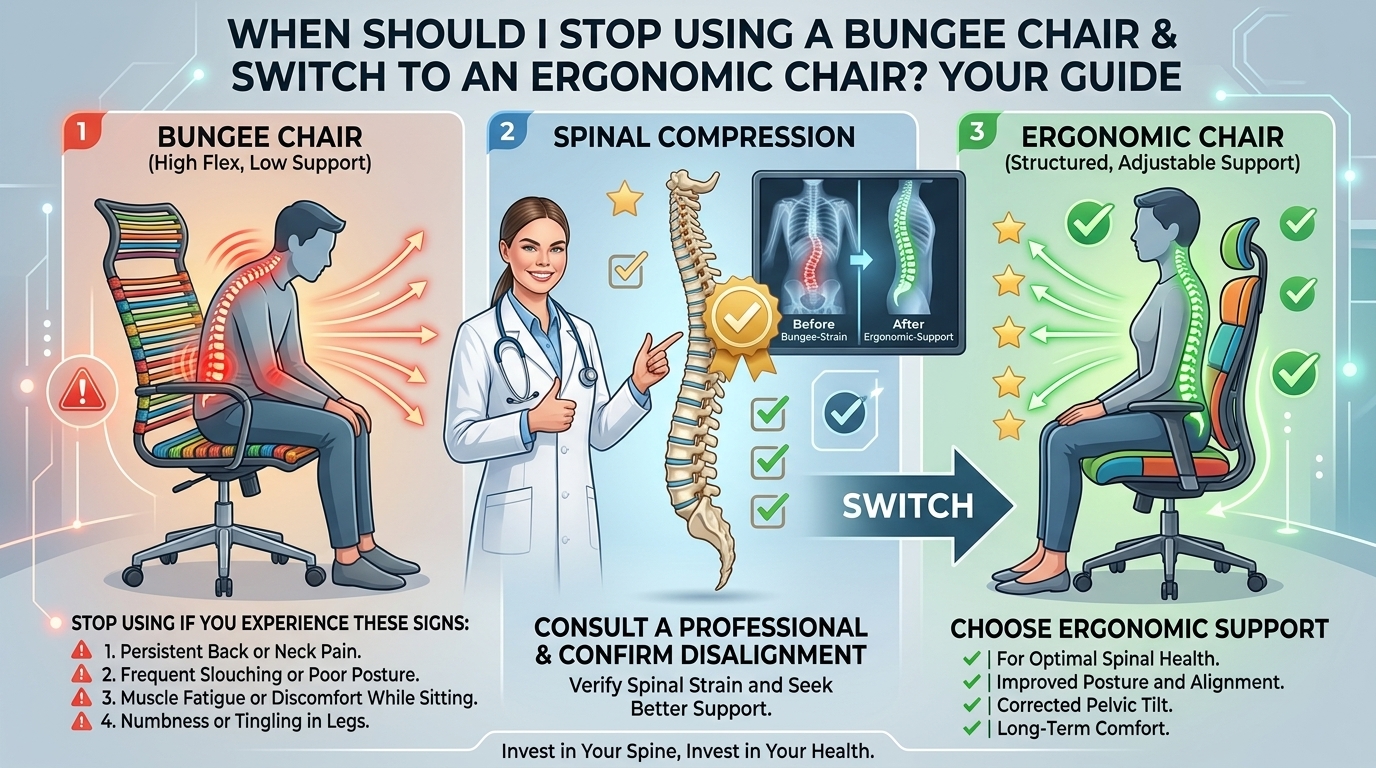
When should I stop using a bungee chair and switch to an ergonomic chair? For modern remote professionals, digital creators, and tech workers outfitting a home office in San Francisco, New York, Seattle, Austin, or Los Angeles, aesthetic furniture choices often compete with long-term physical comfort. Among the most distinctive seating trends is the bungee office chair. Replacing traditional high-density foam padding and rigid mesh panels with a grid of heavy-duty, tensioned elastic shock cords, these chairs offer incredible airflow during hot summers in Texas and a sleek, minimalist silhouette.
However, a bungee chair is fundamentally a piece of casual, modern furniture masquerading as task seating. If you are logging 40 to 60 hours a week at your desk, there comes a critical tipping point where elastic cords stop feeling “bouncy and fun” and start causing physical distress.
When exactly should you throw in the towel on your bungee chair and upgrade to a certified ergonomic task chair?
In this comprehensive, data-driven, optimized guide tailored for itemguides.com, we examine the warning signs of spinal fatigue, analyze top ergonomic alternatives, compare seating features, and provide expert guidance on making the transition to protect your health and productivity.
1. The Honeymoon Phase vs. Reality: Understanding Bungee Chair Limitations
When you first unbox a bungee office chair, the experience is often positive. The open-weave structure delivers unmatched ventilation, and the hammock-like suspension provides unique pressure relief across your glutes. For the first few weeks or months—especially if you use it for casual web browsing, reading, or short 2-hour study sessions—it performs admirably.
However, the laws of physics and material science eventually catch up:
- Elastic Creep: Unlike molded foam that retains its structural integrity or high-end elastomeric mesh engineered for continuous commercial load, rubber-core bungee cords stretch over time.
- The Sagging Basin: After months of sustained body weight, the center cords lose their elastic memory, forming a deep, unsupportive pocket that pulls your pelvis backward.
- The Absence of Spinal Bracing: Because elastic cords yield uniformly to pressure, they offer zero rigid counter-pressure to maintain your lower back’s natural curve.
When your chair can no longer support your posture, your body begins to bear the brunt of the failure. Here are the definitive red flags that signal it is time to switch.
2. Seven Critical Signs You Need to Abandon Your Bungee Chair Immediately: When Should I Stop Use of a Bungee Chair and Switch to an Ergonomic Chair
If you notice any of the following warning signs while working at your desk, your bungee chair is actively harming your physical well-being:
1. Daily Lower Back Stiffness and Muscle Fatigue
If you finish your workday with a dull, persistent ache in your lower back or feel completely exhausted in your core muscles by 3:00 PM, your chair is failing. Because bungee cords lack structural lumbar support, your back and core muscles must work overtime to hold you upright against the hammock effect.
2. The Center Has Visually Sagged (Bottoming Out)
Take a step back and look at your chair from the side when you are not sitting in it. If the central cords have stretched downward, creating a permanent bowl shape, the chair has lost its tension threshold. Sitting in a sagged basin forces your spine into a C-shaped curve (posterior pelvic tilt), which severely compresses intervertebral discs.
3. Numbness or “Dead-Butt Syndrome” in Your Thighs
If you frequently experience tingling, numbness, or a dull ache in the back of your thighs or glutes, your chair is likely pressing against your circulation. Many bungee chairs feature rigid tubular steel frames right beneath the outer cords; as the cords stretch, your weight presses directly onto those unyielding metal frame borders.
4. You Are Constantly Slouching or Hunching Forward
Do you find yourself constantly sliding forward, propping your elbows heavily on your desk, or slouching into a lazy posture? This happens because an unsupportive elastic seat pan provides no pelvic stability, causing your body to subconsciously seek comfort in slumped, energy-draining postures.
5. You Have Developed Acute Pain, Sciatica, or Nerve Flare-Ups
If you are beginning to feel sharp, radiating pain down your legs (sciatica) or experience stiffness that lingers into the evening and weekends, continuing to use a flexible suspension chair is medically unwise. Compromised spines require rigid, adjustable lumbar stabilization that elastic cords cannot provide.
6. The Cords Are Fraying, Dry-Rotting, or Snapping
Visually inspect your cords. If you see exposed white rubber core strands, frayed nylon jackets, or if a cord has already snapped under pressure, the chair’s structural integrity is compromised. Trying to patch or continue using a degrading bungee web is a safety hazard.
7. Your Work Hours Have Increased Permanently
If you transitioned from a part-time student or casual freelancer working 2 hours a day to a full-time remote professional logging 8 to 10 hours a day at your computer, your seating requirements have fundamentally changed. Casual furniture cannot handle professional workloads.
3. Product Reviews: Upgrading from a Bungee Chair to True Ergonomics
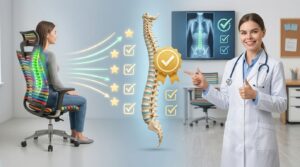
When you make the decision to upgrade, moving to a certified ergonomic task chair will instantly transform your physical workspace experience. Here are three industry-standard benchmarks worth considering for your office upgrade:
1. Herman Miller Aeron (Size B / C)
- Best For: Ultimate breathability paired with uncompromising clinical ergonomics.
- Review: If you love the cooling airflow of a bungee chair but need professional-grade spinal support, the Aeron is the ultimate evolution. Its Pellicle suspension mesh is engineered with zones of varying tension, providing firm lumbar bracing without sagging, backed by a 12-year warranty.
2. Steelcase Leap V2
- Best For: Maximum adjustability and deep lower-back pain relief.
- Review: The gold standard for desk workers managing back pain. The Leap features “LiveBack” technology that changes shape as your spine moves, alongside highly customizable 4D armrests, adjustable seat depth, and a robust pneumatic frame that never bottoms out.
3. Ticova Ergonomic Office Chair (Budget-Friendly Alternative)
- Best For: Remote workers seeking professional ergonomic features on a budget.
- Review: For buyers stepping away from cheap bungee chairs without breaking the bank, the Ticova offers adjustable lumbar support depth and height, a contoured headrest, and 3D armrests, providing exceptional value for home offices in apartments across New York or Seattle.
4. Comparison Table: Bungee Chairs vs. Certified Ergonomic Task Chairs
| Feature | Bungee Office Chair | Certified Ergonomic Task Chair (e.g., Herman Miller / Steelcase) |
| Spinal Support | Low / Passive (Hammock effect, no lumbar adjustment) | High / Active (Adjustable lumbar height and depth) |
| Lifespan & Sag Resistance | Low (Cords stretch and sag within 12–18 months) | High (Engineered for 5–12+ years of heavy commercial use) |
| Adjustability Options | Minimal (Mostly height-only) | Comprehensive (Seat depth, tilt-lock, 4D arms, synchro-tilt) |
| Pressure Distribution | Uneven over time (Risk of bottoming out against steel frame) | Even and calibrated (High-density foam or multi-zone suspension mesh) |
| Recommended Daily Workload | Casual / Short-term use (1 to 2 hours max) | Full-time professional work (8 to 10+ hours daily) |
| Impact on Back Pain | Can induce slouching and aggravate chronic back issues | Promotes correct posture and helps rehabilitate spinal strain |
5. Pros and Cons: Transitioning from Bungee to Ergonomic Seating
Making the Switch to an Ergonomic Chair:
- Pros: Complete elimination of end-of-day muscle fatigue; superior lumbar alignment; drastically reduced risk of chronic back pain; adjustable features that fit your exact body proportions; commercial-grade durability lasting a decade or more.
- Cons: Higher initial financial investment compared to a $100 novelty bungee chair; heavier, less portable frame profiles.
Sticking with a Worn-Out Bungee Chair:
- Pros: Keeps your initial quirky aesthetic; zero upfront cost in the short term.
- Cons: Chronic physical discomfort; potential medical bills from prolonged spinal strain; frequent need to replace sagging cords or buy entirely new cheap chairs every year.
6. Expert Tips: How to Smoothly Transition to Your New Ergonomic Chair
Upgrading your chair is only half the battle. To retrain your body and maximize your new ergonomic setup on itemguides.com, follow these professional guidelines:
- Dial In Your Desk Ergonomics: Adjust your new chair’s height so your feet rest flat on the floor with your knees at a 90-degree angle. Your elbows should rest parallel to your desktop to prevent shoulder shrugging.
- Engage the Lumbar Support Properly: Adjust the lumbar pad so it presses snugly into the small of your back (the beltline). Do not let it ride up too high into your thoracic spine.
- Give Your Muscles Time to Adapt: If your back has spent months compensating for a sagging bungee chair, switching to an active ergonomic chair might feel stiff at first. Give your core muscles 1 to 2 weeks to adjust to proper postural alignment.
- Utilize Synchro-Tilt Mechanisms: Unlike rigid bungee chairs, quality ergonomic chairs feature a reclining tilt mechanism. Use it! Reclining slightly (at a 100- to 110-degree angle) reduces intervertebral disc pressure significantly compared to sitting at a rigid 90-degree angle.
- Recycle Your Old Bungee Chair Responsibly: Instead of tossing your old elastic chair into a landfill, check local donation centers or metal recycling yards in your area (San Francisco, Austin, or Seattle) to keep components out of waste streams.
7. Frequently Asked Questions (FAQs)
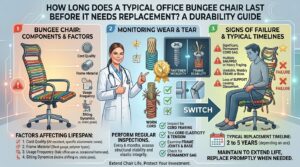
1. How long does a typical office bungee chair last before it needs replacement?
A standard residential bungee chair typically begins losing its elastic tension, sagging, and showing wear within 12 to 18 months of daily full-time use.
2. Can I fix a sagging bungee chair instead of buying an ergonomic chair?
While you can theoretically re-string a bungee chair with marine-grade shock cord, it does not solve the fundamental ergonomic flaw: the complete lack of structural lumbar support and dynamic adjustability.
3. What is the main difference between a bungee chair and an ergonomic task chair?
A bungee chair uses a flexible, yielding elastic web that promotes passive slouching and offers zero posture adjustments, whereas an ergonomic task chair provides rigid, adjustable lumbar support, synchronized tilt, and custom fit controls.
4. Why does my back hurt worse when I sit in a bungee chair for long hours?
Your back hurts because the elastic cords stretch under your weight without pushing back to support your spine, forcing your core and back muscles to bear the burden of holding you upright all day.
5. Are ergonomic chairs expensive?
High-end ergonomic chairs (like Herman Miller or Steelcase) can cost upwards of $800 to $1,500, but there are exceptional mid-tier and budget-friendly ergonomic task chairs available between $180 and $350 that offer full professional adjustments.
6. Will switching to an ergonomic chair cure my chronic back pain instantly?
While a proper chair is a crucial first step, it is not an immediate medical cure. It will halt the mechanical strain causing your pain, but rehabilitation may also require core strengthening, stretching, and physical therapy.
7. Can I keep my bungee chair as a secondary accent chair?
Yes! Bungee chairs make fantastic, breathable, stylish accent chairs for reading nooks, casual guest seating, or brief 15-minute check-ins where you aren’t performing heavy computer work.
8. What features should I look for when buying my first ergonomic chair?
Look for adjustable lumbar support (both height and depth), 3D or 4D adjustable armrests, seat depth adjustment (slider), a breathable mesh or high-density foam seat pan, and a reliable multi-tilt lock mechanism.
9. Do ergonomic chairs trap body heat like executive leather chairs?
Not necessarily. Many modern ergonomic task chairs utilize advanced suspension mesh backs and breathable fabric waterfall seat pans that rival the airflow of bungee chairs without sacrificing support.
10. How do I know for absolute certain that my bungee chair has failed?
If you feel physical pain, stiffness, or fatigue every single workday, if the seat sags visibly in the middle, or if you catch yourself constantly slouching, your bungee chair has failed your body and it is time to switch.
8. Conclusion
Bungee office chairs have a distinct charm, offering lightweight portability, modern aesthetics, and unbeatable ventilation for casual spaces. However, when your lifestyle demands long hours of focused remote work, pushing a casual elastic chair past its limits is a recipe for chronic discomfort and poor posture.
If you recognize the warning signs of sagging tension, muscle fatigue, and lower back strain, it is time to stop using your bungee chair and upgrade to a certified ergonomic task chair. By investing in proper spinal support on itemguides.com, you will protect your health, boost your daily productivity, and ensure your workspace supports your professional ambitions for years to come.