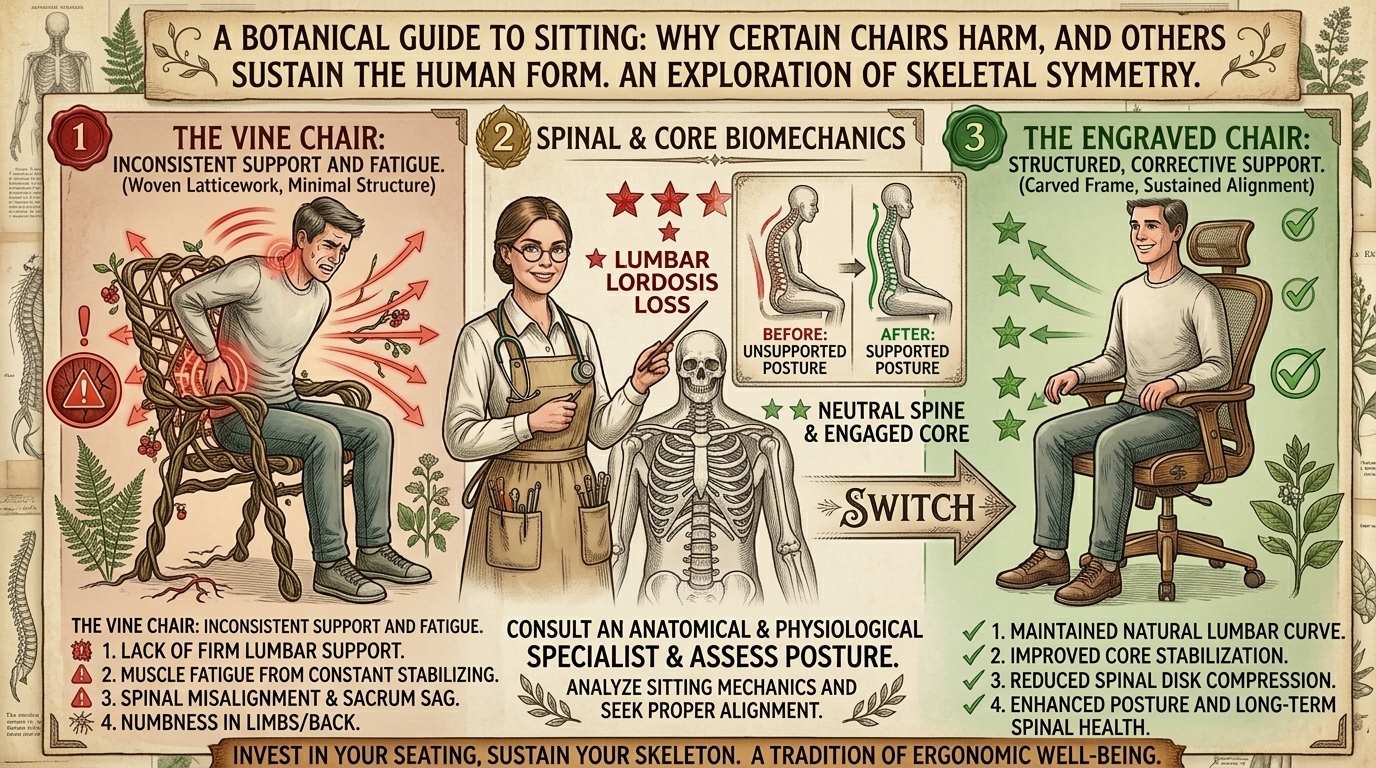
Why does my back hurt worse when I sit in a bungee chair for long hours? If you have transitioned to working remotely or setting up a modern workspace in tech-forward hubs like San Francisco, New York, Seattle, Austin, or Los Angeles, you have likely encountered the popular bungee office chair. With cross-woven elastic cords replacing traditional foam padding and molded mesh panels, these chairs look sleek, feel remarkably bouncy, and provide exceptional airflow during sweltering summer afternoons in Texas.
However, if you have logged a full 8-hour workday in one of these chairs, you have likely noticed a painful consequence: a dull, exhausting ache settling deep into your lower back.
Why does your back hurt worse when you sit in a bungee chair for long hours?
In this comprehensive, data-driven, optimized guide tailored for itemguides.com, we examine the biomechanics of elastic suspension seating, uncover why bungee cords betray your spine over time, review alternative solutions, and provide actionable tips to eliminate end-of-day back pain.
1. The Biomechanics of Sitting: Why Spines Need Structural Bracing
To understand why a bungee chair wreaks havoc on your back during long sessions, we must look at how the human spine functions under load.
The human spine is not a straight vertical rod; it features three natural curves: cervical (neck), thoracic (mid-back), and lumbar (lower back). When you sit upright with proper support, these curves balance your body weight efficiently.
- The Seating Hazard: The moment you sit down in an unsupportive chair, gravity pulls your pelvis downward. Without a rigid structural counter-pressure against your beltline, your pelvis rolls backward into a posterior pelvic tilt.
- The Result: Your lower spine flattens from its natural inward “S” curve into an outward C-shape. This flexed posture places immense, asymmetric compressive pressure on your lumbar intervertebral discs and stretches your spinal ligaments to their absolute limit.
2. Five Reasons Why Bungee Chairs Specifically Trigger Back Pain
While traditional ergonomic chairs are engineered to fight this natural tendency to slouch, bungee chairs inadvertently accelerate it. Here is why your back hurts worse after hours in an elastic chair:
1. The “Hammock Effect” and Absence of Lumbar Support
Bungee chairs operate on tensioned elasticity. When you sit down, the rubber-core cords stretch uniformly under your body weight.
- The Flaw: Because the cords yield completely to pressure, they offer zero rigid counter-pressure to support your lower back’s natural curve. There is no structural brace pressing into your lumbar region. Instead of the chair holding you up, your core and lower back muscles must work overtime as static stabilizers, leading to rapid muscle exhaustion and deep, aching fatigue by mid-afternoon.
2. Progressive Elastic Creep and Sagging Basins
Unlike high-density molded foam or high-tension commercial mesh that holds its form for years, bungee cords experience material fatigue known as elastic creep.
- The Flaw: After just a few months of daily use, body heat and sustained weight stretch out the latex-core cords. The center of the seat pan and backrest sags into a permanent bowl shape. Sitting in a sagging elastic basin forces your hips backward, locking your spine into a chronic slouch that compresses your spinal discs.
3. Complete Lack of Multi-Dimensional Adjustability
True ergonomic rehabilitation requires precise micro-adjustments: seat depth control, synchronized tilt locks, 4D armrests, and dynamic lumbar tension.
- The Flaw: Standard bungee chairs offer little more than basic pneumatic height adjustment. If the fixed frame height or cord tension does not match your specific body proportions, your spine is forced to compensate, leading to muscle spasms and spinal joint stiffness.
4. Hard Frame-Edge Pressures and Restricted Circulation
To keep bungee cords taut, manufacturers anchor them into rigid tubular steel or heavy plastic perimeter frames.
- The Flaw: As the center cords stretch and bottom out under your weight, your thighs and hips inevitably press directly against those unyielding frame borders. This cuts off blood circulation to your lower extremities, causes nerve compression, and forces you to shift awkwardly, throwing your spinal alignment completely out of balance.
5. Static Postural Lock and Muscle Exhaustion
Because bungee chairs lack a dynamic tilting mechanism that allows your spine to recline safely while maintaining support, you are locked into a static 90-degree sitting posture. Sustaining a static posture without lumbar support for 8 hours forces your spinal ligaments into a state of tissue creep, generating intense, burning pain across your lower back.
3. Product Reviews: Evaluating Bungee Chairs vs. Ergonomic Task Chairs for Pain Relief
To see how seating construction impacts back pain, let’s compare how popular bungee models stack up against dedicated ergonomic chairs.
1. The Container Store Flat Bungee Task Chair
- Back Pain Impact: High Risk for Long Hours
- Review: While built with a sturdy steel frame and thicker flat webbing than cheap round-cord models, it completely lacks a dedicated lumbar adjustment system. For a 20-minute check-in, it feels fine. For an 8-hour coding or writing marathon in New York or San Francisco, the absence of lumbar support guarantees lower back stiffness by 3:00 PM.
2. Standard Round-Cord Bungee Lounge / Dish Chairs
- Back Pain Impact: Severe Risk
- Review: Completely unsuited for desk work. These armless, bucket-shaped chairs force an exaggerated forward hunch, compressing intervertebral discs and triggering acute muscle spasms.
3. Herman Miller Aeron (Ergonomic Benchmark)
- Back Pain Impact: Therapeutic and Corrective
- Review: For remote workers transitioning away from bungee chairs, the Aeron offers advanced suspension mesh with variable tension zones and PostureFit SL lumbar support. It actively braces the sacrum and lumbar spine, eliminating end-of-day muscle fatigue.
4. Comprehensive Comparison Table: Bungee Chairs vs. Ergonomic Task Chairs
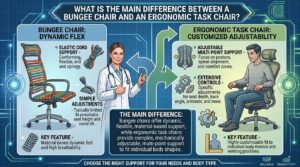
| Seating Factor | Bungee Office Chair (Long-Term Use) | Certified Ergonomic Task Chair |
| Lumbar Support | None / Passive elastic yield (Hammock effect) | Active, adjustable height and depth lumbar bracing |
| Spinal Alignment | Forces posterior pelvic tilt and C-shape slouching | Maintains neutral pelvis and natural spinal S-curve |
| Disc Compression Level | High (Accelerates intervertebral disc fatigue) | Minimized (Distributed evenly via synchro-tilt) |
| Adjustability Options | Minimal (Pneumatic height only) | Comprehensive (Seat depth, 4D arms, tilt-lock) |
| Durability & Sag Resistance | Poor (Cords stretch and sag within 12–18 months) | High (Engineered for 5–12+ years of heavy use) |
| Impact on Back Pain | Worsens chronic back pain and muscle fatigue | Helps prevent and relieve musculoskeletal strain |
5. Pros and Cons of Bungee Seating Regarding Back Pain
The Pros:
- Thermal Comfort: Open-weave cords provide unbeatable airflow, preventing sweat buildup during hot summers in Texas or California.
- Hip Pressure Distribution: For short durations, the elastic matrix distributes weight broadly across the sit bones.
The Cons:
- Zero Spinal Stabilization: Fails to provide the lower-back counter-pressure required to decompress lumbar discs.
- Accelerated Muscle Fatigue: Forces supporting back muscles to work as continuous static stabilizers, causing severe end-of-day aching.
- Zero Customization: Cannot be adjusted to accommodate individual spinal pathologies or physical therapy requirements.
6. Expert Tips: How to Protect Your Back If You Must Use a Bungee Chair
If you own a bungee office chair and cannot immediately upgrade, or if you love its aesthetic for light tasks on itemguides.com, protect your back with these clinical guidelines:
- Strap on an Orthopedic Lumbar Roll: Affix a high-density memory foam lumbar cushion directly to the backrest. This bridges the gap, providing the rigid lower-back support the bungee cords lack.
- Follow the 30-Minute Rule: Never sit in a flexible suspension chair for more than 30 consecutive minutes without standing up, stretching, or walking for 2 minutes to decompress your spine.
- Use a Footrest: Keep your feet flat on the floor or a slanted footrest with your knees bent at a 90-degree angle to stabilize your pelvis.
- Limit Daily Workload: Restrict your time in the bungee chair to light, short-term tasks (under 2 hours a day) rather than grueling professional work shifts.
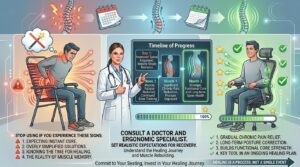
- Upgrade to a True Ergonomic Chair: If your back pain persists despite cushions and breaks, permanently transition to a certified ergonomic task chair to protect your long-term spinal health.
7. Frequently Asked Questions (FAQs)
1. Why does my back hurt worse when I sit in a bungee chair for long hours?
Your back hurts because bungee cords stretch under your weight without pushing back to support your lower spine, forcing your core and back muscles to overcompensate and causing your posture to collapse into a slouched C-curve.
2. Can a bungee chair cause herniated discs?
While a chair rarely causes a primary disc herniation on its own, prolonged sitting in an unsupportive, sagging elastic chair promotes poor posture, which significantly worsens symptoms for individuals with compromised discs.
3. Do chiropractors recommend bungee office chairs for back pain?
No. Chiropractors and ergonomic specialists strongly advise against using bungee chairs for professional desk work because they lack active, adjustable lumbar support and promote posterior pelvic tilt.
4. How can I make my bungee chair better for my back?
You can dramatically improve its back-friendliness by strapping an external memory foam lumbar roll to the backrest and taking a 2-minute standing break every half-hour.
5. Why do my legs feel numb after sitting in a bungee chair?
Numbness is usually caused by the sagging center of the chair pressing your thighs against the rigid, unyielding tubular steel frame borders, which restricts blood circulation.
6. Are bungee chairs safe for sciatica sufferers?
Generally, no. Sciatica is often aggravated by pressure on the sciatic nerve caused by poor pelvic alignment and slouching—both of which are common side effects of long-term seating in flexible bungee webs.
7. What is the best type of office chair for chronic back pain?
The best chairs feature fully adjustable lumbar support systems, synchronized tilt mechanisms, adjustable seat depth, and high-density molded foam or advanced tension mesh (such as Herman Miller or Steelcase models).
8. How long does a bungee chair last before it starts hurting your back?
Under full-time daily professional use (6 to 8 hours a day), bungee cords typically begin stretching and losing tension within 12 to 18 months, at which point back pain usually intensifies due to severe sagging.
9. Can I use a bungee chair for gaming?
For casual mobile or console gaming, yes. For long-session PC gaming where precision posture is required, traditional ergonomic or gaming chairs are far safer for your spine.
10. When should I permanently stop using a bungee chair?
If you experience persistent lower back stiffness, radiating nerve pain, or muscle fatigue by midday that does not resolve with stretching, you should immediately transition to a certified ergonomic task chair.
8. Conclusion
Experiencing worsening back pain after sitting in a bungee chair for long hours is not just in your head—it is a direct biomechanical consequence of material failure and a total lack of structural spinal support. While bungee chairs offer wonderful airflow and a striking modern look for casual spaces across New York, San Francisco, and Austin, they cannot handle the rigorous demands of a full-time professional workday.
By understanding how elastic suspension compromises your posture, utilizing temporary lumbar cushions, and knowing when to upgrade to a certified ergonomic task chair, you can protect your spine, eliminate end-of-day muscle fatigue, and ensure your workspace on itemguides.com supports your long-term health and productivity.