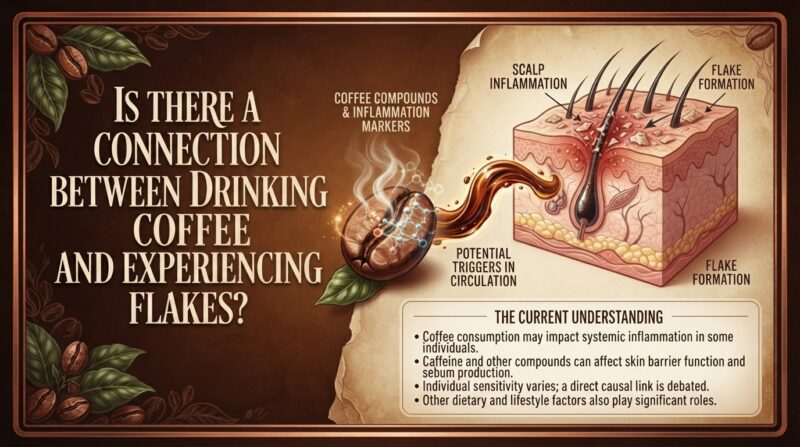
For millions of coffee lovers across major metropolitan hubs like San Francisco, New York, Seattle (Washington), Austin (Texas), and Los Angeles (California), a morning espresso or iced latte is an essential non-negotiable routine. But if you have noticed an itchy, flaking scalp that seems to flare up on days you consume multiple cups of coffee, you might wonder whether your daily brew is secretly responsible.
The direct answer: Coffee does not directly cause dandruff or seborrheic dermatitis, but drinking coffee can significantly worsen scalp flaking through systemic dehydration, cortisol-driven surges, altered scalp sebum production, and nutrient depletion.
Depending on whether your flakes are small and dry or large, yellowish, and greasy, your coffee habit interacts with your scalp physiology in entirely different ways.
The Biological Mechanisms: How Coffee Impacts Scalp Health
To understand how coffee leads to visible flakes, we must examine what happens inside your body when caffeine enters your bloodstream.
1. Cortisol Spikes and Sebum Overproduction
Caffeine stimulates the central nervous system and triggers the adrenal glands to release cortisol and adrenaline. Cortisol is your body’s primary stress hormone.
- Elevated cortisol levels bind to androgen receptors on your scalp’s sebaceous glands.
- This signals the glands to produce excess, thicker sebum (scalp oil).
- Malassezia—the naturally occurring, oil-loving fungus responsible for dandruff and seborrheic dermatitis—feeds on these extra lipids.
- As Malassezia breaks down the oil into irritating fatty acids, scalp inflammation increases, accelerating epidermal cell turnover and resulting in greasy, yellowish flakes.
2. Mild Diuretic Effect and Skin Barrier Dehydration
Caffeine is a mild diuretic. While moderate coffee consumption contributes to daily fluid intake, drinking coffee on an empty stomach or without adequate water can lead to mild cellular dehydration.
- When your body lacks moisture, the scalp’s outer stratum corneum barrier becomes compromised.
- Micro-cracks form in the skin barrier, allowing natural moisture to evaporate (trans-epidermal water loss).
- The result is a dry scalp, characterized by small, powdery white flakes and tight, itchy skin.
3. Gastrointestinal Impact and Acid Production
Coffee stimulates gastric acid secretion. In sensitive individuals, high coffee intake can alter gut motility and disturb gut microbiome balance. Because the gut and skin are linked via the gut-skin axis, intestinal inflammation can manifest externally as inflammatory skin flare-ups, including eczema, psoriasis, and scalp dermatitis.
4. Dairy and Sugar Additives
Often, it is not the coffee bean itself causing the reaction, but what goes into the cup.
- Whole Milk & Heavy Cream: High-glycemic dairy products contain natural hormones (IGF-1) that can stimulate oil production.
- Flavored Syrups & Sugars: Refined sugar spikes blood insulin, triggering systemic inflammation and feeding scalp yeast overgrowth.
Dry Scalp vs. Oily Dandruff: Which Coffee Flake Do You Have?
Coffee can trigger two completely different types of scalp flaking depending on your baseline skin type:
| Characteristic | Dry Scalp Flaking (Dehydration-Driven) | Oily Dandruff / Seborrheic Dermatitis (Cortisol/Yeast-Driven) |
| Flake Appearance | Small, loose, fine, powdery white flakes | Large, sticky, clumped, yellowish or oily flakes |
| Primary Cause | Lack of moisture, skin barrier breakdown | Excess oil secretion feeding Malassezia yeast overgrowth |
| Coffee Trigger Pathway | Caffeine’s diuretic effect + low water intake | Cortisol-induced sebum surge + added dairy/syrup spikes |
| Scalp Feeling | Tight, dry, mildly itchy across the whole scalp | Highly inflamed, red, intensely itchy in concentrated patches |
| Fix Strategy | Hydrate internally; use gentle, moisturizing shampoos | Use antifungal shampoos (Ketoconazole, Zinc Pyrithione) |
Regional Climate & Lifestyle Compounding Factors
Your location plays a major role in how coffee affects your scalp condition:
1. San Francisco & Northern California
- Environment: Cold coastal breezes, heavy fog, and high reliance on tech coffee culture.
- Impact: Coastal winds dry out the skin barrier externally. Drinking coffee on empty stomachs during morning commutes compounds external windburn with internal dehydration.
2. Texas (Austin, Houston, Dallas)
- Environment: Extreme summer heat, heavy air conditioning, and intense sweating.
- Impact: High heat increases sweat and oil production. When caffeine-induced cortisol surges hit during hot Texas summers, Malassezia yeast multiplies rapidly on moist scalps.
3. Washington State (Seattle & Pacific Northwest)
- Environment: High rainfall, long overcast winters, and low Vitamin D levels.
- Impact: Reduced sunlight lowers skin immunity against fungal overgrowth. High coffee consumption during rainy seasons can mask fatigue while aggravating winter seborrheic dermatitis.
4. New York
- Environment: High-stress urban lifestyle, severe winter heating, and rapid commutes.
- Impact: Indoor dry radiator heat combined with morning espresso spikes cortisol rapidly, leading to seasonal winter flaking.
5 Practical Tips to Enjoy Coffee Without Scalp Flakes
You do not have to give up coffee entirely to achieve a healthy, clear scalp. Follow these smart coffee habits:
- Follow the 1:1 Hydration Rule: For every cup of coffee you consume, drink at least one full glass (8–12 oz) of plain water immediately afterward to offset fluid loss.
- Never Drink Coffee on an Empty Stomach: Eat a small, protein-rich snack (like eggs or yogurt) before your morning coffee to blunt the cortisol spike.
- Swap High-Glycemic Additives: Replace refined syrups and dairy with unsweetened oat milk, almond milk, or a pinch of cinnamon for natural flavor.
- Cap Daily Caffeine Intake: Keep caffeine consumption below 200–300 mg per day (roughly 2 standard cups of coffee) to prevent overstimulating your adrenal glands.
- Use Targeted Antifungal Wash: Wash your scalp 2–3 times weekly with active shampoos containing Zinc Pyrithione, Ketoconazole, or Selenium Sulfide, leaving the lather on for 3 to 5 minutes before rinsing.
Frequently Asked Questions (FAQ)
1. Does caffeine itself directly cause dandruff?
No. Caffeine does not create dandruff out of nowhere. However, it can worsen pre-existing flaking by spiking cortisol (which increases scalp oil) or dehydrating the skin barrier (which causes dry, fine flakes).
2. Will switching to decaf coffee stop my scalp from flaking?
Switching to decaf reduces the caffeine-induced cortisol surge and diuretic effect, which significantly helps if your flakes are driven by stress or dehydration. However, decaf coffee is still acidic, so it may still affect sensitive digestive systems.
3. Is coffee scrub good for applying directly onto a flaky scalp?
Physical coffee ground scrubs can help manually exfoliate dead skin buildup on the scalp. However, if your scalp is inflamed or cracked from seborrheic dermatitis, coarse coffee grounds can cause micro-tears and worsen inflammation.
4. How do I know if my flakes are from dehydration or yeast overgrowth?
If your flakes fall easily like dry snow and your scalp feels tight, it is likely dehydration. If your flakes are clumped, greasy, yellow, or sticky and accompanied by red, itchy patches, it is likely yeast-driven dandruff or seborrheic dermatitis.
5. Does iced coffee cause more flaking than hot coffee?
The temperature of the coffee does not matter as much as its caffeine content, sugar, and milk additives. However, iced coffee drinks are more frequently loaded with sweetened syrups and heavy dairy, which trigger higher insulin spikes.
6. Can drinking coffee on an empty stomach trigger a scalp flare-up?
Yes. Drinking coffee on an empty stomach triggers a sharper cortisol release than drinking coffee after a meal. Higher cortisol leads to increased sebum production and increased yeast growth on the scalp.
7. How long after reducing coffee intake will my scalp improve?
Skin cell turnover takes approximately 28 days. However, by balancing hydration and managing cortisol, most people notice reduced itching and flaking within 7 to 14 days.
8. Does tea cause the same scalp flaking as coffee?
Green and black teas contain lower caffeine levels than coffee and are rich in antioxidants (like EGCG) that reduce systemic inflammation. Tea is generally far gentler on the scalp and less likely to trigger flaking.
9. What supplements can offset coffee-induced scalp issues?
Taking Omega-3 fish oil helps restore the scalp’s lipid barrier, while Zinc and B-vitamins help regulate sebum production and support cellular repair.
10. Should I stop drinking coffee if I have severe seborrheic dermatitis?
You do not necessarily need to stop completely. Try cutting back to one cup per day, consuming it after breakfast, eliminating dairy/sugar, and pairing your routine with a medicated antifungal shampoo.
Conclusion
There is a clear indirect connection between drinking coffee and experiencing scalp flakes. Whether through cortisol-driven oil production that feeds dandruff yeast or caffeine-induced dehydration that cracks the skin barrier, your morning cup can easily exacerbate scalp conditions.
By practicing smart coffee habits—eating before drinking, staying hydrated with water, moderating caffeine intake, and using targeted scalp treatments—residents across Texas, California, Washington, and New York can enjoy their daily brew while keeping their scalps clear, calm, and flake-free.