A throbbing, persistent toothache can strike without warning—disrupting your focus, ruining your sleep, and making even simple eating or drinking unbearable. When dental pain flares up at night, over a weekend, or while traveling, immediate professional care might not be instantly available.
Knowing how to safely ease that sharp, pulsating nerve pain using natural remedies at home provides fast, temporary relief until you can visit a dentist.
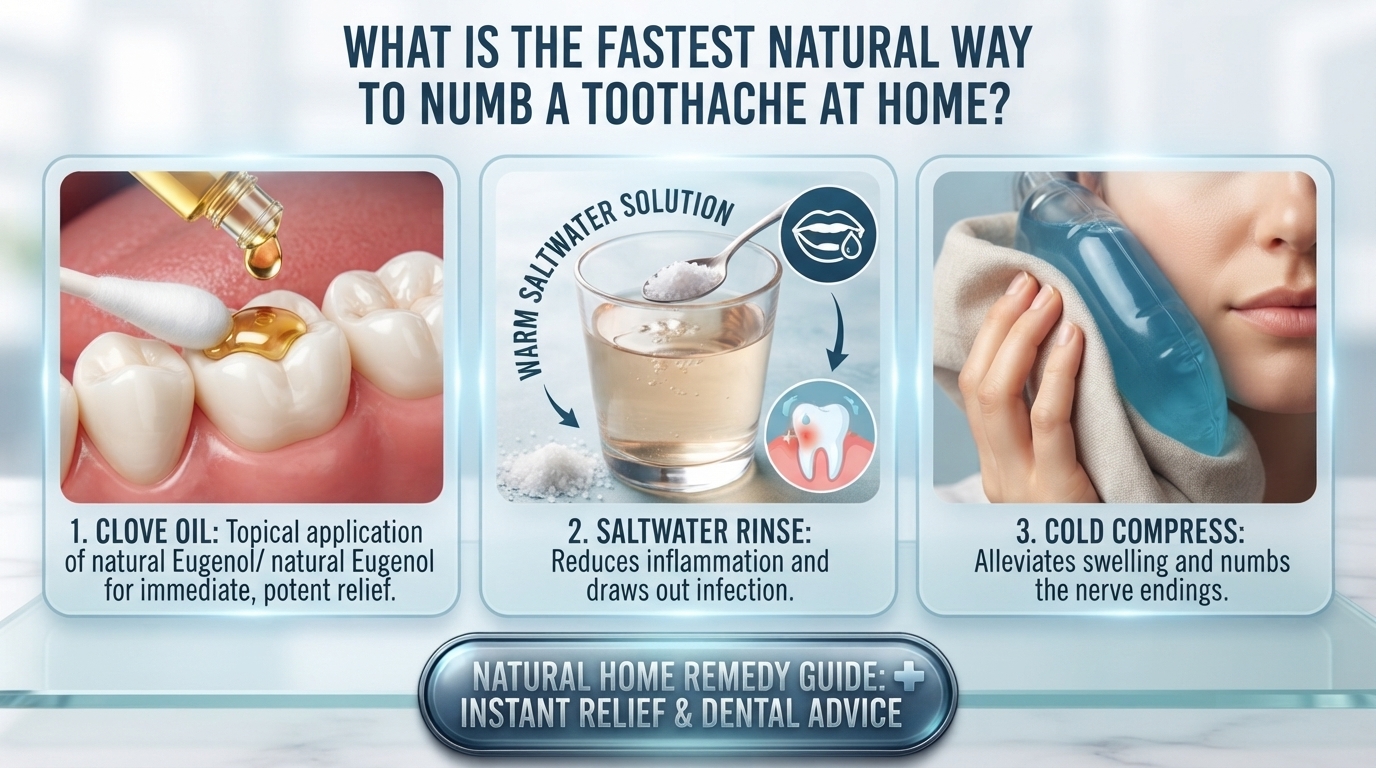
The fastest natural way to numb a toothache at home is applying pure clove oil (eugenol) directly to the affected tooth using a saturated cotton swab, combined with an ice pack held against the outer cheek.
Clove oil contains eugenol, a potent natural anesthetic and anti-inflammatory compound that numbs exposed dental nerves within 3 to 5 minutes. When paired with cold therapy—which constricts blood vessels and slows nerve pain signal transmission—you get two complementary mechanisms that deliver immediate relief.
This comprehensive home care guide covers the chemistry of natural dental numbing, step-by-step application techniques, climate and lifestyle considerations for key US states, top-rated emergency relief products, and an in-depth 10-question dental FAQ.
Medical Disclaimer: Natural remedies provide temporary pain management only—they do not cure underlying dental infections, deep cavities, cracked teeth, or abscesses. Always schedule an evaluation with a licensed dentist as soon as possible.
1. The Science of Natural Toothache Numbing: How Eugenol & Cold Therapy Work
To understand why natural remedies work, it helps to understand how toothache pain originates deep inside the mouth.
[Deep Cavity / Cracked Enamel] ---> [Bacteria Reaches Dental Pulp] ---> [Nerve Inflammation (Pulpitis)] ---> [Pulsating Pressure & Pain]
A toothache occurs when the outer layer of enamel and dentin breaks down, exposing the inner pulp chamber containing delicate blood vessels and trigeminal nerve fibers. Bacteria trigger localized inflammation (pulpitis), causing pressure to build inside the unyielding tooth walls.
1. Eugenol (Clove Oil): Natural Sodium Channel Blocker
- How It Works: Eugenol is a natural phenol derivative found in high concentrations in clove essential oil.
- Mechanism: It acts as a local anesthetic by blocking voltage-gated sodium channels along exposed nerve endings in the pulp. This action halts pain signal transmission to the brain while reducing tissue swelling in surrounding gums.
- Speed: Delivers noticeable numbing within 3 to 5 minutes of direct application.
2. Cold Therapy (Vasoconstriction): Vascular Pressure Relief
- How It Works: Applying an ice pack wrapped in a cloth to the outer jaw reduces local microvascular blood flow.
- Mechanism: Cold temperatures constrict dilated blood vessels around the root apex, reducing fluid pressure buildup within the rigid pulp chamber while slowing nerve conduction speed.
- Speed: Delivers noticeable pain relief within 10 to 15 minutes of continuous application.
2. Top Fast-Acting Natural Remedies for Toothache Pain
While clove oil and ice packs top the list for speed and potency, combining complementary home remedies provides comprehensive relief:
1. Pure Clove Essential Oil (Eugenol)
- Speed of Action: 3–5 minutes
- Duration: 1 to 3 hours per application
- How to Use: Dilute 2–3 drops of pure clove oil with 1/2 teaspoon of a carrier oil (such as olive or coconut oil). Dip a sterile cotton swab or tiny cotton ball into the mixture, squeeze out excess liquid, and gently hold it against the painful tooth and adjacent gum line for 10 to 15 minutes.
- Best For: Direct nerve pain, deep cavity ache, exposed dentin.
2. Saltwater Rinse (Hypertonic Flush)
- Speed of Action: 5–10 minutes
- Duration: 30 to 60 minutes
- How to Use: Dissolve 1/2 teaspoon of pure salt into 8 ounces of warm water. Swish gently around the mouth for 30 to 45 seconds, focusing on the affected side, then spit out completely. Repeat 3 to 4 times daily.
- Best For: Cleansing trapped food debris, reducing swollen gums, drawing out fluid via osmotic pressure.
3. External Cold Compress (Ice Therapy)
- Speed of Action: 10–15 minutes
- Duration: 1 to 2 hours
- How to Use: Wrap an ice pack or a bag of frozen veggies in a soft towel. Hold it against your outer cheek over the painful area for 15 minutes on, followed by 15 minutes off.
- Best For: Throbbing pain, facial swelling, trauma-induced tooth aches.
4. Hydrogen Peroxide Rinse (3% Concentration)
- Speed of Action: 5–10 minutes
- Duration: 1 to 2 hours
- How to Use: Mix equal parts 3% hydrogen peroxide and plain water. Swish thoroughly in your mouth for 30 seconds and spit out. Never swallow hydrogen peroxide. Rinse mouth with plain water afterward.
- Best For: Bleeding gums, bacterial plaque buildup, reducing oral infection pressure.
5. Peppermint Tea Bags (Menthol Cooling)
- Speed of Action: 10–15 minutes
- Duration: 45 to 60 minutes
- How to Use: Steep a peppermint tea bag in hot water for 2 minutes, remove, and allow it to cool in the freezer until damp and chilled. Place the cool tea bag directly against the sore tooth and gum line.
- Best For: Soothing inflamed gum tissue, mild numbing via menthol receptors.
3. Natural Remedy Efficacy & Speed Comparison Table
| Remedy / Treatment | Primary Active Compound | Speed to Numb | Numbing Intensity | Primary Mechanism | Best Used For |
| Clove Essential Oil | Eugenol | 3–5 Minutes | High (Local Anesthetic) | Blocks sodium channels in nerve fibers | Direct cavity & nerve pain |
| Cold Compress / Ice | Low Temperature | 10–15 Minutes | Moderate–High | Constricts blood vessels, slows signals | Throbbing & jaw swelling |
| Saltwater Rinse | Sodium Chloride | 5–10 Minutes | Low–Moderate | Osmotic fluid draw & antibacterial | Trapped food & gum swelling |
| 3% Hydrogen Peroxide | Hydrogen Peroxide | 5–10 Minutes | Moderate | Kills anaerobic bacteria & cleanses | Gum inflammation & bleeding |
| Peppermint Tea Bag | Menthol | 10–15 Minutes | Moderate | Activates cold receptors ($TRPM8$) | Sensitive gums & mild aches |
| Raw Garlic Paste | Allicin | 10–15 Minutes | Moderate | Antibacterial enzyme activity | Bacterial cavity pressure |
4. Regional Health & Climate Factors: Texas, California, Washington & NY
Environmental, regional, and dietary habits across key US states can impact tooth sensitivity and the prevalence of sudden toothaches:
Texas & Desert Southwest
- Environmental Factor: High outdoor temperatures lead to increased consumption of ice-cold beverages, sweet iced teas, and sports drinks.
- Impact on Dental Pain: Rapid temperature changes (chewing ice or drinking ice-cold liquids in summer heat) trigger thermal shock in teeth with micro-cracks or exposed root surfaces, causing acute pulpitis flares. High sugar consumption accelerates bacterial decay.
California & San Francisco Bay Area
- Environmental Factor: Coastal climate, active outdoor lifestyle, and high coffee/acidic beverage intake (kombucha, citrus juices, artisanal coffees).
- Impact on Dental Pain: Acidic beverages erode outer enamel over time, exposing underlying dentin tubules. When exposed dentin reacts to ocean winds or cold air in San Francisco, sharp thermal shock signals fire along the trigeminal nerve.
Washington State & Pacific Northwest
- Environmental Factor: High consumption of warm drip coffee, dark roasts, and craft ciders paired with cooler year-round temperatures.
- Impact on Dental Pain: Alternating between hot coffee and cold ambient air causes enamel expansion and contraction, creating micro-fractures over time that allow mouth bacteria to penetrate deep toward the pulp chamber.
New York & Northeast Urban Centers
- Environmental Factor: Fast-paced urban lifestyle, elevated stress levels, late-night dining, and cold winter months.
- Impact on Dental Pain: High stress levels increase nighttime teeth grinding (bruxism), which wears down enamel and stresses the periodontal ligament. When freezing NYC winter air hits bruxism-damaged teeth, intense throbbing pain follows.
5. Safe Application Protocol: How to Apply Clove Oil Without Burning Gums
Undiluted essential oils are concentrated and can cause chemical burns or tissue irritation on sensitive oral mucosa if applied improperly. Follow this step-by-step protocol:
1.Dilute Clove Oil with a Carrier Oil:Step 1.
Mix 2 drops of pure 100% clove essential oil with 1/2 teaspoon of high-grade carrier oil (such as extra virgin olive oil, cold-pressed coconut oil, or jojoba oil) in a small glass dish.
2.Gently Dry the Affected Area:Step 2.
Use a clean paper towel or sterile gauze pad to gently dab away excess saliva from the tooth and immediate gum line. Dry surfaces help the oil absorb directly into the area.
3.Apply via Precision Cotton Swab:Step 3.
Dip a clean cotton swab into the diluted mixture, allowing it to saturate without dripping excess liquid. Press the swab directly into the cavity opening or against the painful tooth edge for 5 to 10 minutes.
4.Rinse Gently with Warm Saltwater:Step 4.
Remove the swab and spit out any remaining oil. After 15 minutes, gently rinse your mouth with warm saltwater to clean away residue and soothe surrounding soft tissue.
6. Over-the-Counter Toothache Relief Products Review
When natural remedies are combined with targeted over-the-counter (OTC) products, home pain relief becomes significantly more effective. Here are top-rated products to keep in your home medicine cabinet:
1. Red Cross Toothache Complete Medication Kit
- Primary Active Ingredient: Eugenol (85%)
- Form: Liquid drops with precision cotton pellets and tweezers
- Overview: An essential emergency kit for home toothache care. It uses high-potency eugenol liquid paired with pre-cut cotton pellets, allowing you to place concentrated relief directly inside a hollow cavity without getting excess oil on your tongue or cheeks.
- Pros: Rapid 3-minute numbing; high concentration of natural eugenol; includes precise application tools.
- Cons: Strong, pungent herbal taste; can irritate soft tissue if applied carelessly.
2. Orajel 4X Medicated For Toothache & Gum Cream
- Primary Active Ingredient: Benzocaine 20% + Menthol 0.2%
- Form: Topical gel / cream
- Overview: A widely available OTC topical anesthetic. Max-strength benzocaine blocks nerve signals instantly upon contact with soft gum tissue, while menthol provides a cooling sensation that calms localized tissue inflammation.
- Pros: Instant contact numbing; easy to apply precisely on sore gums; pleasant mint taste.
- Cons: Temporary duration (30–45 minutes); does not penetrate deep inside closed teeth as effectively as liquid eugenol.
3. Dentemp Premium Temporary Tooth Filling Kit
- Primary Active Ingredient: Zinc Oxide & Eugenol Paste
- Form: Ready-to-use temporary filling material
- Overview: If your toothache is caused by a lost filling, loose cap, or open cavity, exposing the inner nerve to air and food debris causes intense pain. Dentemp fills the void, sealing out air and food while releasing soothing eugenol directly against the exposed dentin.
- Pros: Seals out hot, cold, and sweet triggers; contains built-in eugenol; stays secure until your dental appointment.
- Cons: Requires a clean cavity void to stick; temporary fix only (lasts up to several weeks).
7. Frequently Asked Questions (FAQ)
Q1: Can I apply pure undiluted clove oil directly to my gums?
It is not recommended to use pure undiluted clove oil on soft gum tissue. Undiluted clove oil can cause localized chemical burns, tissue redness, and severe peeling on tender oral mucosa. Always dilute 2 drops of clove oil with 1/2 teaspoon of a carrier oil (such as olive or coconut oil) before applying.
Q2: Why does my toothache get significantly worse when I lie down at night?
When you lie flat, blood pressure in your upper body and head increases. This increased vascular pressure expands blood vessels inside the rigid pulp chamber of an inflamed tooth, putting extra physical pressure on sensitive nerve fibers. Elevate your head with 2 or 3 pillows while sleeping to reduce head pressure.
Q3: Is it safe to swallow small amounts of clove oil while numbing a tooth?
Swallowing minute traces of diluted clove oil mixed with saliva is generally harmless for healthy adults. However, you should avoid swallowing larger amounts, as essential oils can cause stomach distress, nausea, or liver strain in high doses. Always spit out excess oil after applying.
Q4: How long does the numbing effect of clove oil last?
A single application of diluted clove oil typically numbs dental nerve pain for 1 to 3 hours. You can reapply the diluted mixture up to 3 or 4 times daily as needed while waiting for your dental appointment.
Q5: Can I take ibuprofen and acetaminophen together with natural remedies?
Yes. Combining an over-the-counter nonsteroidal anti-inflammatory drug (NSAID) like ibuprofen with acetaminophen creates a dual-action pain management system that works well alongside natural topical remedies like clove oil and ice packs. Always consult a healthcare professional regarding medication dosages and personal health conditions.
Q6: Does putting a crushed aspirin directly on the aching tooth help?
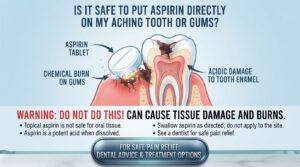
No! Never place an aspirin tablet directly against a tooth or gum tissue. Aspirin is acetylsalicylic acid; placing it against soft tissue causes severe chemical acid burns (“aspirin burn”) on your gums and cheeks, creating an additional painful wound alongside your toothache. Always swallow aspirin tablets whole with water.
Q7: What should I do if my toothache is accompanied by facial swelling and fever?
Facial swelling, fever, difficulty swallowing, or a visible pimple-like bump on your gums indicate a spreading bacterial dental abscess. This is a medical emergency that natural home remedies cannot resolve. Seek emergency dental care or visit an urgent care clinic immediately for prescription antibiotic therapy and drainage.
Q8: Can raw garlic paste really numb a toothache?
Garlic contains allicin, a powerful natural compound with strong antibacterial properties. While garlic can help kill surface cavity bacteria and reduce localized infection pressure, it does not possess true local anesthetic properties like eugenol. Furthermore, raw garlic paste can cause a burning sensation on tender gum tissue.
Q9: Why does cold water make my toothache hurt worse, but an ice pack helps?
Direct contact with cold water on an exposed tooth nerve triggers sudden fluid movement inside dentin tubules, firing sharp pain signals. An ice pack applied to the outside of your cheek cools tissue gradually without touching exposed nerve endings directly, constricting blood vessels and reducing internal pressure.
Q10: Will a natural remedy cure my cavity or tooth infection permanently?
No. Natural remedies, essential oils, and home rinses only manage pain symptoms—they do not repair damaged enamel, kill bacteria deep inside a sealed pulp chamber, or reverse dental decay. Unaddressed dental infections can spread into jawbone tissue and blood vessels. Use home remedies strictly as a temporary bridge until you see a dentist.
Conclusion
When a sudden toothache strikes, clove essential oil (eugenol) combined with an external cold compress provides the fastest, most effective natural numbing relief at home. Eugenol blocks pain signals at exposed nerve endings within minutes, while cold therapy constricts blood vessels to reduce throbbing pressure.
Remember to dilute essential oils properly to protect tender gum tissue, elevate your head when resting, and use hypertonic saltwater rinses to keep the area clean.
Treat home remedies as a reliable first-aid measure—and schedule an appointment with a licensed dentist as soon as possible to resolve the underlying cause.