If you have ever pulled on a dark winter sweater only to notice an embarrassing dusting of yellowish-white flakes on your shoulders, you know the frustration of a winter scalp flare-up.
Whether you are navigating the freezing, wind-whipped streets of New York City, enduring a damp, sunless winter in Seattle, Washington, relying on aggressive indoor heating during a cold snap in Austin, Texas, or dealing with the chilly coastal fog of San Francisco, California, winter is notoriously brutal on the skin barrier. For the millions of Americans managing Seborrheic Dermatitis, the drop in temperature often signals the start of raw, intensely itchy, and inflamed skin.
You might wonder: If seborrheic dermatitis is caused by excess oil and yeast, shouldn’t the cold, dry winter air make it better?
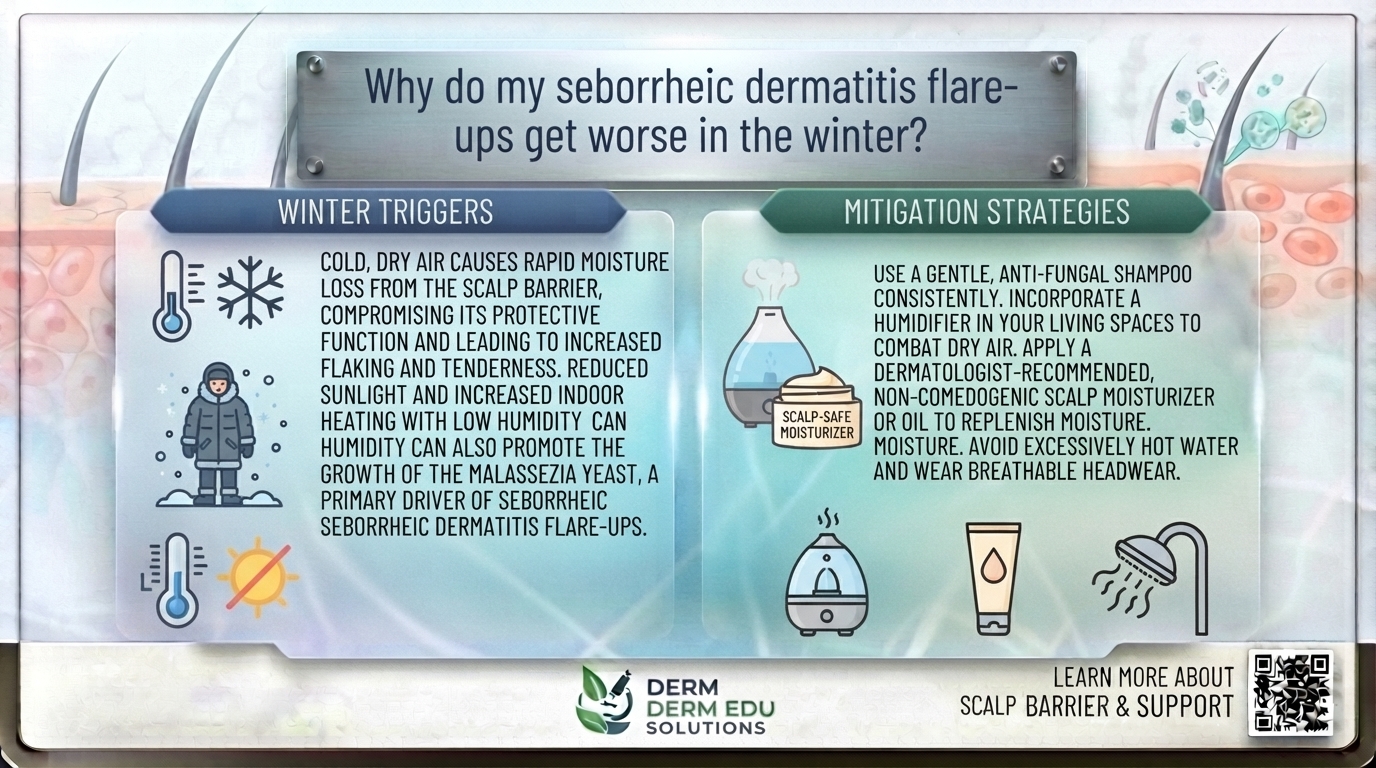
The short answer: While winter air is dry, the combination of indoor heating, a lack of UV sunlight, barrier-stripping hot showers, and heat-trapping winter hats creates the ultimate recipe for skin barrier destruction. When your skin barrier is compromised, your body overcompensates by producing more sebum (oil), triggering a massive overgrowth of the Malassezia yeast that drives seborrheic dermatitis.
This comprehensive guide breaks down the precise biological reasons your scalp rebels in the cold, reviews the best winter-safe treatments, explores how your specific region impacts your skin, and provides an actionable protocol to keep your scalp calm, hydrated, and flake-free all winter long.
1. The Winter Microclimate: The Biology of a Cold-Weather Flare-Up
Seborrheic dermatitis is a chronic inflammatory condition driven by an overreaction to Malassezia globosa, a natural yeast that lives on human skin and feeds on sebum. In the winter, three major environmental shifts cause this delicate ecosystem to spiral out of control.
The Indoor Heating Paradox (Zero Humidity)
When temperatures drop outside, we crank up the radiators and central heating inside. Artificial heat absolutely obliterates indoor humidity, often dropping it below 20%. This saps the moisture directly out of your stratum corneum (the outermost layer of your skin).
To combat this sudden, severe dehydration, your sebaceous glands go into overdrive, pumping out excess oil to try and protect the skin. This creates a paradox: a dehydrated scalp covered in a thick layer of excess oil. The Malassezia yeast gorge on this new oil supply, rapidly multiplying and triggering a massive inflammatory flare-up.
The UV Light Deficiency
During the summer, moderate exposure to natural ultraviolet (UV) sunlight helps naturally suppress the growth of Malassezia yeast and regulates skin cell turnover. In the winter—especially in overcast regions like Washington State or during short Northeast winter days—you are deprived of this natural, yeast-inhibiting UV light, allowing the fungus to grow unchecked.
The “Hat Trap”
To stay warm, we wear beanies, wool caps, and scarves. While these protect you from the wind, they also trap body heat and sweat directly against your scalp. This creates a dark, warm, and humid micro-environment—a literal incubator for yeast. Furthermore, the friction of coarse wool rubbing against a dry scalp creates micro-tears in the skin, further inflaming the area.
2. Regional Winter Challenges: How Geography Impacts Your Skin
The severity of your winter flare-up heavily depends on where you live. Here is how the target regions of itemguides.com influence your scalp health:
- New York City & The Northeast:
- The Threat: Extreme temperature whiplash. You transition from freezing, biting winds on the street directly into aggressively heated, dry subway cars and apartments. This constant expansion and contraction of blood vessels causes severe capillary inflammation and redness on the scalp and face.
- Seattle & Washington State:
- The Threat: The “Gloomy Damp.” Seattle winters lack natural sunlight, meaning you lose the UV suppression of Malassezia. Furthermore, the constant drizzly dampness encourages you to wear hats constantly, trapping sweat and moisture against the scalp all day long.
- San Francisco & Northern California:
- The Threat: Coastal chill and hard water. The Bay Area’s famous microclimates mean your skin never fully adapts to one temperature. Combined with hard tap water in many older buildings, mineral buildup on the scalp can severely exacerbate winter flaking.
- Texas (Austin, Dallas, Houston):
- The Threat: The sudden cold snap. Texans are used to heat, so when a winter freeze hits, HVAC systems are blasted on high. Because Texan bodies are adapted to sweating, the sudden introduction of ultra-dry artificial heat shocks the skin barrier, leading to rapid, painful cracking along the hairline.
3. The Danger of the Winter Hot Shower
When you are freezing cold, stepping into a scalding hot shower feels like pure bliss. However, if you have seborrheic dermatitis, hot water is your worst enemy.
Your skin is protected by a lipid mantle—a delicate layer of natural fats that keeps moisture in and bacteria/yeast out. Scalding hot water literally melts this lipid layer away (much like hot water melts grease off a frying pan).
When you step out of a hot shower into cold winter air, the water evaporates instantly from your skin, taking your natural cellular moisture with it. This leaves your scalp raw, unprotected, and highly susceptible to the irritating oleic acid produced by the Malassezia yeast.
4. Product Reviews: The Best Winter Solutions for Seborrheic Dermatitis
Managing seborrheic dermatitis in the winter requires a shift in strategy. Harsh, drying shampoos that work in the humid summer will completely destroy your skin barrier in January. You must balance antifungal action with barrier repair.
Here are the top four winter-safe products reviewed by itemguides.com:
1. Bulletproof Brain Octane C8 MCT Oil
- Best For: Deeply moisturizing a dry, tight scalp without feeding the Malassezia yeast.
- Why it Works: This is the most crucial winter skincare hack. Malassezia yeast feeds on carbon chain lengths C12-C24. This means common natural oils (olive oil, coconut oil, argan oil, shea butter) will literally feed your seborrheic dermatitis. MCT oil that contains only Caprylic Acid (C8) and Capric Acid (C10) is invisible to the yeast.
- Pros: Intensely hydrating, 100% yeast-safe, clears thick crusts gently.
- Cons: Can make hair look greasy if too much is applied; requires washing out the next morning.
2. Dr. Eddie’s Happy Cappy Medicated Shampoo
- Best For: A gentle, non-stripping antifungal wash for dry winter skin.
- Why it Works: Originally designed for pediatric cradle cap (which is infant seborrheic dermatitis), this wash contains Pyrithione Zinc (0.95%) to kill yeast. Crucially, it is sulfate-free, fragrance-free, and contains licorice root extract to soothe red, inflamed winter skin without stripping it like harsher adult dandruff shampoos.
- Pros: Extremely gentle, safe for daily winter use, won’t dry out hair strands.
- Cons: Not as aggressively potent as prescription-strength treatments for severe, cystic flare-ups.
3. DermaZen Calming Seborrheic Serum
- Best For: Leave-in relief for itchy, tight scalps and facial redness (eyebrows/nose creases).
- Why it Works: This serum is a holy grail for winter. It uses a blend of colloidal silver, xylitol (which breaks down the protective “biofilm” the yeast hides in), and urea to gently exfoliate flakes while delivering pure hydration to cracked skin.
- Pros: Breaks down yeast biofilms, absorbs instantly, zero greasy residue, relieves itching in minutes.
- Cons: High price point per ounce; has a slight tingling sensation upon initial application.
4. Canopy Bedside Humidifier
- Best For: Reversing the damage of dry indoor radiator heating while you sleep.
- Why it Works: Treating the skin is only half the battle; you must treat your environment. The Canopy humidifier uses evaporative technology (no hot steam or messy white mineral dust) to maintain optimal humidity in your bedroom, preventing your scalp from drying out and overproducing oil overnight.
- Pros: Mold-resistant technology, dishwasher-safe parts, deeply hydrates skin systemically.
- Cons: Requires regular filter replacements; upfront hardware cost.
5. Comparison Matrix: Winter Defense Arsenal
| Product | Category | Key Active Ingredient | Winter Benefit | Ideal Usage |
| C8 MCT Oil | Moisturizer | Caprylic Acid (C8) | Hydrates skin without feeding yeast | Overnight scalp mask |
| Happy Cappy Wash | Cleanser | Zinc Pyrithione | Kills yeast without stripping barrier | 2-3x weekly wash |
| DermaZen Serum | Leave-In Treatment | Xylitol & Urea | Dissolves yeast biofilms & stops itch | Daily on dry spots |
| Canopy Humidifier | Environment Tool | Evaporative Moisture | Stops radiator-induced dehydration | Nightly in bedroom |
6. Actionable Tips: Your Winter Prevention Protocol
To keep your scalp clear from November to March, implement these strict winter lifestyle rules:
- Turn Down the Shower Temp: Wash your hair with lukewarm water only. If you must have a hot shower, keep your head out of the water and lower the temperature before washing your hair and face.
- Supplement with Vitamin D3: Since you are missing the sun’s natural UV benefits, taking a daily Vitamin D3 supplement helps regulate your skin’s immune response and reduce systemic inflammation.
- The “Clean Hat” Rule: Wash your winter beanies and scarves at least once a week in hot water. Fungal spores and dead skin cells build up in the fabric, meaning a dirty hat will instantly reinfect your clear scalp.
- Never Go Outside with Wet Hair: Freezing temperatures will damage the hair cuticle of wet hair, and pulling a hat over damp hair creates the ultimate humid breeding ground for Malassezia. Always blow-dry your roots on a cool/warm setting before leaving the house.
- Audit Your Moisturizers: Check all your winter lotions and hair conditioners. If they contain olive oil, coconut oil, shea butter, or polysorbates, keep them far away from your scalp and face. Stick to Squalane oil or C8 MCT oil.
7. Frequently Asked Questions (FAQ)
1. Why does my seborrheic dermatitis disappear in the summer but rage in the winter?
During the summer, natural UV sunlight suppresses the Malassezia yeast, and higher ambient humidity keeps your skin barrier hydrated. In the winter, the loss of UV light and the introduction of ultra-dry artificial heating causes the yeast to overgrow and the skin to crack.
2. Can indoor heating really cause a fungal flare-up?
Yes. Indoor heating destroys the humidity in the air. When your skin dries out, your body’s defense mechanism is to produce a massive surge of sebum (oil) to protect the skin barrier. The yeast feeds on this sudden influx of oil, triggering a flare-up.
3. Is my favorite wool beanie making my scalp worse?
Likely, yes. Wool can cause contact friction that irritates an already sensitive scalp. Furthermore, tight beanies trap sweat and heat against the skin. Switch to a looser, breathable cotton or silk-lined hat, and wash it frequently.
4. Should I moisturize my scalp if it’s flaking?
Yes, but only with specific oils. If your flakes are caused by seborrheic dermatitis, using common moisturizers like coconut oil or olive oil will feed the yeast and make it worse. You must use yeast-safe hydration, specifically 100% C8/C10 MCT Oil or Sugarcane-derived Squalane.
5. Why does a scalding hot shower feel so good on my itchy scalp, but make it worse later?
Hot water overloads the nerve endings in your skin, temporarily replacing the sensation of itching with the sensation of heat. However, the hot water simultaneously melts away your skin’s protective lipid barrier, leading to extreme rebound dryness and a much worse itch a few hours later.
6. Can changing my diet in the winter help?
Absolutely. Winter is synonymous with the holidays—meaning high sugar intake, increased alcohol, and heavy comfort foods. Sugar spikes insulin, which triggers sebum production and systemic inflammation. Cutting back on refined sugar will starve the yeast from the inside out.
7. Should I use strong dandruff shampoos more often in the winter?
No, you should actually use them less often. Strong shampoos containing heavy sulfates (like classic Head & Shoulders or full-strength Nizoral) can be too harsh for winter skin. Over-washing will strip the barrier. Drop usage to 1-2 times a week, and transition to a gentler wash like Happy Cappy for regular maintenance.
8. How do I know if I have seborrheic dermatitis or just a dry winter scalp?
- Dry Scalp: Flakes are tiny, white, and fall easily like snow. The scalp feels tight but is rarely red.
- Seborrheic Dermatitis: Flakes are larger, clump together, look yellowish, and stick to the hair shafts. The underlying skin is distinctly red, inflamed, and intensely itchy.
9. Will a humidifier actually make a difference for my scalp?
Yes. Keeping your bedroom humidity between 40% and 50% stops the ambient air from pulling moisture out of your stratum corneum. If your skin is adequately hydrated by the air, it won’t overproduce the oil that feeds the yeast.
10. When is it time to see a dermatologist for a winter flare-up?
You should book an appointment with a board-certified dermatologist if your flare-up results in raw, weeping sores, crusting that spreads down your neck or face, noticeable hair thinning, or if it does not improve after 4 weeks of consistent over-the-counter treatment. They can prescribe topical antifungals or mild corticosteroids to break the cycle of inflammation.
Conclusion
Managing seborrheic dermatitis during the winter months can feel like an endless battle against the elements. From the dry radiator heat of a New York apartment to the damp chill of a Seattle winter, your skin barrier is under constant assault.
However, by understanding that winter flare-ups are caused by a combination of barrier dehydration and compensatory oil production, you can break the cycle. Turn down the temperature of your showers, invest in a bedside humidifier to restore indoor moisture, protect your skin with yeast-safe C8 MCT oil, and utilize gentle, non-stripping antifungal cleansers. By making these small but powerful adjustments, you can enjoy the winter season with a calm, comfortable, and confidently flake-free scalp.