For millions of Americans—whether you are grabbing a quick espresso in San Francisco before rushing to a tech campus, braving the brisk morning wind in New York City, fueling up for a long commute in Austin, Texas, or waking up to a rainy morning in Seattle, Washington—drinking a hot cup of coffee first thing on an empty stomach is an unquestioned morning ritual.
However, if you frequently deal with an itchy, red, inflamed, or flaking scalp, that empty-stomach morning brew might be the hidden catalyst behind your flare-ups.
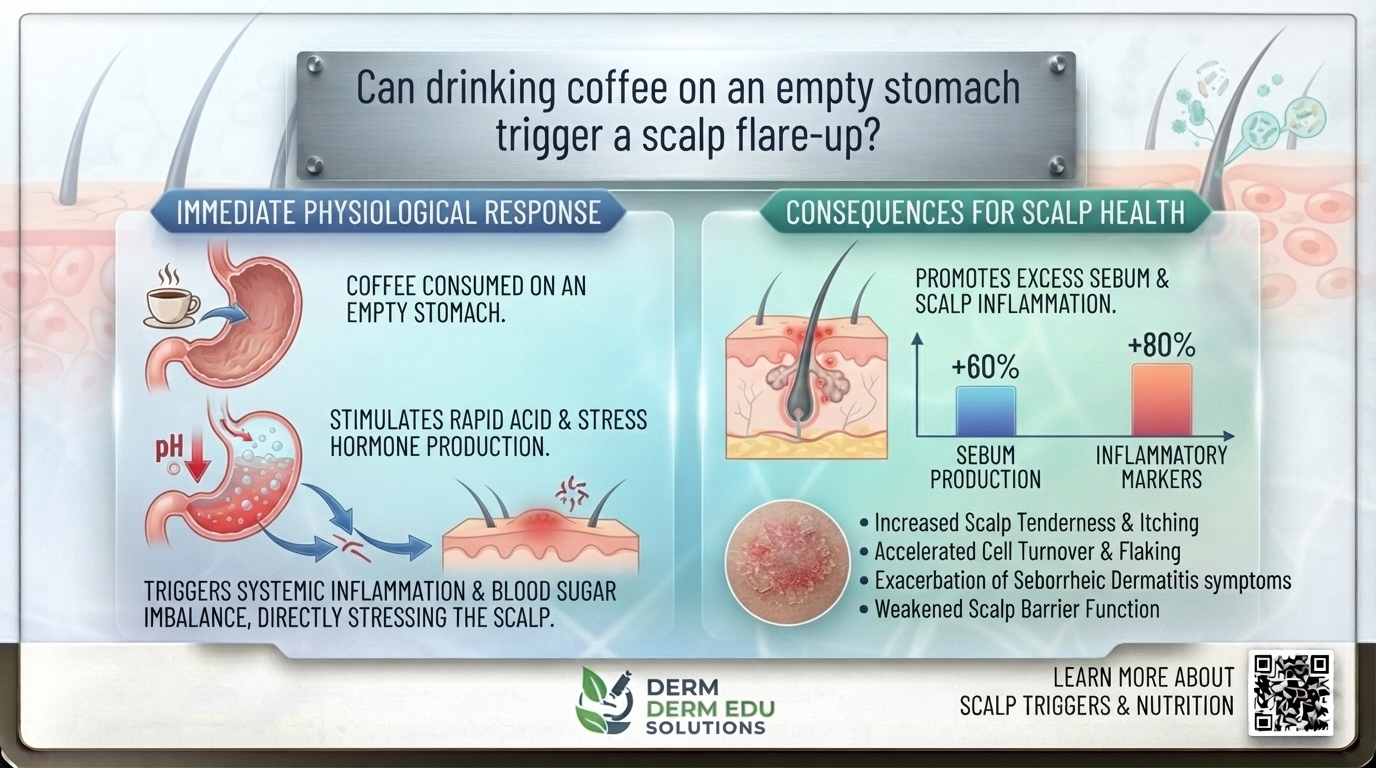
The short answer: Yes, drinking coffee on an empty stomach can directly trigger and worsen scalp flare-ups. While coffee itself is not the underlying disease, drinking caffeine without food induces a rapid physiological cascade: elevated stomach acid, a sharp cortisol (stress hormone) spike, increased gut permeability, and heightened sebaceous (oil) gland production.
This chemical storm fuels inflammation across the body and creates the exact conditions required for dandruff, seborrheic dermatitis, psoriasis, and eczema to flare up on your scalp.
1. The Gut-Skin Axis: The Physiological Chain Reaction
To understand why an empty stomach amplifies coffee’s effect on your skin, you must look at the Gut-Skin-Brain Axis—the biochemical communication network linking your gastrointestinal tract, nervous system, and dermatological tissue.
                      EMPTY STOMACH COFFEE PIPELINE
                                   │
      ┌────────────────────────────┴────────────────────────────┐
      ▼                                                         ▼
[ Gastric Acidity & Gut Lining ]                          [ Adrenal Cortisol Spike ]
• Gastrin release surges without food                     • 30-50% higher cortisol response
• Irritates gut mucosal lining                            • Stimulates adrenal glands directly
• Triggers systemic pro-inflammatory cytokines            • Hyperactivates scalp sebum production
      │                                                         │
      └────────────────────────────┬────────────────────────────┘
                                   │
                                   ▼
                [ Scalp Flare-Up & Inflammation ]
• Redness, itching, burning sensations
• Rapid fungal growth (Malassezia yeast feed on oil)
• Skin cell hyper-proliferation & flaking
1. Gastric Acidity & Intestinal Permeability
Coffee contains chlorogenic acids and caffeine, both of which stimulate the release of gastrin and hydrochloric acid in the stomach.
- With Food: Protein, healthy fats, and complex carbohydrates act as a buffer, absorbing gastric acid and slowing down digestion.
- On an Empty Stomach: Hydrochloric acid washes against an empty stomach lining, irritating the mucosal layer. This localized GI irritation signals your immune system to release pro-inflammatory cytokines (like TNF-alpha and IL-6) into the bloodstream, which travel directly to skin tissue and trigger itching, redness, and scaling on the scalp.
2. The Blunted Cortisol Buffer
When you wake up, your body experiences a natural rise in cortisol called the Cortisol Awakening Response (CAR) to help you feel alert. Drinking caffeine on an empty stomach drastically amplifies this spike—boosting cortisol levels up to 30–50% higher than drinking coffee after breakfast.
- Excess cortisol activates your fight-or-flight response.
- High cortisol prompts your sebaceous glands to overproduce sebum (natural skin oil).
- Excess sebum floods the hair follicles, providing an immediate food supply for scalp microflora.
3. Fungal Microflora Overgrowth (Malassezia)
The human scalp naturally harbors Malassezia yeast. When cortisol-driven sebum surges onto your scalp, Malassezia rapidly digests the fatty acids in the oil, excreting inflammatory oleic acid. If your immune system is already hyper-reactive due to gut irritation, this oleic acid triggers an immediate scalp flare-up: intense itching, burning redness, and heavy flaking.
2. Scalp Conditions Affected by Empty-Stomach Coffee
Understanding which scalp condition you have is essential for adjusting your morning routine.
| Scalp Condition | Primary Cause | How Empty-Stomach Coffee Worsens It | Typical Symptoms |
| Seborrheic Dermatitis | Malassezia yeast + excess oil | Cortisol spikes increase sebum production, feeding the yeast. | Oily yellow flakes, red itchy patches around hairline and nape. |
| Scalp Psoriasis | Autoimmune cell hyper-proliferation | Gut inflammation triggers systemic cytokine surges, accelerating cell buildup. | Thick, silvery-white scales, inflamed raised plaques, bleeding when scratched. |
| Scalp Eczema (Atopic) | Compromised skin moisture barrier | Dehydration from caffeine combined with digestive stress depletes skin barrier lipids. | Dry, cracked, intensely itchy skin, fine white flakes, stinging sensation. |
| Folliculitis | Bacterial/fungal follicle infection | Excess oil clogs hair follicles, trapping bacteria and sweat under the skin. | Red bumps, pimple-like pustules around hair roots, tenderness. |
3. Step-by-Step Morning Protocol for a Flake-Free Scalp
You do not need to give up coffee entirely to heal your scalp. By shifting when and how you consume caffeine, you can enjoy your morning cup without triggering a dermatological flare-up:
1.Drink 16 oz of Room-Temperature Electrolyte Water First:Rehydrates epidermal cells lost to nocturnal respiration.
Before touching coffee, drink 16 ounces of water mixed with a pinch of unrefined sea salt or an electrolyte powder.
- Rehydrates skin tissue after 7–8 hours of sleep.
- Coats the gastric lining and dilutes stomach acid before caffeine arrives.
2.Eat a Protein- and Lipid-Rich Breakfast First:Buffers gastric acidity and prevents cortisol spikes.
Eat a solid breakfast containing at least 15–20 grams of protein and healthy fats before taking your first sip of coffee.
- Ideal Options: Eggs with avocado, Greek yogurt with chia seeds, or a protein smoothie with almond butter.
- Proteins and fats slow gastric emptying, preventing sharp cortisol spikes and protecting the gut lining.
3.Switch to Low-Acid or Cold Brew Coffee:Reduces acid load and prevents gastrointestinal irritation.
If you have a sensitive stomach or active seborrheic dermatitis, choose coffee beans with lower acidity levels.
- Cold brew coffee is naturally up to 60% less acidic than hot-drip coffee.
- Dark roasts (like French or Italian roasts) contain N-methylpyridium, a compound that reduces stomach acid production compared to light roasts.
4.Apply a Soothing Post-Coffee Scalp Treatment:Clears excess oil and prevents yeast colonization.
On days when you feel a mild itch or warmth on your scalp after drinking coffee, counteract the external oil buildup directly.
- Use a lightweight leave-in serum containing niacinamide, tea tree oil, or salicylic acid to regulate sebum and calm inflammation.
4. Product Reviews: Top Scalp & Digestive Solutions
To help you manage both the internal triggers and external symptoms of scalp flare-ups, the team at itemguides.com evaluated four top-tier products:
1. Lucy Jo’s Organic Low Acid Decaf Mellow Belly Blend
- Best For: Coffee lovers prone to acid reflux, stomach sensitivity, and coffee-induced skin flare-ups.
Lucy Jo’s Mellow Belly Blend is specifically roasted to minimize chlorogenic acid concentration while delivering a rich, smooth flavor profile. Processing via organic methods ensures zero chemical residue reaches your digestive tract.
- Key Specifications:
- Acidity Level: Ultra-Low Acid.
- Roast: Dark Roast.
- Processing: Organic Swiss Water Decaf Process.
- Pros: Extremely gentle on empty or sensitive stomachs; eliminates acid-induced gut inflammation; rich taste.
- Cons: Slower brew extraction time due to dark roast density.
2. First Aid Beauty Anti-Dandruff Shampoo (1% Zinc Pyrithione)
- Best For: Soothing red, inflamed scalp skin and controlling yeast overgrowth without harsh sulfates.
Unlike aggressive anti-dandruff shampoos that strip the hair, this formula uses Zinc Pyrithione combined with Calendula and Oatmeal to calm scalp redness and eliminate yeast while preserving the skin barrier.
- Key Specifications:
- Active Ingredient: Zinc Pyrithione 1%.
- Soothing Complex: Colloidal Oatmeal & Calendula.
- Formulation: Sulfate-Free, Fragrance-Free, Safe for Sensitive Skin.
- Pros: Immediately relieves burning and itching; safe for daily use; fragrance-free formula won’t irritate reactive scalps.
- Cons: Requires leaving on the scalp for 2 to 3 full minutes before rinsing for maximum effectiveness.
3. As I Am Dry & Itchy Scalp Care Olive & Tea Tree Oil Treatment
- Best For: Immediate leave-in relief for dry, tight, or inflamed scalps.
This targeted leave-in treatment delivers Zinc Pyrithione, Tea Tree Oil, and Olive Oil directly to irritated patches along the hairline, crown, or nape, suppressing yeast without requiring a full wash.
- Key Specifications:
- Active Ingredients: Zinc Pyrithione, Tea Tree Oil, Oregano Oil.
- Base: Olive Oil & Aloe Vera Leaf Juice.
- Application: No-rinse nozzle tip for direct scalp application.
- Pros: Calms intense itching within minutes; easy nozzle application; non-greasy when used sparingly.
- Cons: Strong tea tree scent that may not appeal to everyone.
4. Seed DS-01 Daily Synbiotic (Probiotic + Prebiotic)
- Best For: Strengthening the gut barrier to stop systemic inflammation at its root source.
Because empty-stomach coffee harms skin health via the gut, repairing your intestinal lining is a long-term cure. Seed’s 2-in-1 capsule technology ensures 100% of live probiotic strains survive stomach acid to reach the lower GI tract.
- Key Specifications:
- Strains: 24 clinically studied probiotic strains targeted for gut barrier integrity & dermatological health.
- Delivery System: ViaCap® 2-in-1 nested capsule (survives stomach acid).
- Pros: Scientifically validated to support skin health via the gut-skin axis; reduces GI sensitivity to acidic foods.
- Cons: Higher monthly subscription cost; requires consistent daily use for 30+ days.
5. Comparison Matrix: Product Evaluation
| Product | Category | Primary Focus | Key Active Ingredient | Best Suited For |
| Lucy Jo’s Mellow Belly | Low-Acid Coffee | Internal Acid Reduction | Organic Low-Acid Dark Roast | Enjoying coffee without GI distress |
| First Aid Beauty Shampoo | Wash-Off Treatment | Yeast Control & Redness Relief | 1% Zinc Pyrithione + Oatmeal | Active scalp dermatitis & red patches |
| As I Am Scalp Treatment | Leave-In Relief | Spot-Treating Itch & Flakes | Tea Tree Oil & Zinc Pyrithione | Immediate itch relief between washes |
| Seed DS-01 Synbiotic | Oral Probiotic | Gut Barrier Restoration | 24-Strain Microbiome Complex | Long-term prevention via Gut-Skin Axis |
6. Regional Lifestyle Factors Across Target Markets
Dermatological reactions to coffee are influenced by environmental conditions in your local city:
San Francisco & Silicon Valley, CA
- High-stress tech environments lead to elevated baseline cortisol levels. When SF residents drink acidic coffee on an empty stomach during early morning remote calls, cortisol surges beyond healthy thresholds. Tip: Pair morning coffee with avocado toast to blunt cortisol spikes.
New York City Metro Area, NY
- Fast-paced morning commutes often mean grabbing an espresso on the go without eating breakfast. Combined with dry indoor winter heating, empty-stomach coffee accelerates skin barrier dehydration across the tri-state area. Tip: Keep a protein bar in your bag to eat alongside morning espresso.
Austin, Dallas & Houston, TX
- Texas heat causes excessive scalp sweating. Drinking caffeinated coffee on an empty stomach triggers dehydration and oil overproduction simultaneously, creating a damp, oily environment where Malassezia thrives. Tip: Switch to cold brew decaf during summer months.
Seattle & Bellevue, WA
- High coffee consumption paired with damp Pacific Northwest weather means Seattle residents are particularly susceptible to fungal scalp conditions. Drinking heavy doses of caffeine without food creates internal inflammation that amplifies humidity-driven yeast growth. Tip: Take a daily probiotic to support gut resilience.
7. Actionable Dietary & Lifestyle Tips
To build resilience against coffee-induced flare-ups, implement these dietary tweaks:
- Add L-Theanine or Collagen to Your Coffee: Stirring 100–200 mg of L-theanine or a scoop of hydrolyzed collagen peptides directly into your coffee slows down caffeine absorption, reduces jitters, and provides amino acids that protect the gut lining.
- Avoid Refined Sugar Syrups: Sweetening your morning coffee with flavored syrups spikes blood sugar and insulin. High insulin increases androgen activity, causing sebaceous glands to pour out even more oil.
- Pace Your Consumption: Avoid chugging a 16 oz cup of coffee in 10 minutes. Pacing your drink over 30 to 45 minutes reduces the acute cortisol spike.
- Maintain a 1:1 Coffee-to-Water Ratio: For every cup of coffee you drink, consume an equal volume of plain water immediately afterward to flush residual acid and prevent dehydration.
8. Frequently Asked Questions (FAQ)
1. Will switching to cold brew coffee stop my scalp from flaking?
Cold brew is significantly less acidic than hot coffee, making it far gentler on your stomach lining. If your scalp flare-ups are triggered by gastric acid irritation, cold brew can help reduce the reaction. However, because cold brew still contains caffeine, it can still trigger a cortisol spike if drunk on an empty stomach.
2. How long after eating breakfast should I wait to drink coffee?
Ideally, wait 15 to 30 minutes after finishing your meal before drinking coffee. This gives your stomach time to establish a digestive buffer of food, proteins, and healthy fats that absorb gastric acid and slow caffeine absorption.
3. Is decaf coffee safer for an empty stomach?
Yes. Decaf coffee triggers significantly smaller cortisol spikes and lowers gastric acid secretion compared to fully caffeinated coffee. Switching to decaf—especially a low-acid or Swiss Water Processed decaf—is one of the fastest ways to test if caffeine is driving your scalp flare-ups.
4. Can espresso trigger a worse scalp flare-up than drip coffee?
Espresso is highly concentrated, delivering a fast burst of caffeine and acid into the stomach. Drinking a double shot of espresso on an empty stomach causes a more rapid cortisol surge than slowly sipping a mug of traditional drip coffee over 40 minutes.
5. Why does my scalp start itching within 30 minutes of drinking coffee?
An immediate itch response after coffee is usually driven by a histamine reaction or rapid nervous system excitation. Caffeine increases systemic blood flow and activates micro-vessels in the skin, while acidic food intake can trigger instant neurogenic itching in a hyper-sensitive gut-skin axis.
6. Does adding oat milk or almond milk to my coffee prevent a flare-up?
Plant milks help neutralize the pH of acidic coffee, making it gentler on the stomach. However, plant milks alone do not contain enough protein or fat to fully buffer the caffeine response. For best results, eat a solid food breakfast alongside your latte.
7. Can coffee-induced scalp flare-ups cause temporary hair loss?
Yes. Inflammatory scalp conditions like seborrheic dermatitis and psoriasis cause localized redness, swelling, and follicle stress. If left unmanaged, the inflammation disrupts the hair growth cycle (telogen effluvium) and causes temporary thinning. Clearing the inflammation restores normal hair growth.
8. Are dark roasts or light roasts better for sensitive skin and scalps?
Dark roasts are better. Light roasts contain higher concentrations of chlorogenic acid and caffeine. Darker roasts produce a compound called N-methylpyridium (NMP) during roasting, which actively blocks stomach cells from producing excess hydrochloric acid.
9. Will taking digestive enzymes before coffee prevent a scalp reaction?
Taking a digestive enzyme or a soothing agent like deglycyrrhizinated licorice (DGL) or aloe vera juice before coffee can help protect the gastric mucosa and improve nutrient breakdown, reducing the risk of gut-driven systemic inflammation.
10. How do I know if my scalp flare-up is caused by coffee versus a hair product?
Perform an elimination test. Keep your hair care products, diet, and washing routine identical for two weeks, but change only your coffee timing—drink it after a protein-rich breakfast instead of on an empty stomach. If your scalp redness, itching, and flaking decrease significantly within 10–14 days, coffee on an empty stomach was a key trigger.
Conclusion
Drinking coffee on an empty stomach sets off an internal chain reaction: gastric acid irritation, cortisol spikes, and excess sebum production that directly fuels scalp inflammation, itching, and flaking.
You do not have to abandon your favorite morning coffee ritual to achieve a clean, healthy scalp. By simply drinking water first, eating a protein-rich breakfast before your first sip, switching to low-acid roasts, and maintaining gut health with daily probiotics, you can enjoy your coffee while keeping your scalp calm, balanced, and flake-free.
For more expert guides on nutrition, skin diagnostics, and targeted personal care reviews, visit itemguides.com!