If you have realized that standard 5% kitchen vinegar isn’t strong enough to wipe out tough, deep-rooted weeds on your driveways or garden boundaries, you have likely upgraded to horticultural vinegar. Clocking in at a powerful 20% to 30% concentration of acetic acid, this industrial-strength compound strips away unwanted plant growth rapidly.
However, moving from standard grocery store vinegar to commercial-grade horticultural solutions changes the chemical rules entirely. As you prepare your garden pump sprayer, you will hit a critical procedural crossroad: Should I dilute horticultural vinegar with water before adding soap?
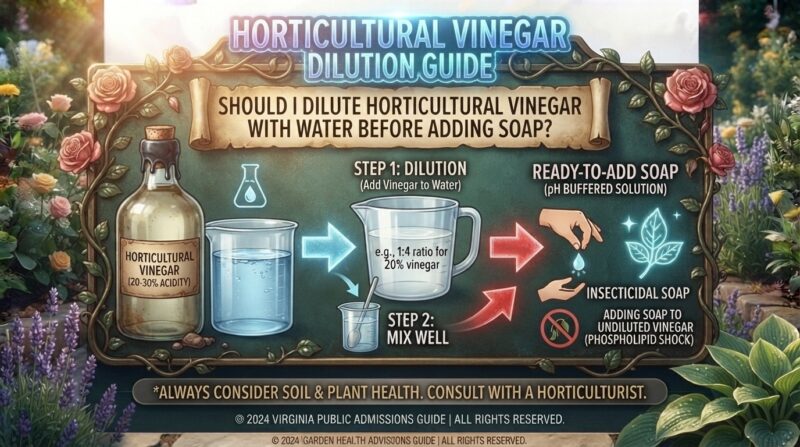
The direct operational answer is no, you should not dilute horticultural vinegar with water if you are trying to kill tough, mature, woody perennial weeds. Leaving the acid at its full 20% to 30% strength ensures maximum desiccation (cellular drying) power.
However, if you are treating young, tender annual seedlings or trying to save money on a large area, you can safely dilute it down to a 10% to 15% concentration.
Regardless of whether you choose to dilute the acid or use it at full strength, the order of operations is crucial: you must mix the water and vinegar thoroughly before adding the liquid dish soap to keep the surfactant from foaming up and clogging your tank.
This comprehensive guide serves as the ultimate mixing and chemistry manual for itemguides.com readers, breaking down precise dilution ratios, exact chemical sequences, and vital personal protection steps.
The Chemical Mechanics: Why Mixing Order Matters
To understand exactly how to handle horticultural vinegar safely and effectively, we need to take a quick look at how the individual ingredients behave inside your spray tank.
1. The Power of Undiluted Acetic Acid
At 20% to 30% concentration, acetic acid ($CH_3COOH$) acts as an aggressive chemical burning agent. The moment it hits a leaf, it instantly ruptures the protective waxy outer cuticle layer.
If you add water to a high-strength acid solution, you reduce its active hydrogen ion concentration. While a diluted 10% mix easily wipes out thin, fragile weeds like chickweed or moss, you need the full, undiluted 20% to 30% strength to penetrate tough, woody invasive plants like field bindweed, mature thistles, or poison ivy.
2. The Golden Rule of Soap Surfactants
Liquid dish soap (like blue Dawn) serves as a surfactant—it reduces the surface tension of the liquid so the acid can coat the leaf smoothly rather than sliding right off.
- The Agitation Issue: If you pour thick dish soap directly into a tank of concentrated acid and then blast it with a heavy stream of water, you will create an uncontrollable mountain of foam. This foam fills the tank prematurely, traps air pockets, and clogs the internal pump tubes. By thoroughly mixing your water and acid first, you can gently fold the soap in at the very end without creating excess bubbles.
The Master Dilution and Application Matrix
To help you choose the right mixing approach for your landscaping projects, refer to this structural formulation guide:
| Target Vegetation Type | Recommended Acetic Acid Strength | Exact Dilution Proportions (Per Gallon) | Surfactant Integration (Dawn Soap) | Expected Results Window |
| Moss, Liverwort, & Tiny Sprouts | 10% Concentration | • 1 Part 20% Vinegar • 1 Part Fresh Water | • 1 Tablespoon per Gallon (Add last) | Complete surface shrivel within 1 to 2 hours. |
| Standard Annual Grasses & Small Weeds | 15% Concentration | • 3 Parts 20% Vinegar • 1 Part Fresh Water | • 1 Tablespoon per Gallon (Add last) | Full leaf browning within 2 to 4 hours. |
| Tough, Woody Perennials & Broadleaf Hubs | 20%–30% (Undiluted) | • Full Strength (Zero Water Added) | • 2 Tablespoons per Gallon (Add last) | Aggressive chemical burn within 60 minutes. |
Step-by-Step Precision Mixing Protocol
Because working with concentrated acids presents genuine chemical hazards, you must execute your mixing process in a controlled, orderly sequence. Follow this playbook to ensure complete safety and peak performance.
1.Equip Heavy-Duty Personal Protective Equipment (PPE):Phase 1: Safety Dress.
Put on heavy chemical-resistant nitrile gloves, long sleeves, closed-toe boots, and completely sealed safety goggles. High-strength 20% to 30% acetic acid causes rapid skin blistering and irreversible eye damage upon direct contact.
2.Blend the Acid and Water Components First:Phase 2: Base Preparation.
If you are diluting the mixture for smaller weeds, pour your measured fresh water into an HDPE plastic tank first, then carefully add the horticultural vinegar. Always add acid to water, never water to acid, to minimize the risk of dangerous splashing.
3.Introduce the Soap Surfactant Slowly at the End:Phase 3: Surfactant Mix.
Measure out your liquid dish soap and pour it gently into the blended liquid. Instead of shaking the container violently (which creates massive foaming), use a long plastic stir stick or gently swirl the tank in a circular motion to dissolve the soap smoothly.
4.Seal, Pressurize, and Execute Target Spraying:Phase 4: Tank Lock.
Thread the pump cap tightly onto the container, prime the plunger system to full working pressure, and adjust the spray wand to a tight, focused stream. Apply the solution directly onto target weeds during a bright morning when temperatures exceed 75°F (24°C).
5 Essential Management Tips for Horticultural Vinegar
- Avoid Metal Tanks and Fittings Completely: Concentrated 20% to 30% acetic acid reacts aggressively with metal. It will quickly corrode steel watering cans, eat through brass spray tips, and destroy aluminum hardware. Only use heavy-duty High-Density Polyethylene (HDPE) plastic sprayers to handle and store these mixtures safely.
- Account for Regional Environmental Guidelines: Environmental rules vary wildly across the country. In ecologically protected areas like the San Francisco Bay Area or Washington State, pouring high-strength acids near public waterways or storm drains is highly restricted. Always keep your applications localized to dry, inland walkways to prevent accidental runoff into local watersheds.
- Never Add Table Salt to High-Strength Acid: While online forums often suggest adding table salt (sodium chloride) to boost weed-killing power, doing so with horticultural vinegar creates a highly toxic brine. This mixture will strip your soil of vital nutrients, kill off beneficial earthworms, and leave behind a sterile, salty zone where no plants can survive for years.
- Always Mix in an Open, Well-Ventilated Space: High-concentration vinegar releases incredibly pungent, volatile acidic fumes. If you crack open a jug inside a tight, enclosed garage or backyard shed, the fumes can instantly sting your eyes and irritate your respiratory tract. Always open and blend your mixtures outdoors in the open air.
- Keep a Box of Baking Soda Nearby: Whenever you work with high-strength industrial acids, keep a box of standard arm & hammer baking soda (sodium bicarbonate) right on your mixing table. If a spill occurs on your workbench or concrete floor, dusting it with baking soda instantly neutralizes the acid, rendering it completely safe to wipe up.
Frequently Asked Questions (FAQ)
1. Can I use industrial horticultural vinegar indoors to clean up moss?
No. Horticultural vinegar should never be used in enclosed indoor environments. The concentrated fumes are highly volatile, presenting an immediate threat to your lungs and eyes, and the acidic mist can tarnish indoor metal appliances. Keep its use strictly outdoors.
2. What happens if I accidentally splash undiluted 30% vinegar onto my skin?
It will cause an immediate, painful chemical burn, turning the skin red and white before blistering. If a splash occurs, immediately place the affected skin under a heavy stream of cool, running tap water for at least 15 minutes, remove any contaminated clothing, and seek medical attention if irritation persists.
3. Will diluting horticultural vinegar with hard well water lower its strength?
Hard water rich in dissolved calcium and magnesium can slightly reduce the immediate impact of the acid, but not enough to ruin its weed-killing ability. If your well water is exceptionally heavy, using distilled water for your dilutions will ensure peak chemical performance.
4. Can I store a pre-diluted vinegar and soap mix inside my sprayer for next month?
You can keep it in a quality plastic sprayer for 2 to 3 days during active projects, but you should never store it there long-term. Over a few weeks, the strong acid will slowly break down the sprayer’s rubber plungers and internal seals, causing the pump to fail.
5. Why does the weed killer mix foam up so badly when I pump the sprayer?
This happens when too much dish soap is added or if the tank was shaken violently. The heavy foam fills the internal pickup tube, causing the wand to spray bursts of thick bubbles instead of a clean, consistent liquid stream.
6. Will horticultural vinegar kill invasive tree stumps permanently?
No. Because vinegar is a contact herbicide, it cannot travel through a tree’s internal vascular network down to the deep root systems. It will scorch the surface sprouts, but it will not kill a mature tree stump permanently.
7. Is it safe to let my pets onto the lawn immediately after spraying?
No. You must keep all dogs, cats, and backyard animals completely out of the treated area until the liquid has evaporated and the plant leaves are bone-dry (typically 2 to 4 hours in direct sun). Wet horticultural vinegar can cause painful chemical burns on animal paw pads.
8. Does rainwater wash away the vinegar mix right after spraying?
Yes. Acetic acid requires a clear window of at least 6 to 8 hours of dry, direct sunlight to effectively dehydrate weed cells. If a sudden rainstorm rolls through shortly after you spray, it will dilute and wash away the acid before it can do its job.
9. Can I use laundry detergent as a replacement surfactant if I run out of Dawn?
Avoid using standard laundry detergents. They often contain complex artificial brighteners, fragrances, and chemical builders that can react unpredictably with highly concentrated acids, sometimes forming thick, gelatinous clumps that clog your sprayer nozzles completely.
10. How do I safely dispose of old, unused horticultural vinegar?
Do not pour bulk amounts down your indoor drains or into outdoor storm systems. The easiest, most environmentally friendly way to dispose of it is to use it up—dilute it down with water and spot-spray unwanted weeds along your concrete driveway seams or gravel parking pads on a hot day.
Conclusion
Upgrading your property maintenance toolkit to include horticultural vinegar is a fantastic way to handle tough weeds naturally, provided you follow proper chemical mixing rules. By keeping your solution undiluted for tough perennial weeds, mixing your water and acid completely before adding any soap surfactants, and always wearing proper personal safety gear, you can keep your property clean while protecting your equipment. Mix your batches with precision, always put safety first, and enjoy a beautiful, well-maintained landscape across every season.