When a toothache strikes late at night or over the weekend, reaching for home remedies like warm salt water, clove oil, or over-the-counter pain relievers is natural. They provide fast, accessible relief when a dental clinic isn’t immediately open.
However, home remedies do not cure dental disease; they only mask symptoms. Knowing the safe window for managing dental pain at home—and recognizing when waiting becomes dangerous—is critical to preventing minor issues from turning into costly emergency procedures or systemic health risks.
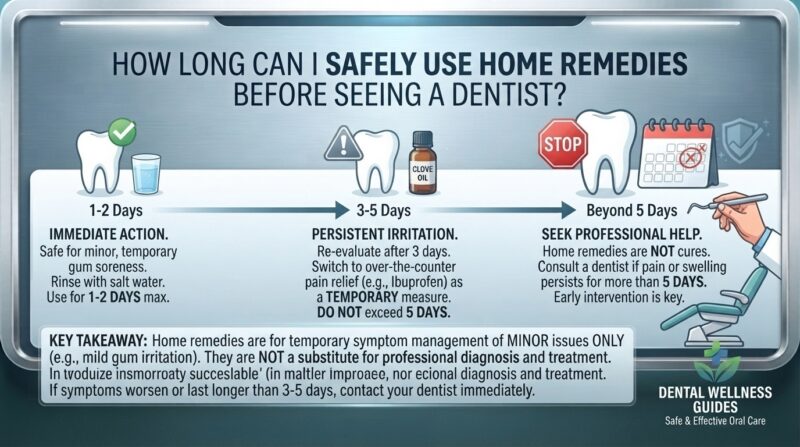
As a general clinical benchmark, you can safely rely on home remedies for 24 to 48 hours (1 to 2 days max) for mild, un-complicated dental discomfort.
If your symptoms last longer than 48 hours, worsen, or return after temporary relief, you must schedule an appointment with a licensed dentist.
Why 48 Hours Is the Hard Limit
Dental issues differ fundamentally from common colds or minor muscle sprains. Enamel cannot regenerate, decay does not heal on its own, and bacterial infections inside the tooth pulp or jawbone will spread until physically removed or treated by a professional.
- Bacteria multiply rapidly: A minor cavity reaching the inner pulp layer can progress to an infection (abscess) within days.
- Pain signals structural damage: When a home remedy dulls your pain, the underlying nerve breakdown or bacterial decay continues unabated.
- Delayed care increases treatment complexity: Catching a problem on Day 2 might mean a simple filling. Waiting until Day 7 could mean a root canal, dental crown, or full extraction.
Immediate “Red Flags”: When to Skip Home Remedies Entirely
In certain scenarios, the 48-hour rule does not apply. You should skip home remedies and seek emergency dental or medical care immediately if you experience any of the following critical symptoms:
1. Facial, Jaw, or Neck Swelling
Visible swelling in your cheek, jawline, or under your chin indicates an active, expanding bacterial infection (such as a dental abscess). If left untreated, facial swelling can compress airways or spread to deep neck spaces (Ludwig’s Angina).
2. High Fever or Chills
A fever accompanied by tooth pain means the infection is no longer localized in your tooth; your immune system is battling a systemic infection.
3. Difficulty Swallowing or Breathing
If swelling extends toward your throat, making it hard to swallow food, saliva, or breathe comfortably, go to an Emergency Room (ER) or Urgent Care immediately.
4. Foul-Tasting Pus or Sudden Drainage
A sudden burst of foul-tasting fluid in your mouth often means a dental abscess has ruptured. While this temporarily relieves pressure and pain, the underlying infection remains active and dangerous.
5. Traumatic Damage or Loose Permanent Tooth
If a tooth is cracked, knocked out (avulsed), or visibly loose due to trauma, the first 60 minutes are critical for saving the tooth.
Emergency Note: If you experience facial swelling combined with high fever, difficulty breathing, or altered mental state, seek emergency medical care (ER) right away.
Breakdown by Symptom: Home Remedy Timelines & Limits
To help you evaluate your situation, here is a quick-reference breakdown of common dental symptoms, safe home management windows, and when professional intervention becomes necessary:
| Dental Symptom | Common Cause | Safe Home Remedy Window | When to See a Dentist |
| Mild Sensitivity (Hot/Cold) | Enamel wear, minor decay, exposed root | up to 7 days (using desensitizing toothpaste) | If sensitivity persists beyond 1 week or turns into lingering, sharp pain. |
| Dull, Intermittent Toothache | Small cavity, food impaction, minor gum irritation | 24 to 48 hours | If pain lasts past 2 days, worsens when biting, or keeps you awake. |
| Severe, Throbbing Pain | Pulpal nerve inflammation, deep decay, crack | 0 to 24 hours | Call for a same-day or next-day emergency appointment immediately. |
| Bleeding Gums During Brushing | Gingivitis, early periodontal disease | 7 to 14 days (with improved flossing/brushing) | If bleeding continues past 2 weeks despite consistent hygiene. |
| Swollen Gums in One Spot | Food impaction, localized abscess, pericoronitis | 24 hours | If swelling remains after gentle flossing and warm saltwater rinses. |
| Chipped or Cracked Tooth | Trauma, biting hard objects | 24 to 48 hours (if painless) | Schedule within 24–48 hours to prevent bacteria from invading inner layers. |
Safe Home Remedies vs. Dangerous Myths
When managing temporary discomfort, choosing the right method is essential. Some popular “internet hacks” do significantly more harm than good.
Safe Short-Term Home Remedies
- Warm Saltwater Rinse (1/2 tsp salt in 8 oz warm water)
- How it helps: Acts as a natural disinfectant, reduces inflammation, and draws out fluid from swollen tissue.
- Safe duration: 3–4 times daily for up to 48 hours.
- Over-the-Counter (OTC) Pain Relief
- How it helps: Non-steroidal anti-inflammatory drugs (NSAIDs) like Ibuprofen reduce swelling and pain. Combining Ibuprofen with Acetaminophen (Tylenol) offers strong dual-action relief under medical guidance.
- Safe duration: Follow package dosage instructions for up to 48 hours.
- Cold Compress
- How it helps: Applying an ice pack wrapped in a towel to the outside of your cheek for 15 minutes on / 15 minutes off constricts blood vessels and numbs pain.
- Safe duration: As needed for the first 24–48 hours.
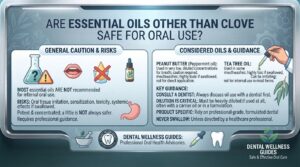
- Clove Oil (Eugenol)
- How it helps: Eugenol is a natural anesthetic and antibacterial compound long used in dentistry.
- Safe usage: Dilute 1–2 drops of clove oil with a carrier oil (like olive oil) on a cotton swab and dab gently on the affected tooth only.
Dangerous Remedies to Avoid
- ❌ Placing Aspirin Directly on Gums: Placing an aspirin tablet against your tooth or gum tissue causes severe chemical burns (aspirin burn) without relieving inner tooth pain. Always swallow pain medication with water.
- ❌ Applying Crushed Garlic or Alcohol Directly: Raw garlic contains concentrated allicin, which can chemically burn delicate oral mucosa. Swishing high-proof alcohol dehydrates tissue and irritates exposed nerves.
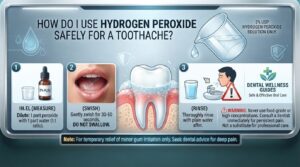
- ❌ Swallowing Hydrogen Peroxide: While a 1.5% to 3% hydrogen peroxide wash diluted 50/50 with water can be a temporary oral rinse, never swallow it, and do not use it for more than 2 days as it disrupts healthy oral microbiome balance.
- ❌ Using Sharp Tools to Pick at Teeth: Never use needles, pins, or non-dental tools to dislodge trapped food or puncture gum blisters.
Navigating Emergency Dental Care Across Key US Regions
Finding fast, reliable dental care when home remedies reach their limit depends on where you live. If you reside in major metropolitan areas across Texas, California, New York, or Washington, specialized resources are available to help you access care quickly:
🏙️ Texas (Houston, Dallas-Fort Worth, Austin, San Antonio)
- 24/7 Dental Urgent Care: Major metro centers in Texas host dedicated 24-hour emergency dental clinics that take walk-ins for severe toothaches and facial swelling.
- Low-Cost Clinics: Community Health Centers (FQHCs) across Texas offer sliding-fee scale dental emergency visits for uninsured patients.
🌉 California & San Francisco Bay Area
- San Francisco & Bay Area Options: San Francisco offers top-tier emergency dental facilities, including specialized emergency clinics at the University of the Pacific (UOP) Arthur A. Dugoni School of Dentistry and UCLA/UCSF Dental Clinics, providing expert urgent care at lower costs.
- Tele-Dentistry Services: California widely supports state-regulated teledentistry, allowing you to get a virtual consultation within hours to secure prescription antibiotics or pain management prior to your in-person visit.
🗽 New York (NYC Metro & Upstate)
- Hospital Dental ERs: In New York City and surrounding boroughs, major hospital networks (e.g., Mount Sinai, NYC Health + Hospitals) operate 24/7 dental emergency departments equipped to handle severe facial trauma and spreading infections.
- Next-Day Scheduling: Utilizing localized online scheduling platforms makes finding same-day open slots across Manhattan, Brooklyn, and Queens straightforward.
🌲 Washington State (Seattle, Tacoma, Spokane)
- Emergency Access: The Seattle-Tacoma area features walk-in emergency dental networks as well as community health networks like Neighborcare Health and Sea Mar, which reserve daily walk-in slots for acute dental emergencies.
- State Health Plans: Washington Apple Health (Medicaid) covers emergency dental services for eligible adults, including extractions and infection control.
Practical Checklist: What to Do While Waiting for Your Dental Appointment
If you have called your dentist and secured an appointment for tomorrow or the next day, follow these practical steps to stay comfortable and safe:
- Sleep Elevated: Prop your head up with two or three pillows at night. Lying flat increases blood pressure in your head, intensifying throbbing tooth pain.
- Stick to Soft, Soft Foods: Eat lukewarm, soft foods (applesauce, yogurt, scrambled eggs, mashed potatoes). Avoid hot, freezing cold, sugary, acidic, or crunchy foods.
- Avoid Chewing on the Affected Side: Prevent further stress or structural fractures on compromised teeth.
- Floss Gently: Carefully floss around the aching tooth to ensure trapped food debris isn’t driving localized gum pressure.
- Keep a Symptom Log: Note down when the pain started, what triggers it (cold water, biting down), and which pain relievers helped. This information helps your dentist diagnose the issue faster.
10 Frequently Asked Questions (FAQs)
1. Can a tooth infection go away on its own without seeing a dentist?
No. A dental infection inside the tooth pulp or surrounding bone will not heal on its own. While symptoms may temporarily disappear if the nerve inside the tooth dies, the bacteria remain and will continue to destroy bone and spread into surrounding tissues.
2. Is clove oil safe to use for a toothache?
Yes, clove oil is safe for short-term topical relief (1–2 days) when used correctly. Always dilute a drop of pure clove oil with a carrier oil (like olive oil) and apply it sparingly to the tooth with a cotton swab. Avoid getting it on your tongue or gums, as concentrated oil can cause tissue irritation.
3. What is the best over-the-counter painkiller combination for severe dental pain?
Under the guidance of a doctor or dentist, combining Ibuprofen (Advil/Motrin) and Acetaminophen (Tylenol) often provides superior pain relief compared to taking either alone. Because they work via different pathways in the body, taking them together (e.g., 400mg Ibuprofen with 500mg Acetaminophen) targets both inflammation and pain signals.
4. What should I do if my toothache stops hurting suddenly?
If a severe toothache suddenly stops hurting without treatment, it usually means the nerve inside the tooth root has died. This is not a sign of recovery. The underlying bacterial infection is still active and can now spread into the surrounding jawbone without triggering initial nerve pain. You still need to see a dentist promptly.
5. Can I go to Urgent Care or the ER for a toothache?
You can go to Urgent Care or an Emergency Room if you have severe swelling, high fever, or trouble swallowing/breathing. However, medical ERs generally cannot perform dental repairs, fillings, or root canals; they will typically administer temporary antibiotics or pain relievers and instruct you to see a dentist.
6. Why does my tooth pain get worse at night?
Tooth pain worsens at night primarily due to blood pressure changes. When you lie down flat, blood surges to your head, increasing pressure inside the inflamed tooth pulp. Additionally, nighttime lacks daily distractions, making you more conscious of pain signals.
7. How long can I take Ibuprofen safely for a toothache?
You should not rely on over-the-counter Ibuprofen for dental pain for more than 2 to 3 days without consulting a health professional. Prolonged high doses of NSAIDs can irritate your stomach lining, elevate blood pressure, and strain your kidneys.
8. Will warm saltwater rinses cure a gum abscess?
No. Warm saltwater rinses help reduce surface swelling, clean the oral cavity, and draw out excess fluid, but they cannot eliminate the root bacterial source inside the gum pocket or tooth root. Professional drainage and treatment (like scaling, root planing, or root canal therapy) are necessary.
9. Can I use salt water or home remedies after a tooth extraction?
After an extraction, gentle warm saltwater rinses are recommended only after 24 hours have passed. Rinsing or spitting forcefully during the first 24 hours can dislodge the blood clot, leading to a painful condition known as dry socket. Always follow your oral surgeon’s specific post-op instructions.
10. How can I manage dental pain if I don’t have dental insurance?
If cost is a concern, look for Federally Qualified Health Centers (FQHCs), community health clinics, or dental school clinics (such as those in major university health systems across CA, TX, NY, and WA). These facilities offer quality care provided by supervised students or licensed clinicians on a sliding-fee scale based on income.
Conclusion: Protect Your Smile with Timely Care
Home remedies are invaluable tools for making dental pain manageable while you arrange professional care. Rinsing with warm salt water, applying cold compresses, and using OTC pain relief can safely get you through the night or weekend.
However, remember the golden rule: Home remedies are a temporary bridge, not a final cure.
Keeping your self-treatment window strictly under 24 to 48 hours—and reaching out to a dentist immediately if you spot red flag symptoms like facial swelling or fever—ensures that a simple dental issue remains quick, simple, and affordable to treat.