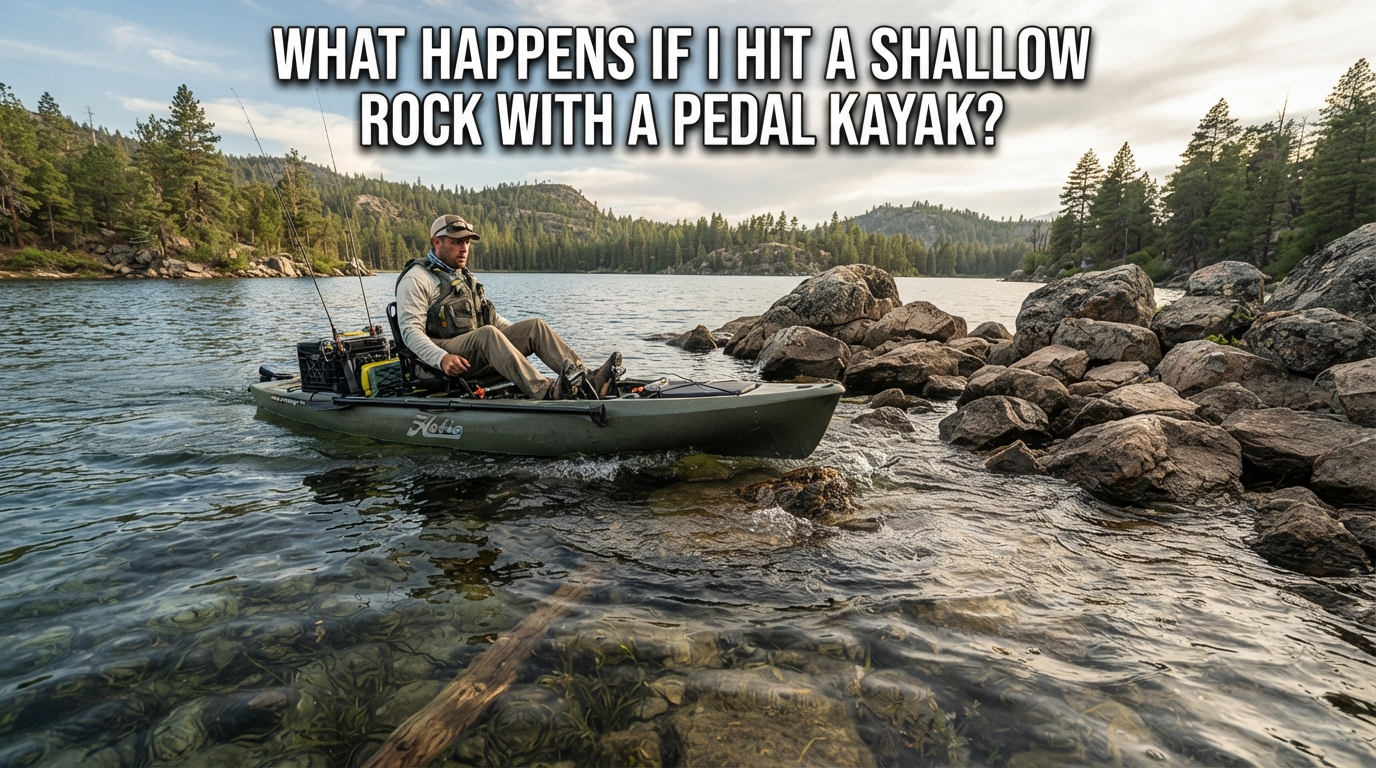
What happens if I hit a shallow rock with a pedal kayak? The distinct crunch of fiberglass or rotomolded plastic scraping against a submerged boulder is a sound that strikes fear into the heart of any kayak angler. When you are moving at a brisk clip powered by the efficiency of your leg muscles, hitting an underwater obstruction feels jarring. For anglers navigating the boulder-strewn rivers of Washington, the rocky bass lakes of New York, the winding shallows of Texas, or the kelp-and-rock-strewn coastlines of California and San Francisco, the risk of striking bottom is an everyday reality.
Understanding what happens during a strike, how different pedal-drive systems react, and how to prevent costly structural damage is essential knowledge before you ever push off the shoreline.
Anatomy of a Strike: How Pedal Systems React to Bottom Impacts
When a traditional paddle kayak hits a rock, the hull absorbs the impact, sliding across the obstacle with minor cosmetic scratches. However, pedal-drive kayaks feature intricate mechanical lower units—either rotating propellers or underwater fins—extending several inches beneath the hull. How your kayak handles a collision depends entirely on its drive architecture.
+------------------------+----------------------------------+----------------------------------+
| Impact Metric          | Propeller-Drive Systems          | Fin-Drive (Flapping) Systems     |
+------------------------+----------------------------------+----------------------------------+
| Primary Reaction       | Sudden stop / Shear pin break    | Automatic kick-up/fold flat      |
| Driver Vulnerability   | High if drive is locked down     | Low due to pivoting mechanism    |
| Recovery Time          | Seconds to lift/clear/replace pin| Immediate (resumes pedaling)     |
| Damage Risk            | Bent props or cracked housings   | Minimal (fins flex past rock)    |
+------------------------+----------------------------------+----------------------------------+
1. Fin-Drive Systems (e.g., Hobie MirageDrive with Kick-Up Fins)
Modern fin-drive systems are engineered with impact mitigation built directly into their geometry. When a fin strikes a rock, a hidden spring-loaded or pivoting hinge system allows the fin to automatically fold or “kick up” flat against the bottom of the hull.
- The Result: The momentum of the kayak pushes the fin out of harm’s way, absorbing the shock without transferring catastrophic force to the internal drive gears. Once you clear the shallow obstruction and resume pedaling forward, the fins automatically snap back into their vertical working position.
2. Propeller-Drive Systems (e.g., Old Town PDL, Native Propel)
Propellers do not fold out of the way; they project a rigid aluminum or high-impact plastic blade downward on a fixed vertical shaft. When a propeller drive hits a rock squarely at speed, something has to give.
- The Result: Depending on the design, you will either experience an abrupt, jarring stop that throws you forward against your seat, or a safety shear pin will snap cleanly to protect the internal gear train from stripping. Many modern prop drives feature quick-release latches that allow the entire lower unit to flip up instantly into a shallow-water docking position when you anticipate shallow water.
Detailed Product Reviews: Impact Resilience and Durability
Evaluating how different kayaks withstand the physical abuse of shallow water hazards helps you choose a rig that matches your local waters.
1. Hobie Mirage Pro Angler 14 (with Kick-Up Fin Technology)
- Drive Type: MirageDrive 180 or 360 with Kick-Up Fins
- Hull Material: Rotomolded Polyethylene
- Best For: Rocky coastal environments, oyster beds, and shallow bays
Product Review: The Hobie Pro Angler series sets the benchmark for shallow-water impact safety thanks to its patented Kick-Up Fin technology. When navigating the treacherous rock gardens and kelp fields around San Francisco and the rugged California coast, hitting submerged obstructions is inevitable. On the Pro Angler, the fins instantly yield to pressure, folding horizontally against the hull. This design prevents bent masts, sheared cables, and panicked underwater rescues. While the hull itself is heavy and durable, the true hero is the drive’s ability to self-preserve during high-speed accidental groundings.
2. Old Town Sportsman 106 PDL
- Drive Type: PDL Propeller Drive with Quick-Flip Mount
- Hull Material: Single-layer Polyethylene
- Best For: Rocky lakes, rivers, and timber-filled reservoirs
Product Review: Old Town designed the 106 PDL to handle the rough-and-tumble environment of inland freshwater fishing. If you approach shallow water, a simple pull of the latch flips the propeller entirely out of the water and onto the deck. If you strike a hidden rock unexpectedly, the robust polyethylene hull absorbs the blow, while the internal gear housing is protected by heavy-duty mounting locks. Although a direct hard-prop strike can occasionally require replacing a sacrificial shear pin, the overall mechanical assembly is heavily armored and built to absorb abuse.
3. Native Watercraft Slayer Propel Max 12.5
- Drive Type: Propel Pedal System with Spring-Loaded Lower Unit
- Hull Material: Advanced Tunnel-Hull Polyethylene
- Best For: Versatile freshwater and brackish environments
Product Review: The Native Watercraft Slayer Propel features a proprietary weedless prop and an intuitive forward-to-reverse gear system. Native addresses shallow water impacts by incorporating robust construction tolerances and an easily removable drive pod. If you ground out, the high-density polyethylene hull slides smoothly over gravel and smooth stone. However, because it relies on a rigid prop, operators must remain vigilant in skinny water, utilizing polarized sunglasses to spot shallow hazards before the propeller makes contact.
4. Bonafide P127
- Drive Type: Propeller Drive System
- Hull Material: Catamaran-Style High-Impact Polyethylene
- Best For: Ultimate primary stability and shallow marsh navigation
Product Review: The Bonafide P127 utilizes a unique catamaran hull shape that provides incredible stability while allowing the vessel to track smoothly across varied water columns. The drive integration is clean and user-friendly. When striking shallow bottoms, the heavy-duty plastic construction resists gouging, though the fixed propeller remains vulnerable if driven at full speed into rocky shoals. The spacious deck and rock-solid standing platform make it a favorite for anglers working the shallow grass flats of Texas.
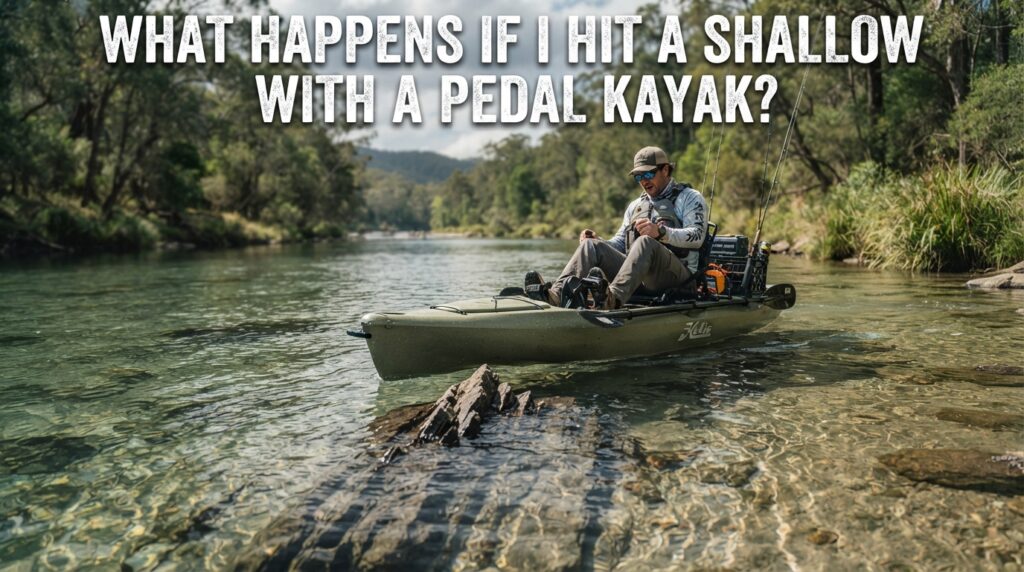
Regional Vulnerability: Navigating Rocks Across the United States
Every region presents unique underwater topography that dictates how you should approach shallow water navigation.
+--------------------+--------------------------------+---------------------------------+
| Region             | Primary Shallow Hazard         | Best Drive Strategy             |
+--------------------+--------------------------------+---------------------------------+
| Texas              | Oyster beds, limestone ledges  | Propeller with instant lift-out |
| New York           | Glacial boulders, shale banks  | Kick-up fins or shear-pin spares|
| California         | Granitic boulders, heavy kelp  | Kick-up fin-drive systems       |
| Washington         | River gravel bars, submerged logs| Shallow-draft hull configurations|
| San Francisco      | Riprap jetties, hidden reefs   | Heavy-duty impact-resistant gear|
+--------------------+--------------------------------+---------------------------------+
- Texas: Coastal bays and estuaries are rife with razor-sharp oyster reefs and hidden limestone ledges. Striking an oyster bed with a rigid prop can chew up plastic blades, making a quick-flip propeller mount or a shallow draft layout vital.
- New York: Upstate glacial lakes and rivers feature smooth-worn boulders and shale shelves. While the polyethylene hulls easily slide over smooth stone, unexpected impacts can jolt the angler and stress drive mounts.
- California & San Francisco: Coastal environments expose kayaks to rough wave action near granite boulder fields and rocky jetties. Fin drives with kick-up capabilities reign supreme here, as they automatically deflect off rocks without stranding the angler.
- Washington: Fast-moving rivers and alpine lakes are filled with river gravel bars and sunken timber drift logs. Maintaining situational awareness and keeping your drive in the raised position while drifting shallow riffles prevents costly repairs.
Step-by-Step Recovery: What to Do Immediately After Hitting a Rock
When you strike a submerged hazard, panicking will only make matters worse. Follow this systematic recovery protocol:
- Assess Your Momentum and Balance: A sudden stop can pitch you forward. Stabilize your footing or grab your gunwales to prevent a spill into the water.
- Check the Drive Integration: Inspect whether the pedal drive has popped out of its locking latches or if the emergency shear mechanism has activated.
- Lift and Inspect: Pull the drive partially or fully out of the water. Check the propeller blades for cracks, deep gouges, or missing chunks, or inspect the fin blades and cables for fraying.
- Inspect the Hull Scupper Well: Look down into the pedal well inside the kayak hull. Check for any signs of water seepage, cracked plastic seams, or structural deformation around the mounting brackets.
- Test Operation in Deep Water: Before resuming aggressive fishing, drop the drive back into a clear, deep section of water and test both forward and reverse pedaling to ensure the gears spin smoothly without binding.
Essential Safety and Maintenance Tips for Rock-Prone Waters
- Always Carry Spare Parts: If you run a propeller drive, keep a ziplock bag containing extra shear pins, cotter pins, and a basic multi-tool inside your dry hatch. Snapping a pin on a remote river is easily fixed if you are prepared.
- Wear Polarized Sunglasses: Polarized lenses cut through surface glare, allowing you to spot subsurface rocks, shallow sandbars, and dark weed beds well before your kayak makes contact.
- Master the Shallow-Water Stance: Learn to recognize water color shifts. Lighter turquoise or brown patches usually indicate shallow shoals or rock shelves. Flip your drive up before you reach these zones.
- Wash and Inspect Regularly: After fishing rocky rivers or coastal oyster beds, thoroughly inspect your hull’s keel line. Deep gouges can be melted back into place with a plastic welding iron or heat gun.
- Install Keel Guards: Applying heavy-duty adhesive keel protectors to the stern and bow wear points of your kayak safeguards the plastic hull against abrasive rock scraping during beach launches and landings.
10 Comprehensive FAQs
1. What happens if I hit a shallow rock with a pedal kayak?
Depending on your drive type, you will either experience an automatic folding of the fins (on fin-drives), a sudden jolt and possible broken shear pin (on propeller-drives), or a scraping glide across the hull if you are traveling slowly.
2. Will hitting a rock crack my kayak hull?
Modern high-quality fishing kayaks are made from durable rotomolded or thermoformed polyethylene designed to absorb heavy impacts. While cosmetic scratching is common, cracking the hull requires a severe high-speed impact against sharp jagged rocks.
3. Do propeller drives break easily when hitting bottom?
They can be vulnerable if struck at full pedaling speed. Most manufacturers utilize sacrificial shear pins designed to snap under extreme stress, protecting the expensive internal gears from total destruction.
4. What is a kick-up fin system?
A kick-up fin system features spring-loaded or pivoting underwater fins that automatically fold flat against the bottom of the kayak hull when they encounter an obstacle like a rock or log, preventing mechanical damage.
5. Can I fix a gouged polyethylene kayak hull?
Yes. Polyethylene can be repaired easily using a plastic welding kit, a heat gun, or a specialized repair polymer to melt and smooth out deep scratches on the hull’s keel.
6. How do I know if my shear pin is broken?
If you pedal forward and notice the pedals spin freely with zero resistance and the kayak refuses to move forward, your propeller shaft’s shear pin has likely snapped and needs to be replaced.
7. Is it safe to fish shallow rocky rivers with a pedal kayak?
Yes, provided you stay alert, wear polarized glasses, and keep your drive mechanism in the raised or shallow-water position when crossing turbulent or extremely rocky riffles.
8. How much does a replacement pedal drive cost?
Replacement pedal-drive units vary widely by brand and complexity, generally ranging from $400 for basic replacement assemblies to over $1,200 for advanced 360-degree motorized or vector-control units.
9. Can I pedal backward if I hit something?
Backpedaling is only effective on propeller-driven kayaks. Fin-drive kayaks require a shift lever or vector adjustment to reverse direction, though backing up will not clear a rock strike if the drive is already jammed against it.
10. How can I protect my kayak bottom from rock damage?
Applying stick-on vinyl or abrasive-resistant keel guards to the high-wear contact points on the bottom bow and stern provides an extra layer of defense against abrasive rocks and concrete ramps.
Conclusion
Striking a shallow rock while piloting a pedal-drive kayak is an inevitable rite of passage for modern anglers. Whether your watercraft relies on self-preserving kick-up fins or robust propeller assemblies equipped with shear protection, understanding how your equipment responds to underwater hazards ensures you can handle incidents calmly. By practicing proactive navigation, wearing polarized optics, and keeping essential spare parts onboard, you can confidently explore the rocky coastlines, winding rivers, and boulder-strewn lakes of Texas, New York, California, Washington, and San Francisco without fear of disabling your vessel.