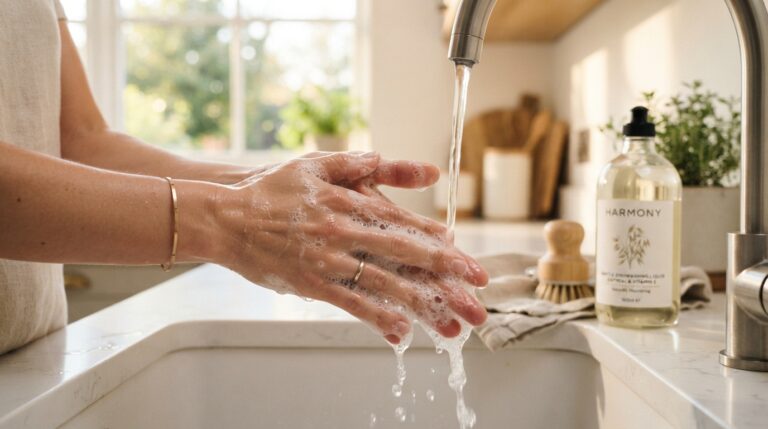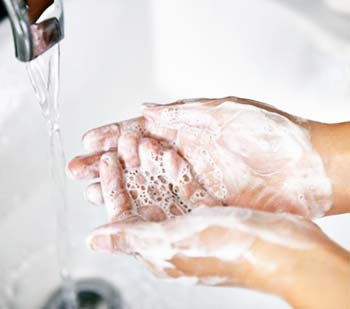
Why we need to wash your hands before cooking? You have to wash your hand all-time, specially before eating, after using toilet, after counting money, etc. Virus and bacteria can spread via hands. So, we should wash hands with soap or hand sanitizer. We have to rub hands together for 15-20 seconds. How do you wash your hands?
The Invisible Threat: The Surface Microbiology of Your Skin
Human skin is an incredibly complex environment. At any given moment, your hands carry two distinct types of bacterial populations:
- Resident Microflora: These are beneficial or neutral microorganisms that live deep within the layers of your skin (stratum corneum). They are natural, stable, and highly resistant to being washed away.
- Transient Microflora: These are the dangerous organisms you pick up throughout the day by touching doorknobs, smartphones, subways, and steering wheels. This category includes aggressive pathogens like Escherichia coli (E. coli), Salmonella, Staphylococcus aureus, and norovirus.
                    [THE TRANSIENT PATHOGEN CONVEYOR]

   Daily Touchpoints                        The Cooking Surface
   [Cell Phone]  ───┐                            ┌─── [Raw Salad Greens]
   [Doorknobs]   ───┼──► [UNWASHED HANDS] ───────┼──► [Cooked Chicken]
   [Faucets]     ───┘                            └─── [Serving Plates]
                                                           │
                                                           ▼
                                                Foodborne Colonization
Unlike resident bacteria, transient pathogens sit loosely on the surface of your skin. This makes them highly dangerous because they transfer effortlessly to whatever food you touch next—but it also means they are incredibly easy to destroy with proper hand washing.
The Risk of Cross-Contamination in the Kitchen
The primary danger of cooking with unwashed hands is cross-contamination—the accidental transfer of harmful bacteria or viruses from one surface to another.
Many people assume that because their hands “look clean,” they are safe. However, bacteria are microscopic; millions of them can sit comfortably on a single fingernail. When you handle raw ingredients with unwashed hands, two distinct dangerous scenarios can occur:
1. Inward Contamination (Outside World to Food)
You walk into the kitchen after commuting or using your phone. Your hands carry transient pathogens. You immediately begin tearing lettuce for a fresh salad. Because the lettuce is eaten raw, those transferred bacteria go straight into your digestive system without being killed by heat.
2. Outward Multiplication (Hand to Ready-to-Eat Food)
You touch a high-risk ingredient like raw chicken, which naturally carries Salmonella or Campylobacter. If you do not thoroughly wash your hands before grabbing the salt shaker, the knife handle, or a plate of freshly cooked food, you spread those active bacteria across your entire kitchen environment.
The Biological Defense Strategy: How Soap Works
Water alone is completely ineffective at cleaning your hands before cooking. To understand why, we have to look at the chemistry of oil and water.
Your skin naturally produces an oily film called sebum, which traps transient bacteria on your hands. Because water cannot mix with oil, rinsing your hands under a running faucet leaves that oily, bacteria-packed layer completely untouched.
                    [THE SOAP MOLECULE MATRIX]

          [ Pathogen / Oil Drop ] ◄── Hydrophobic Tail (Attaches to Grease)
                     │
                     ▼
          [  Hydrophilic Head   ] ◄── Attaches to Water Molecules
                     │
                     ▼
          Result: Encapsulated Micelle Flushed Down the Drain
Soap molecules possess a unique split personality. One end of the molecule is hydrophobic (it hates water but loves fat and grease), while the other end is hydrophilic (it loves water).
When you scrub your hands with soap, the fat-loving tails bind tightly to the oils and bacterial cell walls on your skin. As you rinse, the water-loving heads lock onto the running water, pulling the soap, oils, and shattered bacterial cells completely off your skin and down the drain.
Washing materials –
- Liquid hand wash – 100% working
- Hand soap – 100% working
- Hand sanitizer – 98% working
- Spray for hand sanitize – 95% working
- Alcohol – 98% working
- Body soap
- Washing soap
- Dish washing soap
These materials provide protection for your hands against various viruses and bacteria. It is recommended to wash your hands 7 to 10 times a day. Even when using the best toilet paper, handwashing is still necessary.
Read more articles –
Best polygel nail kit
Best shampoo for dry scalp
Tall toilets reviews
Best moisturizing hand soap for sensitive skin
Best shampoo and conditioner for curly hair and fuzzy hair
How do you wash your hands?
- Wet your hands and apply sufficient liquid soap or soap bar
- Rub your hands together
- Interlink you fingers and wash carefully
- Then cup your fingers to wash
- Rub the back of hands
- Rub palms with fingers
- Clean both of thumbs
The 5-Step Decontamination Sequence
To completely break down the oily barrier on your skin and lift away transient pathogens, you must follow a disciplined, structured washing process. A quick five-second rinse will not cut it.
1.Wet and Temperature Regulation:Phase 1.
Turn on clean, running water. The water temperature should be comfortably warm (around 100°F or 38°C) to help soften the natural oils on your skin, making it easier for the soap to create a rich lather.
2.Apply Soap and Initiate Lather:Phase 2.
Apply a generous amount of liquid or bar soap. Rub your palms together vigorously to distribute the soap across every single surface of your hands.
3.Friction Friction Friction:Phase 3 (Minimum 20 Seconds).
Scrub thoroughly for at least 20 seconds. Pay special attention to the backs of your hands, between your fingers, and underneath your fingernails—the areas where pathogens love to hide.
4.The Complete Flush:Phase 4.
Hold your hands downward under the running water. Let the water flow from your wrists down to your fingertips, completely flushing away the encapsulated dirt, oils, and dead microbes.
5.Evaporative Drying:Phase 5.
Dry your hands completely using a clean, single-use paper towel or a clean cloth towel. Damp hands transfer bacteria 1,000 times more easily than dry hands, so skipping this step ruins your hard work.
Critical Interventions: When to Rewash During Meal Prep
Hand washing is not a one-time event at the start of a recipe. To maintain a truly safe kitchen environment, you must actively rewash your hands every time you switch tasks:
| Action Trigger | Underlying Biological Threat | Required Remediation |
| Handling Raw Meats / Seafood | Salmonella, E. coli, Campylobacter. | Immediate 20-second scrub before touching any utensils, spice jars, or vegetable cutting boards. |
| Touching Your Face, Hair, or Phone | Staphylococcus aureus (naturally carried in the nose and on human skin). | Rewash immediately. Cell phones are notorious microbial hotspots that can instantly re-contaminate clean hands. |
| Handling Fresh Produce | Residual agricultural fertilizers, soil bacteria (Listeria). | Wash hands thoroughly before and after washing or peeling raw vegetables. |
| Clearing Food Waste / Trash | Decaying organic matter, concentrated mold spores. | Complete sanitation cycle immediately after touching the trash bin lid or compost bucket. |
The Alcohol Sanitizer Myth: Hand sanitizer is highly effective at killing bacteria on dry, debris-free hands, but it is not a substitute for washing before you cook. If your hands have any grease, flour, or food residue on them, the sanitizer cannot penetrate that physical barrier to kill the underlying germs. Always prioritize real soap and running water in the kitchen.
By building a strict habit of washing your hands before you touch your ingredients, you protect your kitchen from foodborne illnesses. This simple, science-backed routine ensures that every meal you prepare remains a safe, healthy, and nourishing experience.
Updates –
Best shampoo for hair growth and thickening
Best conditioner for dry hair and scalp